HelloGrowthCRM software
Built for real small-business sales teams
HelloGrowthCRM helps reps qualify faster, follow up on time, and close more deals—with practical automation in one place.
- AI lead scoring and pipeline visibility
- Built-in dialer, WhatsApp, and email automation
- Sales forecasting and RevOps-ready reporting
Email marketing aims to send targeted messages to customers and prospects to build strong relationships, drive sales, promote new products or services, and encourage repeat purchases. Defining clear objectives helps small businesses focus campaigns and measure success effectively.
Why this comes up / what goes wrong
Small business owners often start email marketing without clear goals or strategies. They might send emails sporadically or to unsegmented lists, resulting in low engagement and lost sales opportunities. Without defined objectives, it is difficult to track progress or improve campaigns. Managing replies and follow-ups separately can cause leads to slip through the cracks, wasting time and revenue.
Step-by-step
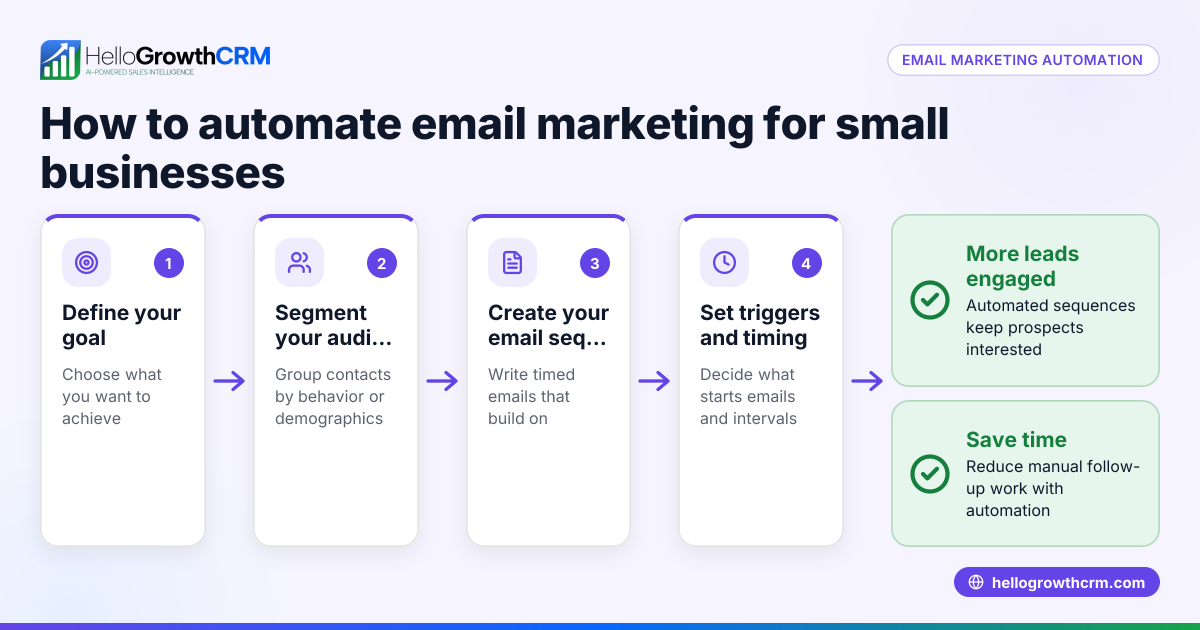
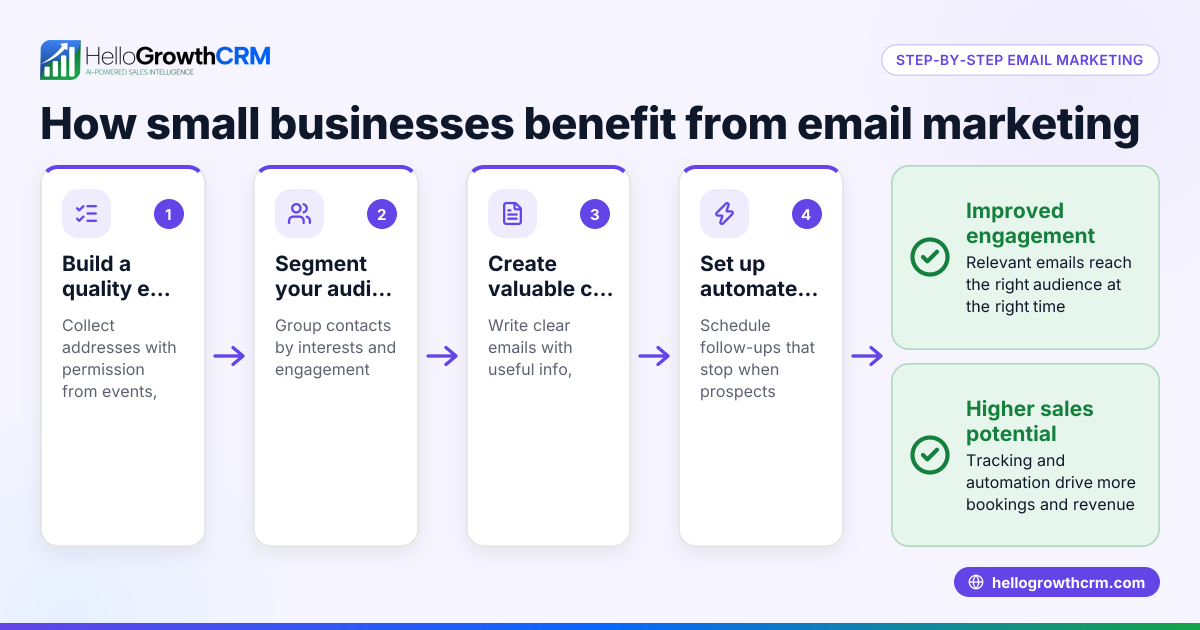
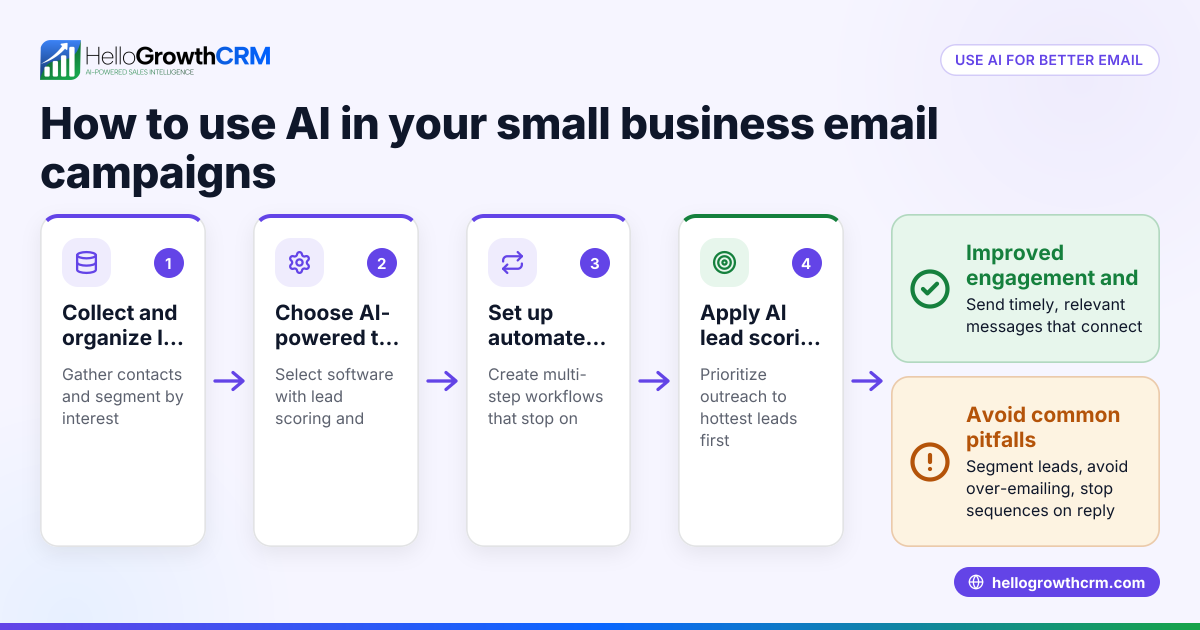
- Set clear email marketing objectives. Choose goals like generating new leads, nurturing existing customers, increasing sales, promoting products, or boosting loyalty. Make sure these align with your overall business plan.
- Segment your email list. Group contacts by purchase history, location, or engagement level. Segmentation ensures messages are relevant to each audience.
- Create targeted email content. Tailor messages to each segment’s interests. Use clear subject lines and strong calls to action to boost engagement.
- Implement automated email sequences. Use multi-step workflows that send timed follow-ups over days or weeks. Ensure sequences stop automatically when a prospect replies or acts, to avoid over-emailing.
- Track and analyze results. Monitor open rates, click-through rates, and conversions regularly. Use this data to refine your messaging, segmentation, and timing.
- Maintain list hygiene and compliance. Remove inactive subscribers and honor unsubscribe requests to keep your list healthy and compliant.
For tools that automate and streamline this process, see email automation and sequences.
Example (fictional figures)
A plumbing company in Austin, Texas, wants to increase repeat business by 20% over six months using email marketing.
- Current repeat sales revenue: $150,000
- Target increase: 20%
- Target additional revenue = $150,000 × 20% = $30,000
- Total target repeat sales = $150,000 + $30,000 = $180,000
They create a 5-step email sequence promoting seasonal plumbing maintenance, scheduled over two weeks. They monitor open and click rates weekly and adjust messaging to improve engagement. After six months, repeat sales reach $182,000, exceeding their goal.
Common mistakes
- No clear objective: Prevent this by setting specific, measurable goals before starting your campaign.
- Ignoring segmentation: Avoid this by grouping contacts and tailoring messages to each segment’s interests.
- Lack of follow-up: Use automated sequences that stop when prospects respond, as explained in email automation and sequences.
- Over-emailing: Prevent unsubscribes by limiting email frequency and respecting recipient preferences.
- Not tracking results: Regularly analyze key metrics to improve campaigns.
- Using separate email tools: Prevent lost context and missed leads by managing emails in a shared inbox where your team can see all replies on deals, improving collaboration.
See more about managing emails and sequences in WhatsApp and SMS CRM.
How to Know If Your Email Marketing Is Working
You want to make sure your email efforts pay off. Here are simple ways to check if your campaigns are on track:
- Monitor engagement: Are more people opening your emails and clicking links? Steady or rising numbers mean your content interests your audience.
- Track conversions: Are recipients taking the actions you want, like making a purchase or signing up? This shows your emails drive results.
- Watch unsubscribe rates: A sudden spike can signal too many emails or irrelevant content.
- Check list growth: Is your contact list growing with new leads? Healthy growth indicates your marketing attracts attention.
- Gather feedback: Ask customers if your emails are useful or if they want different topics.
Regularly review these signs to fine-tune your approach and keep your email marketing effective.
Doing this in HelloGrowthCRM
HelloGrowthCRM helps you achieve your email marketing objectives with HelloMail shared inbox, allowing your team to manage inbound emails from leads and customers without switching apps. Replies to quotation emails are visible to everyone working on the deal, ensuring no lead is missed. Automated sequences run multi-step follow-ups over two weeks and stop immediately when a prospect replies, helping you stay on top of leads efficiently. Learn more at email automation and sequences.
Frequently asked questions
What are the main goals of email marketing? The main goals are to build customer relationships, increase sales, promote new products or services, and encourage repeat purchases. Clear goals help you create focused campaigns that deliver measurable results.
How often should I email my customers? Email frequency depends on your audience and content. Avoid over-emailing to prevent unsubscribes. Experiment with different frequencies and monitor engagement metrics to find the right balance.
How can I improve my email open rates? Use clear, compelling subject lines and segment your list to send relevant content. Personalization and sending emails at optimal times also improve open rates.
What is an email sequence? An email sequence is an automated series of emails sent over time to nurture leads or customers. Sequences stop when the recipient responds, saving time and increasing engagement. Learn more at email automation and sequences.
Can my whole sales team manage emails together? Yes. Using a shared inbox like HelloMail lets your team see all email replies on deals, preventing lost leads and improving collaboration.
Is email marketing effective for small businesses? Yes, when done with clear objectives, proper segmentation, and consistent follow-up. It’s a cost-effective way to reach and engage customers directly.
Key takeaways
- Set clear, measurable objectives for your email marketing campaigns.
- Segment your contact list to send relevant, targeted messages.
- Use automated sequences to follow up and save time.
- Monitor key metrics regularly and adjust campaigns based on data.
- Avoid common mistakes like over-emailing and ignoring replies.
- Manage emails efficiently with tools like HelloMail shared inbox and automated sequences.
Start your email marketing journey with clear goals and the right tools. To try managing leads and email sequences efficiently, Start on the Free Forever plan (200 leads, no credit card).
Ready to put this into practice?
Set up your pipeline, WhatsApp follow-ups, and AI lead scoring in minutes — free, no credit card.
Try HelloGrowthCRM freeGet CRM tips in your inbox
Join thousands of sales professionals who get weekly insights on CRM strategy, AI automation, and pipeline optimization.

The HelloGrowthCRM team publishes guides on CRM strategy, AI sales tools, and revenue operations for small business sales teams.