HelloGrowthCRM software
Built for real small-business sales teams
HelloGrowthCRM helps reps qualify faster, follow up on time, and close more deals—with practical automation in one place.
- AI lead scoring and pipeline visibility
- Built-in dialer, WhatsApp, and email automation
- Sales forecasting and RevOps-ready reporting
Evaluating sales enablement means reviewing how well your sales tools, processes, and team support your sales goals and improve sales results. It involves checking if your sales resources, communication methods, and follow-up systems help your team close deals faster and more consistently. This article covers why evaluating sales enablement matters, step-by-step instructions, a worked example, common mistakes to avoid, and how HelloGrowthCRM features like pipeline management, task tracking, and AI lead scoring can assist.
Why this comes up / what goes wrong
Small business owners often face challenges managing leads, tracking follow-ups, and coordinating sales activities efficiently. Without evaluating sales enablement, leads may be lost due to delayed responses or inconsistent communication across channels like text messages, email, and spreadsheets. This leads to missed sales opportunities and unpredictable revenue. Business owners and sales leaders want to know if their current sales tools and processes effectively support their team and where improvements are needed.
Step-by-step
- Define your sales goals. Identify specific targets such as increasing lead conversion rates, shortening sales cycles, or boosting customer retention. Ensure your sales enablement efforts align with these goals.
- List your sales tools and resources. Take inventory of all software, communication tools, and sales content your team uses. Check if these tools are user-friendly and actively used by sales reps.
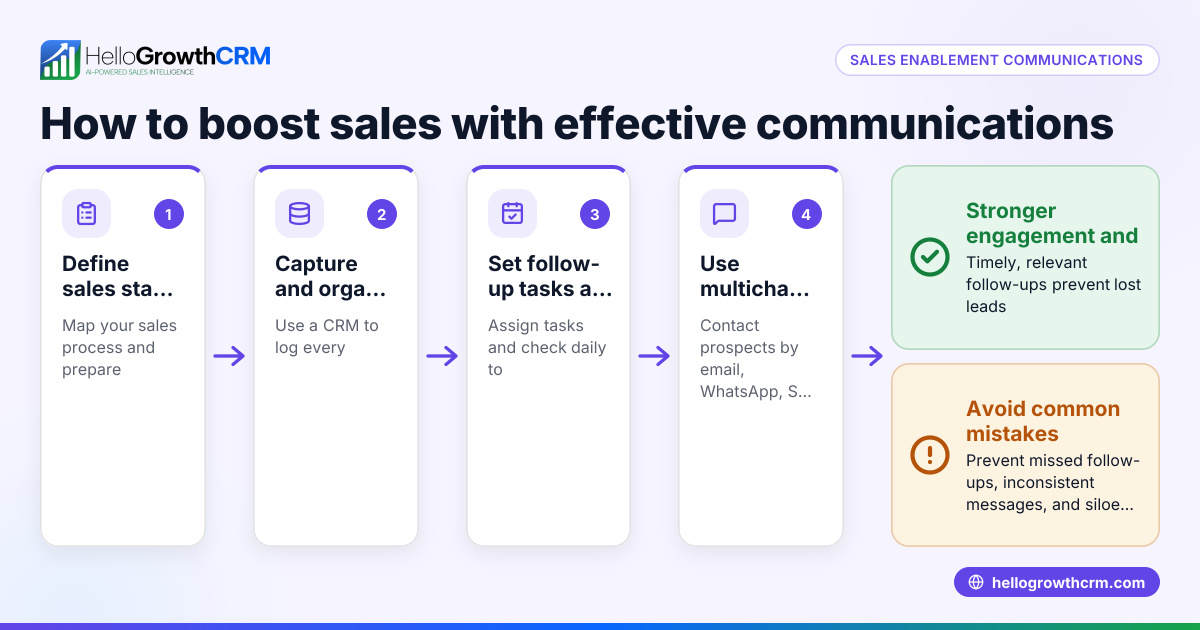
- Review lead capture and follow-up processes. Confirm that leads are captured promptly from web forms or other sources and assigned to sales reps. Check if follow-ups are scheduled and executed on time to avoid lost leads.
- Assess communication consistency. Evaluate if your team uses consistent messaging across WhatsApp, SMS, and email, and whether automated sequences or templates are in place.
- Check pipeline visibility and management. Make sure you can track deals through each stage with clear probabilities and expected values to forecast revenue and spot bottlenecks.
- Collect feedback from your sales team. Ask sales reps what tools and processes help or hinder their work, and what improvements they suggest.
- Analyze sales performance data. Review metrics such as conversion rates, average deal size, and sales cycle length to identify trends and areas needing improvement.
- Prioritize and plan improvements. Based on your findings, decide which changes to implement first, such as better lead scoring, automation, or training.
Example (fictional figures)
A B2B software reseller in Denver, Colorado, evaluates sales enablement on 04/15/2026.
- Goal: Increase lead conversion rate from 20% to 30%.
- Leads captured monthly: 500.
- Current deals closed monthly: 500 × 20% = 100.
- Average deal value: $12,000.
- Current monthly revenue: 100 × $12,000 = $1,200,000.
They estimate that some leads are lost due to slow follow-up.
- Leads lost: 500 × 15% = 75
- Potential deals lost: 75 × 20% = 15
- Potential revenue lost: 15 × $12,000 = $180,000
Improving follow-up speed and enabling sales reps with better tools could recover some of these lost deals and increase revenue.
Common mistakes
- Ignoring input from sales reps: Prevent this by regularly asking your team about obstacles and tool usability to identify real issues.
- Making processes too complex: Simplify sales stages and communication channels to keep the team focused and efficient.
- Relying on manual tracking: Use pipeline management tools to automate follow-ups and reminders, reducing human error.
- Neglecting lead prioritization: Implement lead scoring to focus efforts on high-potential prospects.
- Failing to measure results: Track key sales metrics regularly to evaluate the impact of enablement efforts and adjust accordingly.
Doing this in HelloGrowthCRM
HelloGrowthCRM supports evaluating and improving sales enablement through its Deals (pipeline) feature, which tracks open opportunities from first contact through close. For example, a quotation sent last week appears as a deal at the 'quote sent' stage with a follow-up date, so it is not forgotten. Its territory and field operations tools let field reps log visits from their phones, giving managers visibility into daily sales activity. For founders without a sales manager, Managed RevOps provides a dedicated specialist who manages the follow-up queue weekly, ensuring leads are worked promptly. Learn more about HelloGrowthCRM for the United States, including its WhatsApp and SMS CRM and the built-in CRM dialer.
Frequently asked questions
What is sales enablement evaluation? Sales enablement evaluation is the process of reviewing how well your sales tools, content, processes, and team support your sales goals and improve sales effectiveness.
Why should small businesses evaluate sales enablement? Small businesses often lose leads due to slow follow-up or inconsistent communication. Evaluating sales enablement helps identify gaps and improve sales processes to increase revenue.
How often should I evaluate sales enablement? It is recommended to evaluate sales enablement quarterly or biannually to keep up with changing sales conditions and continuously improve your sales process.
Can the CRM help with sales enablement evaluation? Yes. Features like pipeline management, territory and field operations, and managed revenue operations support tracking opportunities, sales activities, and follow-up effectiveness.
What are common signs that sales enablement needs improvement? Signs include lost leads due to slow follow-up, inconsistent messaging across channels, lack of pipeline visibility, and sales reps struggling with outdated or complex tools.
Key takeaways
- Evaluate sales enablement by reviewing sales goals, tools, processes, and sales rep feedback.
- Focus on lead management, timely follow-up, and consistent communication.
- Use pipeline visibility and sales metrics to identify bottlenecks and opportunities.
- Avoid common mistakes like ignoring sales rep input and relying on manual tracking.
- CRM features like pipeline tracking, territory management, and managed revenue operations can support evaluation and improvement.
Start improving your sales enablement today. Start on the Free Forever plan (200 leads, no credit card) to organize your sales with HelloGrowthCRM.
Ready to put this into practice?
Set up your pipeline, WhatsApp follow-ups, and AI lead scoring in minutes — free, no credit card.
Try HelloGrowthCRM freeGet CRM tips in your inbox
Join thousands of sales professionals who get weekly insights on CRM strategy, AI automation, and pipeline optimization.

The HelloGrowthCRM team publishes guides on CRM strategy, AI sales tools, and revenue operations for small business sales teams.