HelloGrowthCRM software
Built for real small-business sales teams
HelloGrowthCRM helps reps qualify faster, follow up on time, and close more deals—with practical automation in one place.
- AI lead scoring and pipeline visibility
- Built-in dialer, WhatsApp, and email automation
- Sales forecasting and RevOps-ready reporting
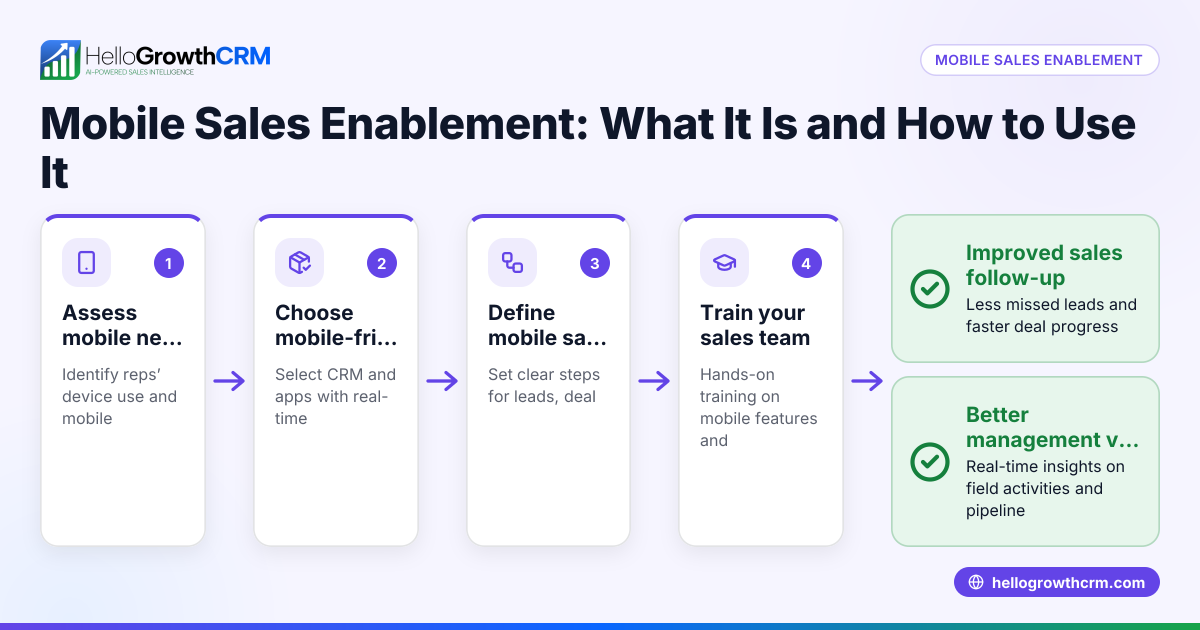
Insurance sales enablement means equipping your insurance sales team with the right tools and processes to follow up on leads promptly, manage sales pipelines effectively, and close deals faster. For insurance business owners or accountants, it ensures no potential client slips through the cracks due to slow follow-up or disorganized tracking. This article explains why sales enablement is crucial in insurance, guides you through practical steps, provides a US-based example, highlights common mistakes, and shows how HelloGrowthCRM can help.
Why this comes up / what goes wrong
Insurance businesses often lose leads because of slow or inconsistent follow-up, especially when sales rely on scattered tools like text messages, emails, and spreadsheets. Owners and accountants struggle to see the sales pipeline clearly and to assign tasks or follow-ups systematically. Without a centralized system, quotations sent to prospects can be forgotten, and field sales reps may not report visits efficiently. This leads to lost sales opportunities and revenue.
Insurance sales enablement addresses these issues by creating a structured approach to managing leads, communications, and sales stages. It is particularly important for small to mid-sized insurance agencies or financial services firms in the US, where competition is high and timely responses matter.
Step-by-step
- Centralize Lead Capture and Tracking Collect leads from web forms, phone calls, or referrals into one system. Check that each lead is logged with contact details and source information.
- Define Clear Sales Stages Map out your sales pipeline stages, such as "Initial Contact," "Quote Sent," "Follow-Up," and "Closed Won/Lost." Ensure every deal moves through these stages visibly.
- Set Follow-Up Reminders and Tasks Assign follow-up dates for quotations or client communications. Verify that reminders alert sales reps to act before leads go cold.
- Enable Field Sales Reporting For teams with field reps, implement tools for logging visits and activities from mobile devices. Confirm that managers can review daily visit logs and routes.
- Track Commissions and Territories Organize sales territories and link commissions to closed deals. Check that commission calculations reflect actual sales outcomes.
- Review and Clean Your Pipeline Regularly Schedule weekly reviews to remove stale leads and update deal statuses. Confirm that follow-up queues are actively managed.
- Use Sales Reporting and Forecasting Analyze pipeline data to forecast revenue and identify bottlenecks. Ensure reports are accessible to owners and sales leaders.
For insurance-specific sales enablement, consider Insurance agents, NBFCs and financial services solutions that fit your business size and model.
Example (fictional figures)
An Austin, Texas insurance agency called Lone Star Insurance has 10 sales reps and generates $3,000,000 in annual revenue. They want to improve sales follow-up and pipeline management starting 07/01/2025.
- They centralize all leads into a CRM and define these sales stages: Initial Contact, Quote Sent, Follow-Up, Closed Won, Closed Lost.
- On 07/10/2025, they send a quote worth $50,000 to a client. They set a follow-up date for 07/17/2025.
- On 07/17/2025, the rep follows up and moves the deal to "Follow-Up" stage.
- The deal closes on 07/25/2025 for $50,000.
Calculations:
$50,000 × 1 (deal value) = $50,000 expected revenue
They track commissions at 5%:
$50,000 × 5% = $2,500 commission for the rep
Weekly pipeline reviews remove deals inactive for over 30 days, keeping the sales focus sharp.
Common mistakes
- Ignoring follow-up dates: Leads get cold when follow-ups are missed. Prevent by setting automated reminders.
- Using multiple disconnected tools: Leads scattered across texts, emails, and spreadsheets cause confusion. Use a centralized CRM.
- Not tracking field reps' activities: Without logging visits, managers lack visibility. Use mobile check-in tools.
- Failing to clean the pipeline: Stale deals clutter focus and reports. Schedule regular pipeline hygiene.
- Overlooking commission tracking: Miscalculations cause disputes. Link commissions directly to deal outcomes.
For more on managing field sales and commissions, see WhatsApp and SMS CRM.
Doing this in HelloGrowthCRM
HelloGrowthCRM supports insurance sales enablement with these features:
- Deals (pipeline): Track open opportunities from first contact through close. A quotation sent last week shows up as a deal at the "quote sent" stage with a follow-up date, so it is not forgotten.
- Territories, field operations and commissions: Field reps log visits from their phones, and managers see the day's beat, helping insurance distributors manage territories and commissions effectively.
- Managed RevOps: For founders without a sales manager, HelloGrowthCRM provides a revenue specialist who works the follow-up queue weekly, ensuring no lead is left unattended.
Learn more about HelloGrowthCRM tailored for the US market at HelloGrowthCRM for the United States.
Frequently asked questions
What is insurance sales enablement? Insurance sales enablement is the process of equipping insurance sales teams with tools, processes, and support to improve lead management, follow-up, and closing rates.
Why is follow-up important in insurance sales? Timely follow-up ensures leads do not get cold and increases the chances of closing deals. Slow or missed follow-ups are a common cause of lost sales.
How can I track field sales visits effectively? Using mobile tools that allow reps to log visits and activities in real time helps managers monitor performance and optimize routes.
What should I look for in an insurance CRM? Look for pipeline management, follow-up reminders, territory and commission tracking, and mobile field sales support tailored to insurance workflows.
Can HelloGrowthCRM handle insurance sales processes? Yes, it offers deal pipelines, territory management, and managed revenue operations support designed for insurance and financial services businesses.
Key takeaways
- Centralize lead capture and pipeline tracking to avoid lost opportunities.
- Define clear sales stages and set follow-up reminders.
- Use mobile tools for field sales visit logging and territory management.
- Regularly clean your sales pipeline to maintain focus.
- Track commissions linked to actual deal outcomes.
- Consider managed revenue operations support if you lack a sales manager.
Start improving your insurance sales enablement today by trying HelloGrowthCRM. Start on the Free Forever plan (200 leads, no credit card).
Ready to put this into practice?
Set up your pipeline, WhatsApp follow-ups, and AI lead scoring in minutes — free, no credit card.
Try HelloGrowthCRM freeGet CRM tips in your inbox
Join thousands of sales professionals who get weekly insights on CRM strategy, AI automation, and pipeline optimization.

The HelloGrowthCRM team publishes guides on CRM strategy, AI sales tools, and revenue operations for small business sales teams.