HelloGrowthCRM software
Built for real small-business sales teams
HelloGrowthCRM helps reps qualify faster, follow up on time, and close more deals—with practical automation in one place.
- AI lead scoring and pipeline visibility
- Built-in dialer, WhatsApp, and email automation
- Sales forecasting and RevOps-ready reporting
The functions of sales management are essential activities that help businesses achieve sales targets and grow revenue. They include planning, organizing, directing, and controlling sales operations. These functions guide how you manage your sales team, allocate resources, and measure success.
Why this comes up / what goes wrong
Small-business owners often struggle with inconsistent sales results, lost leads, or inefficient follow-up. Without clear sales management functions, sales teams may work without direction or fail to prioritize leads effectively. This leads to missed opportunities, slow response times, and disorganized pipelines. Understanding these functions helps owners and sales leaders build a reliable process to convert prospects into customers.
Step-by-step
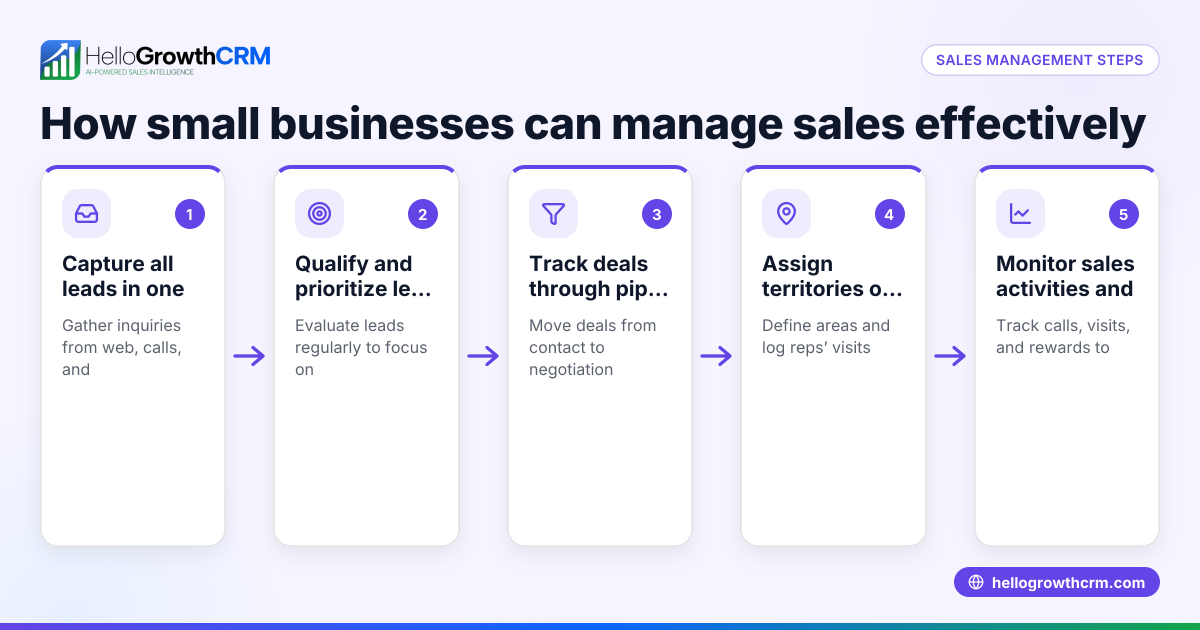
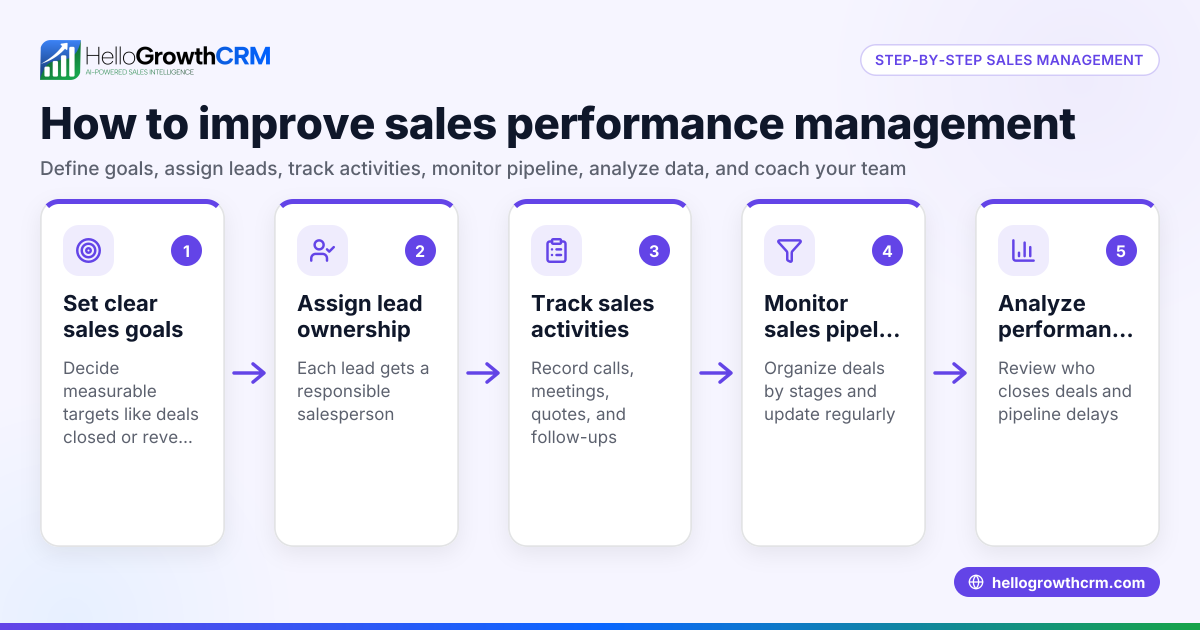
- Sales Planning: Define sales goals based on your business objectives. Check that targets are realistic and aligned with market conditions. Plan your sales approach, including target customer segments, pricing, and sales channels.
- Sales Organizing: Structure your sales team by assigning roles and territories. Check that each salesperson has clear responsibilities and resources needed to succeed.
- Sales Directing: Guide and motivate your sales team through training, communication, and leadership. Check that salespeople follow the sales process and use tools for follow-up and customer engagement.
- Sales Controlling: Monitor sales performance against goals. Check sales reports, forecast future sales, and adjust plans or coaching as needed to improve results.
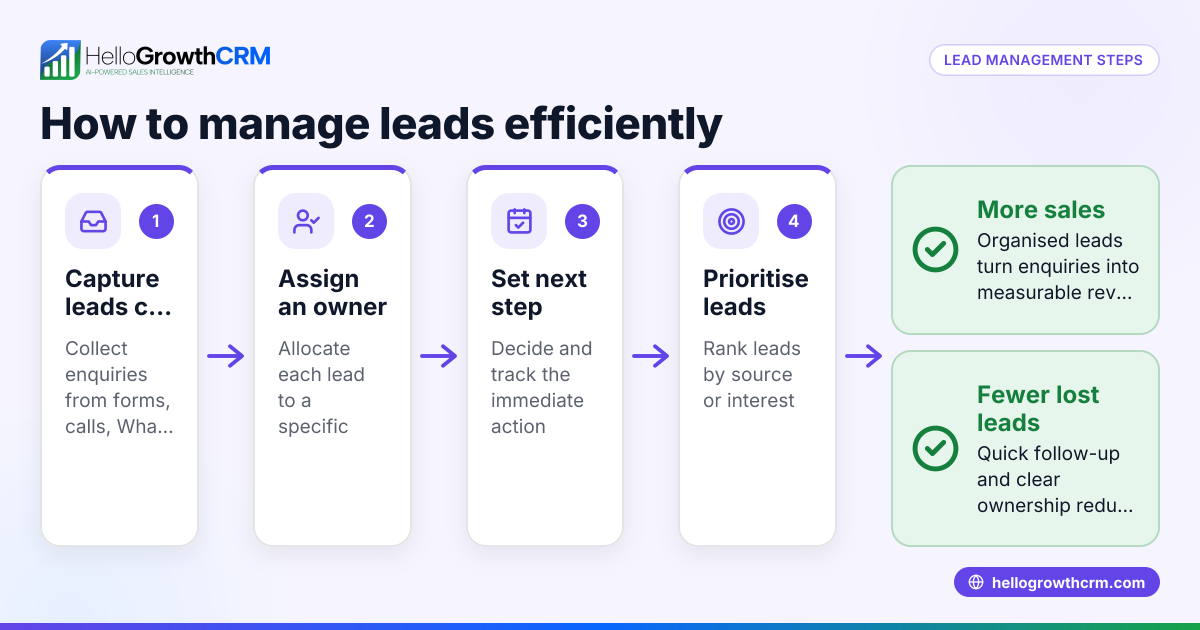
- Lead Management: Capture and qualify leads promptly to avoid losing prospects. Check that every inquiry is assigned an owner and a next step to maintain momentum.
- Pipeline Management: Track deals through stages from initial contact to close. Check follow-up dates and deal status regularly to prevent opportunities from stalling.
- Field Sales and Commissions: For businesses with field reps or distributors, organize territories and track visits. Check that commissions are linked to actual sales outcomes for fair incentives.
Example (fictional figures)
A B2B software reseller in Denver, Colorado, sets a quarterly sales goal of $500,000 starting 07/01/2026.
- Planned 5 sales reps, each with a $100,000 target.
- Organized territories by industry: healthcare, manufacturing, education, tech, and retail.
- Directed reps to follow up on all leads within 24 hours.
- Controlled performance by reviewing weekly sales reports.
Sales results for July:
- Rep 1 sales: $110,000
- Rep 2 sales: $95,000
- Rep 3 sales: $105,000
- Rep 4 sales: $90,000
- Rep 5 sales: $100,000
Total sales = $110,000 + $95,000 + $105,000 + $90,000 + $100,000 Total sales = $500,000
The team met the goal exactly by following the planned functions of sales management.
Common mistakes
- Ignoring lead follow-up: Leads left unattended lose interest. Prevent this by assigning owners and next steps immediately.
- Poor sales team structure: Without clear roles, reps duplicate efforts or miss accounts. Define territories and responsibilities clearly.
- Lack of sales performance tracking: Without monitoring, problems go unnoticed. Use regular reports and forecasts to stay on track.
- Inconsistent sales processes: Different reps using different approaches cause confusion. Standardize the sales process and train your team.
- Neglecting field sales management: For businesses with field reps, not tracking visits wastes time. Use tools to log visits and monitor activity.
- Unlinked commissions: Paying commissions without linking to sales outcomes can demotivate reps. Tie incentives directly to closed deals.
Doing this in HelloGrowthCRM
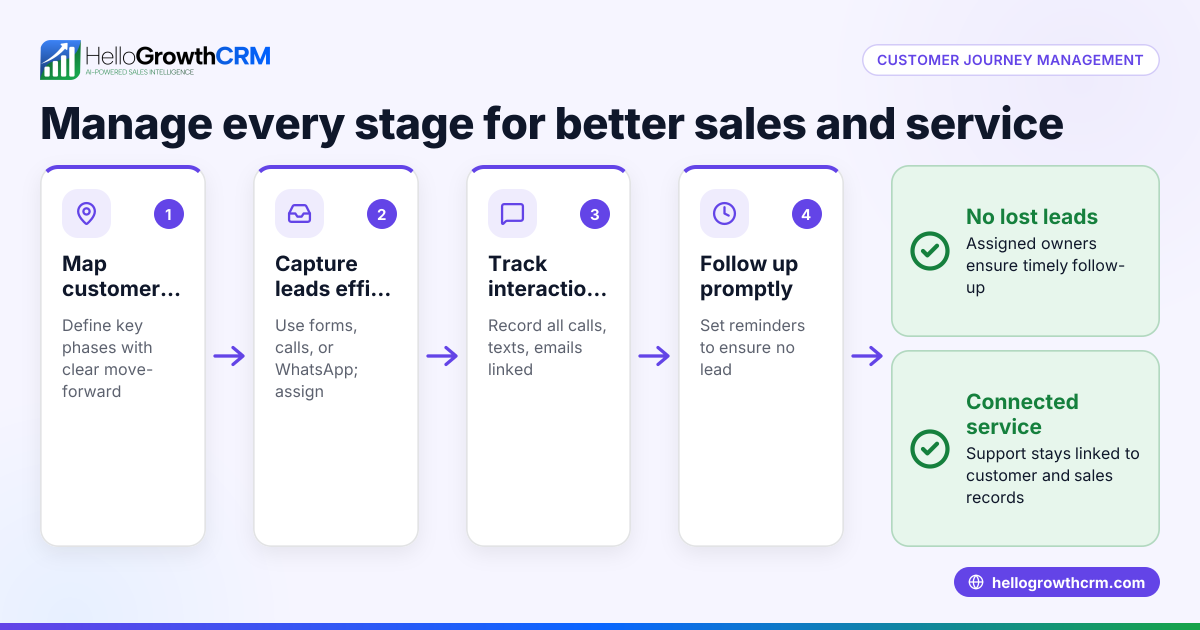
HelloGrowthCRM helps small and mid-sized businesses manage these sales functions efficiently. Every enquiry from a form, call, or WhatsApp message lands as a lead with an owner and a next step, so no prospect gets lost. Deals appear in the pipeline with stage tracking and follow-up dates, keeping quotations and opportunities visible. For field sales teams, distributors can log visits from their phones, and managers can see daily activities and commission tracking. Learn more about HelloGrowthCRM for the United States and how its WhatsApp and SMS CRM and built-in CRM dialer support your sales management.
Frequently asked questions
What are the main functions of sales management? The main functions are planning sales strategies, organizing the sales team, directing sales activities, and controlling performance. These ensure that sales efforts are structured and effective.
How does sales planning improve results? Sales planning sets clear goals and strategies, helping teams focus on the right customers and sales channels. This reduces wasted effort and improves conversion rates.
Why is lead management important in sales? Lead management ensures every inquiry is captured, qualified, and followed up promptly. This prevents leads from slipping through the cracks and increases chances of closing deals. HelloGrowthCRM automates this process.
How can I track my sales pipeline effectively? Use a pipeline management tool to see deals at each stage, set follow-up dates, and forecast sales. Regular review helps you prioritize efforts and close deals faster.
What role does sales controlling play? Controlling monitors sales results, compares them to targets, and identifies areas needing improvement. It keeps the sales process accountable and adaptive.
Key takeaways
- Sales management functions include planning, organizing, directing, and controlling sales activities.
- Clear roles, territories, and follow-up processes prevent lost leads and wasted effort.
- Regular performance tracking and pipeline management keep sales on target.
- Avoid common mistakes like ignoring leads or inconsistent processes to improve sales results.
- HelloGrowthCRM supports these functions with lead capture, deal tracking, and field sales tools.
Start managing your sales more effectively today. Start on the Free Forever plan (200 leads, no credit card) to organize your leads, deals, and sales activities with HelloGrowthCRM.
Ready to put this into practice?
Set up your pipeline, WhatsApp follow-ups, and AI lead scoring in minutes — free, no credit card.
Try HelloGrowthCRM freeGet CRM tips in your inbox
Join thousands of sales professionals who get weekly insights on CRM strategy, AI automation, and pipeline optimization.

The HelloGrowthCRM team publishes guides on CRM strategy, AI sales tools, and revenue operations for small business sales teams.