HelloGrowthCRM software
Built for real small-business sales teams
HelloGrowthCRM helps reps qualify faster, follow up on time, and close more deals—with practical automation in one place.
- AI lead scoring and pipeline visibility
- Built-in dialer, WhatsApp, and email automation
- Sales forecasting and RevOps-ready reporting
To grow your ecommerce CRM effectively, focus on selecting a CRM that integrates well with your sales channels, automates follow-ups, and supports messaging platforms like WhatsApp and SMS. This article covers why ecommerce businesses need specific CRM features, a step-by-step growth plan, common pitfalls, a practical example, and how HelloGrowthCRM supports ecommerce teams.
Why this comes up / what goes wrong
Ecommerce business owners and accountants often struggle with managing leads and customer interactions across multiple platforms such as email, text messages, and social media. Without a centralized system, follow-ups can be slow or missed entirely, causing lost sales and dissatisfied customers. Many ecommerce businesses rely on spreadsheets or disconnected tools, which do not scale well as the business grows. They need a CRM that fits ecommerce workflows, supports messaging channels like WhatsApp and SMS where customers respond quickly, and automates routine tasks to save time.
Step-by-step
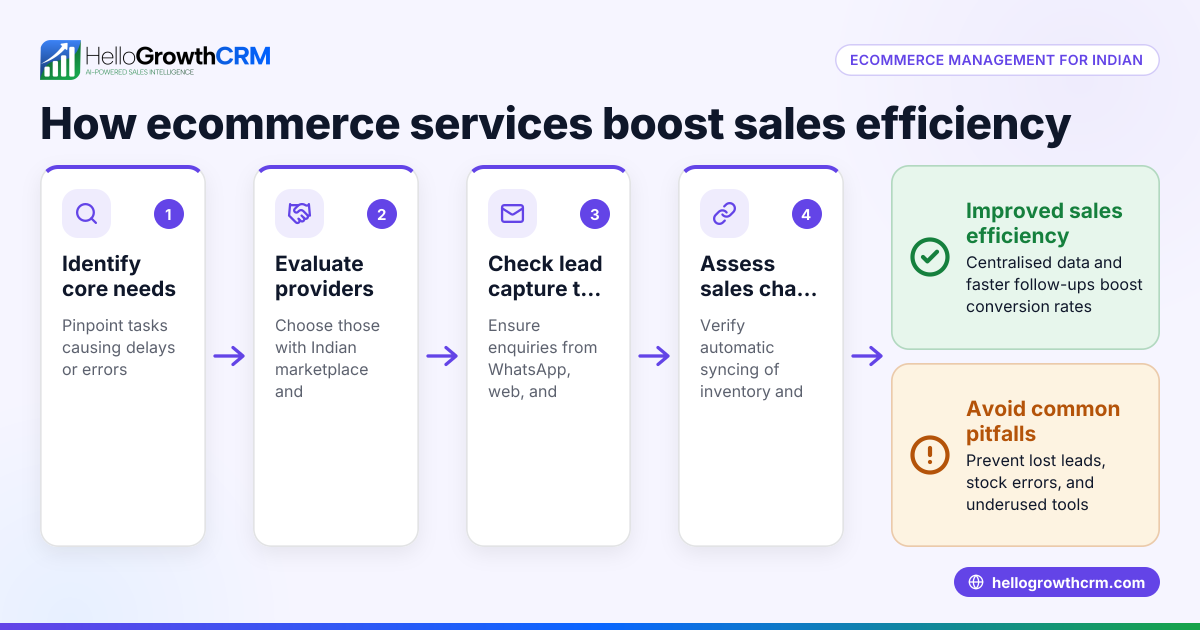
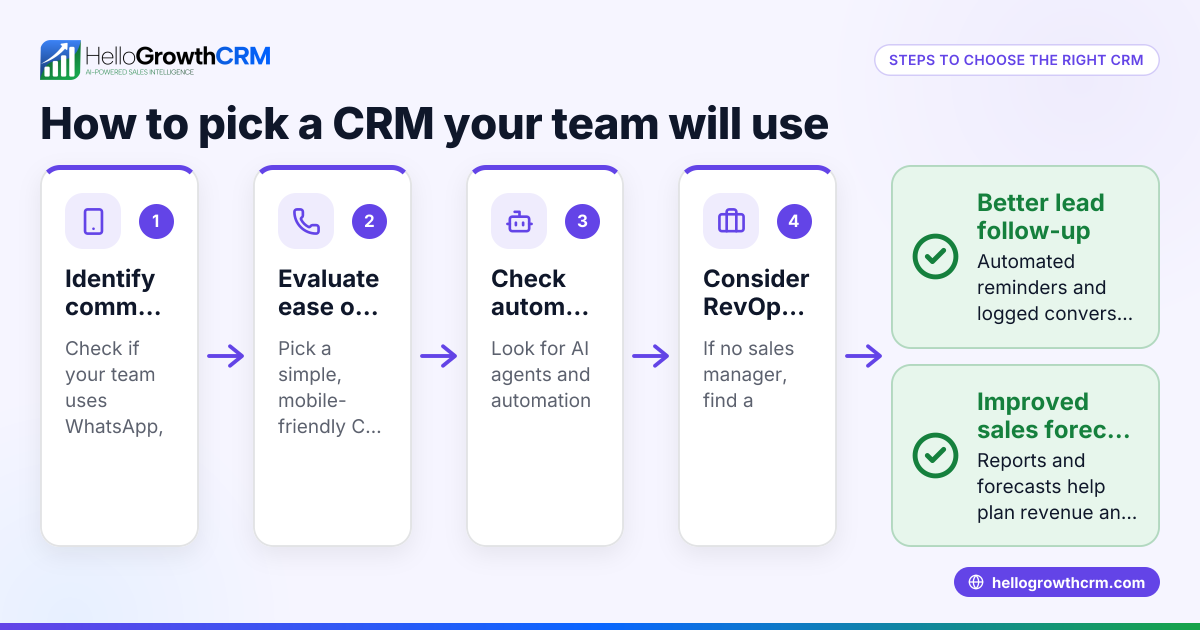
- Assess your current lead and customer communication channels. Check if your CRM or tools can capture leads from your website, social media, and email. Make sure it supports WhatsApp and SMS if those are your customers' preferred channels.
- Evaluate automation features. Look for AI or workflow automation that can draft follow-up messages or update records, reducing manual work for your sales team.
- Choose a CRM that fits your team size and budget. Start with a free or low-cost plan that allows you to manage your pipeline effectively without overspending.
- Integrate your sales pipeline with task management. Use Kanban boards or task lists to track lead progress and schedule follow-ups.
- Train your team on using the CRM daily. Ensure WhatsApp conversations and SMS follow-ups are logged and visible to all team members to avoid duplicate outreach.
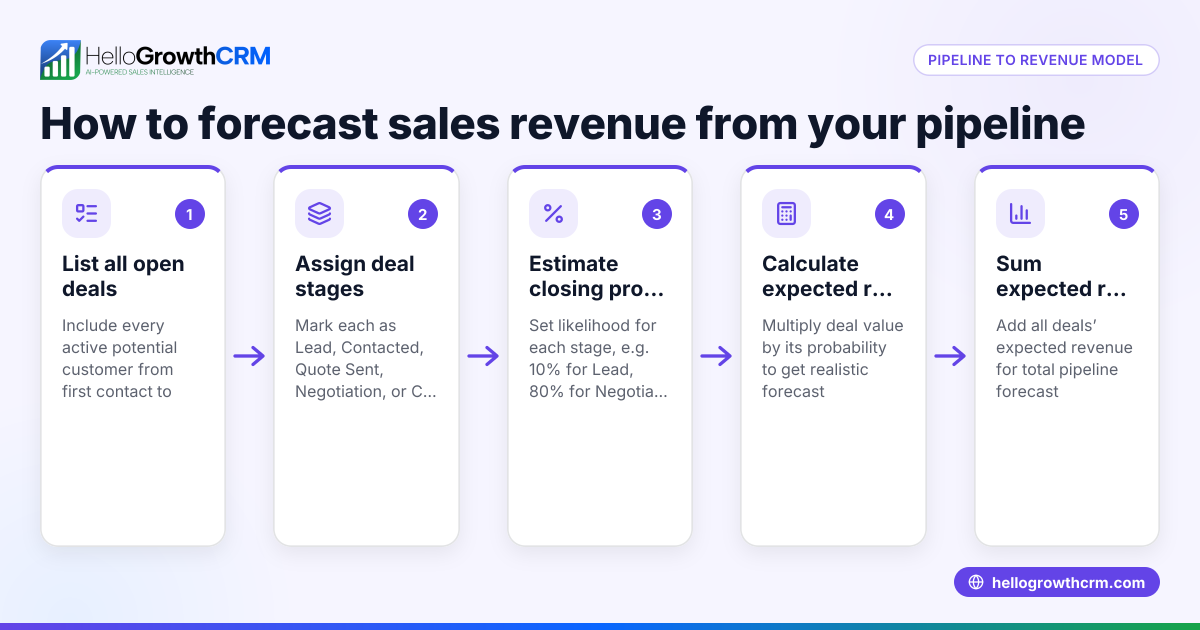
- Monitor CRM reports and sales forecasts. Use data insights to adjust your sales approach and identify bottlenecks.
- Scale your CRM features as your business grows. Add calling, WhatsApp automation, and AI agents to improve efficiency when your lead volume increases.
For more on how ecommerce businesses use CRM, see E-commerce and online sellers.
Example (fictional figures)
GreenLeaf Organics is a small ecommerce business based in Charlotte, North Carolina, selling organic skincare products online. They started with 500 leads captured monthly through their website and social media.
- Monthly leads: 500
- Lead conversion rate before CRM: 10%
- Average order value: $75
They implemented a CRM that supports WhatsApp and SMS follow-ups and added AI to draft messages.
Calculations:
Current monthly sales = 500 leads × 10% conversion = 50 sales
Monthly revenue = 50 sales × $75 = $3,750
After CRM implementation, conversion improved to 15% due to faster follow-ups.
New monthly sales = 500 leads × 15% conversion = 75 sales
New monthly revenue = 75 sales × $75 = $5,625
Increase in monthly revenue = $5,625 - $3,750 = $1,875
This example shows how growing your ecommerce CRM capabilities can directly increase sales and revenue.
Common mistakes
- Ignoring customer communication preferences. Prevent this by using a CRM that supports WhatsApp and SMS, where many ecommerce customers prefer to engage.
- Not automating follow-ups. Avoid slow response times by leveraging AI agents to draft messages, so reps only need to review and send.
- Overcomplicating the CRM setup. Start with a simple pipeline and add features gradually to avoid overwhelming your team.
- Failing to train the team. Prevent inconsistent CRM usage by scheduling regular training and making CRM use part of daily routines.
- Relying on spreadsheets or disconnected tools. This leads to lost leads and duplicated efforts. Use an integrated CRM designed for ecommerce workflows.
For more on WhatsApp and SMS CRM benefits, see WhatsApp and SMS CRM.
Doing this in HelloGrowthCRM
HelloGrowthCRM offers ecommerce teams WhatsApp and SMS messaging workflows that log conversations on lead records and allow follow-ups directly via these channels. AI agents (in beta on the Growth plan) draft follow-up messages after calls, so sales reps only review and send them, saving time. Additionally, the Free Forever plan lets a two-person team manage their pipeline at no cost until they need calling or WhatsApp automation features. This setup helps ecommerce businesses grow their CRM usage efficiently and cost-effectively. Learn more at HelloGrowthCRM for the United States.
Frequently asked questions
What features should an ecommerce CRM have to grow effectively? A growing ecommerce CRM should support lead capture from multiple channels, include automation for follow-ups, and integrate messaging platforms like WhatsApp and SMS. Task management and sales forecasting are also important to track progress and plan growth.
Can small ecommerce teams start with a free CRM plan? Yes, many CRMs offer free plans suitable for small teams. For example, HelloGrowthCRM’s Free Forever plan supports 200 leads and basic pipeline management, allowing teams to get started without upfront costs.
How does WhatsApp integration help ecommerce sales? WhatsApp is a widely used messaging app where many customers prefer quick responses. Integrating WhatsApp in your CRM logs conversations and enables fast follow-ups, improving customer engagement and conversion rates.
What is the role of AI in ecommerce CRM? AI can draft follow-up messages and automate routine updates, reducing manual work for sales reps. This helps maintain timely communication with leads and improves efficiency.
How do I ensure my team uses the CRM consistently? Regular training, simple workflows, and making CRM usage part of daily sales routines help ensure consistent use. Visibility of customer conversations and task tracking also encourage team adoption.
Key takeaways
- Choose a CRM that supports ecommerce channels like WhatsApp and SMS for faster customer engagement.
- Use AI automation to draft follow-ups and reduce manual tasks.
- Start with a free or entry-level CRM plan and scale features as your lead volume grows.
- Train your team regularly and integrate CRM usage into daily workflows.
- Avoid using disconnected tools or spreadsheets to prevent lost leads.
- Monitor sales forecasts and pipeline reports to guide growth decisions.
Growing your ecommerce CRM is essential for improving sales and customer relationships. To start, consider HelloGrowthCRM’s Free Forever plan with 200 leads and no credit card required at Start on the Free Forever plan (200 leads, no credit card).
Ready to put this into practice?
Set up your pipeline, WhatsApp follow-ups, and AI lead scoring in minutes — free, no credit card.
Try HelloGrowthCRM freeGet CRM tips in your inbox
Join thousands of sales professionals who get weekly insights on CRM strategy, AI automation, and pipeline optimization.

The HelloGrowthCRM team publishes guides on CRM strategy, AI sales tools, and revenue operations for small business sales teams.