HelloGrowthCRM software
Built for real small-business sales teams
HelloGrowthCRM helps reps qualify faster, follow up on time, and close more deals—with practical automation in one place.
- AI lead scoring and pipeline visibility
- Built-in dialer, WhatsApp, and email automation
- Sales forecasting and RevOps-ready reporting
A large portion of the buyer’s journey takes place digitally, with many buyers researching and engaging online before contacting a seller. This article explains why understanding this digital engagement matters for your small business, offers step-by-step guidance on mapping and tracking the digital buyer’s journey, and provides practical advice to improve your sales process.
Why this comes up / what goes wrong
As a small-business owner or sales leader, you may notice leads going cold or sales cycles taking longer than expected. One common reason is that buyers conduct much of their research online through websites, social media, reviews, and other digital channels before contacting a salesperson. If your sales process depends mainly on phone calls, emails, or in-person meetings without supporting digital touchpoints, you might be missing most of the buyer’s journey.
Without understanding how digital your buyers’ journey is, you risk:
- Losing leads because your follow-up is too slow or not aligned with where the buyer is in their research.
- Spending time on outreach that doesn’t match buyer expectations.
- Using spreadsheets and scattered tools that don’t capture digital interactions like WhatsApp or SMS.
Knowing the digital buyer’s journey helps you meet buyers where they are and improve your lead capture and follow-up.
Step-by-step
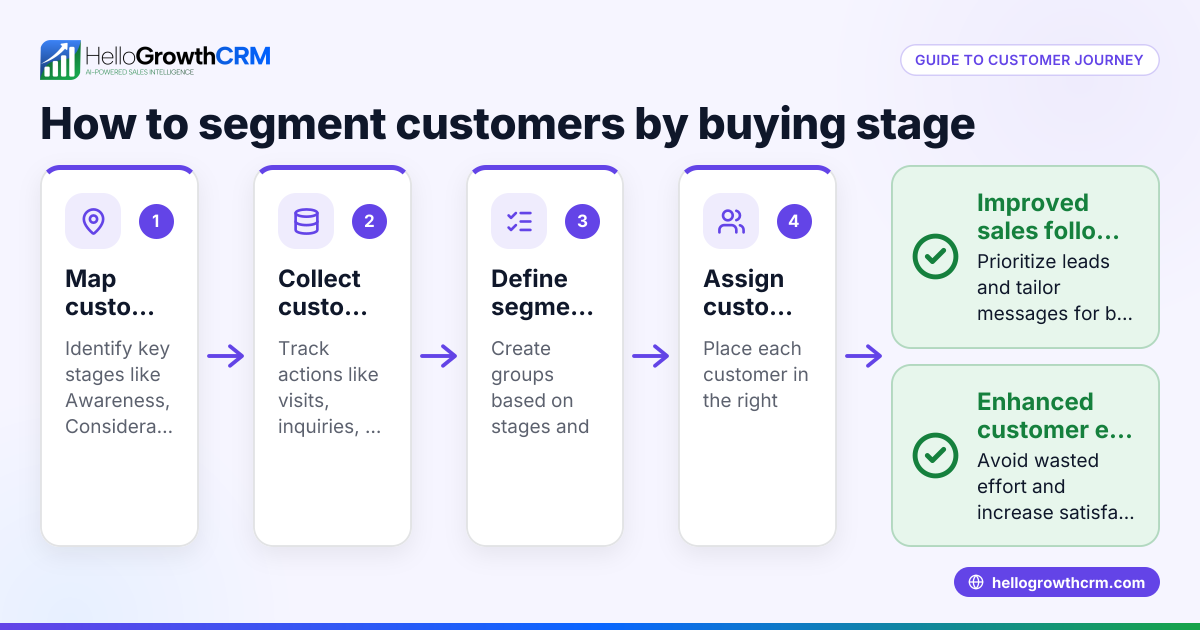
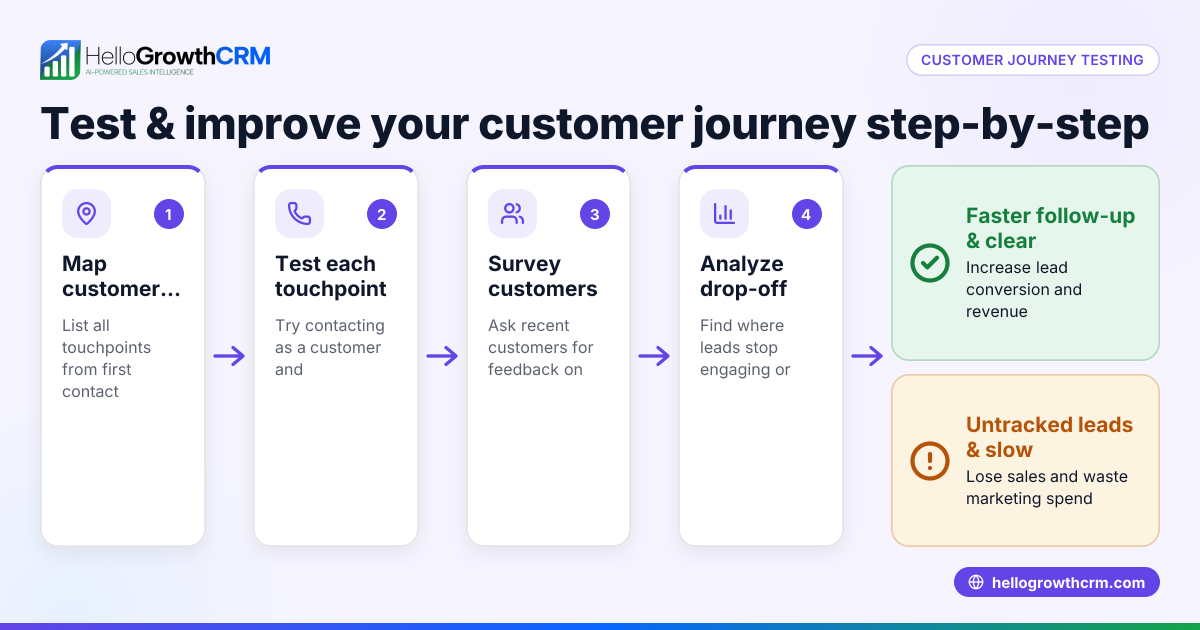
- Map your buyer’s typical journey
- Identify stages your buyers go through: awareness, consideration, and decision.
- List digital touchpoints they use at each stage (website visits, social media, review sites).
- Check how many leads come from these digital channels versus offline sources.
- Track digital engagement metrics
- Use website analytics to monitor visits and engagement with product pages.
- Track email open rates and click-through rates.
- Measure responses on WhatsApp and SMS if you use those channels.
- Assess your current sales follow-up process
- Measure how quickly your team responds to digital inquiries.
- Review the tools your team uses to manage leads (email, spreadsheets, messaging apps).
- Identify gaps where digital interactions aren’t recorded or followed up promptly.
- Integrate digital communication into your CRM
- Ensure your CRM captures all digital leads and conversations.
- Use tools that support WhatsApp, SMS, and email sequences to automate follow-up.
- Analyze conversion rates by channel
- Compare leads generated from digital sources versus offline.
- Identify which digital touchpoints lead to the most closed sales.
- Adjust your sales process based on data
- Focus resources on digital channels with the highest engagement.
- Train your team to respond quickly to digital leads.
- Use pipeline and task boards to manage follow-up efficiently.
See HelloGrowthCRM for the United States for tools that support multi-channel sales processes.
Example (fictional figures)
A B2B software reseller in Denver, Colorado, reviews their buyer’s journey for Q1 2026.
- Total leads: 1,200
- Leads sourced digitally (website, social media, email campaigns): 800
- Leads sourced offline (referrals, events, cold calls): 400
Calculate the digital portion:
800 / 1,200 = 0.6667 or 66.67%
They find that approximately two-thirds of leads come from digital sources.
Next, they check conversion rates:
- Digital leads converted: 160
- Offline leads converted: 80
Conversion rates:
Digital conversion rate = 160 / 800 = 0.20 or 20% Offline conversion rate = 80 / 400 = 0.20 or 20%
Revenue from digital leads:
Assuming average sale value = $5,000
Digital revenue = 160 × $5,000 = $800,000
Offline revenue = 80 × $5,000 = $400,000
Total revenue = $800,000 + $400,000 = $1,200,000
This example shows the importance of focusing on digital lead capture and follow-up.
Common mistakes
- Ignoring digital touchpoints
- Prevent this by mapping where buyers engage online and tracking those channels.
- Using disconnected tools
- Prevent this by consolidating lead capture and communication in one system.
- Slow follow-up on digital leads
- Prevent this by automating sequences and setting reminders in your CRM.
- Relying only on phone and email
- Prevent this by adding WhatsApp and SMS channels to meet buyers’ communication preferences. Learn more on WhatsApp and SMS CRM.
- Not analyzing data by channel
- Prevent this by regularly reviewing lead sources and conversion rates to optimize efforts.
- Failing to coordinate offline and digital leads
- Prevent this by using a CRM with pipeline and task boards to manage all leads together. See built-in CRM dialer for streamlined calling.
Frequently asked questions
How do I know if my buyers prefer digital communication? Look at how leads first contact you. If most come from your website, social media, or messaging apps, your buyers prefer digital channels. Surveys and direct questions during sales calls can also help.
Can small businesses track digital buyer journeys without complex software? Yes. Start with basic tools like Google Analytics for website traffic, email open rates, and simple spreadsheets to log digital inquiries. Gradually integrate more specialized CRM tools that support WhatsApp and SMS for better tracking. See WhatsApp and SMS CRM for ideas.
What percentage of the buyer’s journey is typically digital? While it varies by industry, many buyers complete most of their journey online before contacting a seller. Digital engagement is critical for sales success.
How can I improve digital lead capture? Use clear calls to action on your website, offer downloadable content or demos, and engage visitors via chat or messaging apps like WhatsApp. Make it easy for buyers to reach you digitally.
What role do WhatsApp and SMS play in the buyer’s journey? They offer direct, immediate communication channels preferred by many buyers for quick questions and follow-ups. Integrating these into your CRM helps keep all conversations in one place and speeds up response times. Learn more on WhatsApp and SMS CRM.
How can I manage digital and offline leads together? Use a CRM that supports multiple channels and has pipeline management and task boards. This helps sales teams prioritize and track leads regardless of origin. Tools with a built-in CRM dialer also streamline calls to leads.
Key takeaways
- A large portion of the buyer’s journey happens digitally, often 60-80% or more.
- Mapping and tracking digital touchpoints helps align your sales efforts.
- Use integrated tools to capture and follow up on digital leads efficiently.
- Analyze lead sources and conversion rates regularly to optimize sales.
- Adding WhatsApp and SMS channels can improve engagement and speed.
- Managing all leads in one CRM system improves team coordination and follow-up.
Start understanding your digital buyer’s journey today and improve your sales process. You can Start on the Free Forever plan (200 leads, no credit card).
Explore more about HelloGrowthCRM for the United States and how it supports your sales team.
Ready to put this into practice?
Set up your pipeline, WhatsApp follow-ups, and AI lead scoring in minutes — free, no credit card.
Try HelloGrowthCRM freeGet CRM tips in your inbox
Join thousands of sales professionals who get weekly insights on CRM strategy, AI automation, and pipeline optimization.

The HelloGrowthCRM team publishes guides on CRM strategy, AI sales tools, and revenue operations for small business sales teams.