HelloGrowthCRM software
Built for real small-business sales teams
HelloGrowthCRM helps reps qualify faster, follow up on time, and close more deals—with practical automation in one place.
- AI lead scoring and pipeline visibility
- Built-in dialer, WhatsApp, and email automation
- Sales forecasting and RevOps-ready reporting
You should send a newsletter as often as your audience expects and finds valuable, commonly between once a week and once a month. Sending newsletters too frequently can annoy subscribers, while too infrequently can cause your audience to forget your brand. This article covers why this question matters for small businesses, how to decide your newsletter frequency step-by-step, a practical example with realistic figures, common mistakes to avoid, and how HelloGrowthCRM supports managing your sales follow-up.
Why this comes up / what goes wrong
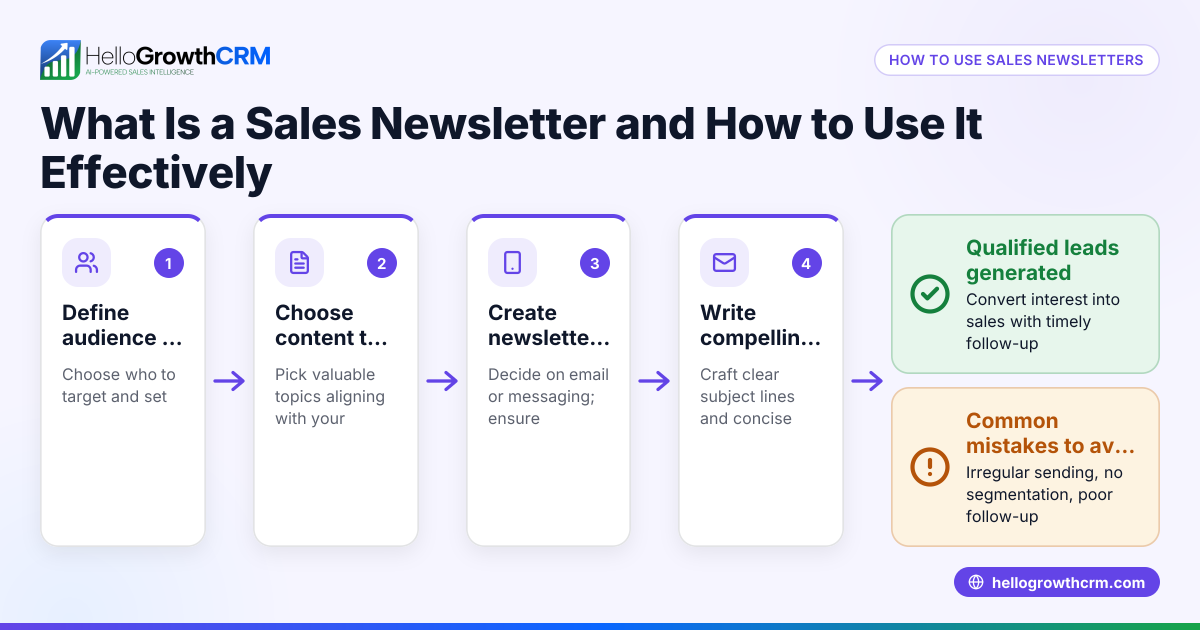
Small-business owners often wonder how often to send newsletters because they want to keep customers engaged but fear overwhelming them. Sending newsletters too often can lead to unsubscribes and complaints, reducing your marketing impact. On the other hand, sending too rarely can mean missed opportunities to nurture leads and stay top of mind. Without a clear plan, many small businesses send newsletters irregularly or inconsistently, which confuses customers and wastes effort. Finding the right balance is key to effective email marketing.
Step-by-step
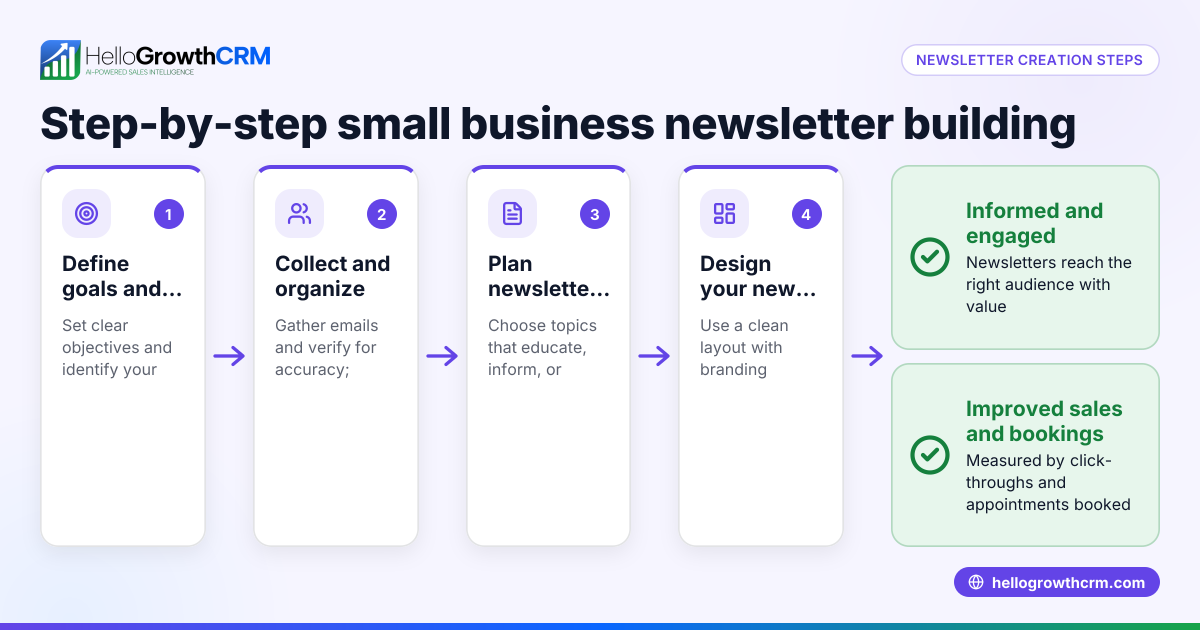
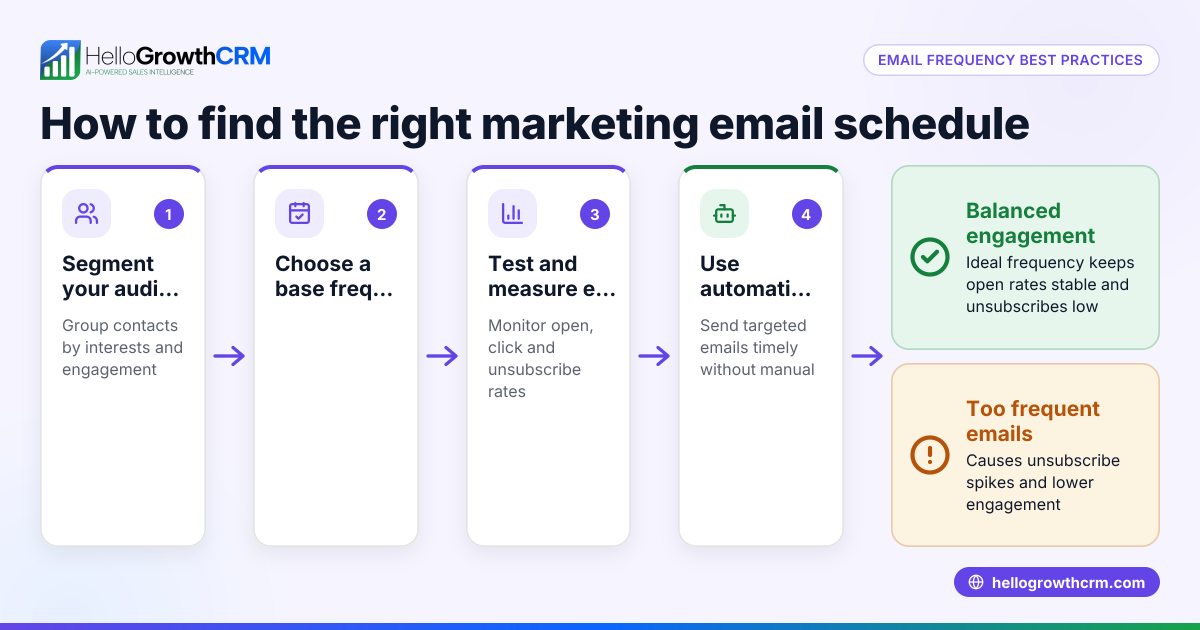
- Identify your audience's preferences and needs. Survey your customers or analyze past newsletter engagement to see how often they open and respond. Check unsubscribe rates and feedback to adjust accordingly.
- Define your newsletter goals. Decide if your newsletter is for promotions, education, company news, or a mix. Frequent sales-focused newsletters may require a lighter schedule to avoid fatigue.
- Choose a starting frequency. For many small businesses, a regular newsletter schedule is important to maintain engagement. Monthly newsletters suit businesses with less frequent updates.
- Create a content calendar. Plan your topics and send dates in advance to maintain consistency and quality.
- Monitor performance metrics after each send. Track open rates, click rates, unsubscribes, and replies to measure engagement.
- Adjust frequency based on data. If engagement drops or unsubscribes rise, reduce frequency. If engagement is high, you might test increasing frequency carefully.
- Maintain list hygiene. Regularly remove inactive subscribers to keep engagement rates healthy.
- Use tools to automate and track newsletters and follow-up. This saves time and ensures timely communication.
Example (fictional figures)
GreenLeaf Landscaping, a landscaping contractor in Charlotte, North Carolina, decided to send newsletters to promote seasonal services and tips.
- They started with a biweekly newsletter.
- Their email list had 1,000 subscribers.
- Each newsletter cost $150 to design and send.
- Average open rate was 25%, click rate 10%, and unsubscribe rate 1%.
After 3 months, GreenLeaf reviewed results:
- Sent 6 newsletters: 6 × $150 = $900 total cost.
- Opened emails: 1,000 × 25% = 250 opens per newsletter.
- Clicks per newsletter: 250 × 10% = 25 clicks.
- Unsubscribes per newsletter: 1,000 × 1% = 10 unsubscribes.
They noticed unsubscribes increased after the 5th newsletter, so they reduced frequency to monthly.
- Monthly cost: $150 × 3 = $450 for next 3 months.
- Open rates stabilized around 30%, clicks increased to 15 per newsletter.
This example shows adjusting frequency based on engagement can improve results and reduce costs.
Common mistakes
- Sending too often without value. Prevent by focusing on quality content and surveying your audience.
- Inconsistent sending schedule. Prevent by creating and sticking to a content calendar.
- Ignoring unsubscribe and engagement data. Prevent by regularly reviewing metrics and adjusting frequency.
- Not segmenting your list. Prevent by tailoring newsletter frequency and content to different audience groups.
- Overloading newsletters with too much content. Prevent by keeping newsletters focused and scannable.
- Failing to clean your email list. Prevent by removing inactive subscribers to improve deliverability and engagement.
Doing this in HelloGrowthCRM
HelloGrowthCRM offers Managed RevOps, which helps founders without a sales manager by assigning a revenue specialist to work the follow-up queue every week. This ensures timely engagement with leads generated from your newsletters and other campaigns, helping you convert interest into sales without losing momentum. Learn more about HelloGrowthCRM for the United States and how its WhatsApp and SMS CRM and built-in CRM dialer features support your outreach efforts.
Frequently asked questions
How do I know if I'm sending newsletters too often? If your unsubscribe rates rise, open rates drop, or you get complaints, you might be sending too often. Monitor these metrics and consider reducing frequency or improving content quality.
Is it better to send weekly or monthly newsletters? It depends on your audience and content. Weekly newsletters can keep your brand top of mind but risk fatigue if content isn’t valuable. Monthly newsletters are easier to manage and suit businesses with less frequent updates.
Should I segment my email list for newsletter frequency? Yes. Different customer groups may prefer different frequencies. Segmenting helps tailor your approach, improving engagement and reducing unsubscribes.
Can I automate newsletter sending and follow-up? Yes. Using a CRM like HelloGrowthCRM helps automate sequences, track engagement, and manage leads efficiently, saving time and ensuring consistent follow-up.
What content should I include in my newsletters? Include helpful tips, company updates, promotions, and calls to action. Keep content relevant and concise to maintain reader interest.
Key takeaways
- Start with a newsletter frequency of once a week to once a month based on your audience.
- Use data on opens, clicks, and unsubscribes to adjust frequency.
- Plan and maintain a consistent sending schedule with a content calendar.
- Avoid overloading subscribers with too frequent or irrelevant emails.
- Segment your audience to tailor newsletter frequency and content.
- Use tools like HelloGrowthCRM’s Managed RevOps to handle follow-up efficiently.
To start managing your leads and follow-up with ease, start on the Free Forever plan (200 leads, no credit card).
Ready to put this into practice?
Set up your pipeline, WhatsApp follow-ups, and AI lead scoring in minutes — free, no credit card.
Try HelloGrowthCRM freeGet CRM tips in your inbox
Join thousands of sales professionals who get weekly insights on CRM strategy, AI automation, and pipeline optimization.

The HelloGrowthCRM team publishes guides on CRM strategy, AI sales tools, and revenue operations for small business sales teams.