HelloGrowthCRM software
Built for real small-business sales teams
HelloGrowthCRM helps reps qualify faster, follow up on time, and close more deals—with practical automation in one place.
- AI lead scoring and pipeline visibility
- Built-in dialer, WhatsApp, and email automation
- Sales forecasting and RevOps-ready reporting
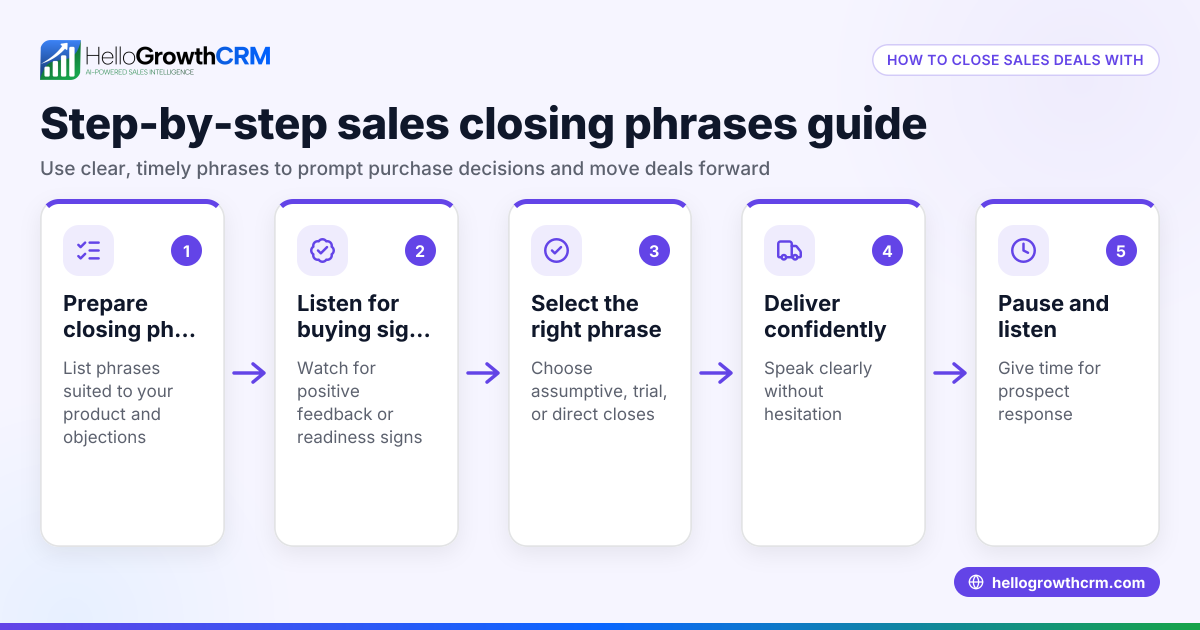
To ask for the sale, be clear, confident, and direct. Summarize your product or service benefits, confirm the prospect agrees it fits their needs, then ask a straightforward question like, “Are you ready to move forward?” or “Can I prepare the paperwork for you today?” This article explains why asking for the sale is often skipped, provides a step-by-step process, shows a worked example with realistic numbers, lists common mistakes to avoid, and explains how HelloGrowthCRM’s Managed RevOps can help you follow up consistently.
Why this comes up / what goes wrong
Small-business owners often hesitate to ask for the sale because they fear rejection or want to avoid sounding pushy. Many rely on informal sales methods like texting or emailing without a clear close. This leads to lost deals as prospects wait for the seller to ask directly or simply move on. Without a structured approach, sales conversations can drag on without commitment, leaving business owners frustrated and confused about when to push for a decision.
Step-by-step
- Prepare your offer summary: Before the call or meeting, list the key benefits and features your product or service provides to the prospect. Check that these address their specific needs.
- Confirm interest: Ask questions like “Does this solution meet your main goals?” or “Do you see how this would help your business?” Confirming their agreement sets the stage.
- Address objections: Invite any remaining questions or concerns. Listen carefully and respond clearly to remove barriers.
- Ask for the sale directly: Use a clear question such as “Are you ready to move forward?” or “Can I send you the contract to get started?” Avoid vague language.
- Handle the response: If yes, confirm next steps and timelines. If no, ask what else they need or if you can follow up later.
- Record the outcome: Document the conversation and next steps in your sales system to ensure timely follow-up.
Check that your tone is confident but not aggressive. Make sure you pause after asking to give the prospect time to respond. Avoid rushing into the close without confirming interest first.
Example (fictional figures)
A residential real-estate team in Phoenix, Arizona, is selling a $350,000 home. On 05/10/2026, the agent reviews the benefits with the buyer:
- Location near good schools
- Newly renovated kitchen
- Competitive price
The buyer confirms these meet their needs. The agent asks, “Are you ready to move forward with the purchase?” The buyer hesitates, so the agent addresses concerns about inspection results. Once reassured, the buyer agrees.
Calculation of initial deposit: $350,000 × 5% = $17,500 (earnest money deposit)
The agent confirms the buyer will provide $17,500 deposit within 3 days to secure the contract.
Common mistakes
- Not asking directly: Avoid vague questions like “What do you think?” Instead, ask clearly for the sale.
- Skipping objection handling: Always invite and address concerns before closing.
- Rushing the close: Confirm interest first; rushing can push prospects away.
- Failing to document: Without recording outcomes and next steps, follow-up can be missed.
- Ignoring follow-up queues: Letting leads go cold loses sales. Use tools to manage follow-up consistently like HelloGrowthCRM’s Managed RevOps service.
Doing this in HelloGrowthCRM
HelloGrowthCRM offers Managed RevOps, a done-for-you revenue operations support service. If you don’t have a sales manager, this service assigns a revenue specialist who works your follow-up queue every week, ensuring no lead is forgotten. They handle pipeline cleanup and hygiene, execute same-business-day lead response, and provide weekly KPI reports. This helps you ask for the sale at the right moment and keep deals moving forward without losing leads. Learn more about HelloGrowthCRM for the United States and how its WhatsApp and SMS CRM and built-in CRM dialer support your sales process.
Frequently asked questions
How do I know when to ask for the sale? Ask once the prospect confirms your solution fits their needs and after you’ve addressed any objections. Look for positive signals like agreement, questions about next steps, or budget confirmation.
What if the prospect says no? Respect their decision but ask what additional information they need or if you can follow up later. Keep the door open for future conversations.
Can I ask for the sale over text or WhatsApp? Yes. Using clear, polite language and confirming interest first works well. HelloGrowthCRM’s WhatsApp and SMS CRM helps automate and track these conversations.
How do I avoid sounding pushy? Use a friendly, confident tone. Frame the ask as helping the prospect move forward rather than pressuring them. Listening carefully and responding to objections builds trust.
What if I don’t have time to follow up regularly? Consider Managed RevOps from HelloGrowthCRM, where a revenue specialist manages your follow-up queue weekly, so no lead is missed.
Key takeaways
- Ask for the sale clearly and directly after confirming interest.
- Handle objections fully before closing.
- Document every conversation and next steps.
- Avoid vague language and rushing the close.
- Use consistent follow-up to avoid lost leads.
- Managed RevOps from HelloGrowthCRM helps keep your sales on track.
Start asking for the sale today with confidence. To keep your leads organized and never miss a follow-up, start on the Free Forever plan (200 leads, no credit card).
Ready to put this into practice?
Set up your pipeline, WhatsApp follow-ups, and AI lead scoring in minutes — free, no credit card.
Try HelloGrowthCRM freeGet CRM tips in your inbox
Join thousands of sales professionals who get weekly insights on CRM strategy, AI automation, and pipeline optimization.

The HelloGrowthCRM team publishes guides on CRM strategy, AI sales tools, and revenue operations for small business sales teams.