HelloGrowthCRM software
Built for real small-business sales teams
HelloGrowthCRM helps reps qualify faster, follow up on time, and close more deals—with practical automation in one place.
- AI lead scoring and pipeline visibility
- Built-in dialer, WhatsApp, and email automation
- Sales forecasting and RevOps-ready reporting
Building and managing a sales pipeline CRM tailored for US B2B companies means creating a system that captures leads, tracks opportunities, and automates outreach while meeting local compliance and business needs. Using an ai pipeline crm can boost efficiency by scoring leads and forecasting sales more accurately.
Key takeaways - A sales pipeline CRM organizes your entire sales process from lead capture to closing deals for B2B businesses. - Tailoring your CRM for the US market includes compliance with CAN-SPAM and TCPA, plus integration with tools like QuickBooks and Stripe. - AI-powered features help prioritize leads, automate communication, and provide accurate sales forecasting. - Effective pipeline management requires clear stages, systematic lead follow-up, and real-time visibility for sales leaders. - Integrating managed RevOps streamlines operations and aligns sales with finance and marketing teams.
What is a pipeline CRM, and why do US B2B companies need one?
A pipeline CRM is a customer relationship management system focused on tracking where prospects are in the sales process. For US B2B companies, this means managing everything from initial lead capture to closing a contract, with compliance to regulations like CAN-SPAM for email outreach and TCPA for calling.
Traditional CRMs can be cumbersome or too generic. A sales pipeline CRM tailored for US companies ensures tools like tax reporting, lead sourcing, and communication channels like email and phone work smoothly. Importantly, AI capabilities improve lead scoring and sales forecasts. This helps your sales team spend time on the deals most likely to close and empowers RevOps managers to optimize the process.
How does an AI pipeline CRM help sales teams?
An AI pipeline CRM combines sales pipeline management with artificial intelligence to optimize sales activities.
AI analyzes historical data and current interactions to score leads by their likelihood to convert. It helps prioritize outreach by highlighting the hottest prospects. AI can also automate repetitive tasks, such as sending follow-up emails or reminders, freeing up sales reps for higher-value conversations.
By forecasting sales more accurately, AI helps sales leaders in the US plan quotas, manage resources across teams, and spot pipeline gaps. The AI-backed insights enable continuous improvement in sales execution and decision making.
How do I build a sales pipeline CRM tailored for my US B2B business?
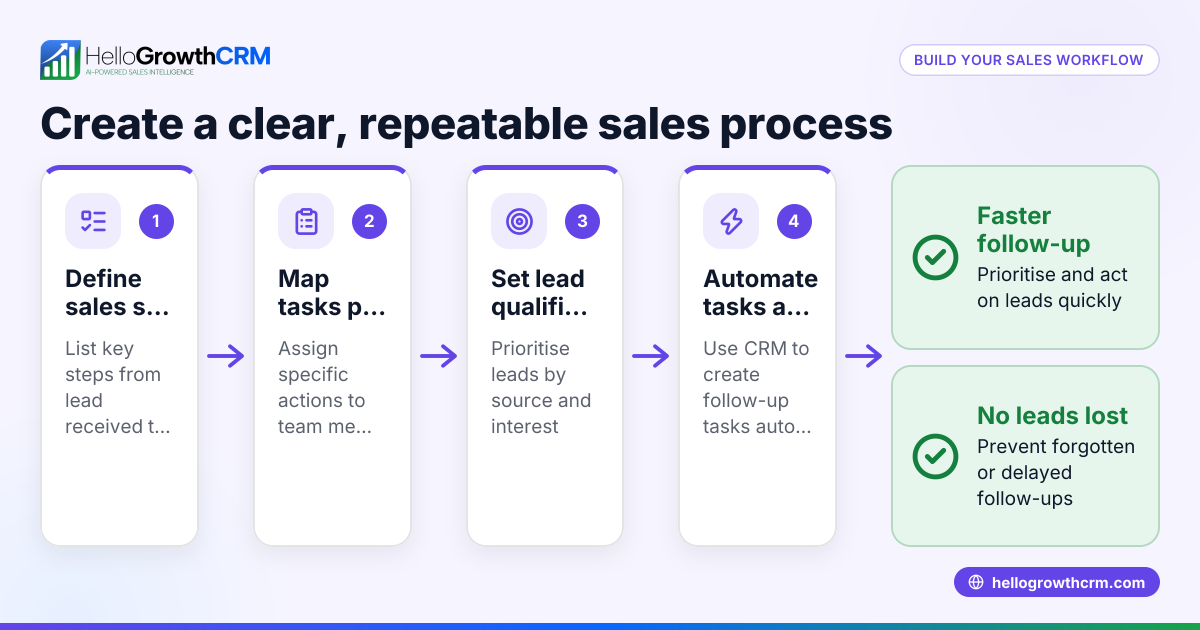
Start by understanding your typical sales process stages and communication channels. Then customize your CRM to match.
Step 1: Map out your sales stages
Define clear sales stages based on your buying cycle. Common stages include:
1. Lead capture
2. Qualification
3. Needs analysis
4. Proposal/Quote
5. Negotiation
6. Closed won or lost
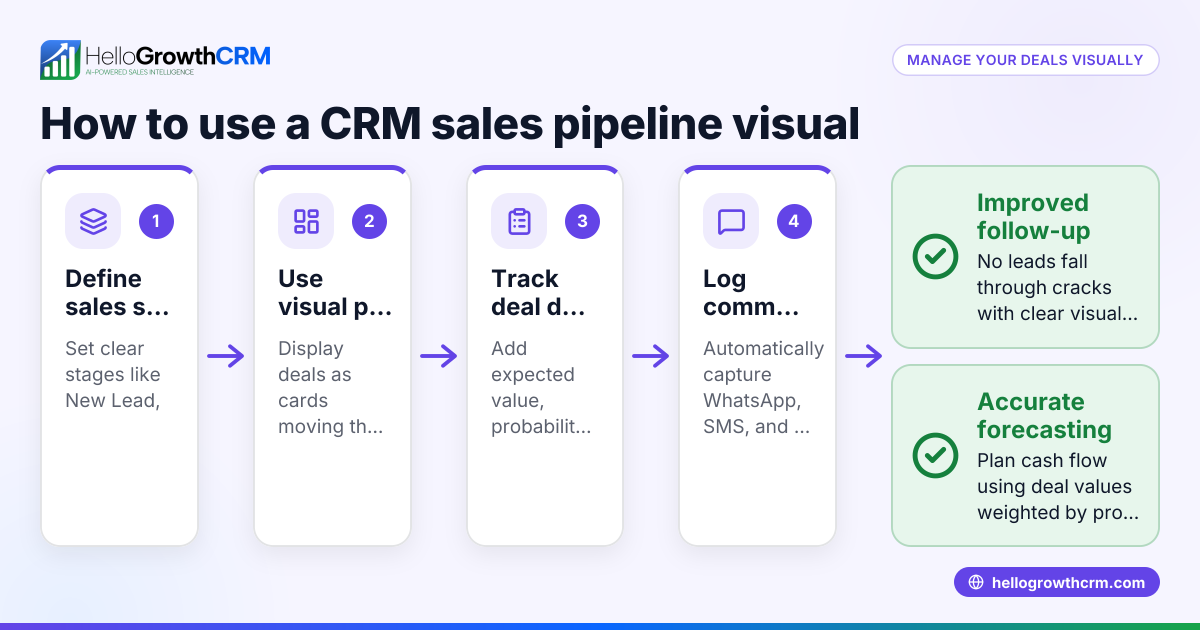
Make these stages visible as pipeline columns in your CRM for tracking progress.
Step 2: Capture and source leads efficiently
Ensure you can capture leads from multiple US-relevant channels like trade shows, LinkedIn outreach, website forms, and inbound calls.
For compliance, collect explicit consent to contact leads via email or phone under CAN-SPAM and TCPA laws. Integrate your CRM with lead capture tools so no opportunity is lost.
Step 3: Use AI scoring to prioritize leads
Implement AI lead scoring that evaluates leads based on engagement, firmographics, and historical conversion data. This lets your team focus on high-potential prospects in Chicago, Houston, Detroit, and beyond.
Step 4: Automate outreach while maintaining compliance
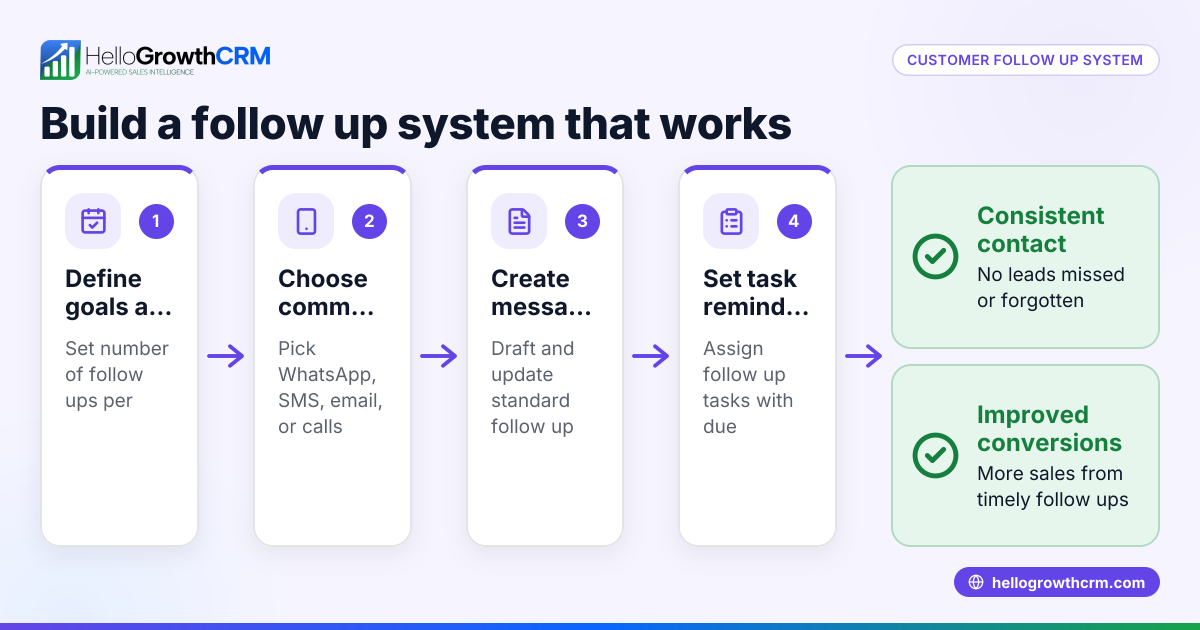
Use email automation and calling sequences tailored to US regulations, such as including opt-out instructions for email or call disclosures for telemarketing. Automating follow-ups ensures timely and consistent communication.
Step 5: Track pipeline and sales activities in real time
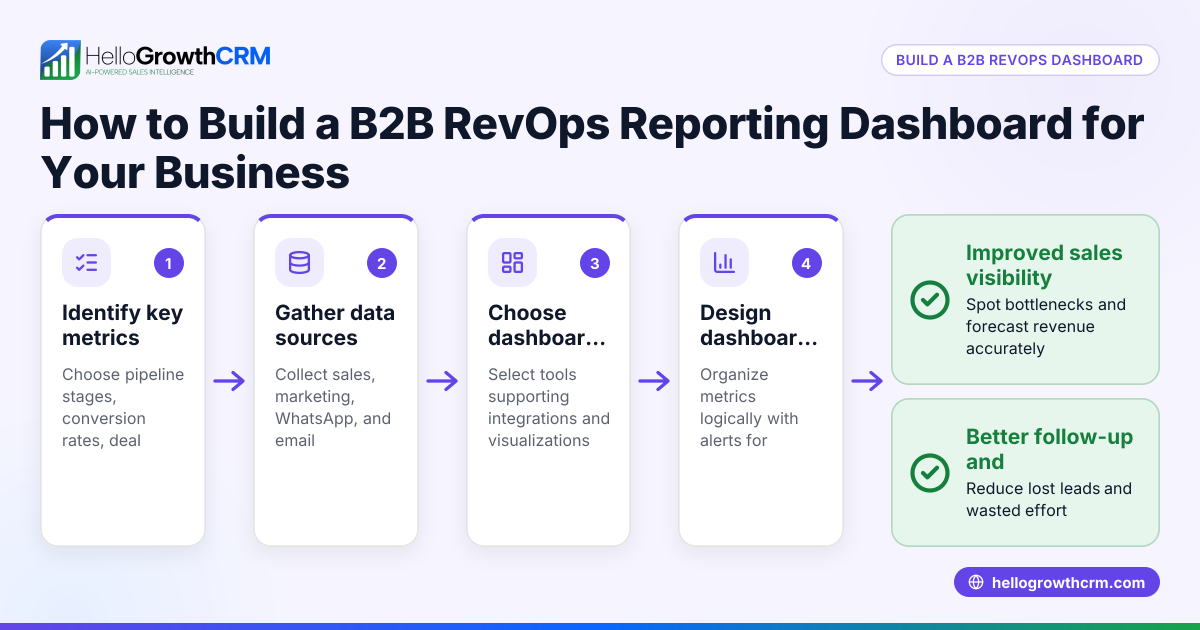
Use dashboards and reporting to monitor deal stages, forecast sales, and identify bottlenecks. Integration with finance tools like QuickBooks or Stripe helps align sales with revenue tracking.
Step 6: Train your sales team and RevOps thoroughly
Adopt a CRM that your US sales reps actually will use because it fits their workflow. Provide training on pipeline management best practices and compliance guidelines.
What features should a sales pipeline CRM have for US B2B companies?
Look for these critical features:
- Lead capture and AI lead scoring to automate prioritizing opportunities.
- Pipeline visualization to track deals visually and update stages easily.
- Multi-channel communication tools, including email, WhatsApp, and phone, compliant with US laws.
- Email automation with CAN-SPAM compliance features.
- Sales forecasting and reporting to predict revenue and manage quotas.
- Integrations with finance (QuickBooks, Stripe), ERP, and marketing tools.
- Managed RevOps services to keep your operations optimized and aligned.
- Security standards like SOC 2 compliance to safeguard customer data, which US buyers expect.
HelloGrowthCRM includes all of these, designed specifically for fast-growing US B2B sales teams.
How can I ensure my sales pipeline CRM remains effective over time?
Set regular reviews for pipeline health and user adoption. Analyze activity data, lead conversion, and sales cycle length quarterly. Use AI insights to adjust lead scoring models continuously.
Get your sales reps’ feedback to improve usability and training. Keep compliance requirements like CAN-SPAM and TCPA top of mind when updating automation rules.
Consider adding managed RevOps to your CRM strategy to keep processes efficient as your company scales.
Can I customize my sales pipeline CRM to industry-specific needs?
Yes. US B2B sectors such as manufacturing, tech, or professional services have unique sales cycles and compliance demands. Customize your CRM’s sales stages, communication sequences, and integration stack accordingly.
For example, manufacturing firms often link their CRM to ERP systems for inventory and order tracking, while software vendors focus on demo bookings and trial management integrated with marketing automation.
With tools like AI CRM, you can tailor pipeline rules and automation workflows that reflect industry nuances and simplify complex sales processes.
Why is integration important in a pipeline CRM for US companies?
Integrations unify your CRM with tools like QuickBooks, Stripe, ERP systems, email marketing platforms, and calling systems. This eliminates manual data entry, reduces errors, and accelerates the sales process.
In the US, a common finance stack involves linking your CRM deals to accounting platforms for accurate revenue tracking and tax calculations, including state sales tax.
HelloGrowthCRM supports seamless integration to keep your sales, marketing, and finance teams aligned.
How do US compliance laws impact pipeline CRM usage?
US regulations such as CAN-SPAM for email marketing and TCPA for telephonic outreach require explicit consent and proper messaging practices. Violating these can lead to penalties and damage your reputation.
Your pipeline CRM should automate compliance features like opt-out management, call time restrictions, and message templates that include required legal disclosures.
Ensuring compliance protects your brand and builds trust with prospective clients.
Start managing your sales pipeline smarter today
Building and managing a sales pipeline CRM for your US B2B company is easier with AI-powered tools tailored to your local market. From lead capture to forecasting, a well-designed CRM keeps your sales team focused on closing deals and growing revenue.
Try HelloGrowthCRM free for yourself or book a demo to see how it fits your process.
Frequently asked questions
What makes an AI pipeline CRM different from a regular sales CRM?
An AI pipeline CRM adds artificial intelligence to analyze data and improve actions like lead scoring and sales forecasting. This increases accuracy in prioritizing opportunities and predicting revenue, unlike traditional CRMs that rely only on manual input.
How does a US B2B company ensure email outreach complies with CAN-SPAM?
Include clear unsubscribe options in every marketing email, honor opt-out requests promptly, and avoid misleading subject lines or sender information. Automate these tasks through compliant email sequences in your CRM.
Can I integrate my QuickBooks accounting software with my sales pipeline CRM?
Yes, many CRMs integrate with QuickBooks to sync sales and revenue data. This is vital for accurate financial reporting and managing state sales tax compliance in the US.
Is pipeline management only for large sales teams?
No, even small and mid-sized B2B sales teams benefit from pipeline management by tracking deals and prioritizing leads. It creates consistent sales processes and improves forecast accuracy at any scale.
How often should I update my sales pipeline stages?
Review sales stages every 6-12 months or when your sales process changes significantly. Align stages with buyer behavior to keep tracking relevant and actionable.
What training do sales reps need for effective pipeline CRM use?
Reps should learn how to update deal stages, use the CRM communication tools, and follow compliance guidelines. Regular refreshers improve adoption and maintain data accuracy.
Read next
This article covers one part of a bigger topic. For the complete picture, read our guide to pipeline crm.
Frequently Asked Questions
Ready to put this into practice?
Set up your pipeline, WhatsApp follow-ups, and AI lead scoring in minutes — free, no credit card.
Try HelloGrowthCRM freeGet CRM tips in your inbox
Join thousands of sales professionals who get weekly insights on CRM strategy, AI automation, and pipeline optimization.

The HelloGrowthCRM team publishes guides on CRM strategy, AI sales tools, and revenue operations for small business sales teams.