HelloGrowthCRM software
Built for real small-business sales teams
HelloGrowthCRM helps reps qualify faster, follow up on time, and close more deals—with practical automation in one place.
- AI lead scoring and pipeline visibility
- Built-in dialer, WhatsApp, and email automation
- Sales forecasting and RevOps-ready reporting
Automating support ticket notifications ensures your Singapore business responds swiftly to customer issues and keeps all communication organised. By automating alerts when tickets are created or updated, your team can act promptly, reducing lost leads and improving customer satisfaction.
Why this comes up / what goes wrong
Many small and mid-sized businesses in Singapore handle support manually through WhatsApp, email, or spreadsheets. This causes delays, missed tickets, and poor customer experience. Without automation, support teams may not see new tickets immediately or lose track of updates. Business owners want a clear, practical way to automate notifications so their team can respond faster and manage all requests in one place.
Step-by-step
- Choose a support ticket system: Pick a CRM or helpdesk tool that supports ticket management and can send notifications via email, WhatsApp, or SMS. Confirm it integrates with your existing communication channels.
- Set up ticket capture channels: Connect your website contact forms, email addresses, or WhatsApp business number to automatically create tickets when customers reach out. Check that tickets appear correctly in the system.
- Define notification triggers: Configure the system to send notifications on key events such as ticket creation, assignment, updates, or resolution. Decide which events require alerts to avoid overload.
- Assign notification recipients: Specify which team members or groups receive alerts based on ticket type, priority, or customer segment. Verify their contact details are accurate.
- Create notification message templates: Draft clear and concise message templates for each event. Include essential details like ticket ID, customer name, issue summary, and next steps.
- Test your notifications: Submit test tickets to verify alerts are sent promptly and contain correct information. Adjust content and timing as needed.
- Train your support team: Explain how notifications work, their importance, and how to respond quickly. Ensure everyone understands their role.
- Monitor and optimise: Regularly review notification logs and team response times. Refine triggers, recipients, and message templates to improve efficiency and avoid alert fatigue.
Example (fictional figures)
GreenLeaf F&B Supplies in Woodlands wants to automate support ticket notifications for customer orders and complaints.
- They use a CRM that creates tickets from their website contact form.
- Notifications alert the support lead and sales manager via WhatsApp and email when a ticket is created or updated.
- Notification template includes:
- Ticket ID: #GL1234
- Customer: FoodCo Pte Ltd
- Issue: Late delivery
- Date: 15/06/2024
Test ticket submission:
- Submit ticket on 15/06/2024
- Notification sent instantly to support lead’s WhatsApp and sales manager’s email
Impact on response time:
- Previous average response time: 4 hours
- New average response time: 30 minutes
Calculation: 4 hours = 240 minutes 240 minutes - 30 minutes = 210 minutes saved per ticket
If GreenLeaf handles 50 tickets monthly: 210 minutes × 50 tickets = 10,500 minutes saved 10,500 minutes ÷ 60 = 175 hours saved monthly
This time saving allows faster resolution and better customer satisfaction.
Common mistakes
- Not defining clear notification triggers: Without clear rules, notifications may be too frequent or missed. Prevent this by mapping all ticket events and selecting the most critical ones.
- Ignoring recipient roles: Sending alerts to everyone causes overload and missed priorities. Assign notifications based on ticket type and urgency.
- Using unclear message templates: Vague or incomplete notifications waste time. Always include ticket ID, customer details, and issue summary.
- Failing to test notifications: Skipping tests leads to broken or delayed alerts. Always submit test tickets and confirm messages arrive correctly.
- Not training the team: Staff unaware of alerts won’t respond promptly. Conduct training sessions covering notification handling.
- Relying on multiple disconnected tools: Using separate apps for tickets and messaging causes lost data and confusion. Use integrated solutions like HelloGrowthCRM to keep tickets and notifications linked, improving team efficiency and customer tracking. See more about HelloGrowthCRM for Singapore and WhatsApp and SMS CRM features.
Doing this in HelloGrowthCRM
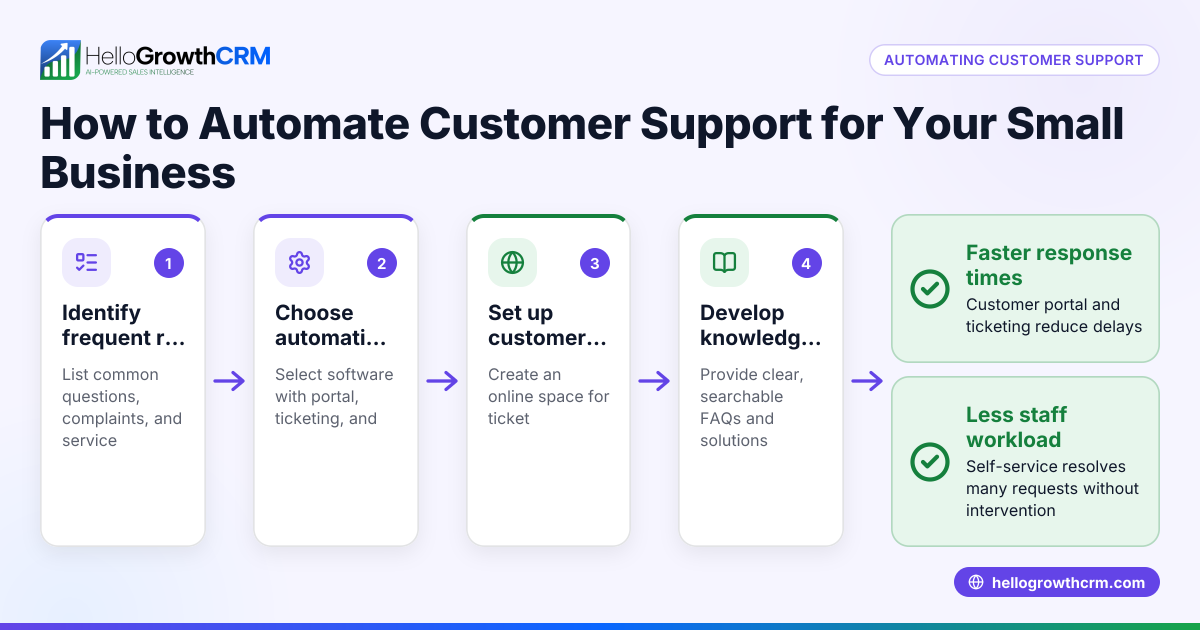
HelloGrowthCRM offers support tickets and a branded customer portal where service requests stay on the same customer record as the deal. This integration helps your team track issues and respond faster without switching apps. You can also manage referrals and maintain a knowledge base alongside tickets for a complete customer service solution. Learn more about HelloGrowthCRM for Singapore and its WhatsApp and SMS CRM capabilities to automate your support ticket notifications effectively.
Frequently asked questions
How do I connect WhatsApp for ticket notifications? You can integrate WhatsApp messaging within your CRM to automatically send alerts when tickets are created or updated. Check your CRM’s setup guide for WhatsApp API or native messaging options to enable this.
Can notifications be customised by ticket priority? Yes, most ticket systems let you set rules to notify different teams or escalate alerts based on ticket priority or SLA policies. This ensures urgent issues get prompt attention.
Is it possible to let customers track their tickets? A customer portal allows clients to view and update their tickets themselves, reducing support load and improving transparency. HelloGrowthCRM offers this feature to keep customers informed.
How do I avoid notification overload? Limit notifications to essential events and assign alerts only to relevant team members. Regularly review notification settings to balance awareness and alert fatigue.
Can I automate follow-up reminders on tickets? Yes, you can schedule automatic reminders for pending tickets to ensure timely responses and prevent issues from being overlooked.
Key takeaways
- Automate notifications by integrating ticket capture and alert triggers.
- Define clear notification events and assign recipients carefully based on roles and priorities.
- Use clear message templates including ticket ID, customer details, and issue summary.
- Test your notification system thoroughly before going live.
- Train your team to respond quickly and understand notification workflows.
- Avoid using disconnected tools; consider an integrated CRM like HelloGrowthCRM to keep tickets and notifications linked.
Automating support ticket notifications improves your team's response speed and customer satisfaction. Start on the Free Forever plan (200 leads, no credit card) at HelloGrowthCRM and set up your ticket notifications today.
Ready to put this into practice?
Set up your pipeline, WhatsApp follow-ups, and AI lead scoring in minutes — free, no credit card.
Try HelloGrowthCRM freeGet CRM tips in your inbox
Join thousands of sales professionals who get weekly insights on CRM strategy, AI automation, and pipeline optimization.

The HelloGrowthCRM team publishes guides on CRM strategy, AI sales tools, and revenue operations for small business sales teams.