HelloGrowthCRM software
Built for real small-business sales teams
HelloGrowthCRM helps reps qualify faster, follow up on time, and close more deals—with practical automation in one place.
- AI lead scoring and pipeline visibility
- Built-in dialer, WhatsApp, and email automation
- Sales forecasting and RevOps-ready reporting
To avoid missing customer follow ups in the UK, you need a reliable, repeatable process that tracks every interaction and prompts action on time. This means turning each follow-up into a task with a clear due date, checking your follow-up list daily, and using reminders or automation to keep things on track.
Why this comes up / what goes wrong
Small and mid-sized UK businesses often miss customer follow ups because they rely on memory, scattered notes, or informal channels like WhatsApp and email threads. Sales teams juggling multiple leads may forget to follow up promptly, especially without a centralised system. Follow-ups can slip through cracks when:
- There is no clear list or schedule of who to contact and when.
- Follow-up tasks are not assigned or tracked with deadlines.
- Teams use multiple unlinked tools (WhatsApp, spreadsheets, email) causing missed or duplicated efforts.
- There is no accountability or daily review of pending follow-ups.
This leads to lost sales opportunities, frustrated customers, and inefficient use of sales time.
Step-by-step
- List all current leads and customers needing follow-up.
- Collect names, contact details, last contact date, and reason for follow-up.
- Check all sources: emails, WhatsApp chats, spreadsheets.
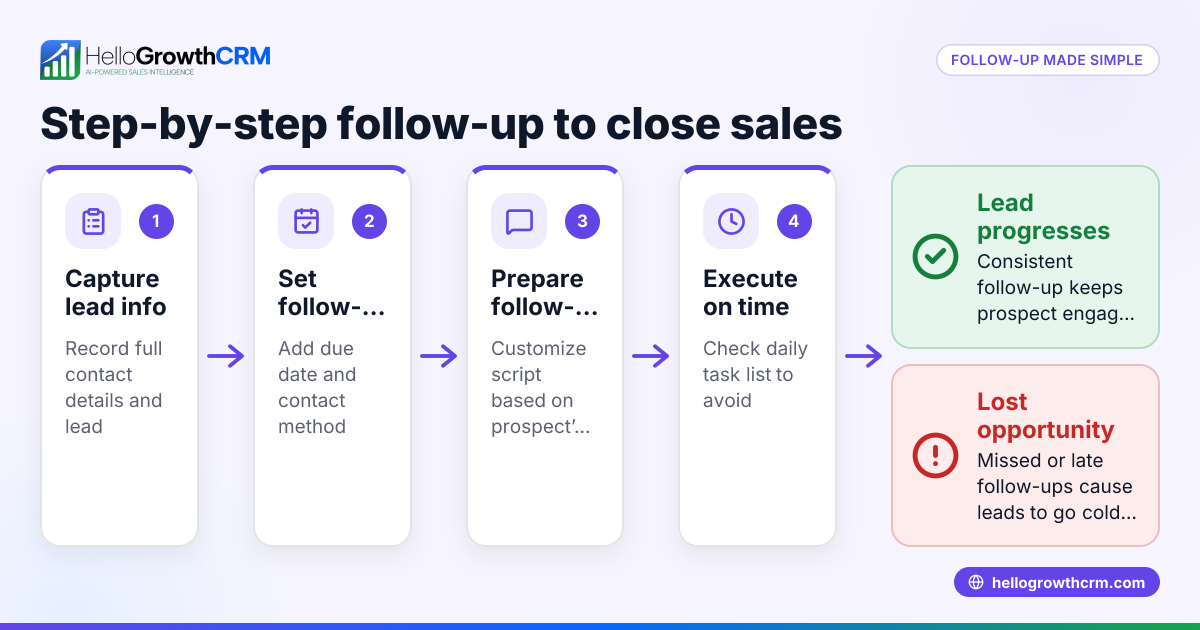
- Create a follow-up task for each contact with a due date.
- Set the due date based on the urgency or agreed follow-up time.
- Include notes on what the follow-up is about.
- Use a single, centralised tool to track follow-ups.
- This can be a CRM, task board, or calendar dedicated to sales follow-ups.
- Avoid mixing WhatsApp, email, and spreadsheets without integration.
- Review your follow-up list daily.
- At the start of each day, check which follow-ups are due.
- Prioritise calls or messages accordingly.
- Set reminders or alerts for upcoming follow-ups.
- Use notifications on your phone or desktop.
- If available, automate follow-ups with sequences or campaigns.
- Record the outcome of each follow-up immediately.
- Log notes about the conversation or next steps.
- Update the task status or create a new follow-up task if needed.
- Regularly clean and update your follow-up list.
- Remove completed or irrelevant tasks.
- Adjust due dates if contacts request a delay.
- Assign tasks clearly if working in a team.
- Each follow-up should have an owner responsible for completion.
Following these steps will help you avoid missing customer follow ups and improve your sales efficiency.
Example (fictional figures)
A recruitment consultancy in Bristol has 20 leads requiring follow-up. They decide to follow up each lead within 3 days of last contact.
- Number of leads to follow up: 20
- Follow-up interval: 3 days
- Daily capacity for follow-ups: 5 calls
Step 1: Calculate daily follow-ups needed to keep on schedule:
20 leads ÷ 3 days = 6.67 leads per day (round up to 7)
Step 2: Compare with daily capacity:
Capacity = 5 calls per day
Since 7 > 5, they need to either increase daily calls or extend follow-up interval.
Step 3: Adjust follow-up interval:
20 leads ÷ 5 calls per day = 4 days per follow-up
Step 4: Set tasks:
- Assign 5 follow-up tasks per day with due dates spaced over 4 days.
- Use reminders to prompt calls each morning.
Step 5: Log outcomes immediately after calls to keep the list updated.
This example shows how planning and task management prevent missed follow-ups.
Common mistakes
- Relying on memory or informal notes. Prevent by always creating a task with a due date.
- Using multiple unlinked tools. Prevent by centralising follow-ups in one system like a sales task board (/product/sales-task-boards).
- Ignoring daily reviews. Prevent by setting a fixed daily time to check follow-ups.
- Not recording follow-up outcomes promptly. Prevent by logging notes immediately after contact.
- Failing to assign responsibility in teams. Prevent by clearly assigning each follow-up task to a team member.
- Not using automation for repetitive follow-ups. Prevent by employing sequences and campaigns (/product/email-automation) where possible.
Doing this in HelloGrowthCRM
HelloGrowthCRM helps you avoid missing customer follow ups with several features:
- Activities and task boards: Each follow-up becomes a task with a due date; the day’s calls appear as a list so reps don’t have to remember everything. See more on sales task boards.
- Sequences and campaigns: Automate a five-step follow-up over two weeks that stops as soon as the prospect replies, reducing manual work. Learn about email automation and sequences.
- AI agents: After a call, an AI agent drafts the follow-up message for the rep to review and send, saving time and ensuring no follow-up is missed.
Frequently asked questions
How often should I follow up with a customer in the UK? Follow-up frequency depends on your industry and customer preferences. A common approach is to follow up within 2-5 days after initial contact and then space out subsequent follow-ups weekly or biweekly. Always respect customer responses and adjust accordingly.
What is the best way to track follow-ups for a small team? Use a centralised CRM or task board where all follow-ups are logged with due dates and assigned owners. This avoids missed tasks and duplicate efforts. HelloGrowthCRM’s task boards can help manage this effectively.
Can automation help with follow-ups? Yes, automated sequences can send timed messages across email, WhatsApp, and SMS until a reply is received. This ensures consistent follow-up without manual effort, freeing up your sales team.
What if a customer does not respond after several follow-ups? If there is no response after 3-5 attempts, consider pausing follow-ups and reviewing the lead’s potential. You can set a task to revisit the lead after a longer interval or archive the lead to focus on active prospects.
How do I ensure my team actually uses the follow-up system? Make follow-up tasks visible and easy to access daily. Use reminders and hold regular check-ins to review follow-up progress. Tools like HelloGrowthCRM’s daily call lists reduce memory load and encourage consistent use.
Key takeaways
- Turn every follow-up into a task with a clear due date.
- Use a single, centralised system to track and review follow-ups daily.
- Automate repetitive follow-ups with sequences to save time.
- Assign responsibility clearly when working in teams.
- Log follow-up outcomes immediately to keep data current.
- Review and adjust follow-up schedules regularly to match capacity.
Start organising your customer follow-ups today to prevent lost sales and improve customer relationships. You can try HelloGrowthCRM for free and manage up to 200 leads without a credit card at Start on the Free Forever plan (200 leads, no credit card).
Ready to put this into practice?
Set up your pipeline, WhatsApp follow-ups, and AI lead scoring in minutes — free, no credit card.
Try HelloGrowthCRM freeGet CRM tips in your inbox
Join thousands of sales professionals who get weekly insights on CRM strategy, AI automation, and pipeline optimization.

The HelloGrowthCRM team publishes guides on CRM strategy, AI sales tools, and revenue operations for small business sales teams.