HelloGrowthCRM software
Built for real small-business sales teams
HelloGrowthCRM helps reps qualify faster, follow up on time, and close more deals—with practical automation in one place.
- AI lead scoring and pipeline visibility
- Built-in dialer, WhatsApp, and email automation
- Sales forecasting and RevOps-ready reporting
An effective follow up email is a clear, concise message sent after initial contact that reminds your prospect, adds value, and encourages a response. It should be timely, personalised, and include a clear call to action. This article explains why follow-up emails matter, provides step-by-step instructions, a worked example with calculations, common mistakes to avoid, and how HelloGrowthCRM can help automate and organise your follow-ups.
Why this comes up / what goes wrong
Many small business owners in the UK struggle with follow-up emails because they lose leads due to slow or inconsistent follow-up. Often, they rely on memory, spreadsheets, or multiple channels like WhatsApp and email without a clear system. This leads to missed opportunities, duplicated efforts, or prospects feeling ignored. For example, a sales team might send an initial quotation by email but forget to follow up, or the follow-up is delayed so much that the lead moves on.
A well-crafted follow-up email helps maintain contact, builds trust, and moves the sale forward without overwhelming the recipient. It also ensures your business stays top of mind and shows professionalism.
Step-by-step
- Wait an appropriate time before following up: Typically 2-3 days after the initial contact or quotation to give the prospect time to consider your offer.
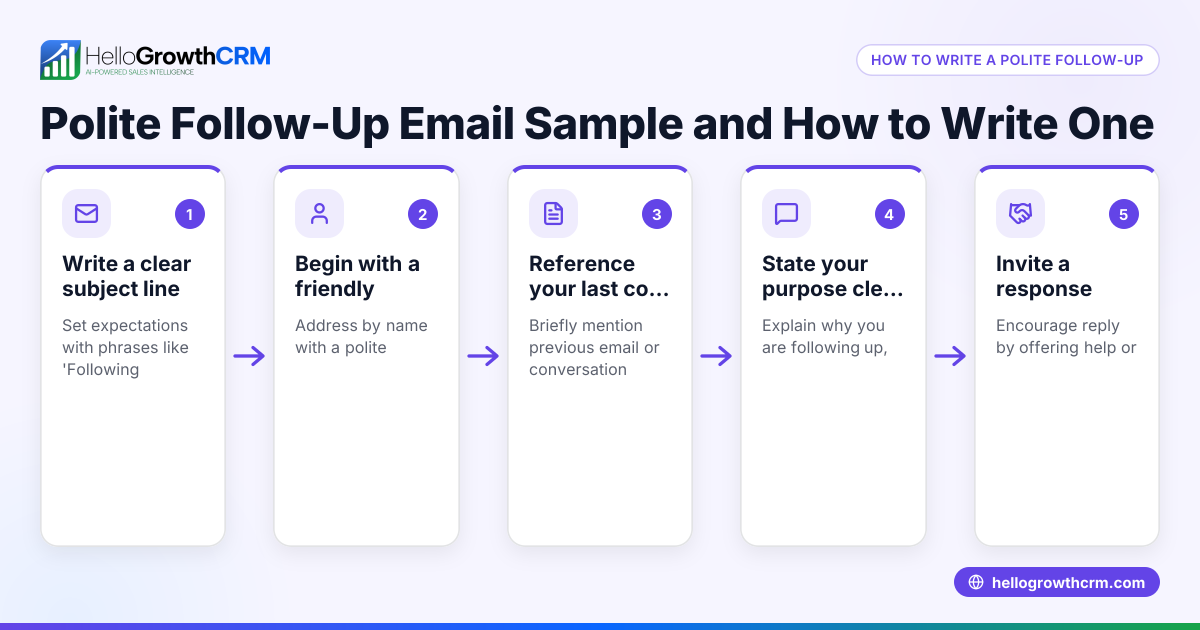
- Personalise your email: Use the recipient’s name and reference your previous interaction or their specific needs to show attention and relevance.
- Keep it concise and clear: Remind them briefly why you’re contacting them and what you can offer without long paragraphs.
- Add value or new information: Share a useful tip, a case study, or a limited-time offer to encourage engagement and differentiate yourself.
- Include a clear call to action (CTA): Ask a direct question or suggest the next step, such as arranging a call or confirming interest, to guide the recipient.
- Use a professional but friendly tone: Avoid sounding pushy or overly formal to keep the conversation approachable.
- Check your email for errors and clarity: Ensure spelling, grammar, and formatting are correct to maintain professionalism.
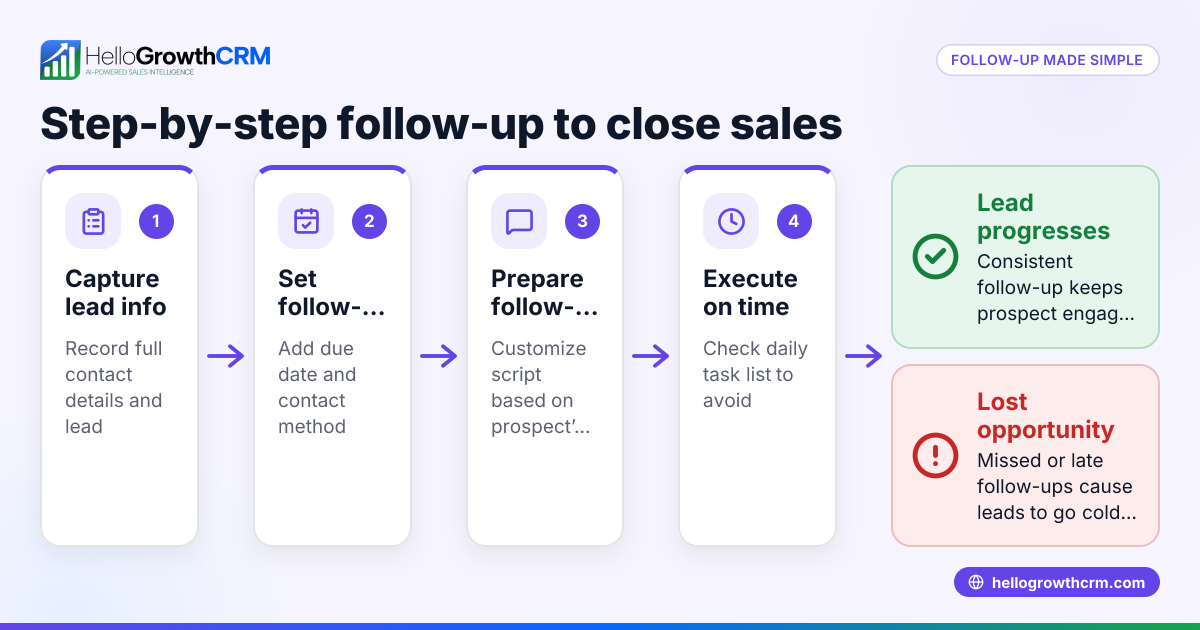
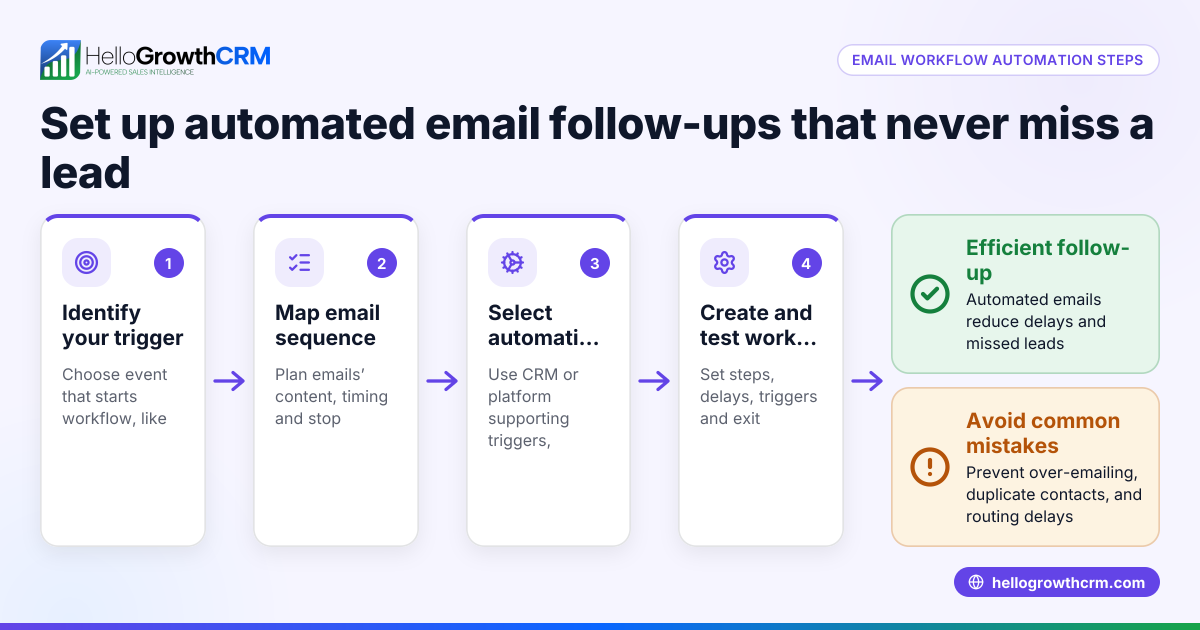
- Schedule your follow-up emails or tasks: Use a CRM or task board to remind you when to send the next email and to track responses, avoiding missed follow-ups or duplicated efforts.
Using tools like sales task boards helps keep follow-ups organised so you never miss a due date.
Example (fictional figures)
A solar-panel installer in Glasgow sends a follow-up email after quoting £12,000 on 01/05/2026.
- Initial quote sent: £12,000
- Wait 3 days: next follow-up email scheduled for 04/05/2026
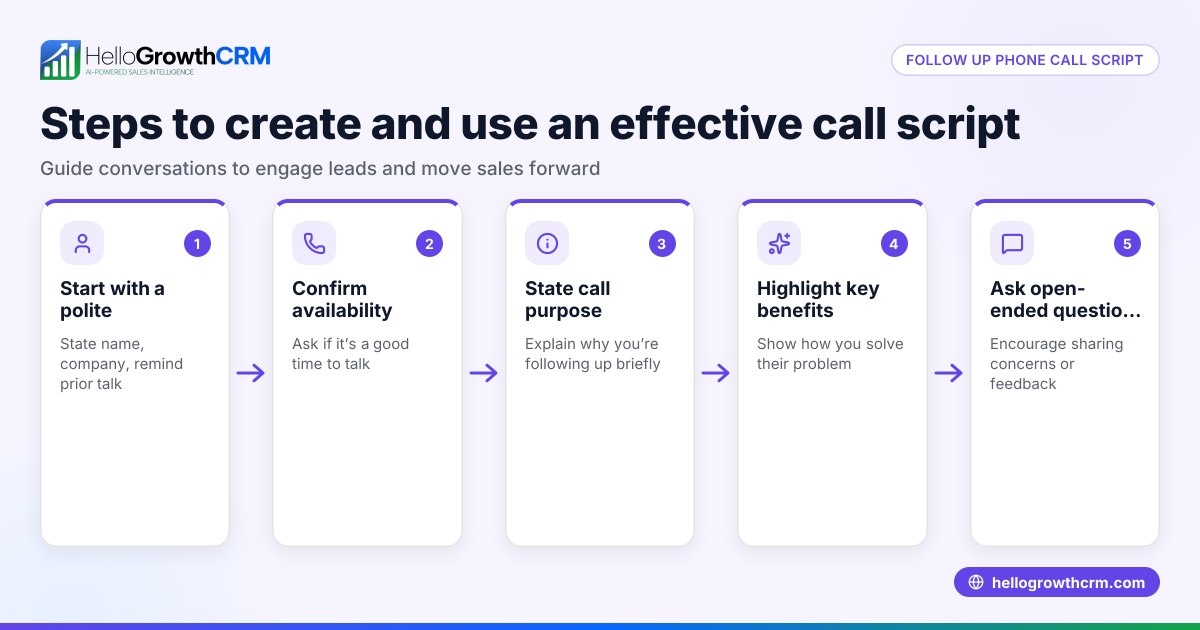
Follow-up email text reminder: "Dear Mr Smith, I wanted to check if you had any questions about the solar panel quote we sent on 01/05/2026. We can help reduce your energy bills and improve your home's efficiency. Would you like to arrange a call this week?"
If no reply, schedule a second follow-up in 5 days, continuing to add value or new information each time.
Calculations for scheduling:
- Date of initial quote: 01/05/2026
- Add 3 days for first follow-up: 01/05/2026 + 3 days = 04/05/2026
- Add 5 days for second follow-up if no reply: 04/05/2026 + 5 days = 09/05/2026
This schedule ensures timely reminders without overwhelming the prospect.
Common mistakes
- Waiting too long to follow up: Leads go cold and lose interest. Prevent by scheduling follow-ups immediately after initial contact using a CRM or task board.
- Sending generic, impersonal emails: Recipients ignore or delete these. Prevent by tailoring each email to the prospect’s name, needs, and previous conversations.
- Being too pushy or salesy: Can annoy prospects and damage relationships. Prevent by focusing on helpful information and soft calls to action.
- Not tracking follow-ups properly: Leads fall through cracks or get contacted multiple times unnecessarily. Prevent by using a CRM or task board to organise activities and deadlines.
- Ignoring replies or not sharing responses with the team: Causes duplicated effort and confusion. Prevent by using a shared inbox tool so all team members see replies.
For more on how to automate follow-ups, see email automation and sequences.
Doing this in HelloGrowthCRM
HelloGrowthCRM offers features that simplify effective follow-up emails:
- Sequences and campaigns: Set up a five-step follow-up sequence over two weeks that runs automatically and stops as soon as the prospect replies.
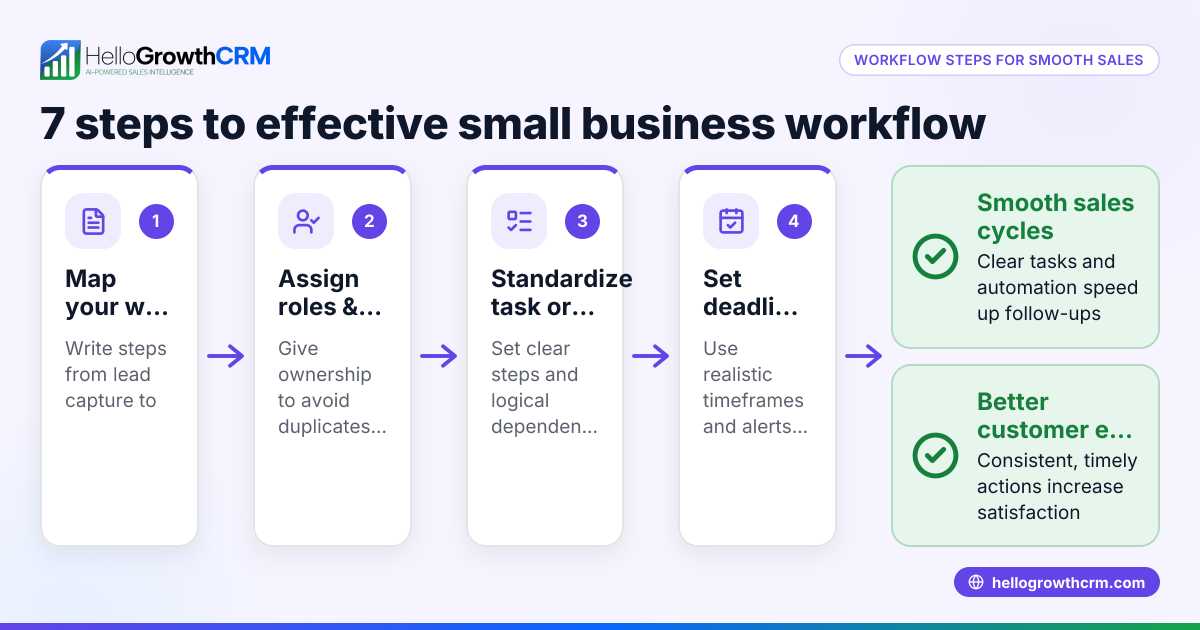
- Activities and task boards: Each follow-up becomes a task with a due date, so your daily calls and emails are organised and you don’t rely on memory.
- HelloMail shared inbox: Replies to quotation emails are visible to the whole sales team, avoiding duplicated efforts and keeping everyone informed.
Learn more about these features at HelloGrowthCRM for the United Kingdom.
Frequently asked questions
How soon should I send a follow-up email? Wait a few days after your initial contact or quote to give the prospect time to review. Following up too soon can seem pushy, while waiting too long risks losing interest.
What should I include in a follow-up email? Include a polite reminder of your previous contact, add value such as helpful information or an offer, and finish with a clear call to action inviting a response.
How many follow-up emails should I send? Typically, 3 to 5 follow-ups spaced over two weeks work well. Stop the sequence as soon as the prospect replies to avoid overwhelming them.
Can I automate follow-up emails? Yes, using email automation tools like email automation and sequences can schedule and send follow-ups automatically, saving time and ensuring consistency.
How do I keep track of all my follow-ups? A CRM with sales task boards helps you organise tasks, calls, and emails in one place, so you never miss a follow-up or duplicate efforts.
Key takeaways
- Send your follow-up email 2-3 days after initial contact.
- Personalise and keep your message clear and concise.
- Add value and include a clear call to action.
- Avoid being pushy or generic.
- Use tools like HelloGrowthCRM to automate and organise follow-ups.
Start managing your follow-ups more effectively today. Start on the Free Forever plan (200 leads, no credit card).
Ready to put this into practice?
Set up your pipeline, WhatsApp follow-ups, and AI lead scoring in minutes — free, no credit card.
Try HelloGrowthCRM freeGet CRM tips in your inbox
Join thousands of sales professionals who get weekly insights on CRM strategy, AI automation, and pipeline optimization.

The HelloGrowthCRM team publishes guides on CRM strategy, AI sales tools, and revenue operations for small business sales teams.