HelloGrowthCRM software
Built for real small-business sales teams
HelloGrowthCRM helps reps qualify faster, follow up on time, and close more deals—with practical automation in one place.
- AI lead scoring and pipeline visibility
- Built-in dialer, WhatsApp, and email automation
- Sales forecasting and RevOps-ready reporting
Creating a customer support knowledge base helps your New Zealand business provide quick, consistent answers to customers and reduce repetitive queries. Many small businesses lose leads or waste time when support is slow or inconsistent, often relying on emails and spreadsheets. A knowledge base centralises information so your team and customers can find answers fast.
Why this comes up / what goes wrong
Small businesses in NZ often struggle to keep support information organised. Without a knowledge base, support teams answer the same questions repeatedly, causing delays and errors. Customers get frustrated waiting for replies, and sales can suffer. This is common when support is run on text messages, email chains, or scattered notes.
Step-by-step
- List common customer questions and issues. Talk to your sales and support teams to gather frequent queries and problems.
- Group topics logically. Organise questions into categories like "Ordering", "Product Use", "Returns", or "Technical Support".
- Write clear, concise articles. Each article should answer one question or explain one process. Use simple language and step-by-step instructions.
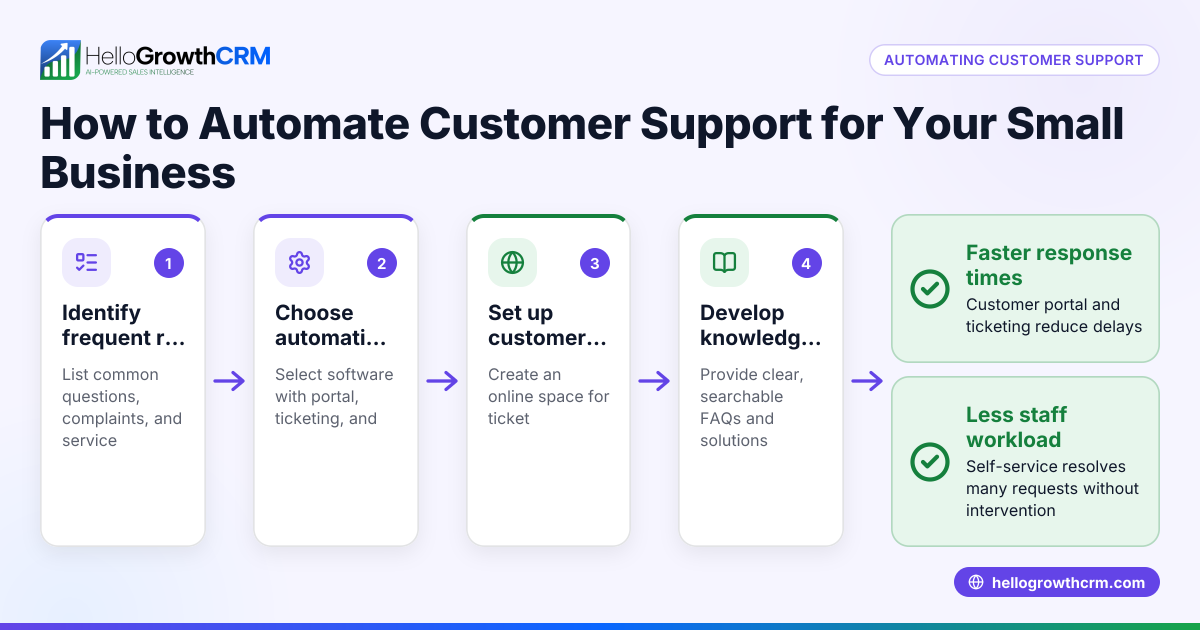
- Choose a platform to host your knowledge base. This could be a dedicated software, a website section, or a customer portal. Check it supports search and is mobile-friendly.
- Add articles to the platform and tag them by category. Make sure they are easy to find through search or menus.
- Test your knowledge base. Ask team members and customers to find answers and give feedback.
- Train your team to use and update the knowledge base. Encourage them to add new articles as new questions arise.
- Promote the knowledge base to customers. Link it in your email signatures, on your website, and in support replies.
- Review and update regularly. Schedule monthly checks to keep information current.
Example (fictional figures)
Sarah runs an electrical contracting business in Wellington. She wants to create a knowledge base to reduce support calls.
- Sarah lists 20 common questions from her team and customers.
- She groups these into 4 categories: "Booking Jobs", "Payments", "Warranty", and "Troubleshooting".
- Sarah writes 20 articles, each about 300 words.
- She chooses a simple customer portal that supports search and mobile access.
- Uploading articles takes 10 hours spread over a week.
- Sarah tests the portal with 5 staff and 3 customers.
- She schedules a monthly review starting 01/09/2024.
Costs example:
Writing 20 articles × 300 words = 6,000 words Writing time: 6,000 words ÷ 500 words/hour = 12 hours Sarah spends 12 hours writing + 10 hours uploading = 22 hours total At NZ$30/hour value (opportunity cost), total = 22 × NZ$30 = NZ$660
Sarah promotes the knowledge base via email and website, reducing support calls by an estimated 15% after 3 months.
Common mistakes
- Not organising content logically. Prevent by grouping articles clearly and using consistent tags.
- Using jargon or complicated language. Write simply to suit all customers.
- Ignoring mobile users. Ensure the knowledge base works well on phones.
- Not updating articles regularly. Set reminders to review and refresh content.
- Failing to train staff. Make sure your team knows how to use and contribute to the knowledge base.
- Overloading with too much information. Keep articles focused and easy to scan.
Doing this in HelloGrowthCRM
HelloGrowthCRM offers a branded self-service customer portal with a built-in knowledge base feature. After the sale, service requests and support tickets stay on the same customer record as the deal, making it easier to track and resolve issues. You can also manage referrals and maintain a reference library within the platform. Learn more about this at customer health score.
Frequently asked questions
What platform should I use to create a knowledge base? Choose a platform that is easy to update, searchable, and accessible on mobile devices. Some businesses use dedicated software, while others add a knowledge section to their website or use customer portals. HelloGrowthCRM provides a customer portal with a knowledge base included.
How often should I update my knowledge base? Regular updates are important. Review your knowledge base at least monthly to add new articles or update existing ones based on customer feedback and new products or policies.
Can a knowledge base reduce support costs? Yes. By providing self-service answers, customers get help faster, reducing the volume of support calls and emails. This frees up your team to focus on more complex queries.
How do I encourage customers to use the knowledge base? Promote it in your email signatures, website, and support communications. Make it easy to find and use with clear navigation and search.
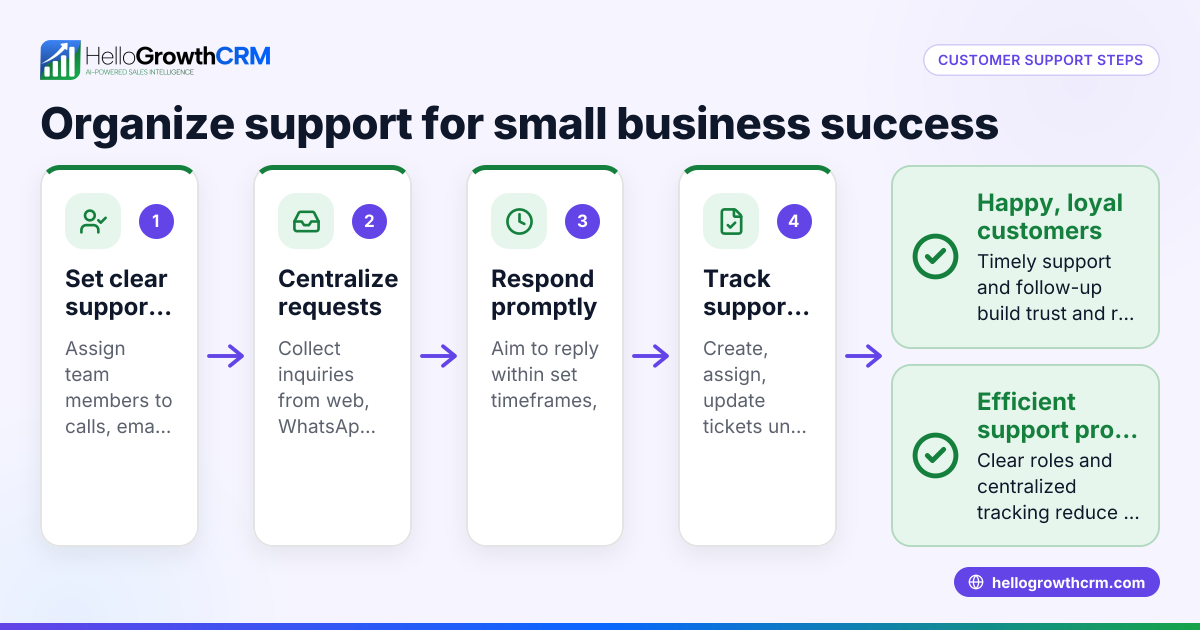
How does HelloGrowthCRM help with customer support? HelloGrowthCRM integrates support tickets and knowledge base articles in a customer portal, keeping all service requests linked to the customer record. This helps your team manage support efficiently and track customer health. See HelloGrowthCRM for New Zealand and WhatsApp and SMS CRM for related features.
Key takeaways
- Identify and organise common customer questions before writing articles.
- Use clear, simple language and logical categories.
- Choose a searchable, mobile-friendly platform.
- Update the knowledge base regularly and train your team.
- Promote the knowledge base to customers to reduce support load.
- HelloGrowthCRM offers a customer portal with integrated tickets and knowledge base to streamline support.
Start building your customer support knowledge base today. To get started with tools that help manage leads and support in one place, Start on the Free Forever plan (200 leads, no credit card).
Ready to put this into practice?
Set up your pipeline, WhatsApp follow-ups, and AI lead scoring in minutes — free, no credit card.
Try HelloGrowthCRM freeGet CRM tips in your inbox
Join thousands of sales professionals who get weekly insights on CRM strategy, AI automation, and pipeline optimization.

The HelloGrowthCRM team publishes guides on CRM strategy, AI sales tools, and revenue operations for small business sales teams.