HelloGrowthCRM software
Built for real small-business sales teams
HelloGrowthCRM helps reps qualify faster, follow up on time, and close more deals—with practical automation in one place.
- AI lead scoring and pipeline visibility
- Built-in dialer, WhatsApp, and email automation
- Sales forecasting and RevOps-ready reporting
A customer support ticket system organises customer service requests into manageable tickets, ensuring no query is lost or ignored. For New Zealand small businesses, this system improves response times and customer satisfaction by tracking every issue from receipt to resolution.
Why this comes up / what goes wrong
Many small businesses in New Zealand handle customer service informally through emails, texts, or phone calls. This can lead to lost or delayed responses, frustrated customers, and inefficiency. Without a ticket system, it’s hard to prioritise urgent issues or keep a clear record of past problems. A ticket system creates a single source of truth and accountability for support requests.
Step-by-step
- Define your support channels: Decide how customers will submit requests (email, web form, phone, WhatsApp). Check that each channel can funnel requests into your system.
- Choose a ticketing tool or platform: Select software that suits your team size and budget. Ensure it supports multi-channel input and ticket tracking.
- Set up ticket fields: Create fields like customer name, contact info, issue description, priority, status, and assigned staff. These help organise and filter tickets.
- Create ticket categories and priorities: Define categories (e.g., billing, technical, general enquiry) and priority levels (low, medium, high) to help route and escalate tickets.
- Assign tickets to team members: Decide how tickets are allocated—manually or automatically based on category or workload.
- Define service level agreements (SLAs): Set expected response and resolution times for different priority levels to manage customer expectations.
- Train your team: Ensure everyone knows how to create, update, and close tickets properly.
- Implement tracking and reporting: Use dashboards or reports to monitor ticket volumes, response times, and unresolved issues.
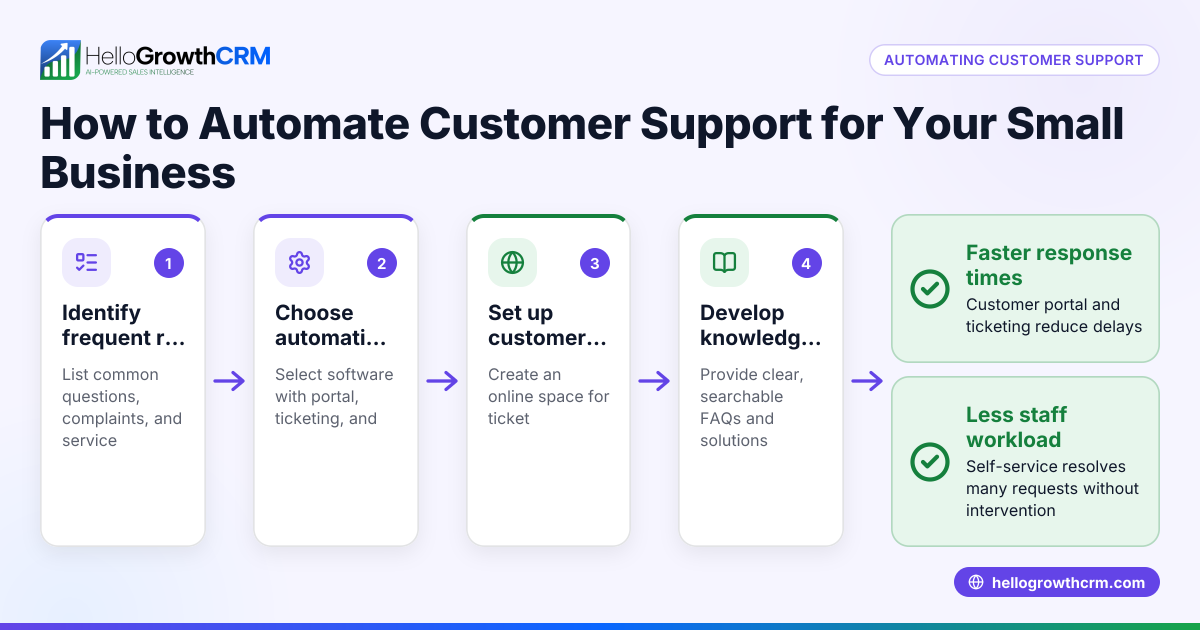
- Create a knowledge base: Develop self-help articles for common issues to reduce ticket volume.
- Gather customer feedback: After closing tickets, ask customers to rate their experience to improve service.
In your setup, consider integrating with your CRM to keep customer information and support history in one place. This helps in understanding customer context and improves follow-up. For more on customer data integration, see customer health score.
Example (fictional figures)
Kiwi Adventures, a Queenstown tourism operator, wants to create a support ticket system starting 01/07/2024. They receive about 200 support requests monthly.
- They choose a tool that supports email and WhatsApp ticket creation.
- They set three priority levels: Low (simple info requests), Medium (booking issues), High (safety concerns).
- They define SLAs: Low priority resolved in 5 days, Medium in 2 days, High in 4 hours.
- On 01/07/2024, 50 tickets arrive: 25 Low, 20 Medium, 5 High.
- They assign 2 staff to Low and Medium tickets, and 1 senior staff to High priority.
Calculations for workload:
Total tickets = 50
Low priority tickets = 25 Medium priority tickets = 20 High priority tickets = 5
Staff assignments:
Low/Medium staff handle 25 + 20 = 45 tickets High priority staff handles 5 tickets
Average tickets per Low/Medium staff member = 45 tickets 2 staff = 22.5 tickets each
High priority staff handles 5 tickets
This distribution helps Kiwi Adventures balance workload and meet SLAs.
Common mistakes
- Not defining clear ticket categories: Leads to confusion and delays. Prevent by listing categories upfront.
- Ignoring SLAs: Customers get frustrated with slow responses. Prevent by setting and monitoring SLAs.
- Overloading staff with too many tickets: Causes burnout and missed deadlines. Prevent by balancing assignments.
- Not training staff on the system: Results in inconsistent ticket handling. Prevent with thorough training sessions.
- Failing to integrate with customer data: Makes follow-up harder. Prevent by linking tickets to customer records in your CRM, such as using HelloGrowthCRM’s customer portal and ticket features.
- Skipping customer feedback: Misses improvement opportunities. Prevent by adding feedback requests after ticket closure.
Doing this in HelloGrowthCRM
HelloGrowthCRM offers a branded self-service customer portal where customers can submit tickets directly. Support tickets and knowledge base articles are managed within the same system, keeping service requests linked to the original deal on the customer record. This integration helps your team track and resolve issues efficiently. To learn more, see customer health score and explore HelloGrowthCRM for New Zealand.
Frequently asked questions
What is a customer support ticket system? It is a system that logs and tracks customer service requests as tickets, ensuring every issue is addressed and resolved systematically.
Why should my small business in New Zealand use a ticket system? It prevents lost requests, improves response times, and creates accountability, which leads to better customer satisfaction.
Can I include WhatsApp messages in my ticket system? Yes, many modern ticket systems support WhatsApp and SMS channels to keep all customer communication in one place. For example, HelloGrowthCRM manages tickets alongside WhatsApp and SMS messaging. See WhatsApp and SMS CRM.
How do I measure the success of my ticket system? Track metrics like average response time, resolution time, ticket backlog, and customer satisfaction scores.
What if I have a very small team? Start simple with basic ticket categories and manual assignments, then scale up as you grow.
How does a knowledge base help my ticket system? It reduces repetitive tickets by letting customers find answers themselves, freeing your team to handle complex issues.
Key takeaways
- Define clear support channels and ticket fields to organise requests.
- Set categories, priorities, and SLAs to prioritise and manage tickets.
- Assign tickets evenly and train your team on the system.
- Use reports to monitor performance and improve service.
- Integrate your ticket system with customer data for better context.
- Collect customer feedback and maintain a knowledge base to reduce ticket volume.
Creating a customer support ticket system in New Zealand is straightforward with these steps. To try a solution that includes customer portals, tickets, referrals, and a knowledge base all linked to customer records, start on the Free Forever plan (200 leads, no credit card).
Ready to put this into practice?
Set up your pipeline, WhatsApp follow-ups, and AI lead scoring in minutes — free, no credit card.
Try HelloGrowthCRM freeGet CRM tips in your inbox
Join thousands of sales professionals who get weekly insights on CRM strategy, AI automation, and pipeline optimization.

The HelloGrowthCRM team publishes guides on CRM strategy, AI sales tools, and revenue operations for small business sales teams.