HelloGrowthCRM software
Built for real small-business sales teams
HelloGrowthCRM helps reps qualify faster, follow up on time, and close more deals—with practical automation in one place.
- AI lead scoring and pipeline visibility
- Built-in dialer, WhatsApp, and email automation
- Sales forecasting and RevOps-ready reporting
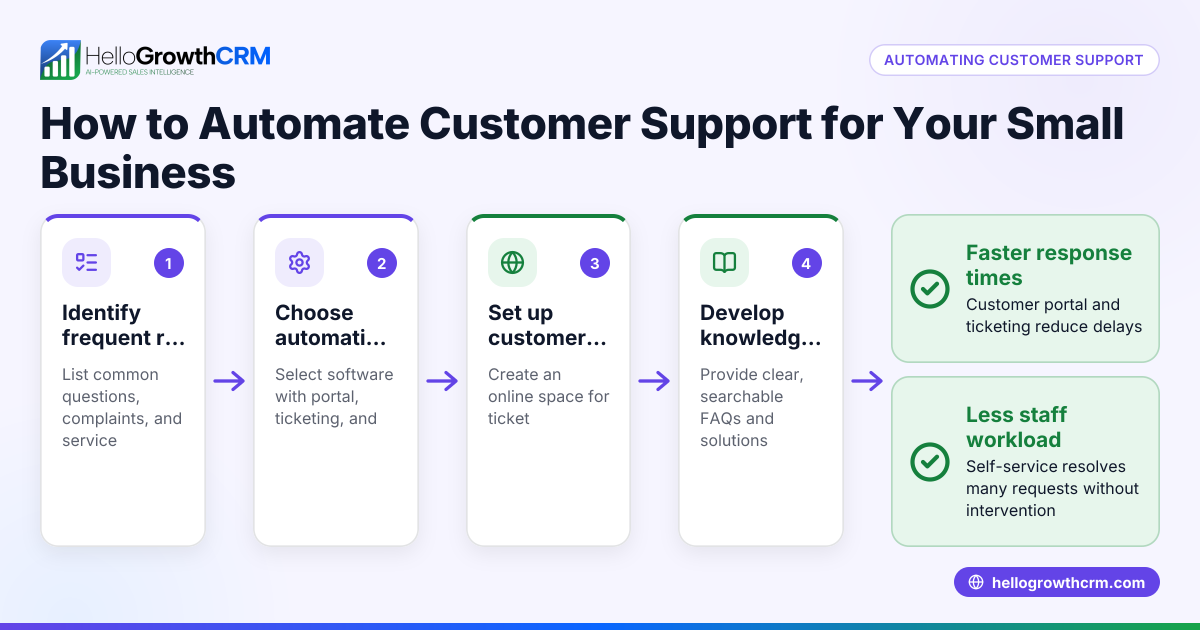
To create a customer support ticket system in the USA, follow these clear steps: define your support goals, choose or develop a ticketing tool, configure ticket categories and priorities, assign tickets to team members, and track resolution times. This article explains why small businesses need such a system, provides a step-by-step setup guide, a worked example with realistic US figures, common mistakes to avoid, and how HelloGrowthCRM supports ticket management.
Why this comes up / what goes wrong
Many small-business owners in the US struggle to manage customer inquiries efficiently. Without a ticket system, support requests get lost in emails or texts, leading to slow responses and unhappy customers. Teams often lack a clear process for prioritizing and tracking issues, causing duplicated efforts or missed follow-ups. This reduces customer satisfaction and can harm reputation and sales. A customer support ticket system organizes requests in one place, assigns responsibility, and tracks progress until resolution.
Step-by-step
- Define your support process and goals: Decide what types of customer issues you will track (e.g., product questions, billing, technical problems). Determine your target response and resolution times.
- Choose your ticket management tool: You can use dedicated software, build a simple system with spreadsheets, or adopt a CRM with ticket features. Check it supports ticket categorization, assignment, status updates, and reporting.
- Set up ticket categories and priorities: Create categories that match your support types (e.g., "Technical", "Billing", "General Inquiry"). Define priority levels such as "Low", "Medium", "High".
- Create intake channels: Decide how customers submit tickets—email, web form, phone, or messaging apps. Ensure all channels feed into the ticket system.
- Assign tickets to team members: Establish rules for who handles which tickets (by category, skill, or workload). Assign tickets promptly to avoid delays.
- Track ticket status and resolution times: Use statuses like "New", "In Progress", "Waiting on Customer", and "Closed". Monitor how long tickets take to resolve.
- Train your team: Make sure everyone understands the ticket workflow, how to update tickets, and customer communication standards.
- Review and improve regularly: Analyze ticket data to find bottlenecks or common issues. Adjust categories, priorities, or staffing as needed.
Example (fictional figures)
A residential real-estate team in Phoenix, Arizona, wants to set up a support ticket system for client inquiries about listings and contracts.
- They define categories: "Listing Questions", "Contract Issues", "General Support".
- Priorities: "High" for contract issues, "Medium" for listing questions, "Low" for general support.
- They expect to handle 100 tickets monthly, aiming for a 24-hour response time.
- They choose a CRM with ticket management to capture tickets from email and web forms.
- Assignments: The lead agent handles "Contract Issues"; assistants handle "Listing Questions" and "General Support".
On 07/15/2024, they receive 30 tickets:
- 10 "Contract Issues" (High priority)
- 15 "Listing Questions" (Medium priority)
- 5 "General Support" (Low priority)
They allocate their team’s hours as follows:
- Lead agent: 10 tickets × 1 hour each = 10 hours
- Assistants: 20 tickets × 0.5 hour each = 10 hours
Total support time needed = 10 + 10 = 20 hours monthly
This plan helps them staff appropriately and meet their 24-hour response goal.
Common mistakes
- Not defining clear ticket categories: Prevent by analyzing common support issues before setup.
- Ignoring ticket prioritization: Prevent by assigning priority levels and training the team.
- Using multiple disconnected channels: Prevent by consolidating all intake into one system.
- Lack of ticket ownership: Prevent by assigning tickets promptly and clearly.
- Failing to track resolution times: Prevent by using status updates and reporting features.
- Not training the team on the system: Prevent by conducting thorough training sessions.
Doing this in HelloGrowthCRM
HelloGrowthCRM offers a branded customer portal where customers can submit support tickets directly. Tickets and service requests stay linked to the same customer record as deals, keeping all information unified. The platform supports referrals and a knowledge base to reduce repetitive questions. This integration helps small businesses manage support efficiently after the sale. Learn more about HelloGrowthCRM’s customer portal and ticket features at customer health score.
Frequently asked questions
What is a customer support ticket system? A customer support ticket system is a tool that organizes customer inquiries and issues into tickets. Each ticket tracks the problem, status, and communication until resolution, helping teams respond efficiently.
How do I choose the right ticket system for my small business? Consider your volume of support requests, channels customers use, and features needed like ticket assignment and reporting. A CRM with integrated ticketing can unify sales and support data.
Can I use WhatsApp or SMS for customer support tickets? Yes, many businesses use WhatsApp and SMS for support. Using a CRM that supports WhatsApp and SMS CRM integration helps capture these messages as tickets and manage them alongside emails and forms. See WhatsApp and SMS CRM for details.
How do I measure the effectiveness of my ticket system? Track metrics like average response time, resolution time, and ticket volume by category. Regular reviews help improve processes and customer satisfaction.
Can a ticket system improve customer retention? Yes, timely and organized support increases customer satisfaction and loyalty. A good ticket system ensures no inquiry is missed and responses are consistent.
Key takeaways
- Define clear support categories and priorities before building your system.
- Consolidate all customer inquiries into one ticket management tool.
- Assign tickets promptly to responsible team members.
- Track ticket status and resolution times to monitor performance.
- Train your team thoroughly on the ticket process.
- Use CRM features like customer portals and integrated tickets for better management.
Start building your customer support ticket system today with a clear process and the right tools. To get started easily, consider HelloGrowthCRM’s customer portal and ticket features.
Start on the Free Forever plan (200 leads, no credit card) at HelloGrowthCRM.
Ready to put this into practice?
Set up your pipeline, WhatsApp follow-ups, and AI lead scoring in minutes — free, no credit card.
Try HelloGrowthCRM freeGet CRM tips in your inbox
Join thousands of sales professionals who get weekly insights on CRM strategy, AI automation, and pipeline optimization.

The HelloGrowthCRM team publishes guides on CRM strategy, AI sales tools, and revenue operations for small business sales teams.