HelloGrowthCRM software
Built for real small-business sales teams
HelloGrowthCRM helps reps qualify faster, follow up on time, and close more deals—with practical automation in one place.
- AI lead scoring and pipeline visibility
- Built-in dialer, WhatsApp, and email automation
- Sales forecasting and RevOps-ready reporting
Creating a sales follow up sequence is essential to turn leads into customers without wasting time or missing opportunities. Many UK small business owners find it hard to keep track of follow-ups or to know what to say and when. This guide explains why follow-up sequences matter, gives clear steps to build one, shows a worked example, highlights common pitfalls, and explains how HelloGrowthCRM supports this with automation and task management.
Why this comes up / what goes wrong
Small and mid-sized UK businesses often lose leads because follow-up is too slow, inconsistent, or manual. Sales teams juggling WhatsApp, email, and spreadsheets can forget who to contact or when. Without a clear sequence, prospects feel ignored or overwhelmed. The result is lost sales and wasted marketing spend. Creating a structured follow-up sequence helps ensure every lead gets timely, relevant contact that encourages a response.
Step-by-step
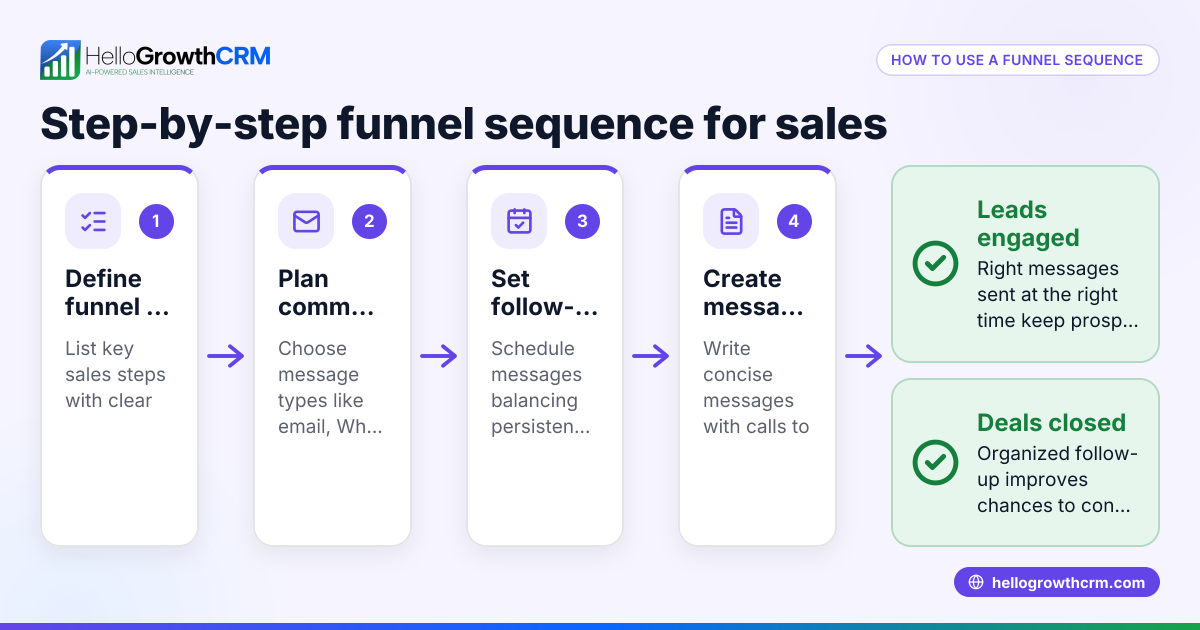
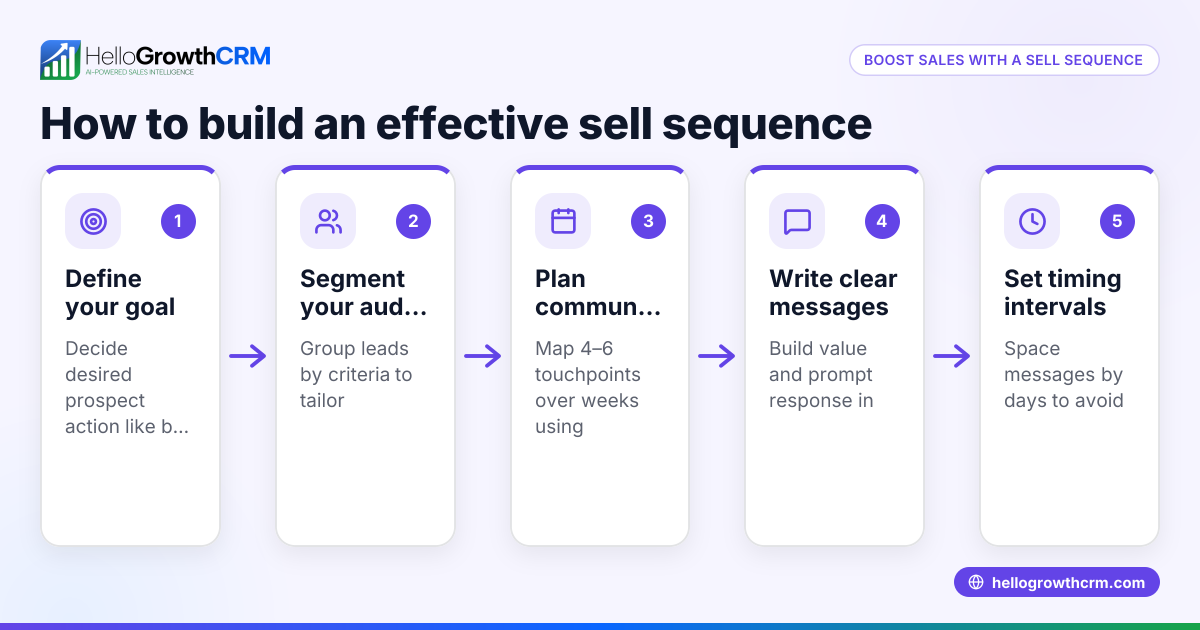
- Define your goal: Decide what you want to achieve with the sequence (e.g., book a meeting, send a quote, or close a sale). This guides message content and timing.
- Choose your channels: Select communication methods your prospects prefer, such as email, WhatsApp, SMS, or calls. Using multiple channels increases chances of contact.
- Plan the timing and number of steps: Typically, a five-step sequence over two weeks works well. Space messages to avoid overwhelming the prospect but keep momentum.
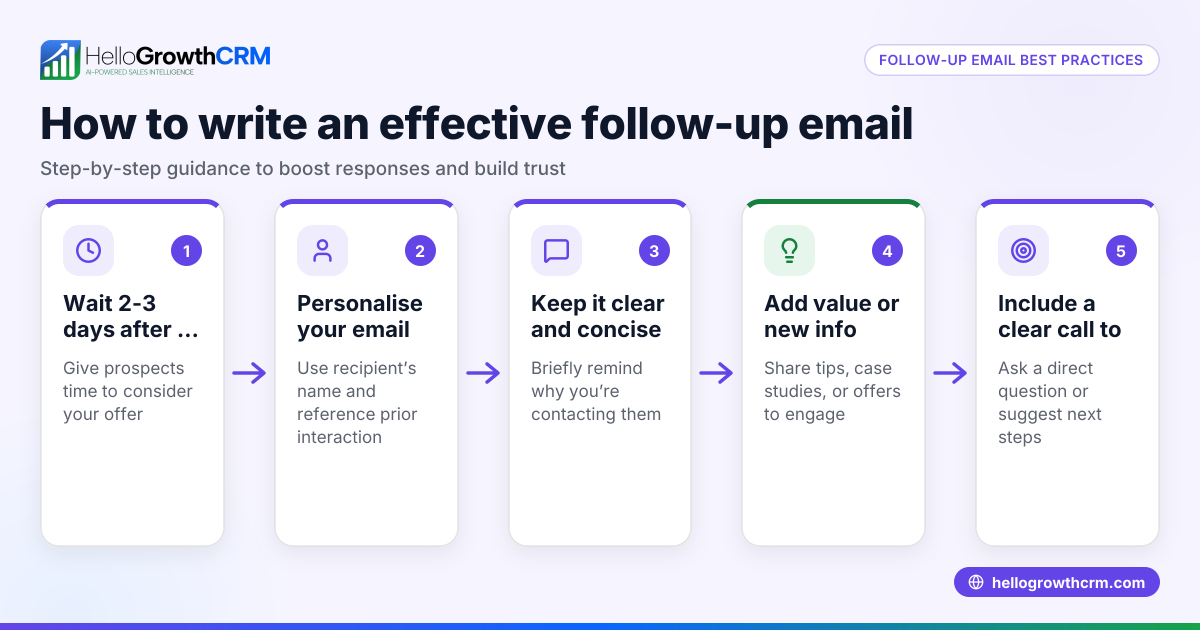
- Write message templates: Prepare clear, concise, and polite messages for each step. Include a call to action and personalise where possible.
- Set triggers to pause the sequence: The sequence should stop automatically when the prospect replies to avoid spamming or annoying them.
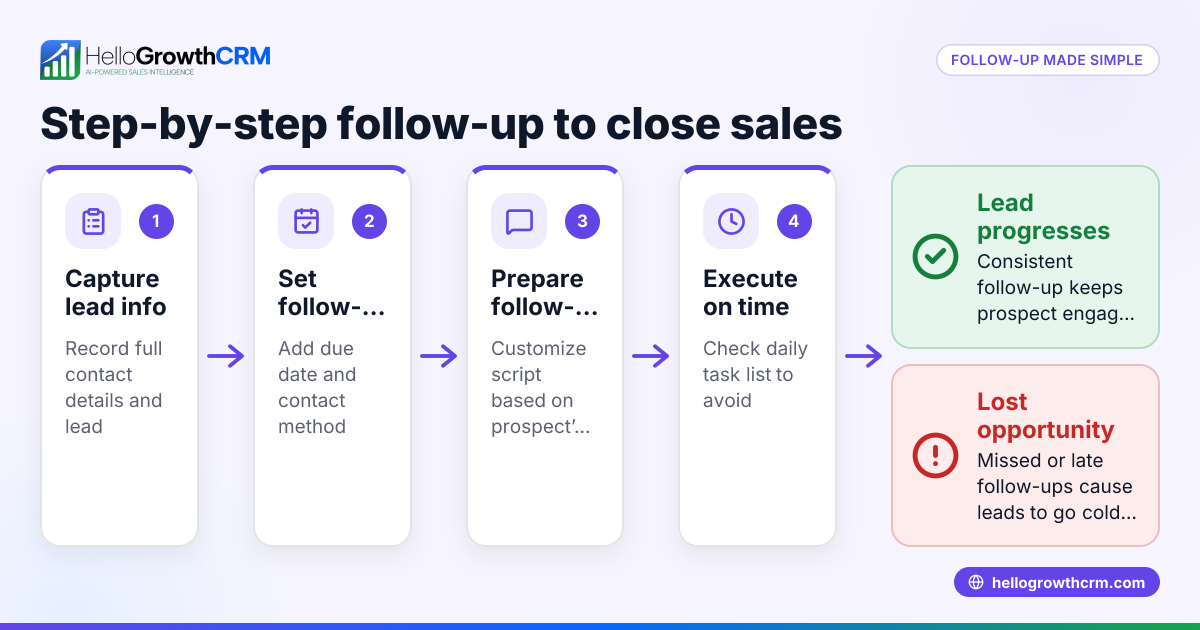
- Assign tasks and reminders: Turn each follow-up into a task with a due date so sales reps know what to do each day without relying on memory.
- Track responses and update the pipeline: Log all interactions and move prospects through your sales stages based on replies and engagement.
- Review and optimise: Monitor which messages get replies and adjust timing or content to improve results.
You can learn more about managing follow-ups and tasks with sales task boards and automate outreach with email automation and sequences.
Example (fictional figures)
An accountancy practice in Birmingham wants to follow up new leads who requested a free consultation.
- Goal: Book a consultation call.
- Channels: Email and WhatsApp.
- Sequence: 5 steps over 14 days.
| Step | Day | Channel | Message summary |
|---|---|---|---|
| 1 | 1 | Thank you + booking link | |
| 2 | 3 | Friendly reminder + benefits | |
| 3 | 6 | Share client success story | |
| 4 | 10 | Offer to answer questions | |
| 5 | 14 | Call | Final check-in and offer |
If the lead replies at any point, the sequence stops.
Calculations for timing:
Day 1: Send first email.
Day 3: 3 days after day 1, send WhatsApp message.
Day 6: 3 days after day 3, send second email.
Day 10: 4 days after day 6, send WhatsApp message.
Day 14: 4 days after day 10, make a call.
This spacing balances persistence with politeness.
Common mistakes
- Following up too frequently: Bombarding prospects can annoy them. Prevent by spacing messages 2-4 days apart.
- Not pausing on reply: Continuing after a response feels pushy. Use triggers to stop sequences immediately when a reply arrives.
- Using only one channel: Relying on email or WhatsApp alone misses chances. Combine channels for better reach.
- Not assigning tasks: Without clear daily follow-up tasks, reps forget or delay. Use task boards to organise daily calls and messages.
- Generic messages: Sending the same text to all leads feels impersonal. Personalise messages with names and relevant details.
- Ignoring data: Not reviewing which messages work wastes effort. Track replies and adjust sequence steps accordingly.
Doing this in HelloGrowthCRM
HelloGrowthCRM helps UK businesses automate and organise sales follow-ups with these features:
- Sequences and campaigns: Set up a five-step follow-up over two weeks that runs automatically and stops the moment the prospect replies. This removes manual effort and ensures timely contact. Learn more at email automation and sequences.
- Activities and task boards: Each follow-up becomes a task with a due date, so your team sees the day’s calls and messages as a clear list, not a memory test. This keeps follow-ups organised and consistent. See details at sales task boards.
- AI agents: In Beta, an AI agent drafts follow-up messages after calls for the sales rep to review and send, saving time while keeping personal touch. Explore AI capabilities at HelloGrowthCRM for the United Kingdom.
Frequently asked questions
How long should a sales follow up sequence last? A typical sequence runs over about two weeks with 4-6 steps spaced every 2-4 days. This timeframe balances persistence with respect for the prospect’s time.
What channels should I use for follow-ups? Use a mix of email, WhatsApp, SMS, and calls based on what your prospects prefer. Multi-channel outreach improves contact rates.
How do I know when to stop following up? Stop immediately when the prospect replies or takes the desired action. Continuing after a response risks annoying them.
Can I automate follow-ups without losing personal touch? Yes. Automated sequences can include personalised fields like names and company details. AI agents can draft messages tailored to each prospect for review.
What if my sales team forgets to follow up? Use task boards that assign follow-up tasks with due dates visible daily. This removes reliance on memory and keeps calls and messages on schedule.
Key takeaways
- Plan a multi-step follow-up sequence over about two weeks with spaced messages.
- Use multiple channels like email, WhatsApp, SMS, and calls.
- Stop the sequence immediately when the prospect replies.
- Assign each follow-up as a task with a due date to keep reps organised.
- Personalise messages to increase engagement.
- Review response data regularly to optimise your sequence.
Start creating your sales follow up sequence today and keep leads moving through your pipeline without losing them. For easy automation and task management, try HelloGrowthCRM — Start on the Free Forever plan (200 leads, no credit card).
Ready to put this into practice?
Set up your pipeline, WhatsApp follow-ups, and AI lead scoring in minutes — free, no credit card.
Try HelloGrowthCRM freeGet CRM tips in your inbox
Join thousands of sales professionals who get weekly insights on CRM strategy, AI automation, and pipeline optimization.

The HelloGrowthCRM team publishes guides on CRM strategy, AI sales tools, and revenue operations for small business sales teams.