HelloGrowthCRM software
Built for real small-business sales teams
HelloGrowthCRM helps reps qualify faster, follow up on time, and close more deals—with practical automation in one place.
- AI lead scoring and pipeline visibility
- Built-in dialer, WhatsApp, and email automation
- Sales forecasting and RevOps-ready reporting
Creating a sales pipeline helps you organise and track your sales leads from initial contact through to closing the deal. For New Zealand small businesses, a structured pipeline ensures no opportunities slip through the cracks and helps forecast revenue.
Why this comes up / what goes wrong
Many small business owners in New Zealand struggle with managing leads because they rely on scattered notes, text messages, emails, or spreadsheets. This disorganisation causes slow follow-up, lost leads, and inaccurate sales forecasting. Without a clear sales pipeline, it’s hard to know which prospects need attention, what stage each lead is at, or when deals might close.
Step-by-step
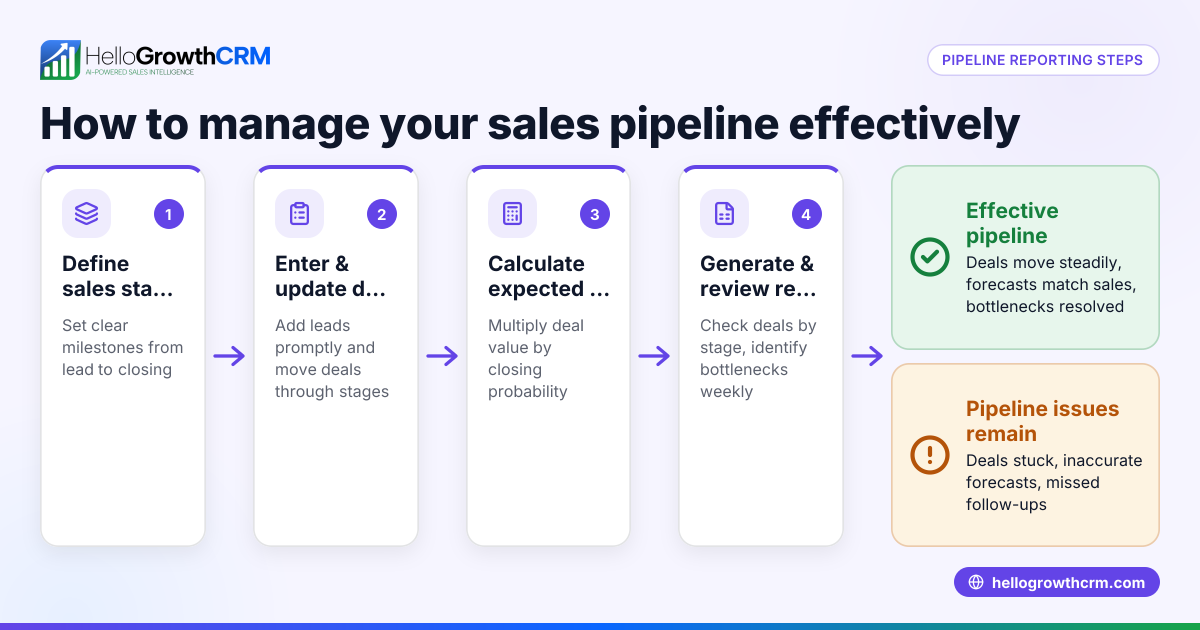
- Define your sales stages: List the key steps a lead passes through from first contact to sale. Common stages include "Lead Captured", "Contacted", "Qualified", "Quote Sent", "Negotiation", and "Closed Won/Lost". Make sure each stage has clear criteria.
- Assign actions and criteria for each stage: Decide what qualifies a lead to move to the next stage. For example, a lead moves from "Contacted" to "Qualified" if they express interest and meet your target customer profile.
- Choose how to track your pipeline: Use a simple spreadsheet or a CRM system. Tracking must be consistent and updated regularly to avoid lost leads.
- Enter your current leads: Input all active prospects into the pipeline with their current stage and next action date.
- Set follow-up tasks and reminders: For each lead, assign a next step and a date to follow up. This ensures timely contact and moves deals forward.
- Review and update your pipeline weekly: Check the progress of deals, update stages, and remove dead leads.
- Analyse your pipeline for bottlenecks: Identify stages where leads stall and adjust your sales process accordingly.
- Forecast sales based on pipeline data: Estimate expected revenue by multiplying deal values by the probability of closing at each stage.
Example (fictional figures)
A dairy-equipment supplier in Hamilton wants to create a sales pipeline to manage their leads. They define these stages:
- Lead Captured
- Contacted
- Qualified
- Quote Sent
- Negotiation
- Closed Won
They have 5 leads currently:
| Lead | Stage | Deal Value (NZ$) | Probability (%) | Expected Revenue (NZ$) |
|---|---|---|---|---|
| A | Quote Sent | 50,000 | 40 | 50,000 × 40% = 20,000 |
| B | Negotiation | 80,000 | 60 | 80,000 × 60% = 48,000 |
| C | Qualified | 30,000 | 30 | 30,000 × 30% = 9,000 |
| D | Contacted | 20,000 | 10 | 20,000 × 10% = 2,000 |
| E | Lead Captured | 15,000 | 5 | 15,000 × 5% = 750 |
Total expected revenue = NZ$20,000 + NZ$48,000 + NZ$9,000 + NZ$2,000 + NZ$750 = NZ$79,750
They set follow-up dates for each lead and review the pipeline every week to update stages and next actions.
Common mistakes
- Not defining clear stages: Leads get stuck because it’s unclear when to move them forward. Prevent this by setting specific criteria for each stage.
- Failing to update the pipeline regularly: Without updates, your data becomes inaccurate. Schedule weekly reviews.
- Ignoring follow-up tasks: Leads cool off if not followed up. Use reminders and assign next steps.
- Overcomplicating the pipeline: Too many stages cause confusion. Keep it simple and relevant.
- Not using pipeline data to forecast: Guessing sales without data leads to poor planning. Use expected revenue calculations.
- Scattered lead information: Using multiple tools like text, email and spreadsheets causes lost leads. Consolidate your data.
Doing this in HelloGrowthCRM
HelloGrowthCRM helps you manage your sales pipeline with its Deals (pipeline) feature, which tracks open opportunities from first contact through to close. For example, a quotation sent last week appears as a deal at the "quote sent" stage with a follow-up date, so it is not forgotten. The platform offers pipeline forecast and AI insights that show which stages deals are stalling in without needing to build spreadsheets. For businesses with field teams, territories, field operations and commissions tools allow reps to log visits from their phone, and managers can see the day's activities. Learn more about the AI CRM and sales forecasting features, designed with New Zealand businesses in mind, on our HelloGrowthCRM for New Zealand page.
Frequently asked questions
How do I create a sales pipeline in New Zealand? Start by defining your sales stages and criteria, then track leads consistently through these stages. Assign follow-up tasks and review progress weekly to keep deals moving.
What sales stages should I use in my pipeline? Stages vary by business but typically include Lead Captured, Contacted, Qualified, Quote Sent, Negotiation, and Closed Won/Lost. Each stage should have clear criteria for progression.
How can I forecast sales from my pipeline? Multiply each deal's value by the probability of closing at its current stage, then sum these amounts. This gives an expected revenue figure to aid planning.
Can I manage my sales pipeline on my phone? Yes, tools like HelloGrowthCRM let you track deals, log field visits, and manage follow-ups from mobile devices, helping field sales teams stay organised.
How do I avoid losing leads in my sales pipeline? Use a consistent tracking method, set follow-up reminders, and update your pipeline regularly. Avoid using scattered tools like text and spreadsheets alone.
Is there a CRM that helps with sales pipelines for NZ businesses? HelloGrowthCRM offers pipeline management, AI forecasting, and field sales tools tailored for New Zealand small and mid-sized businesses.
Key takeaways
- Define clear, simple sales stages with criteria.
- Track all leads consistently and update the pipeline weekly.
- Assign follow-up tasks with dates to avoid lost leads.
- Use expected revenue calculations to forecast sales.
- Avoid scattered lead management by consolidating data.
- HelloGrowthCRM supports pipeline tracking, forecasting, and field sales management.
Creating a sales pipeline is essential for managing your leads and forecasting revenue accurately. Start organising your sales process today and keep your deals moving forward. To get started without any cost or credit card, try HelloGrowthCRM on the Free Forever plan (200 leads, no credit card).
Ready to put this into practice?
Set up your pipeline, WhatsApp follow-ups, and AI lead scoring in minutes — free, no credit card.
Try HelloGrowthCRM freeGet CRM tips in your inbox
Join thousands of sales professionals who get weekly insights on CRM strategy, AI automation, and pipeline optimization.

The HelloGrowthCRM team publishes guides on CRM strategy, AI sales tools, and revenue operations for small business sales teams.