HelloGrowthCRM software
Built for real small-business sales teams
HelloGrowthCRM helps reps qualify faster, follow up on time, and close more deals—with practical automation in one place.
- AI lead scoring and pipeline visibility
- Built-in dialer, WhatsApp, and email automation
- Sales forecasting and RevOps-ready reporting
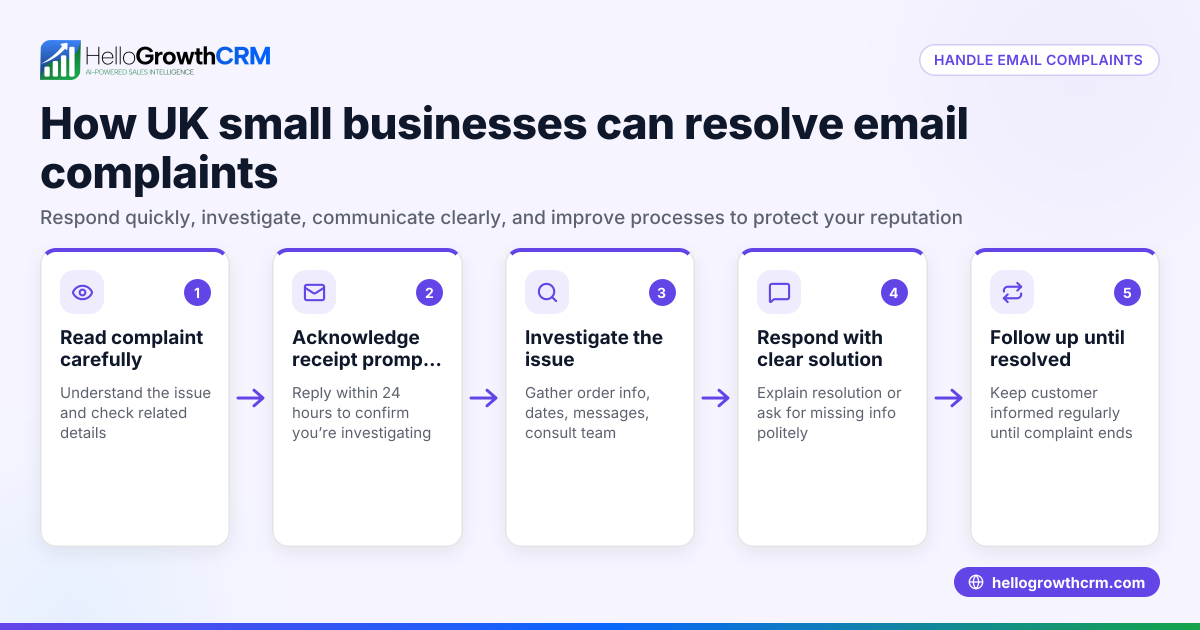
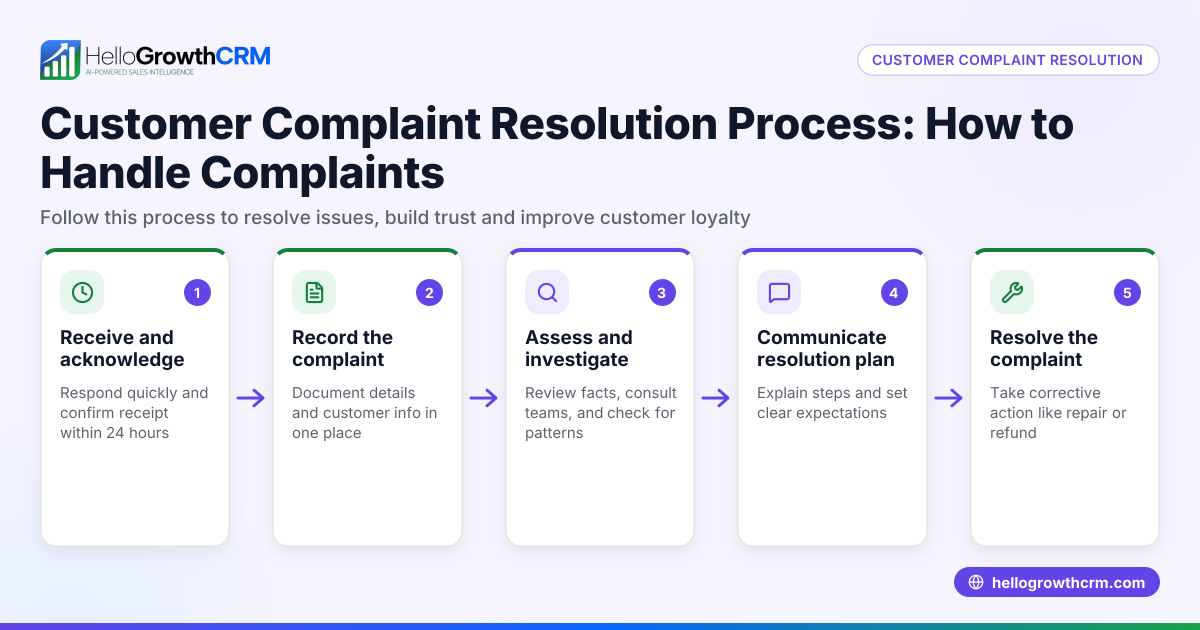
Dealing with customer complaints in person requires patience, clear communication, and a structured approach to resolve issues effectively. This guide explains why complaints arise in small businesses, provides a step-by-step method to handle them, a worked example with figures, common pitfalls, and how HelloGrowthCRM supports complaint management.
Why this comes up / what goes wrong
Small-business owners often face customer complaints because of unmet expectations, product or service defects, or communication gaps. Complaints happen face to face when customers visit a store, office, or meet a sales or service representative. Without a clear approach, these interactions can escalate, damage reputation, or cause lost sales. Business owners may feel unprepared or defensive, which worsens the situation. Handling complaints well is essential to retain customers and improve business processes.
Step-by-step
- Listen actively and patiently: Give the customer your full attention. Do not interrupt or argue. Check your body language to appear open and calm.
- Acknowledge the complaint sincerely: Show empathy by repeating the main issue in your own words. For example, say, “I understand that your order arrived late, and that caused inconvenience.”
- Ask clarifying questions: Gather all necessary details to fully understand the problem. Confirm facts like dates, product names, or service terms.
- Apologize without blaming: Offer a genuine apology for the inconvenience, even if the fault is not clear. Avoid blaming the customer or others.
- Offer a clear solution or compensation: Propose how you will fix the issue, such as a replacement, refund, discount, or free service. Be specific about timelines.
- Confirm the customer agrees: Ask if the proposed solution is acceptable. If not, discuss alternatives respectfully.
- Take immediate action: Start resolving the issue promptly. If it requires follow-up, set a clear deadline and inform the customer.
- Document the complaint and resolution: Record details in your system to track recurring problems and follow up later.
- Follow up after resolution: Contact the customer to ensure satisfaction and thank them for their feedback.
- Review and improve processes: Use complaint data to prevent future issues.
Check your customer records regularly to ensure no complaint is overlooked. Tools like HelloGrowthCRM help track deals and service requests on the same customer record, so follow-ups are never forgotten.
Example (fictional figures)
A B2B software reseller in Denver, Colorado, receives a complaint on 04/15/2026 about a delayed software license delivery worth $12,000.
- Step 1: Listen as the customer explains the delay caused project setbacks.
- Step 2: Acknowledge: “I understand the delay impacted your project schedule.”
- Step 3: Clarify: Confirm order date was 03/30/2026, expected delivery 04/05/2026.
- Step 4: Apologize: “We’re sorry for the inconvenience this caused.”
- Step 5: Offer: Provide a 10% discount on the $12,000 order as compensation.
Calculation: $12,000 × 10% = $1,200 discount $12,000 - $1,200 = $10,800 final price
- Step 6: Customer agrees to the discount.
- Step 7: Process discount and update invoice by 04/18/2026.
- Step 8: Record complaint and resolution in CRM.
- Step 9: Follow up on 04/25/2026 to confirm customer satisfaction.
This approach turns a complaint into an opportunity to strengthen customer trust.
Common mistakes
- Interrupting or arguing with the customer: Prevent by practicing active listening and staying calm.
- Dismissing or minimizing the complaint: Prevent by acknowledging the issue sincerely.
- Failing to clarify details: Prevent by asking open-ended questions.
- Delaying the resolution: Prevent by setting clear timelines and acting promptly.
- Not documenting the complaint: Prevent by recording every complaint and follow-up in your system.
- Ignoring follow-up: Prevent by scheduling follow-up calls or messages.
Using a CRM like HelloGrowthCRM helps avoid these mistakes by keeping all customer interactions and service requests organized and visible.
Doing this in HelloGrowthCRM
HelloGrowthCRM’s Deals (pipeline) feature helps you track open opportunities and follow-ups, so a quotation sent last week shows up at the 'quote sent' stage with a follow-up date, preventing forgotten issues. After the sale, service requests and complaints stay on the same customer record through the customer portal, referrals, tickets, and knowledge base features. This centralized record helps you manage complaints efficiently and maintain customer satisfaction. Learn more about HelloGrowthCRM’s AI CRM and customer health score features.
Frequently asked questions
How can I stay calm when a customer complains face to face? Take deep breaths and remind yourself that the complaint is about the situation, not you personally. Listen actively and focus on solving the problem rather than reacting emotionally.
What if the customer wants a refund but I can only offer a replacement? Explain clearly what you can provide and why. Offer the replacement as a solution and check if the customer agrees. If not, explore other options respectfully.
Should I take notes during the complaint conversation? Yes. Taking notes helps you remember details and shows the customer you take their complaint seriously. Later, enter these notes into your CRM to track the issue.
How soon should I follow up after resolving a complaint? Follow up within a week to confirm the customer is satisfied with the solution and thank them for their feedback. This helps rebuild trust.
Can technology help me manage customer complaints better? Yes. A CRM like HelloGrowthCRM organizes complaints, tracks follow-ups, and links service requests to customer records. This prevents lost information and improves response times.
See more about HelloGrowthCRM for the United States here.
Key takeaways
- Listen actively and acknowledge complaints sincerely.
- Clarify details and apologize without blaming.
- Offer clear solutions and confirm customer agreement.
- Document complaints and follow up promptly.
- Avoid interrupting, dismissing, or delaying resolution.
- Use tools like HelloGrowthCRM to track and manage complaints effectively.
Handling customer complaints face to face well can save relationships and improve your business. Start managing your leads and customer issues efficiently with HelloGrowthCRM. Start on the Free Forever plan (200 leads, no credit card).
Ready to put this into practice?
Set up your pipeline, WhatsApp follow-ups, and AI lead scoring in minutes — free, no credit card.
Try HelloGrowthCRM freeGet CRM tips in your inbox
Join thousands of sales professionals who get weekly insights on CRM strategy, AI automation, and pipeline optimization.

The HelloGrowthCRM team publishes guides on CRM strategy, AI sales tools, and revenue operations for small business sales teams.