HelloGrowthCRM software
Built for real small-business sales teams
HelloGrowthCRM helps reps qualify faster, follow up on time, and close more deals—with practical automation in one place.
- AI lead scoring and pipeline visibility
- Built-in dialer, WhatsApp, and email automation
- Sales forecasting and RevOps-ready reporting
Following up with course applicants promptly and systematically is essential to convert interest into enrolment. In the UAE, where competition is strong, businesses must avoid losing leads due to slow or disorganised follow-ups.
Why this comes up / what goes wrong
Many small and mid-sized course providers and training centres in the UAE manage applicants using WhatsApp, phone calls, and spreadsheets. This informal approach often causes delays, missed contacts, or forgotten follow-ups. Without a clear system, applicants lose interest or choose competitors. Owners and sales teams find it hard to track multiple applicants at different stages, resulting in lost revenue and wasted marketing efforts.
Step-by-step
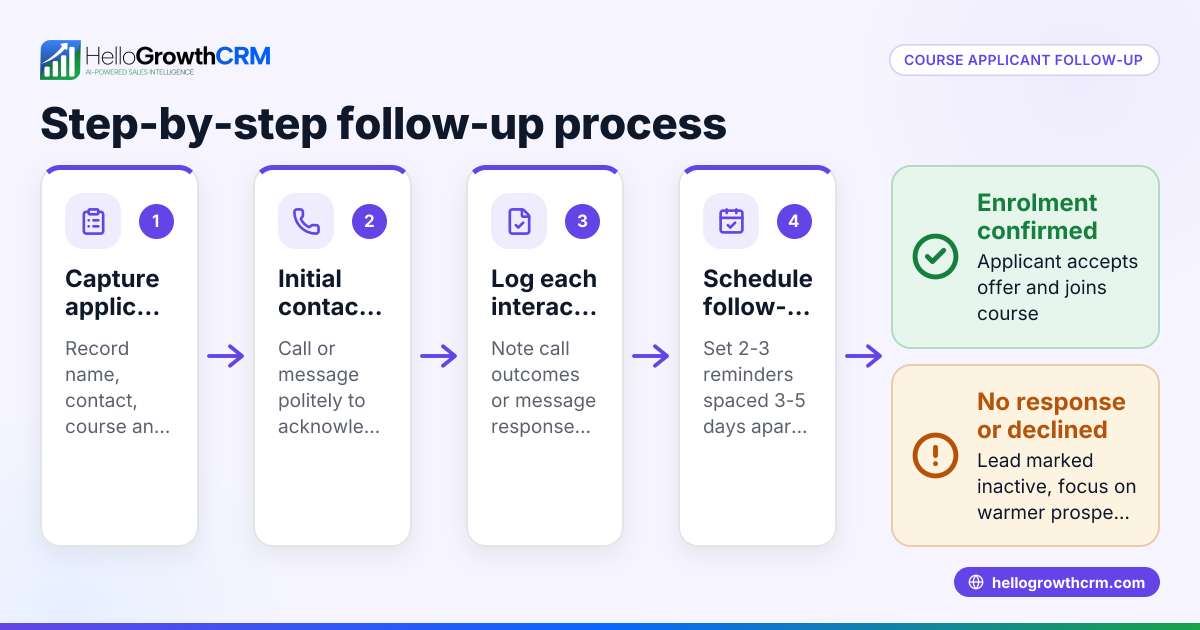
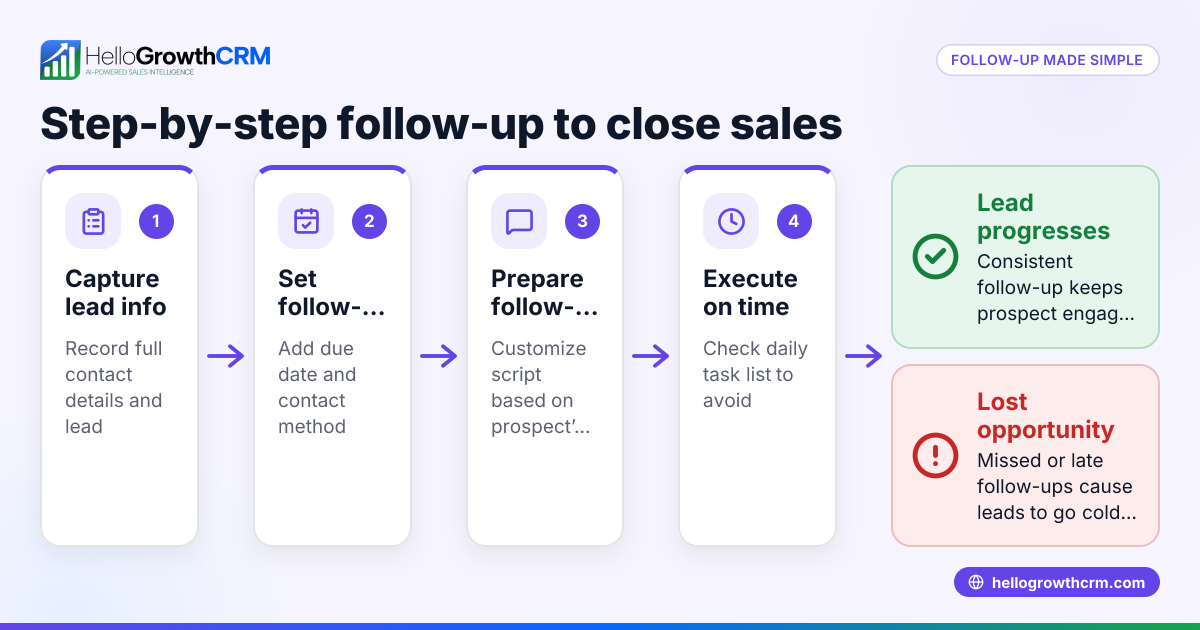
- Collect and centralise applicant details
- Gather full name, phone number, email, course interested in, application date, and preferred contact method.
- Use a single spreadsheet or CRM to keep all data in one place.
- Categorise applicants by status
- Assign each applicant a status: New inquiry, Contacted, Interested, Needs more info, Enrolled.
- This helps prioritise who to contact first.
- Schedule the first follow-up
- Plan to contact applicants within 24 to 48 hours after application.
- Use their preferred channel: WhatsApp, call, or email.
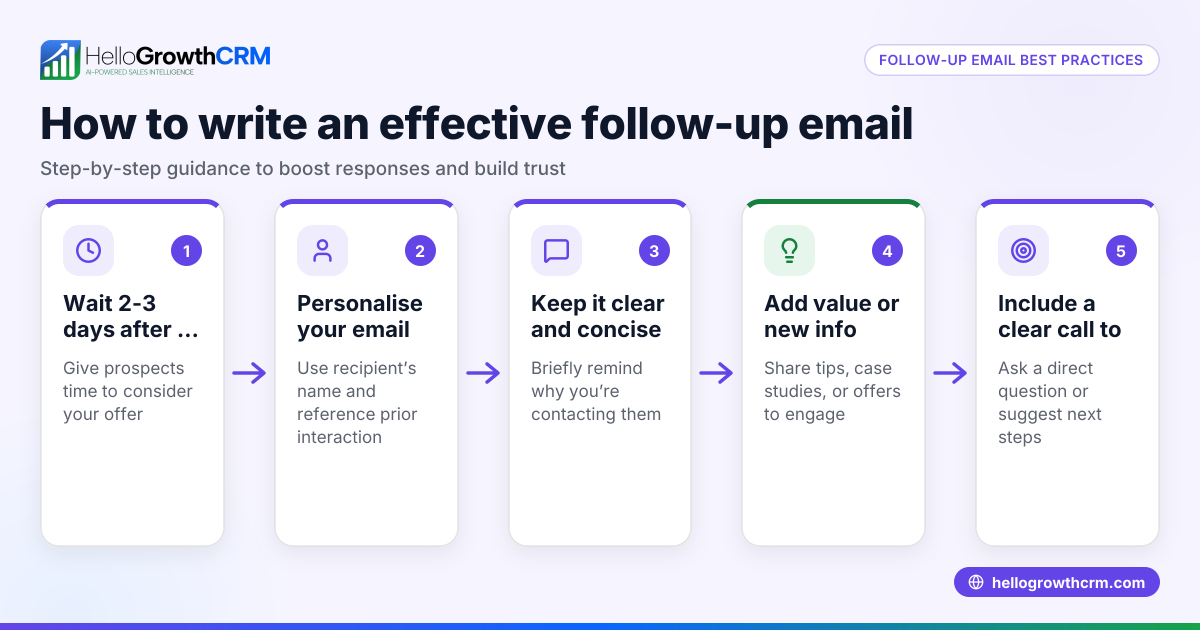
- Personalise your message
- Mention the specific course they applied for.
- Reference any previous conversations or questions.
- Log every interaction immediately
- Record calls, messages sent, and applicant responses.
- Note any questions or next steps.
- Set follow-up tasks with due dates
- Schedule subsequent follow-ups every 3 to 5 days if no response.
- Use reminders to avoid missing deadlines.
- Review daily task lists
- Each morning, check your follow-ups due that day.
- Prioritise calls or messages to applicants with urgent or pending status.
- Adjust follow-up frequency
- If an applicant replies, move them to enrolment steps.
- After 3 to 5 attempts with no response, pause follow-ups but keep their record for future campaigns.
- Analyse follow-up results weekly
- Track how many applicants convert after each follow-up.
- Refine your message content and timing based on what works.
Use tools like sales task boards to organise follow-up activities and keep your team aligned.
Example (fictional figures)
A training centre in Jumeirah, Dubai receives 20 new course applications on 01/05/2024. The average course fee is AED 8,000.
- Step 1: Applicant details collected into a CRM.
- Step 2: All 20 labelled as "New inquiry".
- Step 3: First follow-up calls and WhatsApp messages scheduled for 02/05/2024.
- Step 4: Messages personalised mentioning the "Digital Marketing" course.
- Step 5: On 02/05/2024, 5 applicants called; 3 answered, 2 no response.
- Step 6: Outcomes logged immediately.
- Step 7: Second follow-up planned for 05/05/2024 for no-response applicants.
- Step 8: After two follow-ups, 10 applicants confirm enrolment.
Calculation of potential revenue:
10 enrolled applicants × AED 8,000 = AED 80,000
Potential lost revenue from 5 no-response applicants:
5 × AED 8,000 = AED 40,000
This example shows how timely follow-up can secure AED 80,000 in course fees and prevent losing AED 40,000.
Common mistakes
- No centralised applicant list: Leads to lost contacts and missed follow-ups. Prevent by using a CRM or a single spreadsheet.
- Delayed follow-ups: Applicants lose interest quickly. Prevent by scheduling first contact within 48 hours.
- Generic, impersonal messages: Fail to engage applicants. Prevent by personalising each message with course details and previous conversations.
- No interaction logging: Makes it hard to know who to contact next. Prevent by recording every call and message outcome.
- Too many follow-ups: Can annoy applicants and harm your reputation. Prevent by limiting follow-ups to 3-5 attempts and pausing if no response.
- Ignoring daily tasks: Leads to missed calls and forgotten follow-ups. Prevent by reviewing your task list each morning and prioritising.
For automating follow-ups and messaging, see email automation and sequences.
Doing this in HelloGrowthCRM
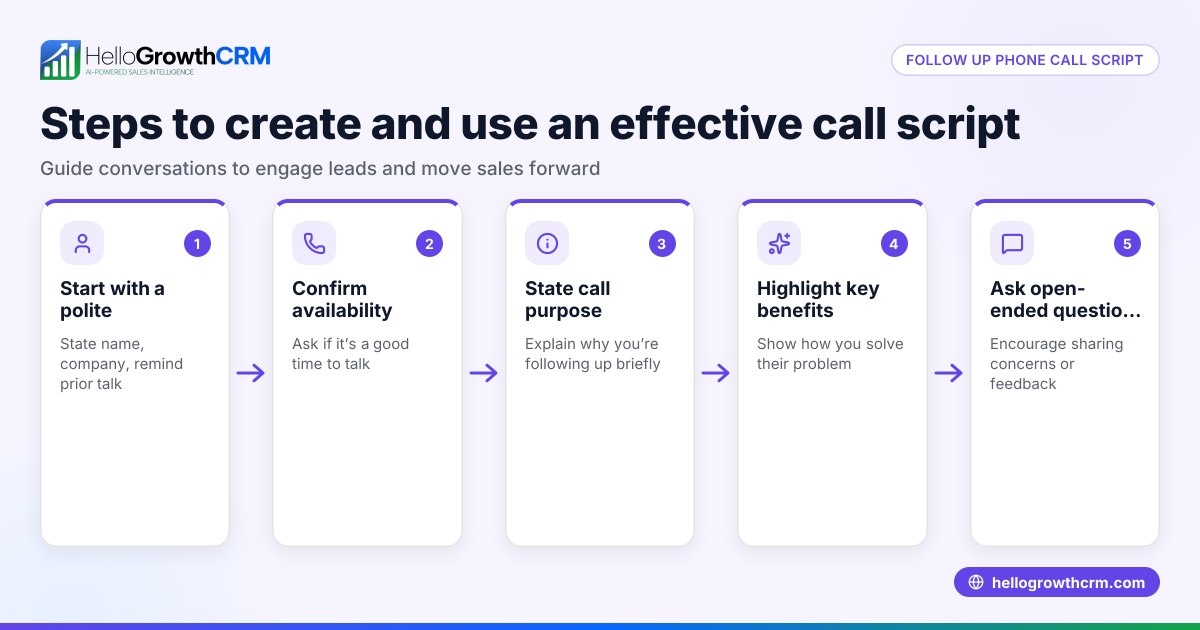
HelloGrowthCRM helps you manage follow-ups with these features:
- Activities and task boards: Each follow-up becomes a task with a due date; the day's calls appear as a list, so you don’t rely on memory. Learn more at sales task boards.
- Sequences and campaigns: Set up a five-step follow-up sequence over two weeks that runs automatically and stops as soon as the applicant replies.
- AI agents: Beta feature where an AI agent drafts follow-up messages after calls for your review and sending.
Learn more about using HelloGrowthCRM in the UAE here.
Frequently asked questions
How soon should I follow up after a course application? Follow up within 24 to 48 hours to keep applicants engaged and demonstrate professionalism.
What is the best way to contact course applicants in the UAE? WhatsApp is widely used and effective, but also consider phone calls or emails based on the applicant’s preference.
How many follow-up attempts are appropriate? Limit follow-ups to 3-5 attempts over two weeks to avoid overwhelming or annoying applicants.
How can I track applicants at different stages? Use a task board or CRM to categorise applicants by status and set reminders for follow-ups, ensuring no one is missed.
Can I automate follow-ups? Yes, tools like sequences in HelloGrowthCRM can automate multi-step outreach until the applicant responds.
Key takeaways
- Collect and centralise all applicant data to avoid losing leads.
- Schedule follow-ups within 24-48 hours and log every interaction.
- Personalise messages to increase applicant engagement.
- Use task boards to organise daily follow-up calls and messages.
- Limit follow-ups to 3-5 attempts to respect applicants’ time.
- Automate follow-ups where possible to save time and maintain consistency.
Following up effectively with course applicants in the UAE can increase enrolments and revenue. Start organising your follow-ups today and consider using HelloGrowthCRM to manage tasks and automate messaging.
Start on the Free Forever plan (200 leads, no credit card) at HelloGrowthCRM.
Ready to put this into practice?
Set up your pipeline, WhatsApp follow-ups, and AI lead scoring in minutes — free, no credit card.
Try HelloGrowthCRM freeGet CRM tips in your inbox
Join thousands of sales professionals who get weekly insights on CRM strategy, AI automation, and pipeline optimization.

The HelloGrowthCRM team publishes guides on CRM strategy, AI sales tools, and revenue operations for small business sales teams.