HelloGrowthCRM software
Built for real small-business sales teams
HelloGrowthCRM helps reps qualify faster, follow up on time, and close more deals—with practical automation in one place.
- AI lead scoring and pipeline visibility
- Built-in dialer, WhatsApp, and email automation
- Sales forecasting and RevOps-ready reporting
To generate B2B sales leads in the UK, start by identifying your target market and ideal customer profile. Then use multiple channels such as LinkedIn outreach, content marketing, networking events, and cold calling to capture leads. Qualify and organise these leads promptly to maximise conversion chances. This article covers why lead generation matters, step-by-step instructions, a realistic example, common pitfalls, and how HelloGrowthCRM can help streamline the process.
Why this comes up / what goes wrong
Many small and mid-sized UK businesses struggle to generate consistent B2B sales leads because they rely on informal methods like WhatsApp messages, spreadsheets, or notebooks to track enquiries. Leads get lost or followed up too late, resulting in missed sales opportunities. Founders and sales teams often lack a clear, repeatable process to identify prospects, capture their details, and prioritise follow-up activities. Without a structured approach, sales pipeline visibility is poor and forecasting is unreliable.
Step-by-step
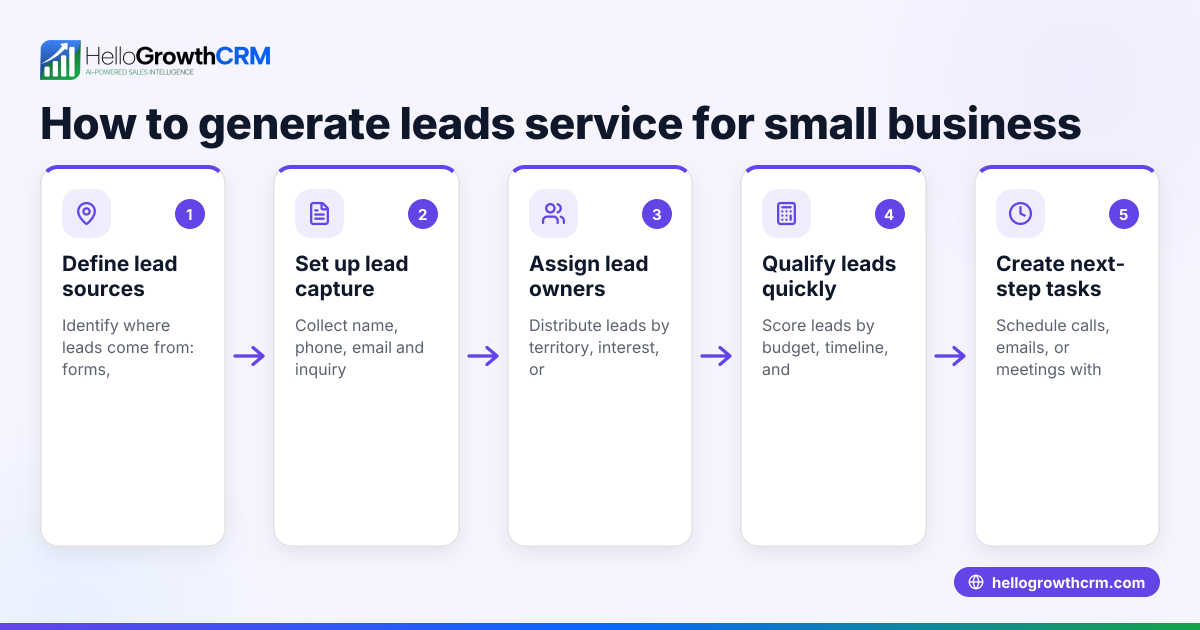
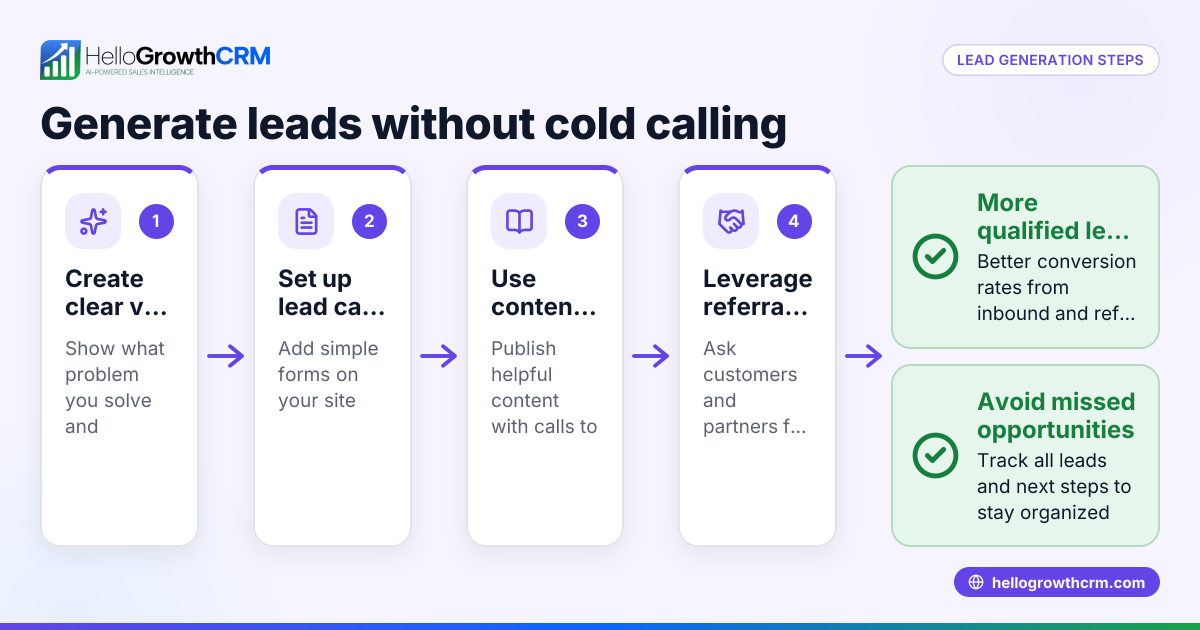
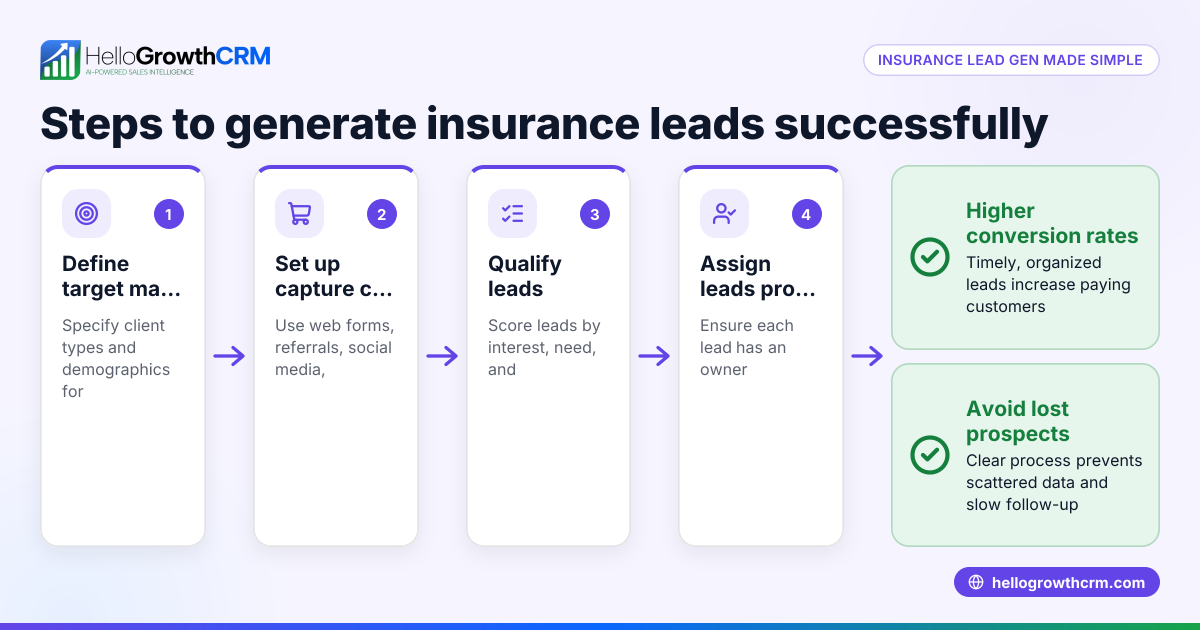
- Define your ideal customer profile (ICP): List the industries, company sizes, job titles, and geographic areas you want to target. Check that your product or service solves a clear pain point for this profile.
- Research prospects: Use LinkedIn, industry directories, trade associations, and business databases to find companies and decision-makers matching your ICP. Verify contact details like emails and phone numbers.
- Create outreach content: Prepare personalised email templates, LinkedIn messages, and phone scripts that explain how your solution benefits the prospect. Keep messages clear and concise.
- Launch multi-channel outreach: Send LinkedIn connection requests, email sequences, and make cold calls. Attend relevant networking events and trade shows to collect business cards and contacts.
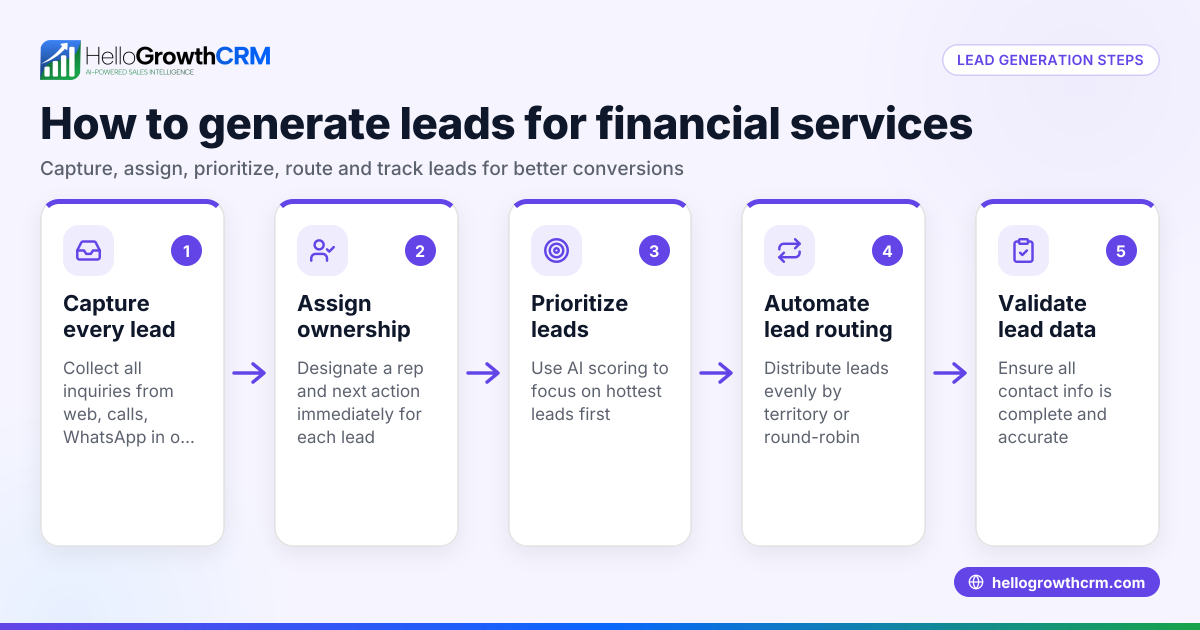
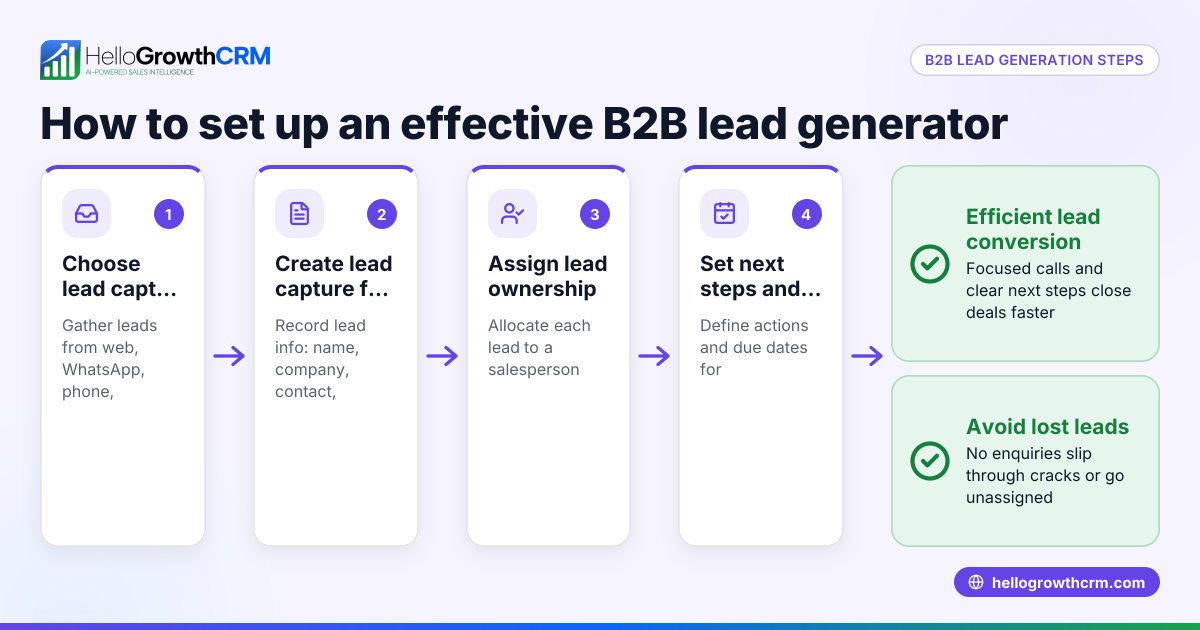
- Capture leads immediately: Record every enquiry or contact in a central place—ideally a CRM—to avoid losing information. Assign each lead an owner responsible for follow-up.
- Qualify leads quickly: Ask key questions to assess budget, authority, need, and timeline. Score leads by likelihood to convert and prioritise calls accordingly.
- Track progress in a pipeline: Move leads through stages like contacted, interested, quote sent, and closed. Set follow-up tasks and reminders to stay on top.
- Analyse and refine: Review which channels and messages generate the best leads. Adjust your ICP and outreach accordingly.
Check each step for completeness before moving on to the next to maintain a steady flow of qualified leads.
Example (fictional figures)
A recruitment consultancy in Bristol wants to generate B2B leads for its permanent staffing service.
- ICP: Medium-sized tech companies in South West England with 50-500 employees, HR managers or directors.
- Research: Finds 150 companies fitting ICP using LinkedIn and local business directories.
- Outreach content: Creates an email explaining how their service reduces hiring time by 30%.
- Launches outreach:
- Sends 150 personalised emails over two weeks.
- Makes 75 follow-up calls.
- Captures leads:
- 30 replies expressing interest.
- 5 leads from networking event.
- Qualifies leads:
- 20 have budget and hiring need in next 3 months.
- Pipeline tracking:
- Moves 20 qualified leads into CRM pipeline stages.
- Sets follow-up calls every 7 days.
- Analyse:
- Email open rate 40%, reply rate 20%.
- Calls convert 10% to meetings.
Calculations:
Total outreach contacts = 150 emails + 75 calls = 225 Interested leads = 30 email replies + 5 event leads = 35 Qualified leads = 20 Conversion rate = (20 ÷ 225) × 100 = 8.9%
Common mistakes
- Not defining the ideal customer profile (ICP): Leads are unfocused and low quality. Prevent by clearly specifying who benefits most from your product.
- Delaying lead capture: Enquiries lost in notebooks or WhatsApp. Use a CRM to record leads immediately.
- Ignoring lead qualification: Wasting time on leads unlikely to convert. Prioritise calls using qualification criteria and AI lead scoring where possible.
- No follow-up system: Leads go cold without reminders. Use pipeline stages and task boards to schedule follow-ups.
- Relying on a single channel: Limits reach and volume. Combine LinkedIn, email, calls, and events.
- No analysis or adjustment: Continuing ineffective tactics. Regularly review results and refine your approach.
Using tools like HelloGrowthCRM helps avoid these mistakes by organising leads, scoring them, and tracking deals efficiently.
Doing this in HelloGrowthCRM
HelloGrowthCRM captures every enquiry from forms, calls or WhatsApp as a lead with an assigned owner and next step, so no lead is lost in notebooks. Its AI lead scoring helps telecallers prioritise calls to leads most likely to convert. The deals pipeline shows quotations and follow-up dates clearly, ensuring no opportunities are forgotten. This keeps your B2B sales lead generation organised and actionable. Learn more about AI lead scoring, WhatsApp and SMS CRM, and HelloGrowthCRM for the United Kingdom.
Frequently asked questions
What is the best channel to generate B2B leads in the UK? Combining LinkedIn outreach, personalised emails, cold calls, and attending networking events tends to work best. Using multiple channels increases your reach and chances to connect with decision-makers.
How quickly should I follow up on new leads? Aim to follow up within 24 hours of receiving a lead. Prompt contact increases the chance of conversion as interest is fresh.
How do I qualify a B2B sales lead? Ask about their budget, decision-making authority, specific needs, and timeline for purchase. This helps prioritise leads most likely to convert soon.
Can I manage lead generation without a CRM? While possible, it is difficult to keep leads organised and follow-ups timely without a CRM. HelloGrowthCRM helps centralise leads, assign owners, and track progress efficiently.
How does AI lead scoring improve sales calls? AI lead scoring ranks leads by likelihood to convert based on data patterns, so sales teams call the highest-potential leads first, improving productivity.
Key takeaways
- Define your ideal customer profile to target the right prospects.
- Use multiple channels like LinkedIn, email, calls, and events to generate leads.
- Capture every lead immediately in a central system.
- Qualify leads quickly and prioritise follow-up.
- Track leads in a pipeline with clear stages and reminders.
- Analyse results regularly to refine your approach.
Start organising your B2B sales leads today with HelloGrowthCRM. Start on the Free Forever plan (200 leads, no credit card).
Ready to put this into practice?
Set up your pipeline, WhatsApp follow-ups, and AI lead scoring in minutes — free, no credit card.
Try HelloGrowthCRM freeGet CRM tips in your inbox
Join thousands of sales professionals who get weekly insights on CRM strategy, AI automation, and pipeline optimization.

The HelloGrowthCRM team publishes guides on CRM strategy, AI sales tools, and revenue operations for small business sales teams.