HelloGrowthCRM software
Built for real small-business sales teams
HelloGrowthCRM helps reps qualify faster, follow up on time, and close more deals—with practical automation in one place.
- AI lead scoring and pipeline visibility
- Built-in dialer, WhatsApp, and email automation
- Sales forecasting and RevOps-ready reporting
Managing client expectations is crucial for small businesses to maintain trust and avoid misunderstandings. It involves clear communication, setting achievable goals, and ongoing updates about progress or changes. This article guides you through why this issue arises, how to handle it step-by-step, a practical example, common pitfalls, and answers to common questions.
Why this comes up / what goes wrong
Small business owners often face client expectation issues because initial conversations are vague or overly optimistic. For example, a client might expect a project to finish faster or cheaper than feasible. Without clear agreements, the client gets disappointed, and the business risks losing trust or repeat work. This happens frequently when sales teams use informal communication like text messages or emails without a system to track promises and deadlines. Managing expectations becomes harder as your business grows or if you rely on spreadsheets that don't clearly show task status or deadlines.
Step-by-step
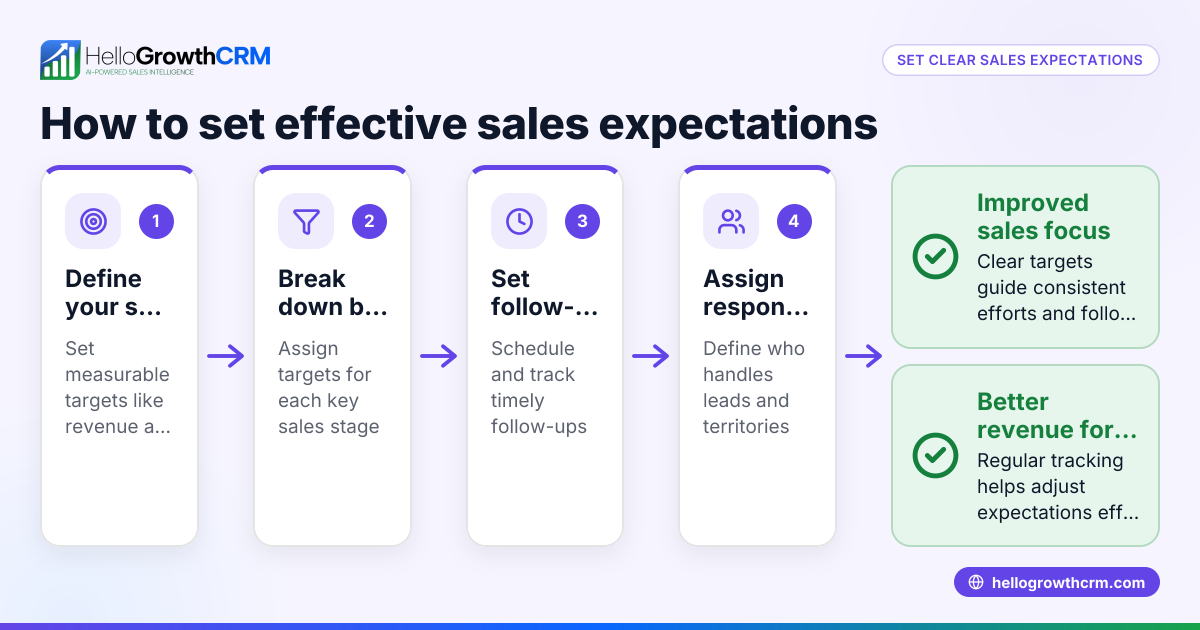
- Start with clear communication: Explain what your service or product includes and what it does not. Use simple language. Check that the client understands by asking them to summarize key points.
- Set realistic goals and deadlines: Based on your capacity and experience, propose achievable timelines and outcomes. Avoid promising something you can’t deliver.
- Document agreements: Put the agreed scope, price, and deadlines in writing. This can be an email summary or a formal contract.
- Establish regular updates: Agree on how often you will update the client on progress (e.g., weekly email or call). This keeps them informed and reduces surprises.
- Use a task or pipeline board: Track client projects visually to see what’s done, in progress, or delayed. This helps you stay on top of commitments and spot issues early.
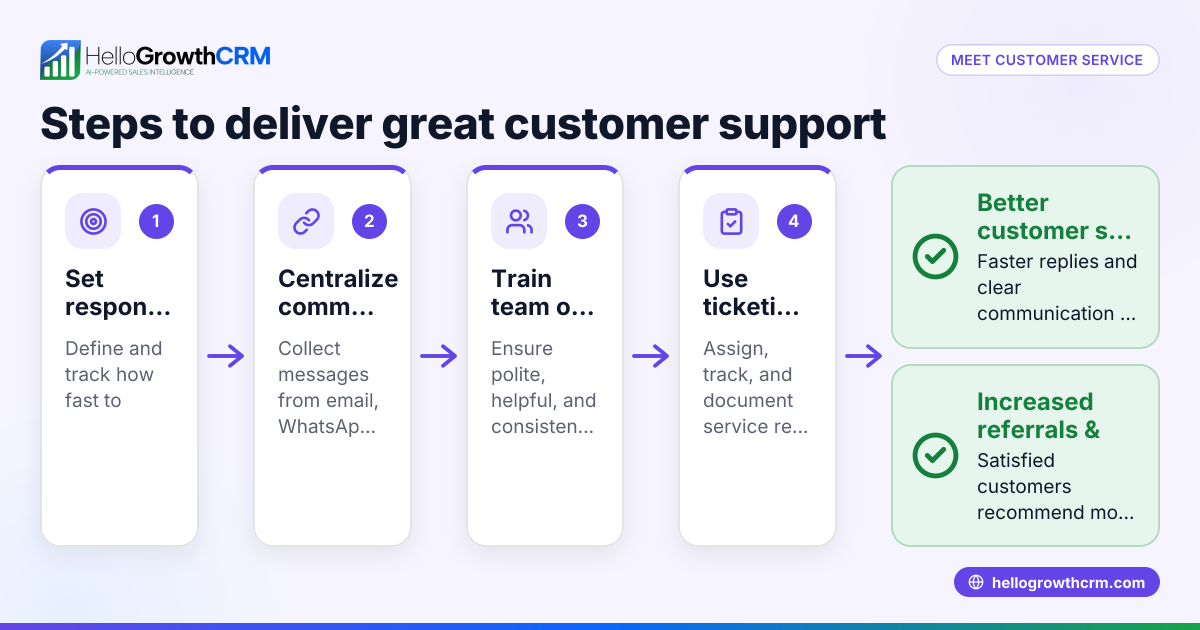
- Respond promptly to client questions or concerns: Quick replies show you value their business and help adjust expectations if needed.
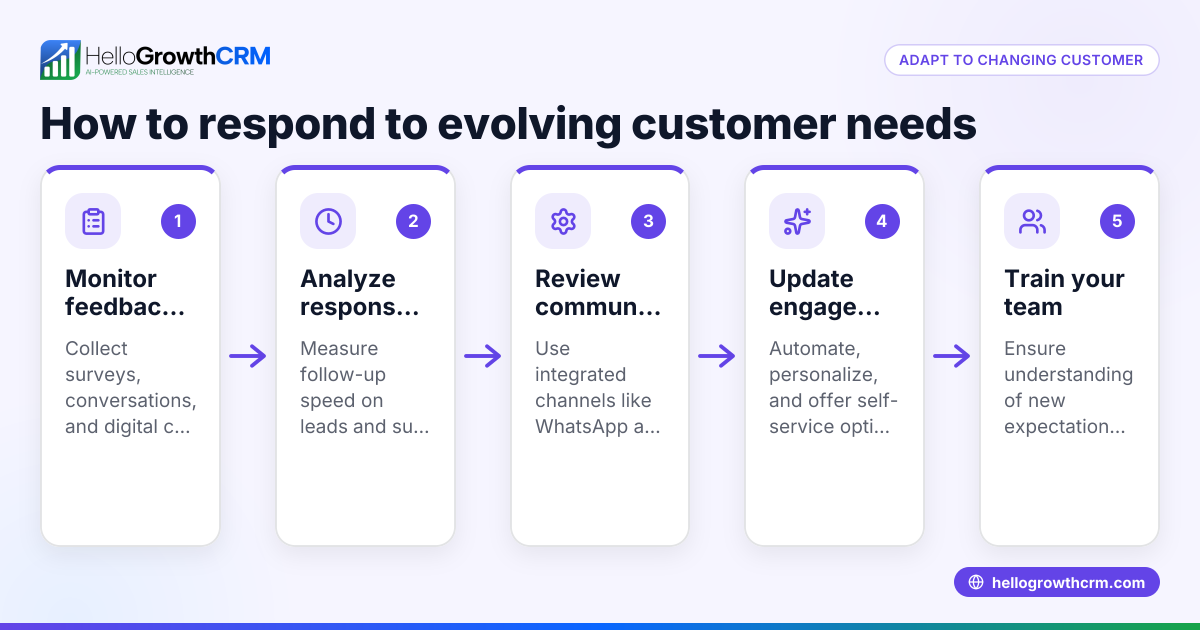
- Review and adjust expectations as needed: If delays or changes occur, inform the client immediately with reasons and new timelines.
- Confirm satisfaction at project milestones: Check with the client regularly that the work meets their expectations before final delivery.
- Close with a summary report or final meeting: Recap what was delivered, any deviations, and next steps if applicable.
- Keep records for future reference: Store all communication and agreements in one place.
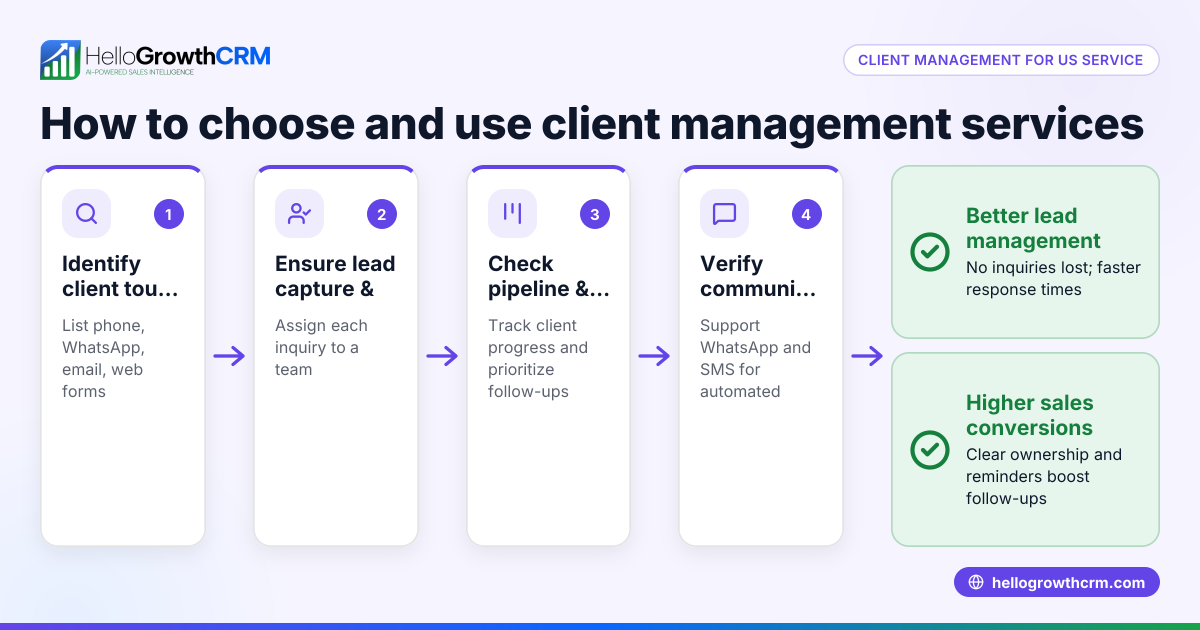
Using a CRM that supports WhatsApp and SMS communication alongside email can help keep all client interactions organized and easily accessible. For example, a built-in CRM dialer can speed up calls and follow-ups, ensuring no client question goes unanswered. Learn more about WhatsApp and SMS CRM and the built-in CRM dialer.
Example (fictional figures)
A two-location dental practice in Columbus, Ohio, agrees to install new patient management software by 10/15/2026. The agreed price is $25,000, with $10,000 upfront and $15,000 on completion.
Step 1: Clear communication Explain software features and clarify it does not include hardware upgrades.
Step 2: Set realistic goals Estimate installation and training will take 6 weeks.
Step 3: Document agreements Send an email confirming scope, price, and 10/15/2026 deadline.
Step 4: Establish updates Agree on weekly Friday progress emails.
Step 5: Track tasks Use a task board to monitor installation, testing, and training phases.
Step 6: Respond promptly Answer client queries within 24 hours.
Step 7: Adjust expectations On 09/20/2026, a software update delay pushes completion by 1 week.
Notify client immediately: new completion date is 10/22/2026.
Step 8: Confirm satisfaction At 10/22/2026, client approves software functionality.
Step 9: Close project Send final invoice and summary report.
Step 10: Keep records Store all emails and task board notes.
This approach avoids surprises and keeps the client confident in your service.
Common mistakes
- Overpromising and underdelivering: Prevent by setting realistic goals and checking your capacity before agreeing.
- Poor documentation: Prevent by always putting agreements and changes in writing.
- Ignoring client communication: Prevent by responding quickly and scheduling regular updates.
- Failing to adjust expectations: Prevent by informing clients immediately of any delays or changes.
- Using scattered communication tools: Prevent by centralizing client info in one place, like a CRM system, to avoid lost messages.
- Not confirming client satisfaction during the process: Prevent by checking in at key milestones.
For small businesses using multiple communication channels, a CRM designed for WhatsApp and SMS can help centralize client interactions. See HelloGrowthCRM for the United States for more.
Frequently asked questions
How often should I update clients on progress? Weekly updates are common, but adjust based on project length and client preference. Regular communication reduces surprises and builds trust.
What if a client’s expectations are unrealistic? Address this early by explaining what is feasible clearly and professionally. Provide data or examples to support your position.
How do I handle changes requested after agreement? Treat changes as new requests requiring review. Communicate any impact on price or timeline before proceeding.
Can I manage client expectations without software? Yes, but it’s harder. Use spreadsheets and email summaries carefully to track agreements and deadlines. Consider a CRM as you grow.
What if a client is unhappy despite good communication? Listen carefully to their concerns, clarify misunderstandings, and offer solutions or compromises. Document all discussions.
Key takeaways
- Communicate clearly and confirm understanding early.
- Set and document realistic goals and deadlines.
- Provide regular updates and respond quickly to questions.
- Use tools like task boards or CRMs to track progress and communication.
- Inform clients immediately of any changes or delays.
- Confirm satisfaction at key milestones to avoid surprises.
Start managing your client expectations better today. Start on the Free Forever plan (200 leads, no credit card) to organize your client communications and tasks with ease.
Ready to put this into practice?
Set up your pipeline, WhatsApp follow-ups, and AI lead scoring in minutes — free, no credit card.
Try HelloGrowthCRM freeGet CRM tips in your inbox
Join thousands of sales professionals who get weekly insights on CRM strategy, AI automation, and pipeline optimization.

The HelloGrowthCRM team publishes guides on CRM strategy, AI sales tools, and revenue operations for small business sales teams.