HelloGrowthCRM software
Built for real small-business sales teams
HelloGrowthCRM helps reps qualify faster, follow up on time, and close more deals—with practical automation in one place.
- AI lead scoring and pipeline visibility
- Built-in dialer, WhatsApp, and email automation
- Sales forecasting and RevOps-ready reporting
Sales expectations are the realistic goals or benchmarks a business sets for its sales performance, including revenue targets, deal closures, and follow-up activities. They guide your sales efforts and help measure success. This article explains why sales expectations matter, how to set them step-by-step, a practical example, common mistakes to avoid, and how HelloGrowthCRM can help you manage them.
Why this comes up / what goes wrong
Small-business owners often struggle with unclear or unrealistic sales expectations. Without clear targets, sales teams may lack direction, leading to missed opportunities and inconsistent follow-up. For example, a founder might not know how many deals to aim for each month or how quickly to respond to leads. This uncertainty can cause lost revenue and frustration as leads fall through the cracks due to slow follow-up or poor tracking.
Setting clear sales expectations ensures everyone on your team understands what success looks like and what actions to take. It also helps you prioritize leads, forecast revenue, and measure performance effectively.
Step-by-step
- Define your sales goals clearly
- Decide on measurable targets such as monthly revenue, number of deals closed, or new customers acquired.
- Check that goals are realistic based on your market and past performance.
- Break goals down by sales stages
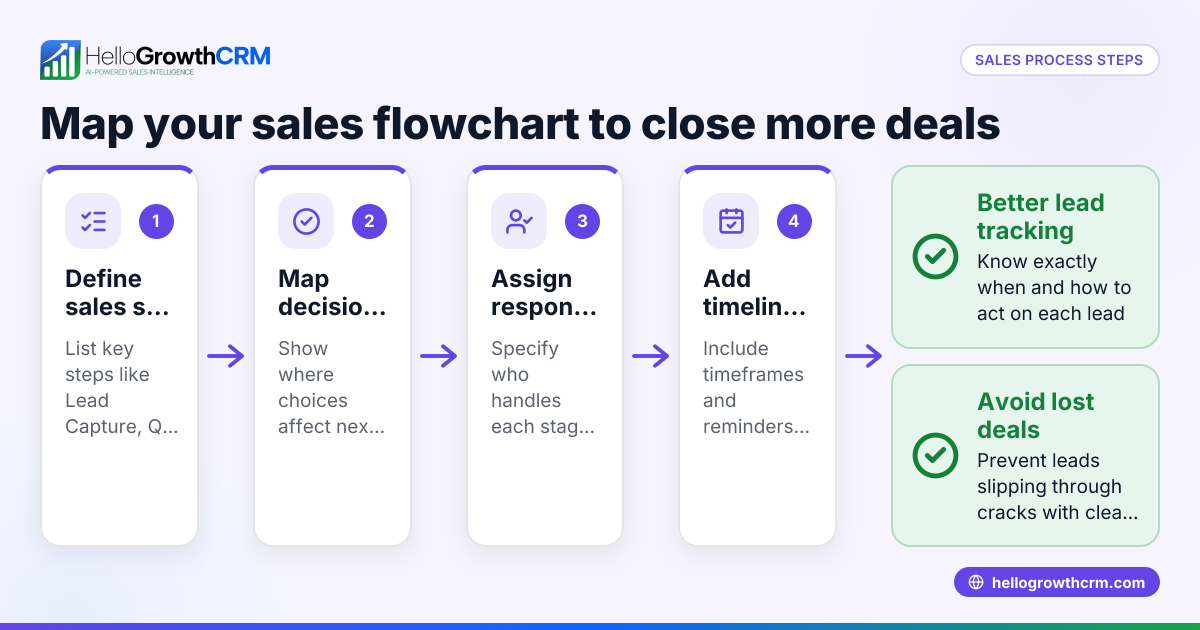
- Identify key stages in your sales process (e.g., lead capture, quote sent, negotiation, close).
- Assign expectations for how many leads should move through each stage weekly or monthly.
- Set follow-up timelines and actions
- Specify when and how often sales reps should follow up with prospects.
- Check that follow-ups are scheduled and tracked to avoid delays.
- Assign responsibilities and territories
- Define who handles which leads or geographic areas.
- Ensure sales reps know their targets and territories.
- Use tools to track progress and adjust expectations
- Monitor your sales pipeline regularly to see if you’re meeting expectations.
- Adjust goals or processes based on actual results and market changes.
- Communicate expectations clearly to your team
- Share sales goals, timelines, and responsibilities openly.
- Check in frequently to provide feedback and support.
Example (fictional figures)
Imagine a landscaping contractor in Charlotte, North Carolina, setting sales expectations for Q3 2026.
- Goal: $150,000 in revenue from new contracts by 09/30/2026.
- Average deal size: $5,000.
- Expected close rate: 30%.
Calculate the number of deals needed:
$150,000 ÷ $5,000 = 30 deals needed to close
Calculate leads required to reach those deals:
30 deals ÷ 30% close rate = 100 leads needed
Set weekly lead targets:
100 leads ÷ 13 weeks = approximately 8 leads per week
Set follow-up expectations:
- Follow up within 24 hours of lead capture
- Schedule at least 2 follow-ups per lead
This breaks down a big revenue goal into manageable weekly activities and clear sales expectations.
Common mistakes
- Setting unrealistic goals: Prevent by reviewing past sales data and market conditions.
- Ignoring sales stages: Prevent by breaking down goals by pipeline stages and tracking each.
- Poor follow-up discipline: Prevent by scheduling follow-ups and using reminders.
- Not assigning clear responsibilities: Prevent by defining territories and roles.
- Failing to adjust expectations: Prevent by regularly reviewing sales data and updating goals.
- Lack of communication with the team: Prevent by holding regular sales meetings and sharing progress.
Doing this in HelloGrowthCRM
HelloGrowthCRM helps you manage sales expectations with features like Deals (pipeline), where a quotation sent last week shows up as a deal at the 'quote sent' stage with a follow-up date, so it is not forgotten. For businesses with field sales, Territories, field operations and commissions tools allow reps to log visits from their phone while managers see the day's activity. If you don’t have a dedicated sales manager, Managed RevOps provides weekly follow-up execution and pipeline hygiene to keep expectations on track. Learn more about how HelloGrowthCRM supports sales management on WhatsApp and SMS CRM and with the built-in CRM dialer.
Frequently asked questions
What are sales expectations exactly? Sales expectations are specific, measurable sales targets and behaviors a business sets to guide its sales efforts. They include revenue goals, number of deals, follow-up timelines, and team responsibilities.
Why are sales expectations important? They provide clear direction and benchmarks for your sales team, helping to prioritize activities, forecast revenue, and improve follow-up. Without them, sales efforts can be unfocused and inconsistent.
How do I set realistic sales expectations? Start by analyzing past sales data and market conditions. Break down big goals into smaller, manageable targets by sales stage and timeframe. Adjust as you gather new data.
Can sales expectations change over time? Yes, regularly review your sales pipeline and results to update expectations based on performance and market changes.
How can technology help manage sales expectations? CRM tools like HelloGrowthCRM track deals, set follow-up reminders, assign territories, and provide pipeline visibility to keep sales teams aligned with expectations.
Key takeaways
- Sales expectations are measurable goals guiding your sales process and team actions.
- Break down goals by sales stages and set clear follow-up timelines.
- Assign responsibilities to avoid confusion and improve coverage.
- Regularly review and adjust expectations based on data.
- Use tools like HelloGrowthCRM to track deals, follow-ups, and territories.
Start setting clear sales expectations today to improve your sales results. You can start on the Free Forever plan (200 leads, no credit card) with HelloGrowthCRM and see how it keeps your sales pipeline organized and active.
Ready to put this into practice?
Set up your pipeline, WhatsApp follow-ups, and AI lead scoring in minutes — free, no credit card.
Try HelloGrowthCRM freeGet CRM tips in your inbox
Join thousands of sales professionals who get weekly insights on CRM strategy, AI automation, and pipeline optimization.

The HelloGrowthCRM team publishes guides on CRM strategy, AI sales tools, and revenue operations for small business sales teams.