HelloGrowthCRM software
Built for real small-business sales teams
HelloGrowthCRM helps reps qualify faster, follow up on time, and close more deals—with practical automation in one place.
- AI lead scoring and pipeline visibility
- Built-in dialer, WhatsApp, and email automation
- Sales forecasting and RevOps-ready reporting
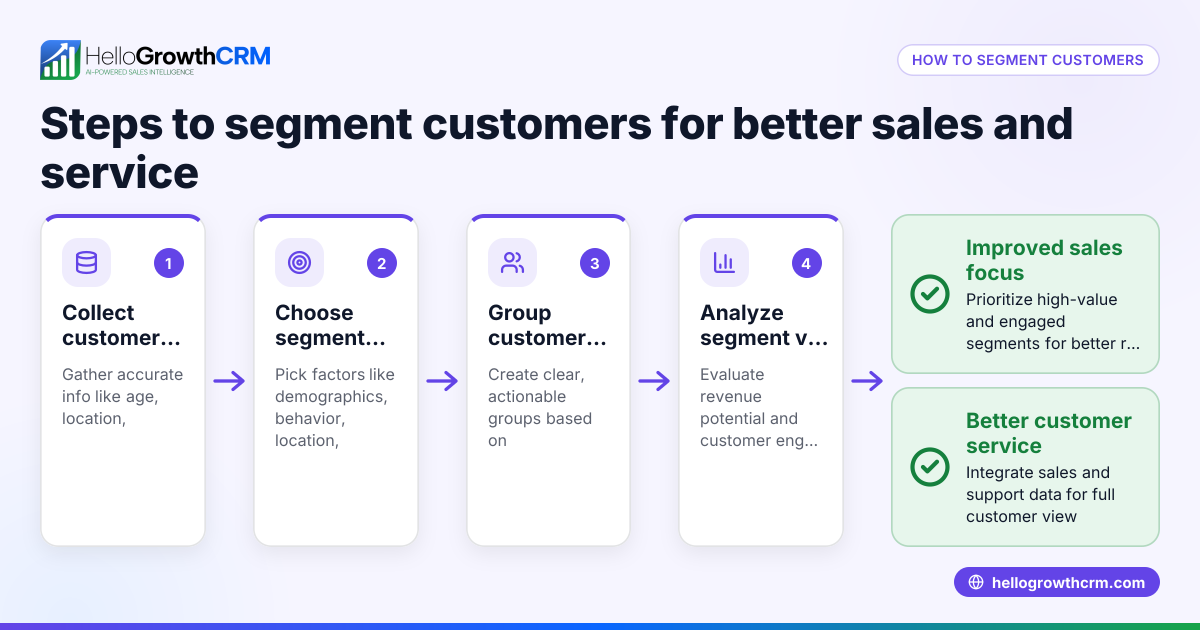
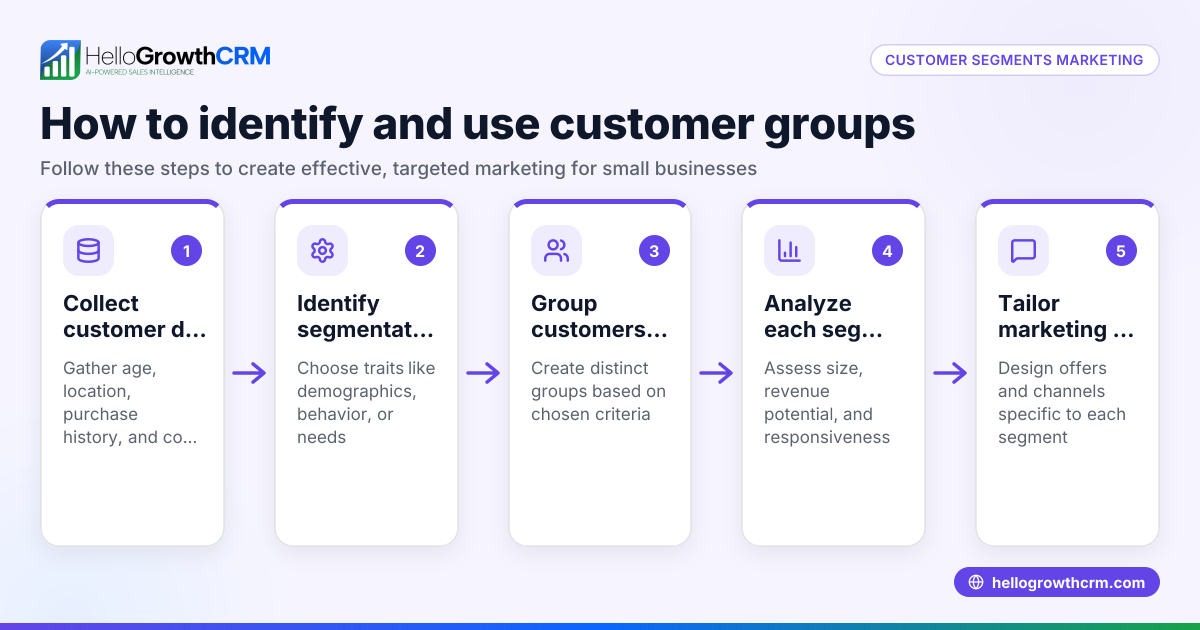
To segment customers for campaigns in the UAE, start by collecting relevant customer data, then group customers based on shared characteristics such as demographics, purchase history, or engagement. This allows targeted messaging that improves campaign effectiveness. This article explains why segmentation matters, gives you step-by-step instructions, a worked example, common pitfalls, and how HelloGrowthCRM can help.
Why this comes up / what goes wrong
Many small business owners in the UAE run sales and marketing campaigns without clear customer segmentation. They often send the same message to all customers, losing engagement and wasting resources. This happens because customer data is scattered across WhatsApp chats, calls, and spreadsheets, making it hard to identify meaningful groups. Without segmentation, campaigns are less relevant, response rates drop, and sales opportunities slip away.
Step-by-step
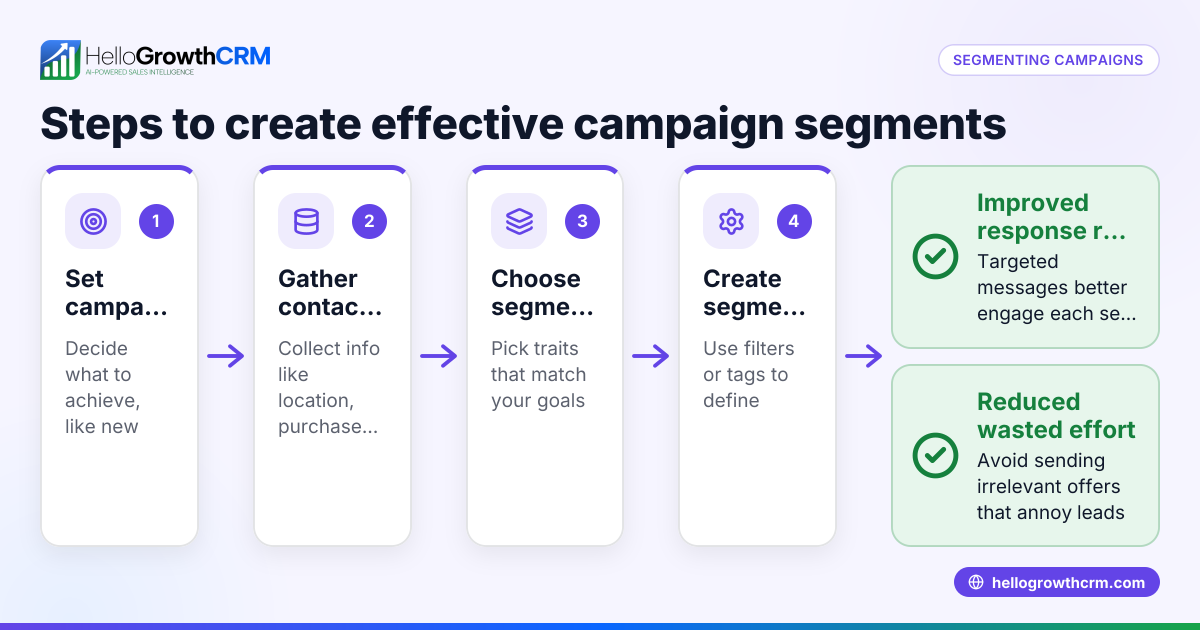
- Gather Customer Data
- Collect customer details such as location, age, gender, purchase history, and communication preferences.
- Check your sources: WhatsApp chats, call logs, spreadsheets, and web forms.
- Choose Segmentation Criteria
- Decide which customer traits matter for your campaign goal. Common criteria include:
- Demographics (age, gender, location)
- Purchase behaviour (frequent buyers, high spenders)
- Engagement (recent activity, response to past campaigns)
- Customer status (new, loyal, inactive)
- Verify data completeness and accuracy before proceeding.
- Create Customer Groups
- Use your chosen criteria to divide customers into clear segments.
- Each segment should be large enough to justify a tailored campaign but specific enough to be relevant.
- Tailor Campaign Messages
- Design messages that address the specific needs or interests of each segment.
- Check that message tone and offers suit the segment profile.
- Set Up Campaign Delivery
- Decide on communication channels (WhatsApp, SMS, email).
- Schedule campaigns for optimal timing based on segment behaviour.
- Monitor and Adjust
- Track responses and engagement by segment.
- Refine your segmentation and messaging based on results.
- Maintain Updated Segments
- Regularly update customer data and segments to reflect changes.
Example (fictional figures)
An interior fit-out contractor in Sharjah wants to run a campaign promoting premium office design packages.
- Total customers: 1,200
- Data collected: location, last purchase date, average spend
Step 1: Gather data from sales records and WhatsApp chats.
Step 2: Choose segmentation criteria:
- Location: Sharjah, Dubai, Abu Dhabi
- Purchase recency: last 6 months vs older
- Spend: above AED 50,000 vs below
Step 3: Create segments:
- Segment A: Sharjah customers, last purchase within 6 months, spend > AED 50,000 (200 customers)
- Segment B: Dubai customers, last purchase over 6 months ago, spend < AED 50,000 (300 customers)
- Segment C: Abu Dhabi customers, any purchase date, any spend (700 customers)
Step 4: Tailor messages:
- Segment A: "Exclusive premium office design offers for loyal clients"
- Segment B: "We miss you! Special discount to refresh your office space"
- Segment C: "Discover our new office design packages"
Step 5: Schedule WhatsApp campaigns for each segment over two weeks.
Step 6: Monitor replies and adjust offers or follow-up messages.
Common mistakes
- Using incomplete or outdated data: Leads to irrelevant segments. Prevent by regularly updating data.
- Over-segmentation: Too many tiny groups waste resources. Keep segments meaningful and manageable.
- Ignoring customer preferences: Sending messages on wrong channels or times reduces impact. Check communication preferences.
- Not tracking campaign results by segment: Misses insights for improvement. Always analyse segment-specific responses.
- Mixing sales and service data: Confuses segmentation. Keep sales leads and post-sale service requests separate but linked, as HelloGrowthCRM allows.
Doing this in HelloGrowthCRM
HelloGrowthCRM supports segmentation through its sequences and campaigns feature, enabling automated multi-step outreach workflows that send timed messages across WhatsApp, SMS and email. Campaigns can be broadcast to specific lists or segments, and stop automatically when a prospect replies, saving time. After the sale, service requests stay on the same customer record as the deal via the customer portal, referrals, tickets and knowledge base features. For founders without a sales manager, Managed RevOps provides weekly follow-up execution to keep your pipeline active. Learn more about HelloGrowthCRM for the United Arab Emirates and its WhatsApp and SMS CRM capabilities.
Frequently asked questions
How do I decide which customer data to collect for segmentation? Focus on data relevant to your campaign goals, such as location, purchase history, and engagement. Ensure data is accurate and updated to avoid poor segmentation.
Can I segment customers using WhatsApp chat history? Yes, but it requires extracting and organising the data. Using a CRM like HelloGrowthCRM helps centralise WhatsApp interactions and customer details for easier segmentation.
How often should I update customer segments? Update segments regularly, at least quarterly or when significant customer behaviour changes occur, to keep campaigns relevant.
What’s the difference between sequences and campaigns in HelloGrowthCRM? Sequences are automated multi-step follow-ups that stop when a prospect replies, ideal for nurturing leads. Campaigns are broadcast tools for sending messages to lists or segments.
How can I track campaign success by segment? Use CRM reporting to monitor responses and engagement metrics per segment. This helps refine your segmentation and messaging.
Key takeaways
- Collect accurate and relevant customer data from all sources.
- Choose segmentation criteria aligned with your campaign goals.
- Create manageable, meaningful customer groups.
- Tailor messages and channels for each segment.
- Monitor campaign responses and update segments regularly.
- Use HelloGrowthCRM’s sequences, campaigns, and customer portal for efficient segmentation and follow-up.
Start segmenting your customers today and improve your campaign results. Start on the Free Forever plan (200 leads, no credit card).
Ready to put this into practice?
Set up your pipeline, WhatsApp follow-ups, and AI lead scoring in minutes — free, no credit card.
Try HelloGrowthCRM freeGet CRM tips in your inbox
Join thousands of sales professionals who get weekly insights on CRM strategy, AI automation, and pipeline optimization.

The HelloGrowthCRM team publishes guides on CRM strategy, AI sales tools, and revenue operations for small business sales teams.