HelloGrowthCRM software
Built for real small-business sales teams
HelloGrowthCRM helps reps qualify faster, follow up on time, and close more deals—with practical automation in one place.
- AI lead scoring and pipeline visibility
- Built-in dialer, WhatsApp, and email automation
- Sales forecasting and RevOps-ready reporting
Customer segments marketing means dividing your customers into groups based on shared characteristics such as demographics, buying behavior, or needs, then designing marketing strategies that address each group's specific interests. This focused approach helps small businesses avoid wasting effort on generic marketing and instead connect more effectively with each type of customer.
Why this comes up / what goes wrong
Many small-business owners try to market to everyone the same way, hoping to attract more customers. But this often leads to slow sales follow-up, lost leads, and low customer engagement. When you don’t know who your customers really are or what they want, your messages feel generic and fail to convert. Business owners who run sales on text messages, email, and spreadsheets struggle to keep track of different customer types and their unique preferences. This is where customer segments marketing becomes essential—it helps you organize your customers into meaningful groups so your marketing is relevant and timely.
Step-by-step
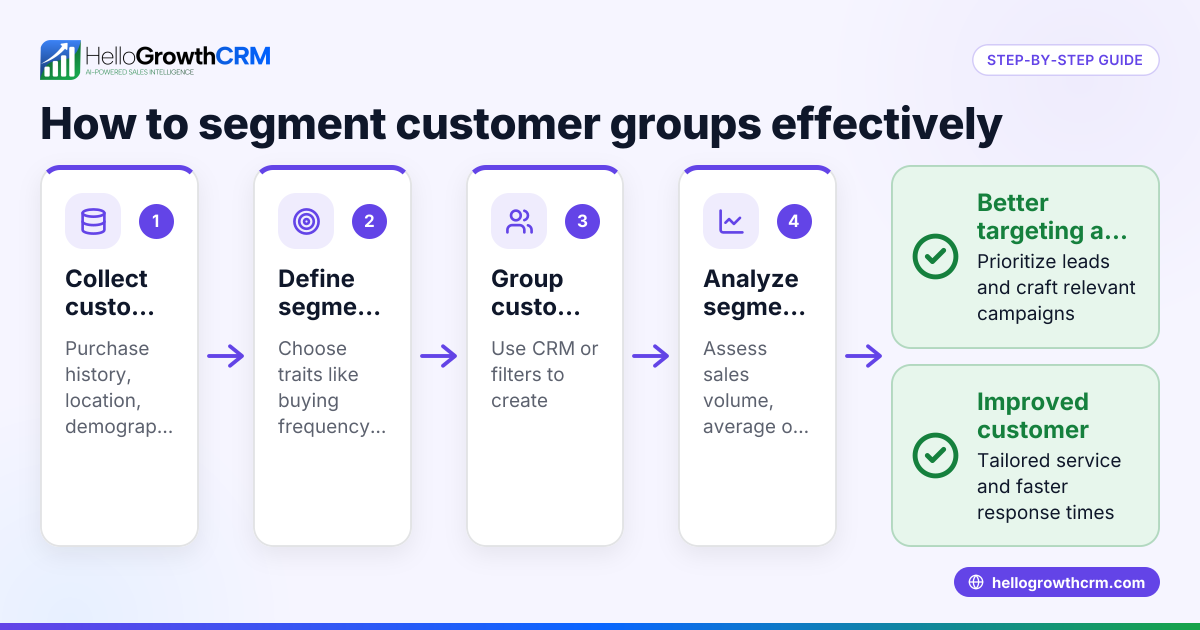
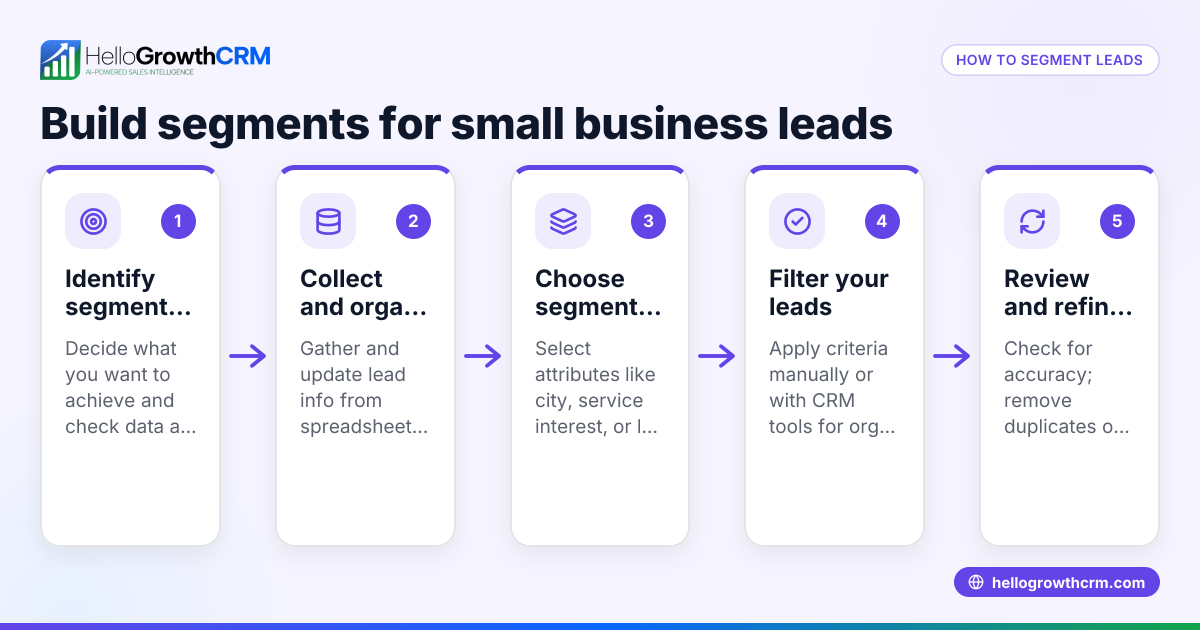
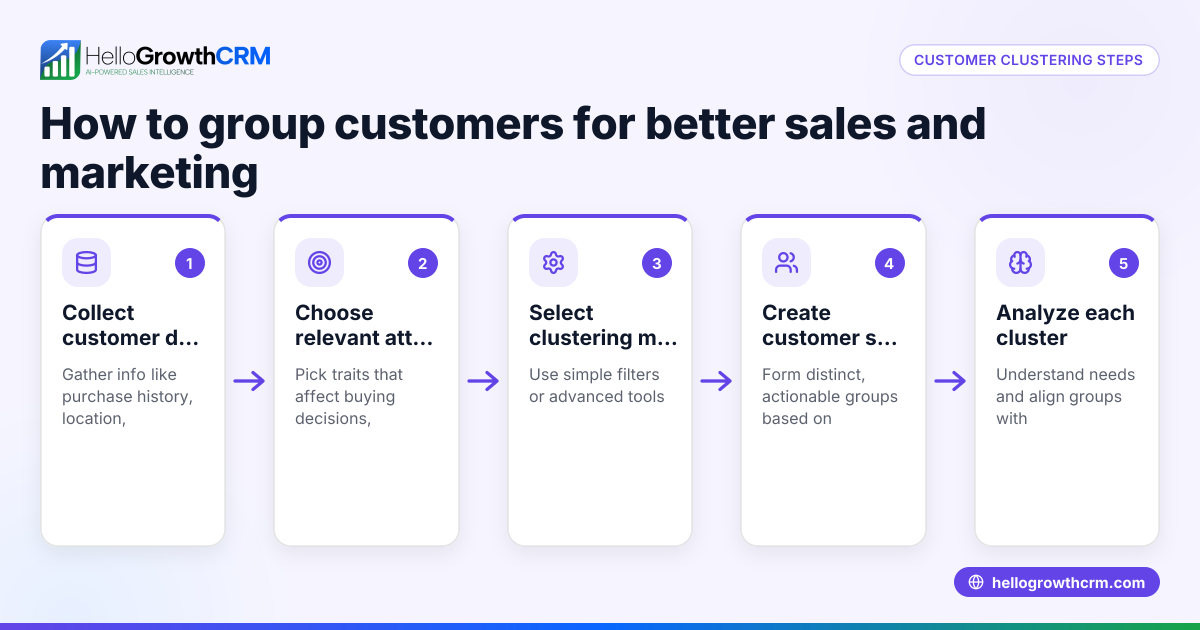
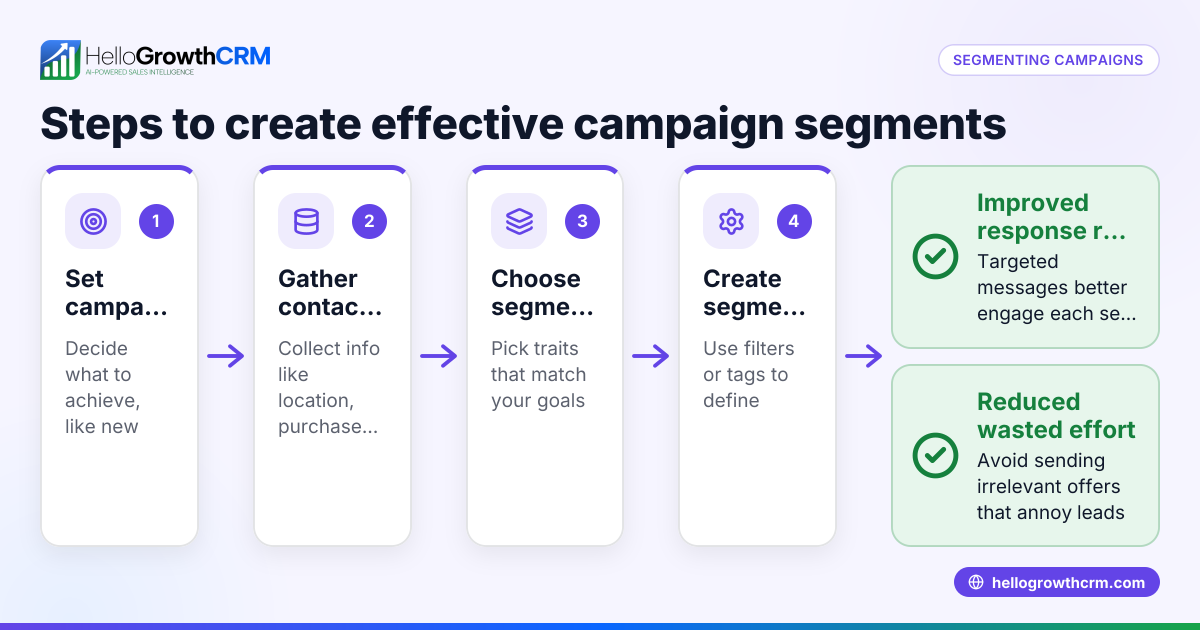
- Collect customer data: Gather information on your customers such as age, location, purchase history, product preferences, and communication channels. Check your existing sales records, emails, and any web form data.
- Identify segmentation criteria: Decide which traits matter most for your business goals. Common criteria include demographics (age, gender), geography (city, state), behavior (purchase frequency), and needs (product type).
- Group customers into segments: Use your chosen criteria to create distinct groups. For example, frequent buyers aged 30-45 in Phoenix, Arizona, or new leads interested in a specific service.
- Analyze each segment: Look at the size, revenue potential, and responsiveness of each group. Check which segments bring the most value or have growth potential.
- Tailor marketing messages and offers: Develop specific messages, promotions, and communication channels for each segment. For example, send SMS discounts to frequent buyers and email newsletters to new leads.
- Track and adjust: Monitor how each segment responds to your marketing. Use sales data and customer feedback to refine your segments and strategies.
Using a CRM designed for WhatsApp and SMS like HelloGrowthCRM can help capture leads and keep detailed records to support segmentation and targeted messaging. Learn more about WhatsApp and SMS CRM (/product/whatsapp-sms-crm) and tracking customer engagement at the customer health score page (/product/customer-health-score).
Example (fictional figures)
A residential real-estate team in Phoenix, Arizona, wants to use customer segments marketing to boost sales in 2026.
- They have 1,000 leads collected from web forms and referrals.
- They identify two main segments:
- Segment A: First-time homebuyers aged 25-35 (600 leads)
- Segment B: Investors looking for rental properties (400 leads)
They decide to focus on Segment A in Q1 2026.
Step 1: Estimate conversion rates
- Segment A conversion rate assumed at 10%
- Segment B conversion rate assumed at 5%
Step 2: Calculate expected buyers
- Segment A expected buyers = 600 × 10% = 60 buyers
- Segment B expected buyers = 400 × 5% = 20 buyers
Step 3: Average sale value
- Average home price for Segment A = $350,000
- Average home price for Segment B = $500,000
Step 4: Calculate expected revenue
- Segment A revenue = 60 × $350,000 = $21,000,000
- Segment B revenue = 20 × $500,000 = $10,000,000
This example shows how segmenting customers helps focus efforts on the most promising groups.
Common mistakes
- Using too many segments: Creating too many small groups makes marketing complicated and inefficient. Prevent by focusing on a manageable number of meaningful segments.
- Ignoring data quality: Poor or outdated customer data leads to wrong segments. Regularly update and verify your data.
- Treating segments as static: Customer preferences change over time. Review and adjust segments quarterly.
- Sending generic messages: Failing to tailor communication wastes opportunities. Use personalized messages for each segment.
- Not tracking results: Without measuring response rates, you can't know which segments work best. Use CRM reports to monitor.
Learn how to track customer engagement and health scores to improve segmentation at HelloGrowthCRM’s customer health score page (/product/customer-health-score).
Doing this in HelloGrowthCRM
HelloGrowthCRM supports customer segments marketing by keeping all customer interactions, service requests, and sales deals on the same customer record. After the sale, service requests stay linked to the deal, helping you maintain a clear view of each customer's history. Features like the customer portal, referral tracking, support tickets, and knowledge base keep your team organized and customers satisfied. This centralized approach helps you manage segmented marketing and follow-up efficiently.
Frequently asked questions
What is the difference between customer segmentation and targeting? Customer segmentation is the process of dividing your customers into groups based on shared traits. Targeting means choosing which segments to focus your marketing efforts on. Segmentation comes first; targeting uses that insight.
How often should I update my customer segments? Review your segments at least every quarter. Markets and customer behavior change, so updating segments ensures your marketing stays relevant.
Can I segment customers without a CRM? Yes, but it’s harder and less accurate. Using spreadsheets or notes can work initially, but a CRM like HelloGrowthCRM helps automate data collection and track interactions across WhatsApp, SMS, and email.
What data is most important for segmentation? Depends on your business, but common data includes demographics, purchase history, location, and communication preferences. Focus on data that affects buying decisions.
How does HelloGrowthCRM help with segmented marketing? It centralizes customer data, keeps service requests linked to deals, and tracks referrals and tickets. This helps you maintain detailed customer profiles to support segmentation and personalized marketing.
Key takeaways
- Customer segments marketing groups customers by shared traits to target marketing effectively.
- Collect and analyze customer data before creating 3-5 meaningful segments.
- Tailor marketing messages and offers to each segment and track results.
- Avoid common mistakes like too many segments or ignoring data quality.
- HelloGrowthCRM keeps customer records and service requests linked, supporting segmented marketing and follow-up.
Start on the Free Forever plan (200 leads, no credit card) at HelloGrowthCRM to organize your customer segments and improve your marketing results.
Ready to put this into practice?
Set up your pipeline, WhatsApp follow-ups, and AI lead scoring in minutes — free, no credit card.
Try HelloGrowthCRM freeGet CRM tips in your inbox
Join thousands of sales professionals who get weekly insights on CRM strategy, AI automation, and pipeline optimization.

The HelloGrowthCRM team publishes guides on CRM strategy, AI sales tools, and revenue operations for small business sales teams.