HelloGrowthCRM software
Built for real small-business sales teams
HelloGrowthCRM helps reps qualify faster, follow up on time, and close more deals—with practical automation in one place.
- AI lead scoring and pipeline visibility
- Built-in dialer, WhatsApp, and email automation
- Sales forecasting and RevOps-ready reporting
Segmenting customers means dividing your customer base into groups that share similar characteristics. This allows you to tailor your sales and marketing strategies to each group’s needs, improving engagement and conversions.
Why this comes up / what goes wrong
Small-business owners often struggle to manage leads and customers effectively because they treat all customers the same. Without segmentation, marketing messages can be too broad, and sales teams may waste time on low-value prospects. For example, a landscaping contractor in Charlotte might miss opportunities by not distinguishing between residential and commercial clients or by not prioritizing repeat customers. This lack of focus can lead to slower follow-up, lost leads, and inefficient use of sales resources.
Step-by-step
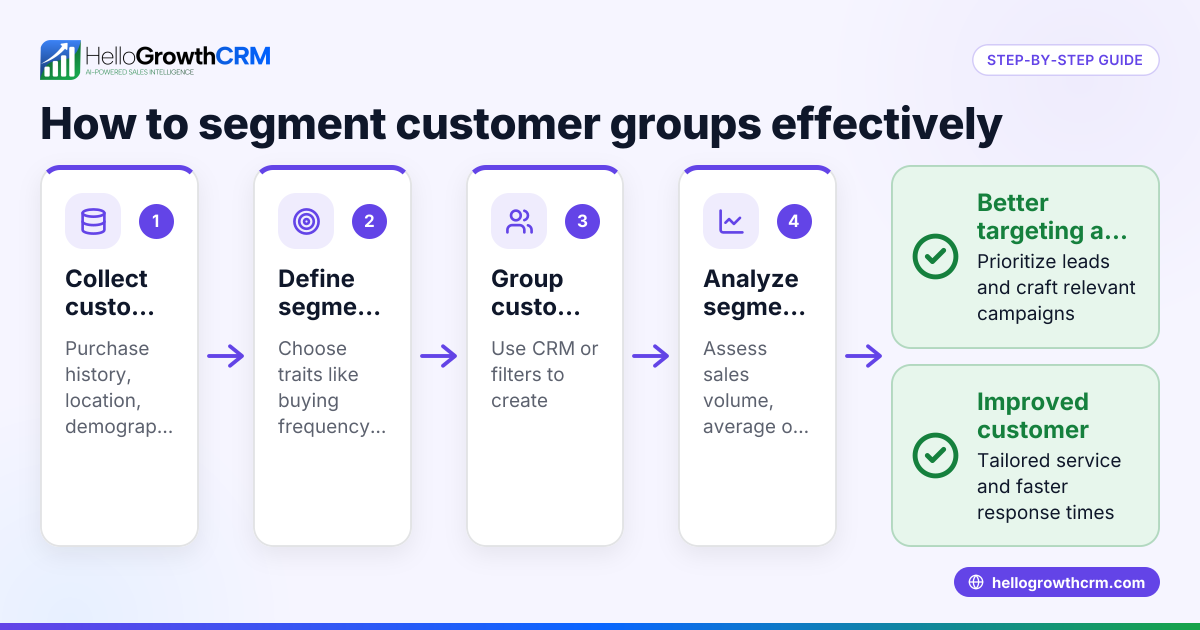
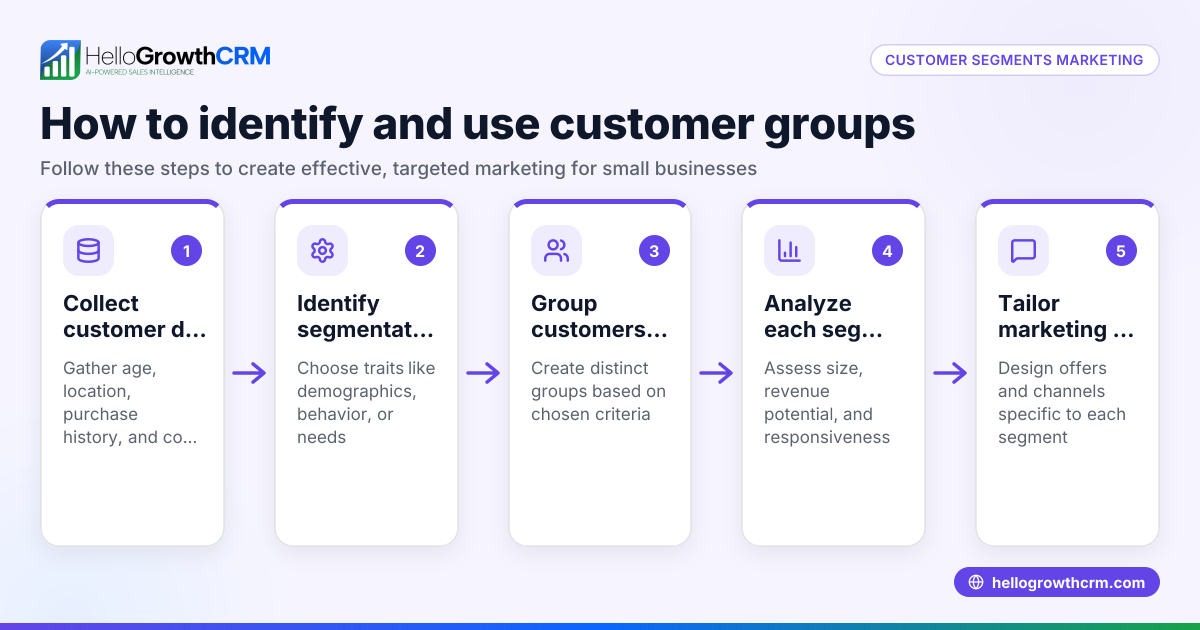
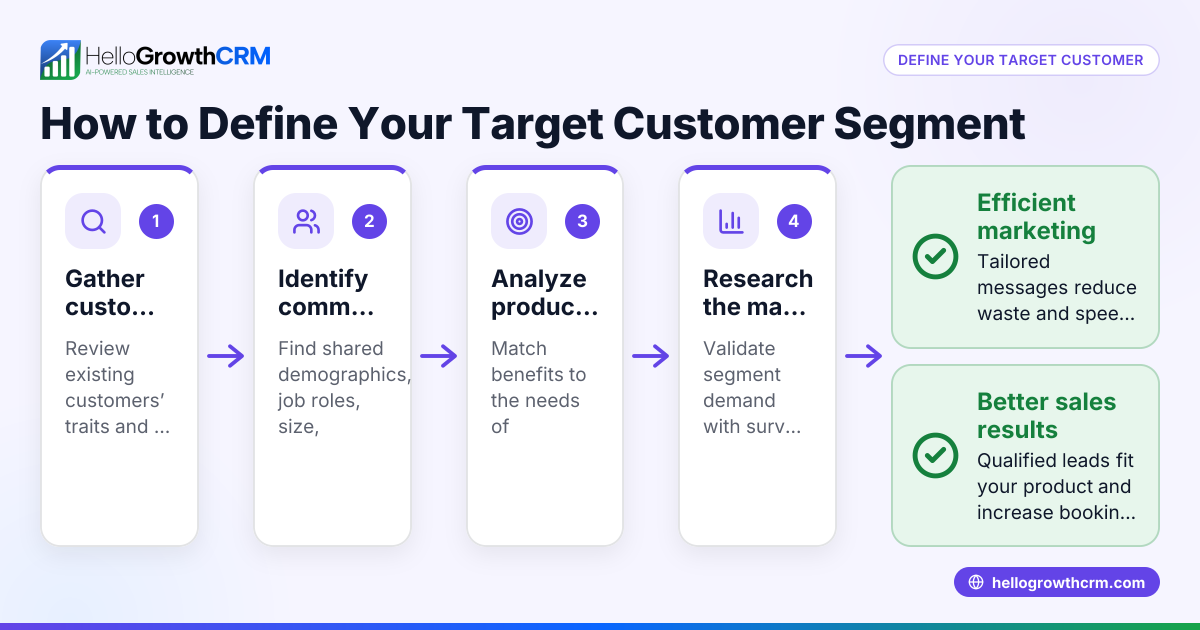
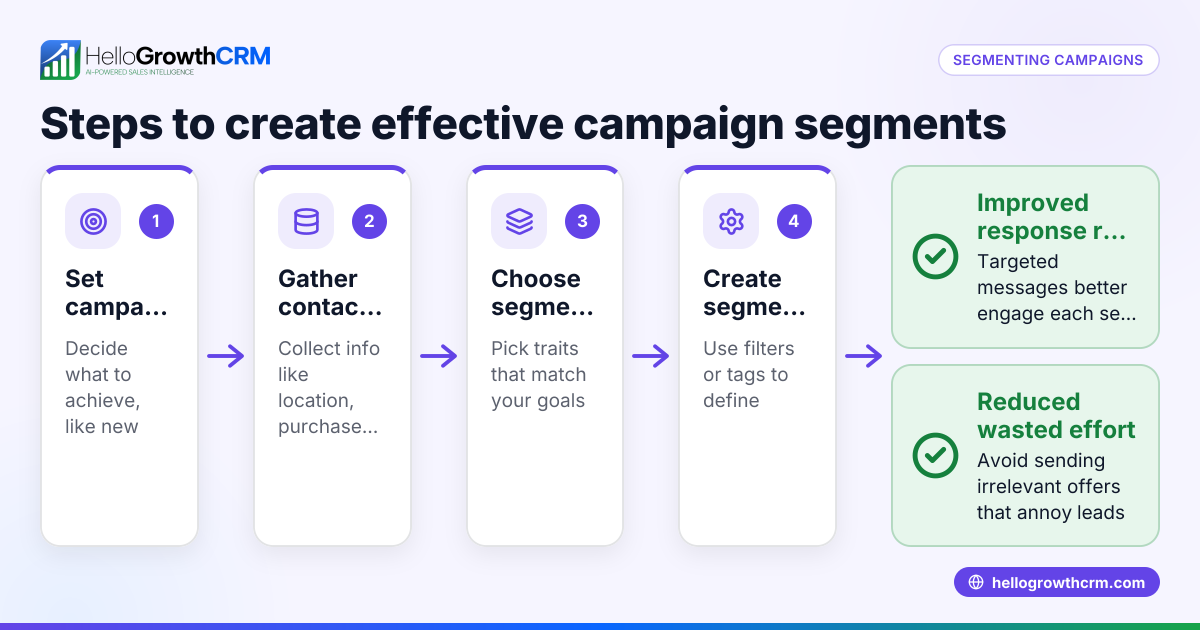
- Collect customer data: Gather information such as age, location, purchase history, and communication preferences. Check that your data is accurate and up-to-date. Good data is the foundation of effective segmentation.
- Choose segmentation criteria: Decide which factors matter most for your business, such as demographics (age, gender), buying behavior (purchase frequency, average spend), geographic location, or engagement level (response to messages, referrals). Ensure the criteria align with your sales goals and marketing plans.
- Group customers into segments: Create clear groups based on the chosen criteria. For example, segment by geographic region (city or ZIP code) or by customers who purchased within the last 6 months. Segments should be actionable and meaningful.
- Analyze segment value: Evaluate each segment’s revenue potential and engagement. Check which segments generate the most sales or have the highest referral rates. Use tools like a customer health score to track engagement and loyalty.
- Tailor marketing and sales efforts: Develop targeted campaigns and sales approaches for each segment. Verify that messaging and offers fit the segment’s needs and preferences. Personalization increases the chance of conversion.
- Monitor and update segments regularly: Customer behavior changes over time, so review your segments periodically and adjust as needed. Updating segments at least quarterly keeps your targeting relevant and effective.
Example (fictional figures)
A landscaping contractor in Charlotte, North Carolina, wants to segment customers to improve follow-up and sales.
- Total customers: 1,000
- Segment 1: Residential customers (700 customers)
- Segment 2: Commercial customers (300 customers)
The contractor finds that residential customers spend an average of $1,200 per year, while commercial customers spend $3,500.
Calculate total revenue by segment:
Residential revenue = 700 × $1,200 = $840,000 Commercial revenue = 300 × $3,500 = $1,050,000
Because commercial customers generate more revenue per customer, the contractor decides to prioritize personalized outreach for this segment.
Common mistakes
- Using too many segmentation criteria: Avoid overcomplicating segments. Focus on a few key factors to keep it manageable and actionable.
- Ignoring data quality: Prevent inaccurate segmentation by regularly cleaning your customer data. Remove duplicates and update outdated information.
- Failing to act on segments: Segmentation is useless if you don’t tailor your sales and marketing efforts accordingly. Always use segments to guide your outreach.
- Not updating segments: Customer preferences and behaviors change; review segments at least quarterly to stay relevant.
- Overlooking engagement levels: Include customer activity and referral behavior to identify loyal customers. Use tools like a customer health score to track engagement and prioritize follow-up.
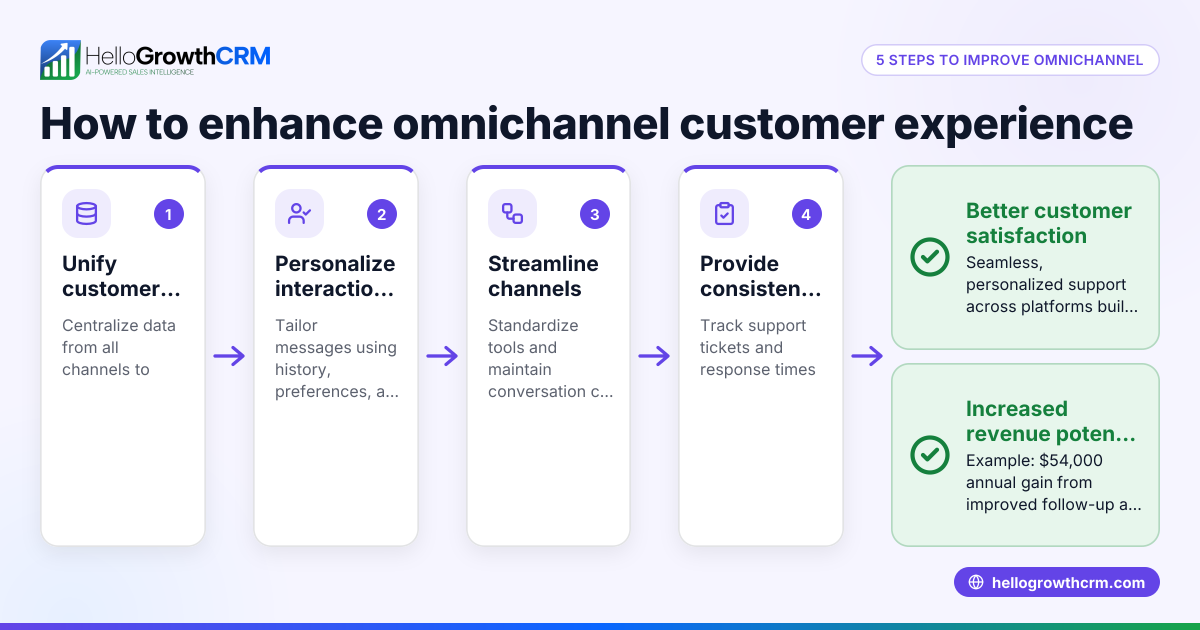
- Separating post-sale service from sales data: Keeping service requests disconnected from customer records can reduce the effectiveness of segmentation. Integrate service and sales data for a full customer view.
Doing this in HelloGrowthCRM
HelloGrowthCRM helps you manage customer relationships after the sale with a customer portal, referrals, tickets, and knowledge base. Service requests stay on the same customer record as the deal, making it easier to track ongoing interactions and support. This integration helps maintain clear communication and improves customer satisfaction. Learn more about HelloGrowthCRM for the United States and its WhatsApp and SMS CRM features to enhance your customer segmentation and follow-up.
Frequently asked questions
What are the most common ways to segment customers? Common methods include demographic segmentation (age, gender), geographic (location), behavioral (purchase history, product usage), and psychographic (values, lifestyle). Each method helps tailor marketing and sales strategies to customer needs.
How often should I update my customer segments? Update segments at least every three months to reflect changes in customer behavior, market trends, and business priorities. Regular updates prevent outdated targeting and missed opportunities.
Can I segment customers without advanced software? Yes, you can start by using spreadsheets to group customers by basic criteria like location or purchase date. As your business grows, consider CRM tools like HelloGrowthCRM to automate and refine segmentation.
How does customer segmentation improve sales? Segmentation allows you to focus sales efforts on high-value or engaged customers, personalize communication, and create relevant offers. This leads to higher conversion rates and better customer retention.
What role does customer engagement play in segmentation? Engagement metrics like response to emails, referrals, and repeat purchases help identify loyal customers. Including engagement in segmentation helps prioritize customers who are more likely to buy again or refer others.
Key takeaways
- Segment customers by clear, relevant criteria like demographics, behavior, geographic location, and engagement.
- Use accurate data and keep segments updated regularly to maintain relevance.
- Tailor marketing and sales efforts to each segment for better targeting and results.
- Avoid overcomplicating segmentation; focus on actionable and manageable groups.
- Track customer engagement with tools like a customer health score to refine segments.
- Manage post-sale interactions efficiently using HelloGrowthCRM's customer portal and support features.
Start segmenting your customers today to improve sales focus and customer satisfaction. To get started easily, Start on the Free Forever plan (200 leads, no credit card).
Ready to put this into practice?
Set up your pipeline, WhatsApp follow-ups, and AI lead scoring in minutes — free, no credit card.
Try HelloGrowthCRM freeGet CRM tips in your inbox
Join thousands of sales professionals who get weekly insights on CRM strategy, AI automation, and pipeline optimization.

The HelloGrowthCRM team publishes guides on CRM strategy, AI sales tools, and revenue operations for small business sales teams.