HelloGrowthCRM software
Built for real small-business sales teams
HelloGrowthCRM helps reps qualify faster, follow up on time, and close more deals—with practical automation in one place.
- AI lead scoring and pipeline visibility
- Built-in dialer, WhatsApp, and email automation
- Sales forecasting and RevOps-ready reporting
Selling to salespeople requires understanding their mindset: they prioritize tools that speed up their sales process and improve results clearly. They are skeptical of vague claims and want proof your product helps them meet their targets. This guide helps US small-business owners and sales leaders sell effectively to salespeople with clear steps, a realistic example, common pitfalls, and FAQs.
Why this comes up / what goes wrong
Many small-business owners struggle to sell to salespeople because salespeople are experienced buyers of sales tools. They quickly detect pitches that don’t focus on their results or waste their time. Business owners often use generic sales approaches that don’t emphasize clear benefits or ROI. This leads salespeople to lose interest or say no. To succeed, you must tailor your approach to salespeople’s priorities: speed, money, and simplicity.
Salespeople want to know how your product helps them close more deals faster or reduces their administrative tasks. If you fail to address these points clearly, your pitch will fall flat.
Step-by-step
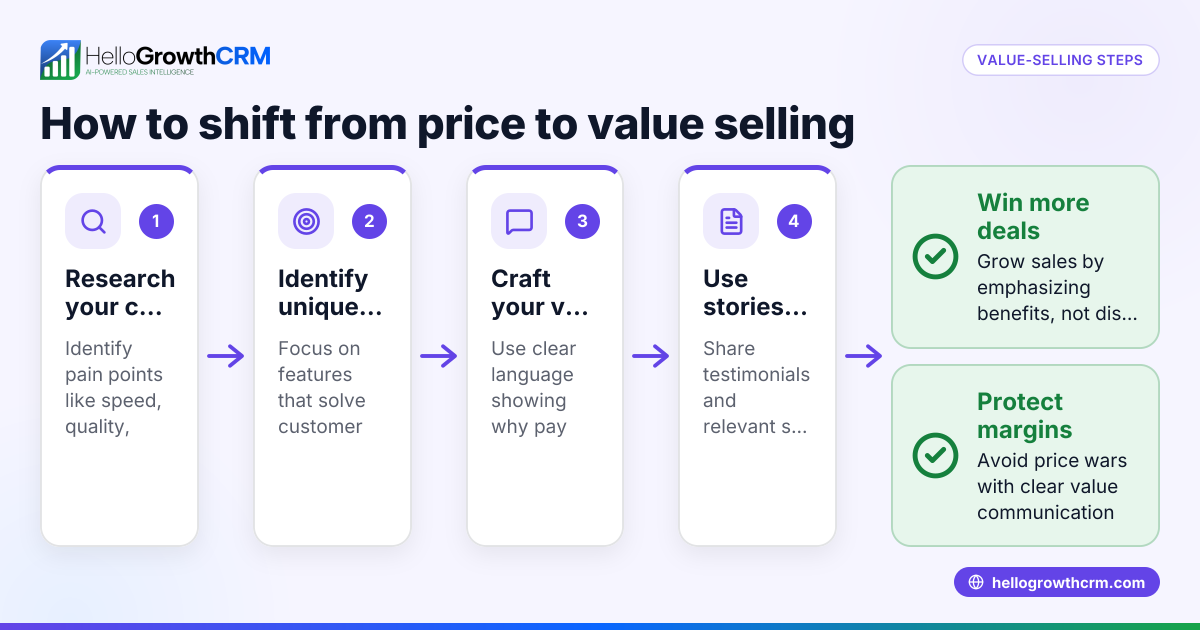
- Research your prospect salesperson: Use LinkedIn, company websites, or sales forums to learn their sales targets, challenges, and existing tools. Knowing their role and goals helps you tailor your message.
- Start with a clear value statement: Open by telling them exactly how your product helps close deals faster, reduces admin work, or increases commissions. Be concise and direct.
- Provide social proof from peers: Share examples or testimonials from other salespeople or sales teams who benefited from your product. Salespeople trust peer success stories more than generic claims.
- Show concrete ROI with numbers: Calculate how much time or money your product saves or earns. Use simple math so the salesperson can easily understand the benefit.
- Be ready for detailed questions: Salespeople will ask about integrations, ease of use, and how the product fits into their workflow. Prepare clear, concise answers.
- Offer a demo or trial focused on their daily tasks: Let them see how your product fits into their sales process and makes their work easier.
- Follow up quickly and consistently: Salespeople dislike delays. Use tools like a built-in CRM dialer to speed communication and keep the conversation active.
- Close by summarizing benefits and next steps: Make it easy for them to say yes by removing obstacles and clarifying the buying process.
Example (fictional figures)
A plumbing company in Austin, Texas, wants to sell a CRM tool to its sales team of 5 salespeople. Each salesperson closes about $500,000 in sales annually. The company estimates the CRM can improve closing rates by 5%, adding $25,000 more sales per person.
Total additional sales = 5 salespeople × $25,000 = $125,000
Assuming a 10% commission on new sales:
Additional commission per salesperson = $25,000 × 10% = $2,500
Total extra commission paid = 5 × $2,500 = $12,500
If the CRM costs $5,000 per year, the net gain for the company is:
$125,000 (extra sales) - $5,000 (CRM cost) = $120,000
This example shows salespeople the clear financial benefit of adopting the CRM.
Common mistakes
- Not tailoring the pitch to salespeople: Avoid generic pitches. Focus on how your product helps them sell more or faster.
- Ignoring their need for numbers: Always quantify benefits with clear math to build trust.
- Failing to respond quickly: Slow follow-up kills deals with salespeople. Use tools like WhatsApp and SMS CRM to stay fast.
- Overloading with features instead of benefits: Salespeople want to know what’s in it for them, not every feature.
- Skipping peer validation: Always include examples of other salespeople who benefited.
- Not demonstrating ease of use: If your product complicates their workflow, they won’t adopt it.
Frequently asked questions
How do I build rapport quickly with salespeople? Start by acknowledging their expertise and challenges. Use language that shows you understand sales pressures and goals. Ask questions about their current process to engage them.
What kind of social proof works best? Testimonials or case studies from other salespeople or sales teams in similar industries resonate best. Numbers and specific results make social proof more credible.
How can I prove ROI to a skeptical salesperson? Use simple calculations showing time saved or increased commissions. Provide a worked example relevant to their business size and sales targets.
Is it better to offer a free trial or a demo? Both have value. A demo shows how your product works, while a free trial lets salespeople test it in real scenarios. Tailor your offer based on their interest level.
What tools help me follow up faster? Using a built-in CRM dialer or a WhatsApp and SMS CRM can speed up communication and keep leads warm.
Key takeaways
- Focus your pitch on how your product helps salespeople close more deals or save time.
- Use clear, simple math to demonstrate ROI.
- Provide peer examples and social proof.
- Respond quickly and consistently to maintain trust.
- Avoid overwhelming features; emphasize benefits.
- Use communication tools to speed follow-up.
Selling to salespeople means respecting their expertise and showing how your product directly helps them succeed. Start with a clear value proposition, back it with numbers and peer proof, and keep communication fast.
Start on the Free Forever plan (200 leads, no credit card) at HelloGrowthCRM to organize your sales process and follow up faster.
For more on US sales teams, see HelloGrowthCRM for the United States.
Ready to put this into practice?
Set up your pipeline, WhatsApp follow-ups, and AI lead scoring in minutes — free, no credit card.
Try HelloGrowthCRM freeGet CRM tips in your inbox
Join thousands of sales professionals who get weekly insights on CRM strategy, AI automation, and pipeline optimization.

The HelloGrowthCRM team publishes guides on CRM strategy, AI sales tools, and revenue operations for small business sales teams.