HelloGrowthCRM software
Built for real small-business sales teams
HelloGrowthCRM helps reps qualify faster, follow up on time, and close more deals—with practical automation in one place.
- AI lead scoring and pipeline visibility
- Built-in dialer, WhatsApp, and email automation
- Sales forecasting and RevOps-ready reporting
Places to sell are the platforms or locations where your business offers products or services to customers in exchange for payment. For UK small businesses, places to sell include physical stores, online marketplaces, social media platforms, and direct communication channels like WhatsApp or email. This article covers why choosing the right places to sell matters, step-by-step guidance on selecting and using these places, a realistic example, common mistakes to avoid, and answers to frequently asked questions.
Why this comes up / what goes wrong
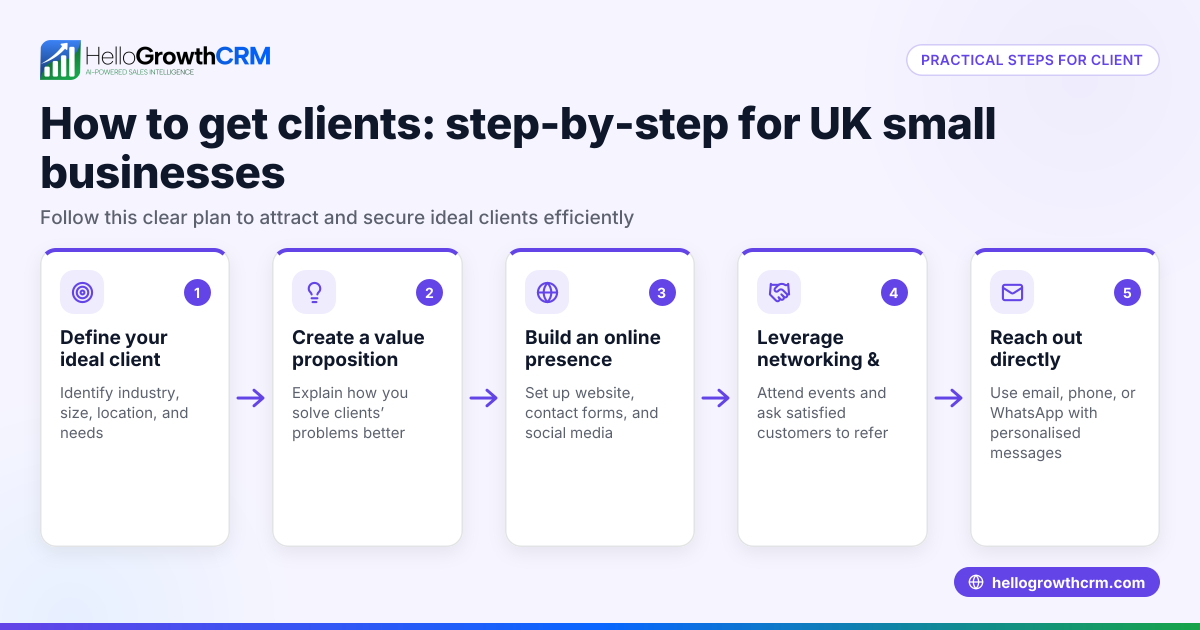
Small business owners in the UK often search for "places to sell" because they want to expand their reach and convert more leads into customers. Many start by selling informally through WhatsApp groups, emails, or spreadsheets, which can lead to lost leads and slow follow-up. Without a clear plan or knowledge of available selling channels, businesses may miss out on sales opportunities or waste time on ineffective platforms. Understanding where and how to sell helps streamline sales, improve customer experience, and grow revenue.
Step-by-step
- Identify Your Product or Service Type
- Check if your product suits physical retail, online marketplaces, social media, or direct sales.
- For example, bespoke crafts may do well on artisan online platforms, while consultancy services may sell better via direct communication.
- Research Popular Selling Places in the UK
- Look into local markets, online marketplaces like eBay or Etsy, social media platforms (Facebook Marketplace, Instagram), and direct communication tools such as WhatsApp.
- Check if these platforms support UK sellers and comply with UK consumer laws.
- Evaluate Costs and Benefits
- Check fees, commission rates, and payment processing costs.
- Consider ease of use, customer reach, and integration with your sales process.
- Set Up Your Sales Channel
- For physical stores, secure a location and stock.
- For online marketplaces, create seller accounts and list products.
- For social media, set up business profiles and enable shopping features.
- For direct sales, organise communication tools and lead management.
- Integrate Sales and Lead Management
- Use tools that centralise leads and sales from multiple places to avoid losing prospects.
- For example, a CRM that supports WhatsApp and email can streamline follow-up and task management.
- Test and Monitor Performance
- Track sales volume, customer feedback, and lead conversion rates.
- Adjust your selling places based on what works best.
Example (fictional figures)
A letting agency in Manchester wants to expand where it sells its services. It currently uses email and phone calls but wants to try new places.
- Identifies its service: property lettings and management.
- Researches places: local property portals, Facebook Marketplace, and WhatsApp for direct client communication.
- Evaluates costs:
- Local property portal listing fee: £100/month
- Facebook Marketplace: free
- WhatsApp: free
- Sets up accounts:
- Registers on property portal on 01/03/2026
- Creates Facebook business profile on 02/03/2026
- Organises WhatsApp business account
- Integrates leads using a CRM that supports WhatsApp and email to track enquiries.
- Measures results after one month:
- Property portal leads: 15, with 5 lettings at £800/month each
- Facebook leads: 8, with 2 lettings
- WhatsApp direct leads: 12, with 4 lettings
Calculations for one month revenue from new lettings:
£800 × 5 = £4,000 £800 × 2 = £1,600 £800 × 4 = £3,200
Total revenue = £4,000 + £1,600 + £3,200 = £8,800
Cost of property portal = £100
Net revenue = £8,800 - £100 = £8,700
This example shows diversifying places to sell can increase leads and revenue.
Common mistakes
- Selling only on one platform
- Prevent by diversifying selling places to spread risk and reach more customers.
- Ignoring costs and fees
- Prevent by comparing fees before committing to a platform.
- Not integrating sales channels
- Prevent by using tools that centralise leads and communications, avoiding lost prospects.
- Poor follow-up on leads
- Prevent by organising tasks and reminders for timely follow-up.
- Using informal tools without tracking
- Prevent by adopting CRM or sales management tools that handle WhatsApp and email leads efficiently, as explained in WhatsApp and SMS CRM and built-in CRM dialer.
- Failing to monitor performance
- Prevent by regularly reviewing sales data and adjusting selling places accordingly.
Frequently asked questions
What are the best online places to sell in the UK? Popular online places include eBay, Etsy, Facebook Marketplace, and specialised local portals. Choosing depends on your product type, audience, and fees. Testing multiple platforms can help find the best fit.
Can I sell directly through WhatsApp? Yes, many UK businesses use WhatsApp for direct communication and sales. Organising leads and messages with a CRM that supports WhatsApp can improve follow-up and sales efficiency. See WhatsApp and SMS CRM for options.
Should I have a physical store or sell only online? It depends on your product and customers. Physical stores suit local foot traffic and tactile products, while online selling offers wider reach. Many businesses use both to maximise sales.
How do I avoid losing leads when selling across multiple places? Use a CRM or sales management system that centralises leads from all channels, including WhatsApp, email, and online marketplaces. This helps track and follow up on every lead promptly.
Are there legal considerations when selling on different platforms? Yes, ensure compliance with UK consumer protection laws, data protection (GDPR), and platform-specific rules. Always provide clear terms, refunds, and privacy notices.
How can I track sales performance across different places? Use sales reporting tools or a CRM with forecasting features to monitor which places generate the most leads and sales. This data helps optimise your selling strategy.
Key takeaways
- Places to sell include physical stores, online marketplaces, social media, and direct communication channels like WhatsApp.
- Research and evaluate selling places based on product fit, costs, and customer reach.
- Integrate leads from all places using a CRM to avoid losing potential sales.
- Diversify selling places to reduce risk and increase revenue.
- Monitor performance regularly and adjust your selling channels accordingly.
- Avoid common mistakes like poor follow-up and ignoring fees.
Start your sales growth by choosing the right places to sell and organising your leads effectively. You can Start on the Free Forever plan (200 leads, no credit card) to manage your leads from WhatsApp, email, and more in one place.
Explore how HelloGrowthCRM for the United Kingdom supports sales teams using WhatsApp and email for lead management and follow-up.
Ready to put this into practice?
Set up your pipeline, WhatsApp follow-ups, and AI lead scoring in minutes — free, no credit card.
Try HelloGrowthCRM freeGet CRM tips in your inbox
Join thousands of sales professionals who get weekly insights on CRM strategy, AI automation, and pipeline optimization.

The HelloGrowthCRM team publishes guides on CRM strategy, AI sales tools, and revenue operations for small business sales teams.