HelloGrowthCRM software
Built for real small-business sales teams
HelloGrowthCRM helps reps qualify faster, follow up on time, and close more deals—with practical automation in one place.
- AI lead scoring and pipeline visibility
- Built-in dialer, WhatsApp, and email automation
- Sales forecasting and RevOps-ready reporting
To use a CRM for marketing, begin by organizing your leads and contacts into meaningful segments based on criteria such as location, purchase history, or engagement level. Then set up targeted messaging campaigns using email, SMS, or WhatsApp to communicate relevant offers. Track every interaction and automate follow-ups to keep prospects engaged. This article explains why small businesses need a clear CRM marketing process, provides step-by-step instructions, a realistic example, common mistakes to avoid, and how HelloGrowthCRM supports marketing workflows.
Why this comes up / what goes wrong
Many small-business owners struggle to manage marketing efforts because leads are scattered across spreadsheets, emails, and messaging apps. Without a central place to organize contacts and track communication, marketing campaigns become inconsistent or delayed. This leads to lost opportunities and wasted time. Owners want clear guidance on how to use CRM tools specifically for marketing to improve lead nurturing and conversion rates.
Step-by-step
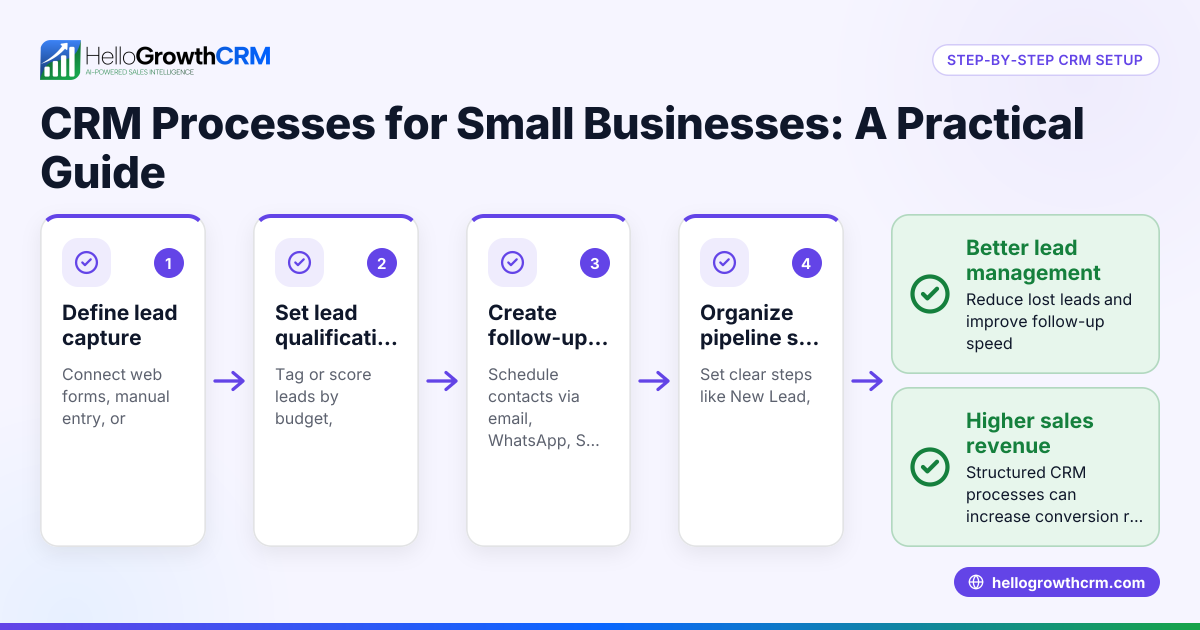
- Import and organize your contacts. Gather all lead and customer data from spreadsheets, emails, and messaging apps into your CRM. Check that each contact has key fields filled: name, email, phone, location, and source. This ensures you can contact and segment them properly.
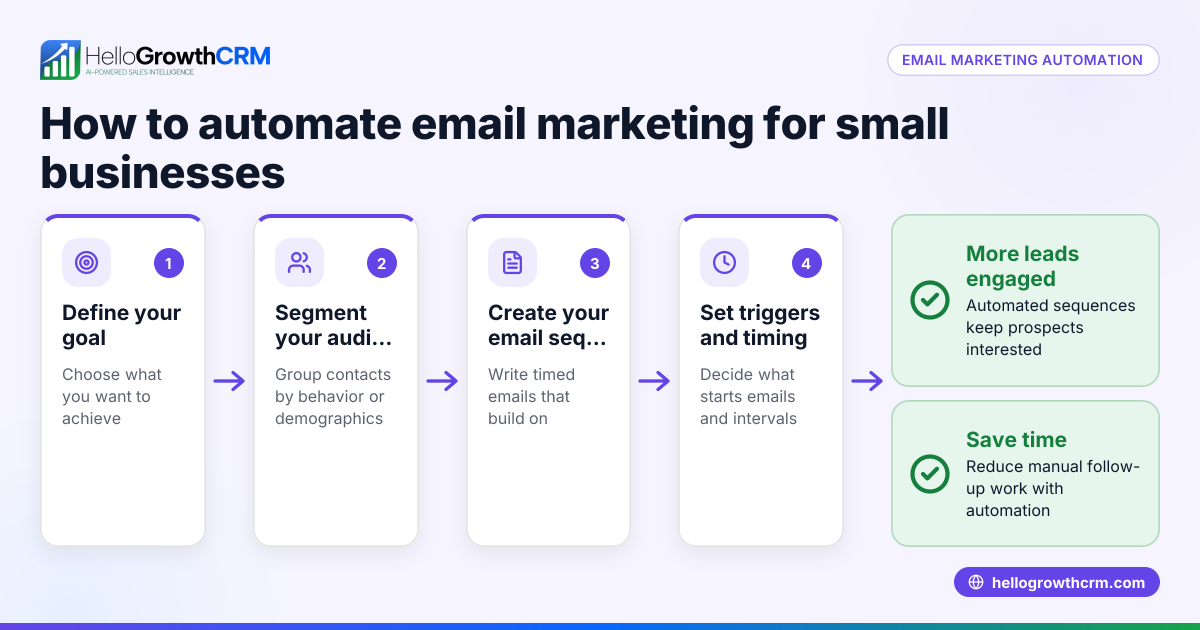
- Segment your contacts. Create groups based on shared traits like purchase history, demographics, or engagement level. Verify segments are meaningful for your marketing goals, such as targeting first-time buyers or high-value customers.
- Plan your marketing messages. Decide what offers or information each segment should receive. Prepare messages tailored for email, SMS, or WhatsApp. Check that the content matches the audience’s interests and needs.
- Set up messaging sequences. Use your CRM to schedule messages and follow-ups automatically. Confirm timing and frequency avoid spamming and respect customer preferences.
- Track interactions and responses. Monitor which contacts open messages, reply, or click links. Check that the CRM records these activities on each contact record to measure engagement.
- Adjust campaigns based on data. Use interaction reports to refine segments and message content. Confirm improvements in engagement and conversion.
- Follow up on leads promptly. Assign tasks or reminders to sales reps for timely outreach. Check task completion regularly to avoid missed opportunities.
Example (fictional figures)
Phoenix Home Solutions, a residential real-estate team in Phoenix, Arizona, wants to market a new homebuyer seminar on 10/15/2025.
- They import 1,000 leads into the CRM.
- Segment leads into "First-time buyers" (600 leads) and "Repeat buyers" (400 leads).
- Prepare two message sequences:
- First-time buyers get an SMS invitation and a WhatsApp follow-up.
- Repeat buyers get an email invite and a reminder SMS.
Campaign costs:
- SMS cost: $0.05 per message
- Email cost: assumed included in CRM
Calculations:
- SMS messages to first-time buyers: 600 × 2 messages = 1,200
- SMS messages to repeat buyers: 400 × 1 message = 400
- Total SMS messages: 1,200 + 400 = 1,600
- SMS cost: 1,600 × $0.05 = $80
Phoenix Home Solutions tracks responses and assigns follow-ups within 24 hours. They adjust messaging based on open rates after week 1.
Common mistakes
- Failing to keep contact data updated. Prevent this by regularly importing new leads and verifying fields. Use CRM import tools to avoid duplicates.
- Overloading contacts with messages. Avoid spamming by setting reasonable intervals between messages and respecting opt-outs.
- Not segmenting contacts. Prevent sending irrelevant offers by creating clear, actionable segments.
- Ignoring engagement data. Check reports frequently to refine campaigns and improve ROI.
- Delaying follow-ups. Use CRM task reminders and assign owners to keep lead contact timely.
- Using multiple disconnected tools. Consolidate messaging in one CRM to track all interactions, such as WhatsApp and SMS conversations logged on lead records. Learn more in our help center.
Doing this in HelloGrowthCRM
HelloGrowthCRM supports marketing with WhatsApp and SMS messaging, where conversations with leads are logged on their records and follow-ups can be sent as messages. Its AI agents (in Beta) draft follow-up messages after calls for reps to review and send. For founders without sales managers, Managed RevOps provides weekly follow-up queue support to keep marketing efforts on track. See full details on WhatsApp and SMS CRM and HelloGrowthCRM for the United States.
Frequently asked questions
Can I use CRM for both sales and marketing? Yes, a CRM helps manage leads through marketing campaigns and sales follow-ups in one place, improving coordination and tracking.
How do I segment contacts effectively? Start with basic criteria like location, purchase history, or engagement level. Refine segments over time using CRM reports on campaign responses.
What messaging channels work best with CRM marketing? Email, SMS, and WhatsApp are common channels. Using a CRM that logs WhatsApp and SMS conversations helps keep all communication organized.
How often should I send marketing messages? Avoid spamming by spacing messages appropriately, such as weekly or biweekly, depending on your audience’s preferences.
Can AI help with marketing follow-ups? Yes, AI agents can draft follow-up messages for review, saving time while maintaining personalized contact.
Key takeaways
- Import and organize contacts with complete information.
- Segment contacts to target marketing messages effectively.
- Use CRM to schedule and automate messaging sequences.
- Track engagement and adjust campaigns based on data.
- Follow up promptly using CRM task reminders.
- Avoid common mistakes like spamming or ignoring data.
- HelloGrowthCRM supports WhatsApp and SMS marketing with logged conversations and AI-assisted follow-ups.
Start using your CRM for marketing today by organizing your leads and setting up targeted campaigns. To try HelloGrowthCRM, start on the Free Forever plan (200 leads, no credit card).
Ready to put this into practice?
Set up your pipeline, WhatsApp follow-ups, and AI lead scoring in minutes — free, no credit card.
Try HelloGrowthCRM freeGet CRM tips in your inbox
Join thousands of sales professionals who get weekly insights on CRM strategy, AI automation, and pipeline optimization.

The HelloGrowthCRM team publishes guides on CRM strategy, AI sales tools, and revenue operations for small business sales teams.