HelloGrowthCRM software
Built for real small-business sales teams
HelloGrowthCRM helps reps qualify faster, follow up on time, and close more deals—with practical automation in one place.
- AI lead scoring and pipeline visibility
- Built-in dialer, WhatsApp, and email automation
- Sales forecasting and RevOps-ready reporting
Increasing ecommerce sales requires a combination of targeted actions and consistent follow-up. Many ecommerce businesses lose potential sales due to slow responses, inefficient lead tracking, or poor pipeline management. This guide explains the common challenges ecommerce owners face, practical steps to boost sales, a realistic example from a US ecommerce business, common mistakes to avoid, and how HelloGrowthCRM helps streamline sales operations.
Why this comes up / what goes wrong
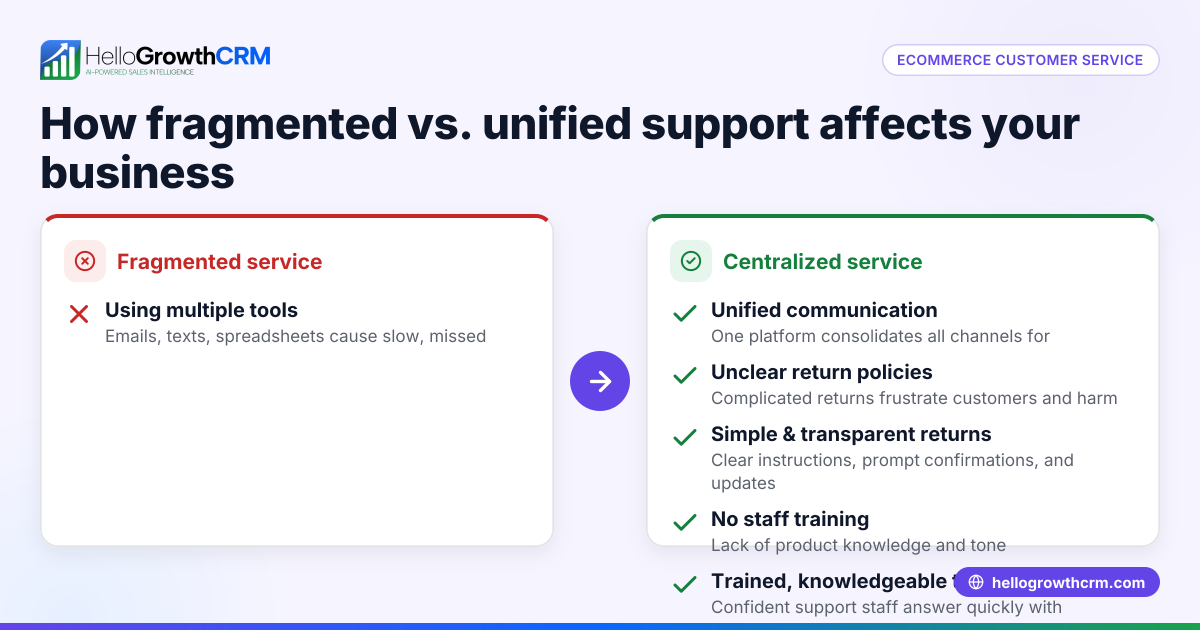
Ecommerce business owners in the US often face intense competition and fluctuating customer expectations. They may rely on email, text messages, or spreadsheets to manage sales leads, which leads to delays in following up with prospects. Without a clear system to track quotations, customer inquiries, and sales stages, deals can be forgotten or mishandled. Slow or inconsistent communication causes lost sales opportunities and impacts revenue growth. Owners or accountants managing ecommerce sales without dedicated sales resources struggle to keep pipelines clean and follow-ups timely.
Step-by-step
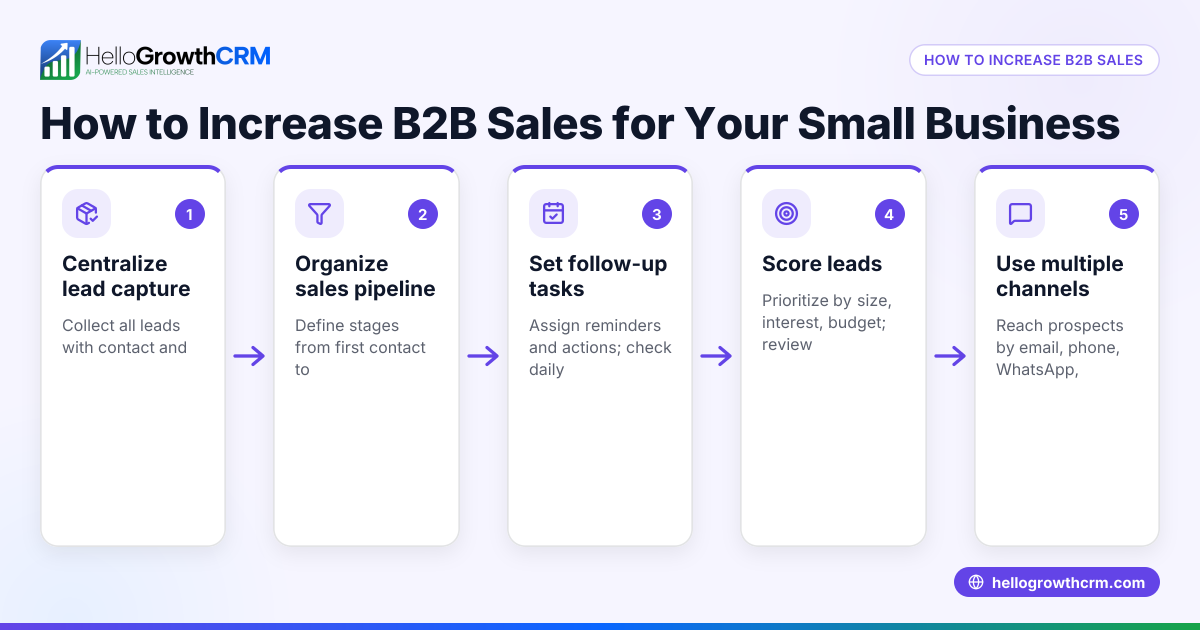
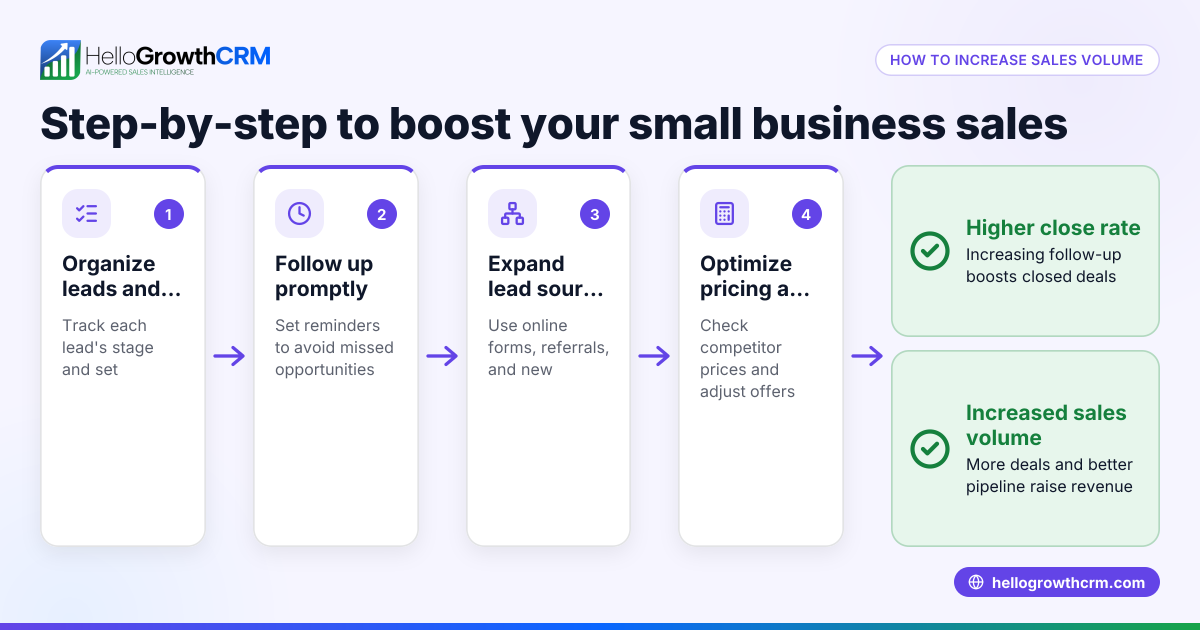
- Capture and organize leads efficiently: Use web forms and integrations to automatically capture leads into a centralized system. Check that all inquiries are logged without manual entry to prevent missing contacts.
- Track sales opportunities with a pipeline: Create a sales pipeline with stages such as prospecting, quote sent, negotiation, and closed. Assign follow-up dates to every deal and regularly review the pipeline for stalled opportunities.
- Prioritize follow-up based on lead quality: Score leads using criteria like engagement or purchase intent. Focus your efforts on high-scoring leads first to increase conversion rates.
- Use multiple communication channels: Reach customers via WhatsApp, SMS, and email to increase contact chances. Schedule sequences to nurture leads over time.
- Analyze sales data regularly: Review reports on sales forecasts, conversion rates, and pipeline health. Identify bottlenecks or stages where leads drop off.
- Assign responsibilities and territories if applicable: If you have multiple sales reps, define territories and assign leads accordingly. Track field visits and commissions to motivate your team.
- Maintain pipeline hygiene: Clean up old or dead deals weekly. Remove or archive leads that have gone cold to keep your focus sharp.
- Automate repetitive tasks where possible: Use sales automation tools to send follow-up reminders, update deal stages, and generate reports.
- Measure and adjust your strategy: Regularly test different sales approaches, messaging, and timing to find what works best for your audience.
- Consider expert support if needed: If managing sales operations becomes overwhelming, seek managed revenue operations services to keep your sales process on track.
For more detailed guidance on ecommerce sales and online sellers, see E-commerce and online sellers.
Example (fictional figures)
A US-based ecommerce business selling specialty coffee operates from Columbus, Ohio, with two warehouse locations. In Q1 2026, they want to increase sales by improving follow-up and pipeline management.
- Current monthly leads: 500
- Average conversion rate: 5%
- Average order value: $75
- Monthly sales: 500 × 5% × $75 = $1,875
They implement a pipeline system to track quotes and set follow-up reminders.
- After pipeline management, conversion rate improves to 7%
- New monthly sales: 500 × 7% × $75 = $2,625
Increase in monthly sales:
$2,625 - $1,875 = $750
Annualized increase:
$750 × 12 = $9,000
By organizing deals and ensuring timely follow-up, the business gains an extra $9,000 in sales annually.
Common mistakes
- Ignoring follow-up dates: Leads go cold if you don’t follow up promptly. Prevent this by setting reminders and reviewing your pipeline daily.
- Using multiple disconnected tools: Managing leads across email, texts, and spreadsheets causes data loss. Use a unified CRM to centralize communication.
- Not scoring leads: Treating all leads equally wastes effort. Implement lead scoring to prioritize high-potential customers.
- Overlooking pipeline hygiene: Old or dead deals clutter your system and distract focus. Regularly clean your pipeline to stay efficient.
- Failing to analyze sales data: Without reviewing sales reports, you miss opportunities to improve. Schedule weekly or monthly reviews.
- Not assigning territories or responsibilities: In teams, unclear ownership leads to duplicated or missed follow-ups. Define territories and roles clearly.
Learn more about managing sales territories and field operations at HelloGrowthCRM for the United States.
Doing this in HelloGrowthCRM
HelloGrowthCRM offers a Deals (pipeline) feature that tracks open opportunities from first contact through close. For example, a quotation sent last week appears at the 'quote sent' stage with a follow-up date, so it is not forgotten. This helps ecommerce teams stay organized and responsive.
For businesses with field sales, territories and commission tracking features enable reps to log visits from their phones while managers monitor daily activity. For founders without dedicated sales managers, Managed RevOps provides weekly follow-up execution and pipeline hygiene support.
Explore how HelloGrowthCRM supports ecommerce sales with WhatsApp and SMS CRM features at WhatsApp and SMS CRM.
Frequently asked questions
How can I improve customer engagement to increase ecommerce sales? Improving engagement involves timely and personalized communication. Use multiple channels like WhatsApp, SMS, and email to stay connected. Automate sequences to nurture leads and respond quickly to inquiries.
What is the best way to prioritize leads in ecommerce? Lead scoring based on actions such as website visits, inquiry types, or past purchases helps prioritize. Focus on leads with higher scores to maximize conversion chances.
How often should I review my sales pipeline? Review your pipeline at least weekly to update deal statuses, set follow-ups, and remove inactive leads. Regular reviews keep your sales process efficient.
Can small ecommerce businesses benefit from territory management? Yes, if you have multiple sales reps or locations, defining territories ensures clear ownership and reduces lead duplication.
What sales data should ecommerce owners track? Track metrics like lead volume, conversion rates, average order value, and sales forecast accuracy. These insights guide strategy adjustments.
Key takeaways
- Capture and organize leads automatically to avoid missing inquiries.
- Use a structured sales pipeline with follow-up dates to manage deals.
- Prioritize leads using scoring to focus on high-potential customers.
- Communicate via multiple channels like WhatsApp, SMS, and email.
- Regularly clean your sales pipeline and analyze performance data.
- Assign territories and roles to clarify responsibilities in sales teams.
Start improving your ecommerce sales process today. Start on the Free Forever plan (200 leads, no credit card).
Ready to put this into practice?
Set up your pipeline, WhatsApp follow-ups, and AI lead scoring in minutes — free, no credit card.
Try HelloGrowthCRM freeGet CRM tips in your inbox
Join thousands of sales professionals who get weekly insights on CRM strategy, AI automation, and pipeline optimization.

The HelloGrowthCRM team publishes guides on CRM strategy, AI sales tools, and revenue operations for small business sales teams.