HelloGrowthCRM software
Built for real small-business sales teams
HelloGrowthCRM helps reps qualify faster, follow up on time, and close more deals—with practical automation in one place.
- AI lead scoring and pipeline visibility
- Built-in dialer, WhatsApp, and email automation
- Sales forecasting and RevOps-ready reporting
Intelligent customer experience means using data, automation, and smart tools to provide personalized, timely, and efficient interactions with your customers. It improves satisfaction and loyalty by anticipating needs and solving problems quickly. This article explains why intelligent customer experience matters for small businesses, outlines practical steps to create it, shows a realistic example, highlights common mistakes, and describes how HelloGrowthCRM supports it.
Why this comes up / what goes wrong
Small-business owners often struggle with slow or generic customer interactions that fail to meet expectations. Leads get lost or ignored, follow-up is inconsistent, and after-sales service is disconnected from sales records. Without a unified view of the customer journey, teams rely on spreadsheets, emails, or text messages, making it hard to respond quickly or personalize communication. This leads to frustrated customers, missed sales, and lower retention.
Step-by-step
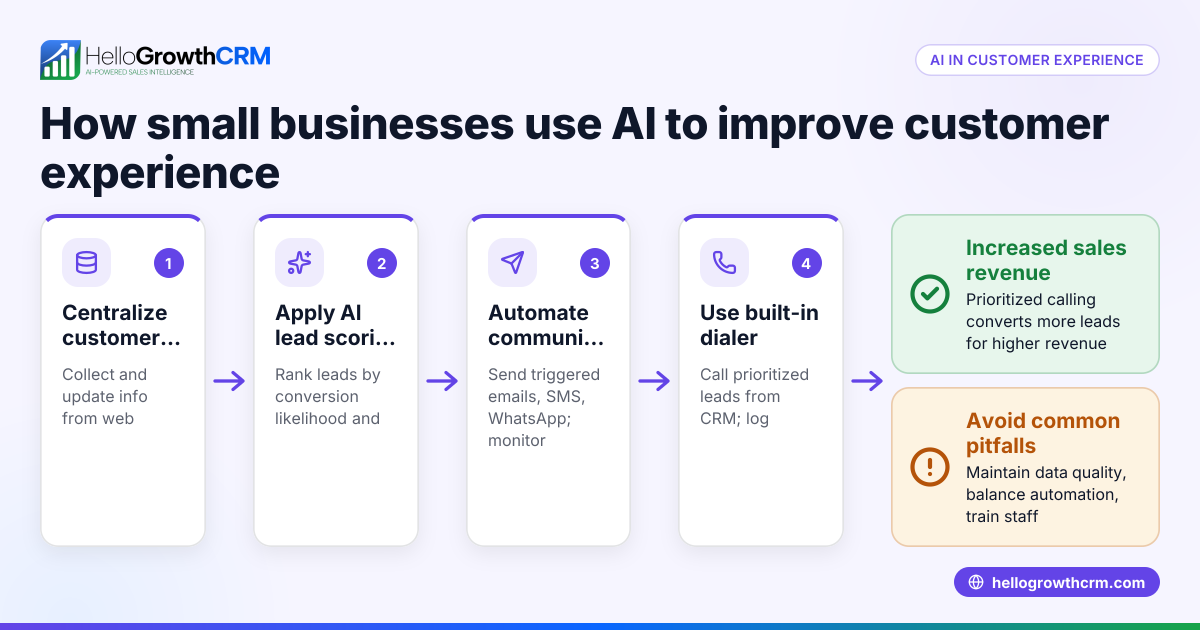
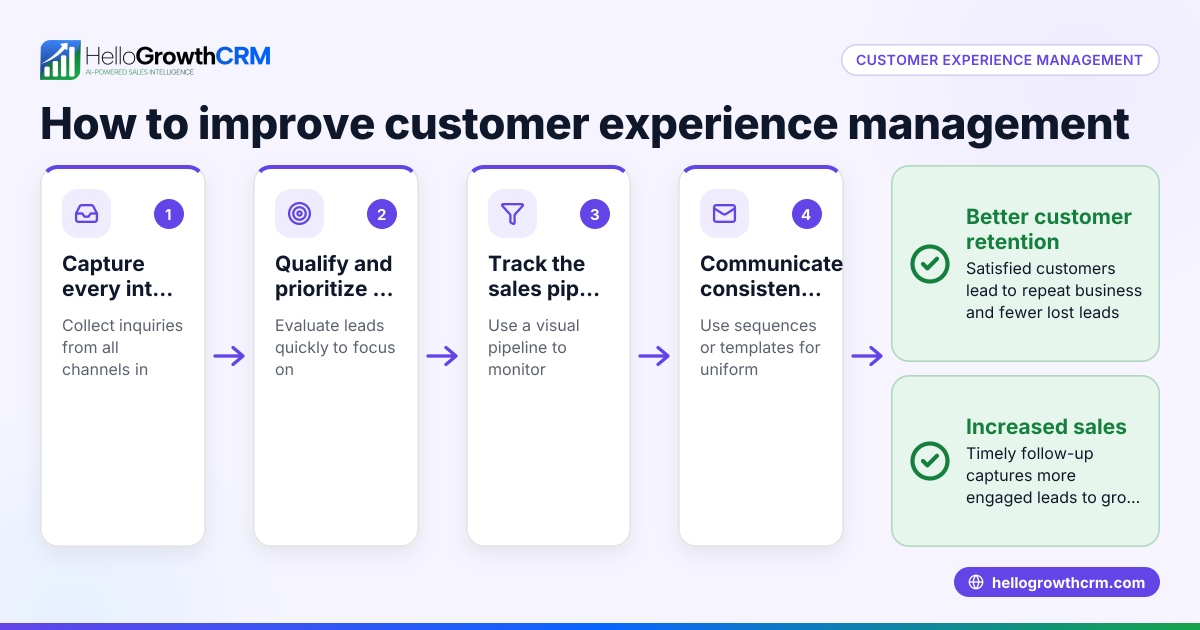
- Collect customer data centrally: Gather all customer information and interactions in one place, including inquiries, purchases, and support tickets. Check that no data is siloed in emails or spreadsheets.
- Use automation to respond quickly: Set up automated messages or task reminders to follow up on leads and service requests promptly. Verify that no lead or ticket is left unattended beyond a reasonable timeframe.
- Personalize communication: Tailor messages based on customer history and preferences. Review your messaging templates to ensure they reference relevant customer details.
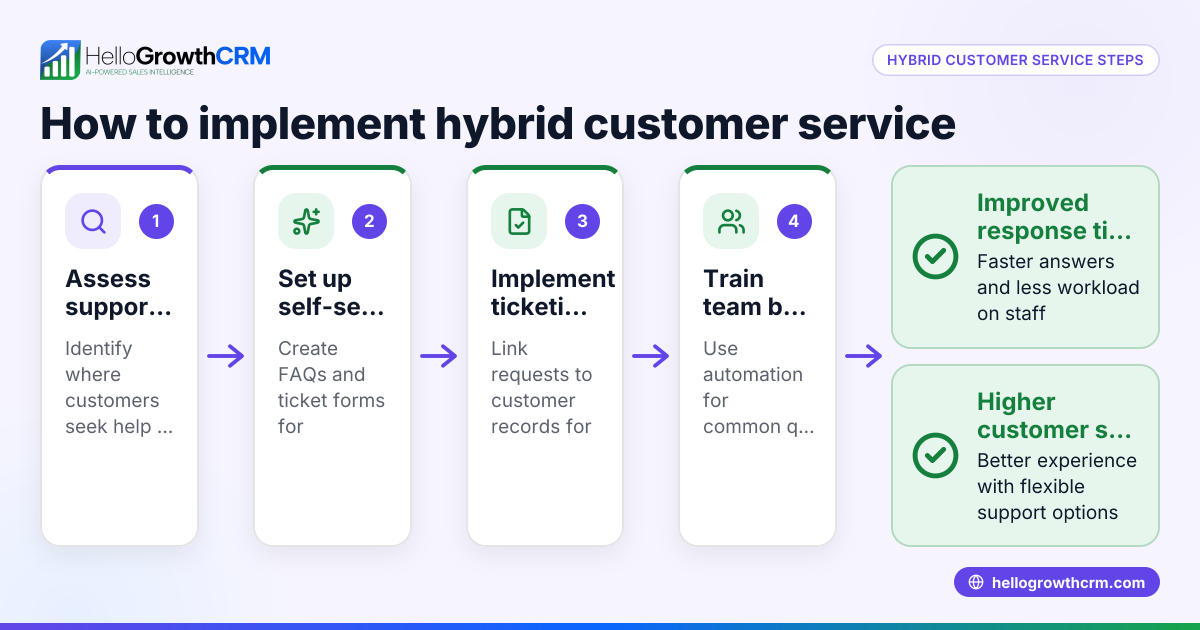
- Provide self-service options: Enable customers to access their information, request help, or find answers through a branded portal. Confirm that the portal is easy to navigate and up to date.
- Track referrals and feedback: Encourage satisfied customers to refer others and collect their feedback to improve service. Monitor referral program participation and customer satisfaction trends.
- Link sales and service records: Keep service requests and support tickets attached to the original deal or customer record to maintain context. Regularly audit records to ensure completeness.
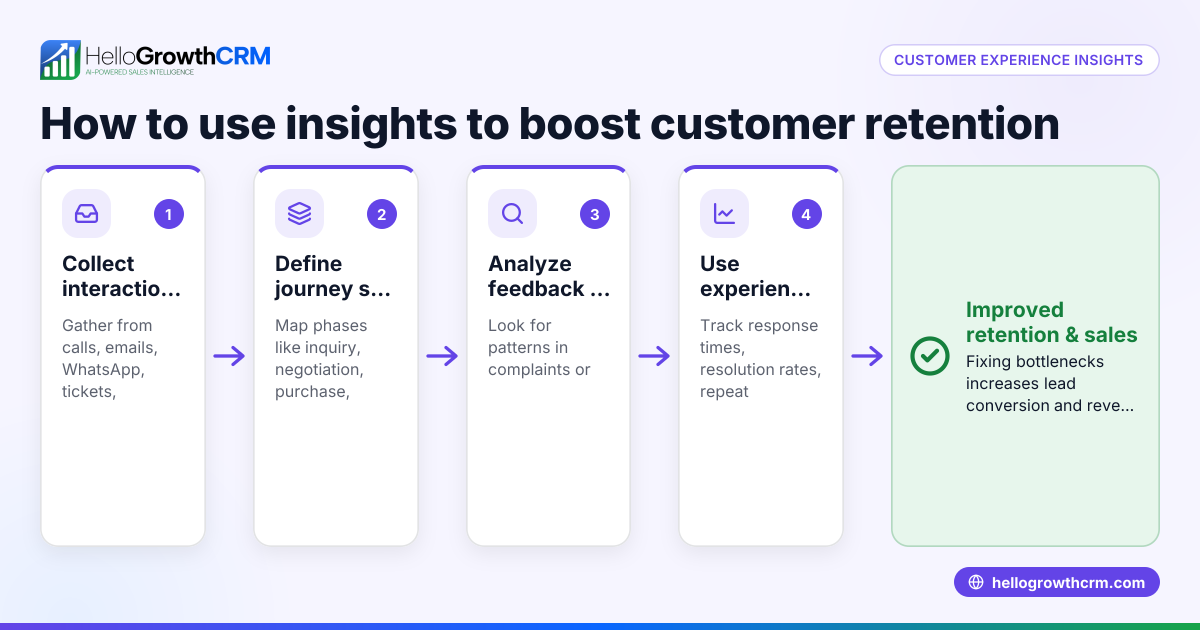
- Measure and improve: Use customer health scores and reporting to identify bottlenecks or issues in the experience. Check that your CRM provides actionable insights.
For more on tracking customer health, see customer health score.
Example (fictional figures)
A residential real-estate team in Phoenix, Arizona, wants to improve its customer experience. They handle 500 leads annually, with an average sale price of $350,000.
- They centralize all lead data in their CRM.
- Automate follow-up messages within 24 hours.
- Provide a customer portal for document sharing and support tickets.
Assume their conversion rate before was 10%, and after improvements, it rises to 15%.
Leads before improvement = 500 Conversion rate before = 10% Sales before = 500 × 10% = 50 Revenue before = 50 × $350,000 = $17,500,000
Leads after improvement = 500 Conversion rate after = 15% Sales after = 500 × 15% = 75 Revenue after = 75 × $350,000 = $26,250,000
Revenue increase = $26,250,000 - $17,500,000 = $8,750,000
This example shows how intelligent customer experience can boost sales and revenue by improving follow-up and service.
Common mistakes
- Ignoring data centralization: Prevent by consolidating all customer info in one CRM to avoid lost leads.
- Delaying follow-up: Prevent by setting automated reminders and quick-response workflows.
- Using generic messaging: Prevent by personalizing communication based on customer history.
- Lacking self-service options: Prevent by providing a user-friendly customer portal.
- Separating sales and service records: Prevent by linking tickets to deals in the CRM.
- Not measuring experience: Prevent by tracking customer health scores and feedback regularly (see customer health score).
Doing this in HelloGrowthCRM
HelloGrowthCRM supports intelligent customer experience with features like a branded self-service customer portal, referral program tracking, support tickets, and a knowledge base. Importantly, service requests stay on the same customer record as the deal, ensuring your team always has full context. These tools help small and mid-sized businesses manage customer interactions efficiently and personally. Learn more about HelloGrowthCRM for the United States at HelloGrowthCRM for the United States.
Frequently asked questions
What is the difference between intelligent customer experience and regular customer service? Intelligent customer experience uses data and automation to anticipate customer needs and personalize interactions, while regular customer service often reacts to issues as they arise without deep personalization or proactive engagement.
How can small businesses start improving their customer experience? Begin by centralizing customer data, automating timely follow-ups, and offering self-service portals. Tracking referrals and support tickets in one system also helps maintain continuity and satisfaction.
Why is linking sales and service records important? It provides your team with full context about each customer, enabling faster problem resolution and personalized communication, which improves customer loyalty.
Can I track customer satisfaction within HelloGrowthCRM? Yes, HelloGrowthCRM includes features like customer health scores and a knowledge base to help monitor and improve customer satisfaction. See customer health score for details.
Does HelloGrowthCRM support messaging beyond email? HelloGrowthCRM supports WhatsApp and SMS communication, allowing you to reach customers on popular channels. Learn more at WhatsApp and SMS CRM.
Key takeaways
- Intelligent customer experience uses data and automation to personalize and speed up customer interactions.
- Centralizing customer data and linking sales with service records prevents lost leads and improves service.
- Automated follow-ups and self-service portals increase customer satisfaction and loyalty.
- Tracking referrals and customer health helps small businesses grow sustainably.
- HelloGrowthCRM offers tools like a customer portal, referrals, tickets, and knowledge base to support intelligent customer experience.
Start improving your customer experience today. Start on the Free Forever plan (200 leads, no credit card).
Ready to put this into practice?
Set up your pipeline, WhatsApp follow-ups, and AI lead scoring in minutes — free, no credit card.
Try HelloGrowthCRM freeGet CRM tips in your inbox
Join thousands of sales professionals who get weekly insights on CRM strategy, AI automation, and pipeline optimization.

The HelloGrowthCRM team publishes guides on CRM strategy, AI sales tools, and revenue operations for small business sales teams.