HelloGrowthCRM software
Built for real small-business sales teams
HelloGrowthCRM helps reps qualify faster, follow up on time, and close more deals—with practical automation in one place.
- AI lead scoring and pipeline visibility
- Built-in dialer, WhatsApp, and email automation
- Sales forecasting and RevOps-ready reporting
Customer experience insights are the meaningful information businesses gain by analyzing how customers interact with their products or services. These insights reveal what customers value, where they face issues, and how their overall experience can be improved to boost retention and sales.
Why this comes up / what goes wrong
Small business owners often struggle to understand why some customers leave or why sales stall. Without clear insights, they may rely on guesswork or scattered data from emails, texts, and spreadsheets. This fragmented approach makes it hard to identify patterns or solve problems effectively. For example, a residential real estate team might lose leads because they don’t know which stage in their sales process causes delays or drop-offs. Gathering and analyzing customer experience insights helps pinpoint these issues and guides targeted improvements.
Step-by-step
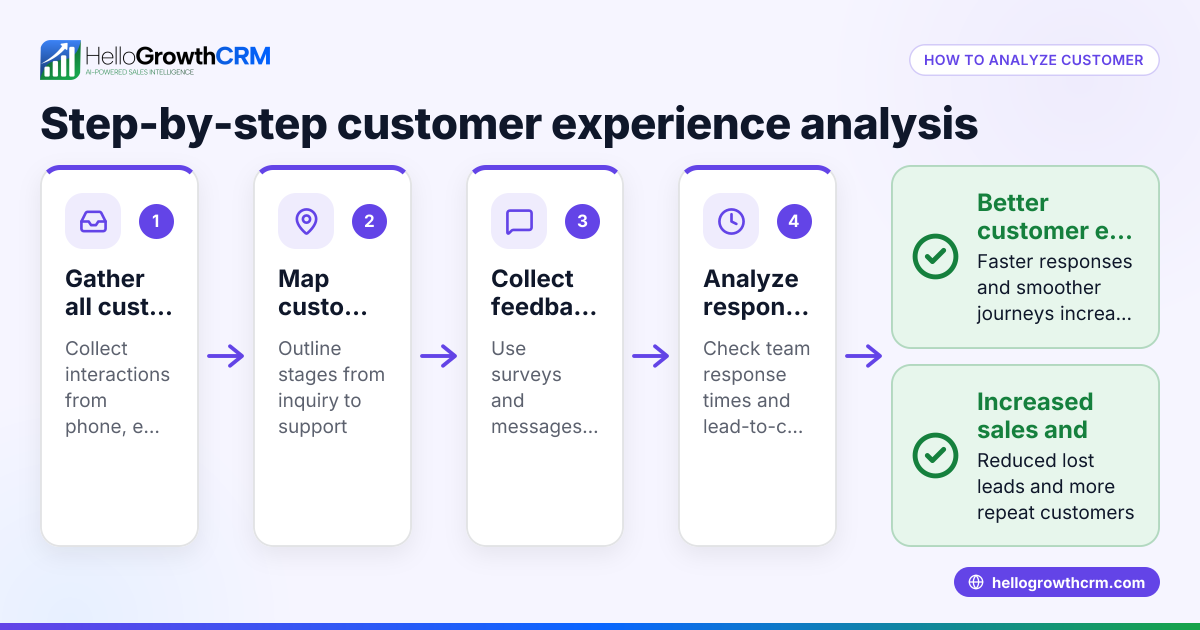
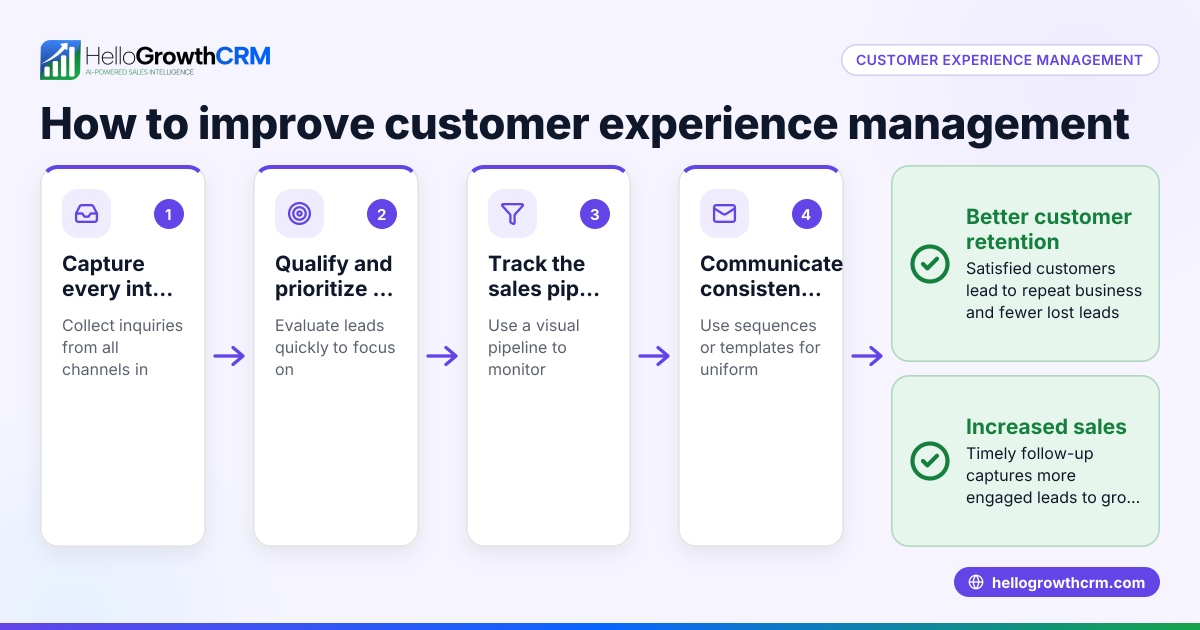
- Collect customer interaction data: Gather information from all touchpoints—phone calls, emails, WhatsApp messages, support tickets, and feedback forms. Check that data is organized by customer and interaction date.
- Identify key customer journey stages: Define the main phases customers go through, such as inquiry, negotiation, purchase, and post-sale support. Check that each stage has measurable activities or milestones.
- Analyze customer feedback and behavior: Look for common themes in complaints, compliments, or service requests. Check for recurring issues or delays in specific journey stages.
- Use metrics to measure experience quality: Track indicators like response times, resolution rates, repeat purchases, and referral counts. Check these metrics regularly to spot trends.
- Segment customers by behavior or value: Group customers based on purchase frequency, deal size, or engagement level. Check which segments have the best or worst experience.
- Prioritize improvements based on impact: Focus on changes that will improve the experience for the largest or most valuable segments. Check that planned actions address root causes identified.
- Monitor changes and update insights: After implementing improvements, track customer responses and adjust strategies accordingly. Check that new data is integrated into your analysis.
Example (fictional figures)
A residential real estate team in Phoenix, Arizona, tracked their customer experience insights over Q1 2026 to improve lead conversion.
- Total leads received: 150
- Leads lost at negotiation stage: 45
They found negotiation delays were due to slow follow-up calls. They decided to speed up follow-up within 24 hours.
Before improvement:
45 leads lost at negotiation stage
After improvement:
Leads lost reduced to 20
Improvement calculation:
45 - 20 = 25 leads saved
Assuming an average deal value of $350,000:
25 leads × $350,000 = $8,750,000 potential revenue saved
This example shows how identifying a bottleneck in customer experience and acting on it can protect significant revenue.
Common mistakes
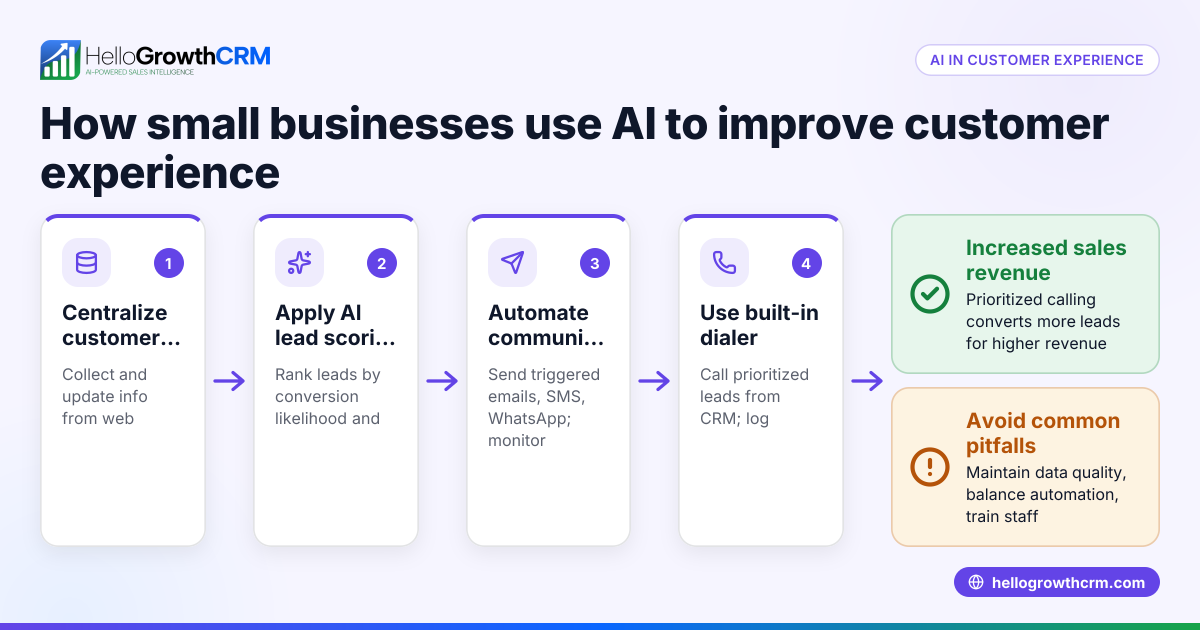
- Ignoring data from some channels: Not including WhatsApp or SMS messages can miss key customer feedback. Prevent this by centralizing communication in one system like a WhatsApp and SMS CRM.
- Overlooking post-sale service requests: Failing to track support tickets linked to customers means missing ongoing experience issues. Prevent by using a customer portal that stores all service requests on the same customer record.
- Relying on gut feeling instead of data: Guessing what customers want without evidence leads to wasted effort. Prevent by using AI insights and pipeline forecasting to identify where deals stall and why.
- Not segmenting customers: Treating all customers the same ignores differences in needs and value. Prevent by grouping customers and customizing follow-up accordingly.
- Failing to monitor changes after improvements: Without tracking results, you won’t know if actions worked. Prevent by regularly reviewing metrics and adjusting your approach.
Doing this in HelloGrowthCRM
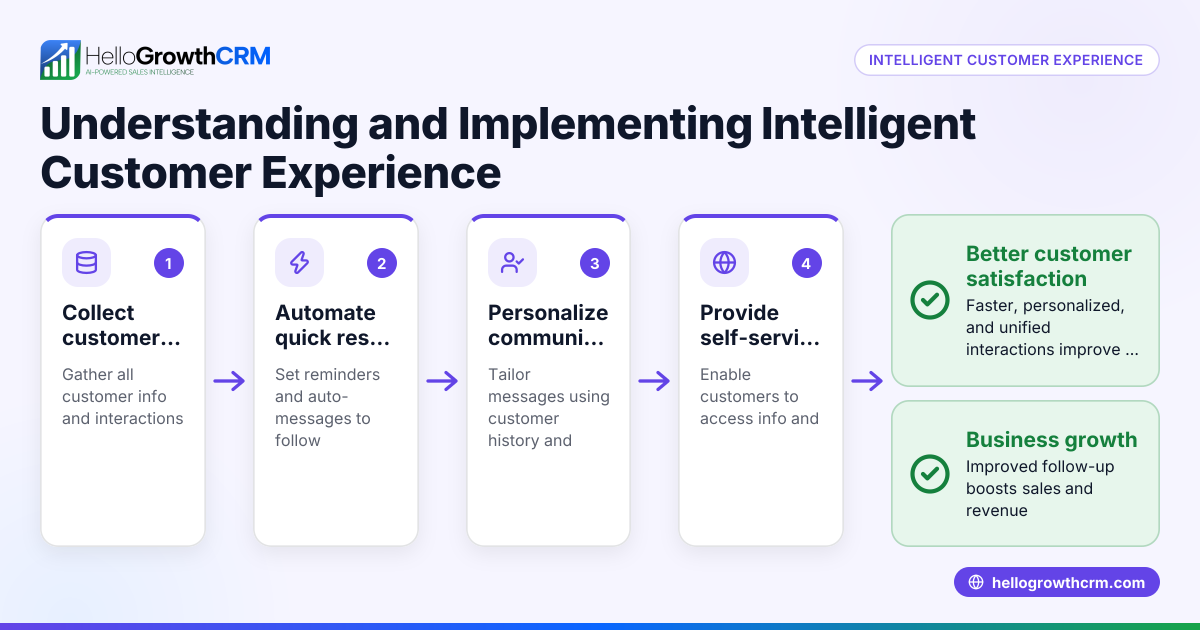
HelloGrowthCRM helps small businesses manage customer experience insights through features like pipeline forecast and AI insights. You can see which sales stages deals are stalling in without building spreadsheets. After the sale, service requests stay on the same customer record as the deal via the customer portal, referrals, tickets, and knowledge base tools. This keeps all customer interactions and issues organized in one place, making it easier to analyze and act on experience insights. Learn more about WhatsApp and SMS CRM and customer health score.
Frequently asked questions
What are customer experience insights? Customer experience insights are the understanding gained from analyzing customer interactions and feedback. They help businesses improve satisfaction, loyalty, and sales by revealing what works well and what needs fixing.
How do I collect customer experience data effectively? Collect data from all communication channels like email, phone, WhatsApp, and support tickets. Use a CRM that centralizes these interactions to avoid missing important information.
Why is segmenting customers important for experience insights? Segmenting customers helps tailor your approach to different groups based on behavior or value. This ensures you focus improvements where they matter most and provide more personalized service.
How can AI help with customer experience insights? AI can analyze patterns in your sales pipeline and customer data to highlight where deals stall or which reps perform best. This reduces guesswork and helps prioritize actions.
Can I track customer service requests in the same system as sales? Yes, using a CRM with a customer portal and ticket system keeps all service requests linked to the original deal and customer record, providing a full picture of the customer experience.
How often should I update my customer experience insights? Regularly review your data and metrics, at least monthly, to track the impact of changes and identify new issues early.
Key takeaways
- Customer experience insights come from analyzing all customer interactions and feedback.
- Collect data from every channel and organize it by customer and journey stage.
- Use metrics and segmentation to understand experience quality and prioritize improvements.
- Avoid common mistakes like ignoring some channels or relying on guesswork.
- HelloGrowthCRM offers pipeline forecasting and a customer portal to manage insights efficiently.
Start improving your customer experience insights today. Start on the Free Forever plan (200 leads, no credit card) and see how HelloGrowthCRM can help you organize and act on customer data.
Ready to put this into practice?
Set up your pipeline, WhatsApp follow-ups, and AI lead scoring in minutes — free, no credit card.
Try HelloGrowthCRM freeGet CRM tips in your inbox
Join thousands of sales professionals who get weekly insights on CRM strategy, AI automation, and pipeline optimization.

The HelloGrowthCRM team publishes guides on CRM strategy, AI sales tools, and revenue operations for small business sales teams.