HelloGrowthCRM software
Built for real small-business sales teams
HelloGrowthCRM helps reps qualify faster, follow up on time, and close more deals—with practical automation in one place.
- AI lead scoring and pipeline visibility
- Built-in dialer, WhatsApp, and email automation
- Sales forecasting and RevOps-ready reporting
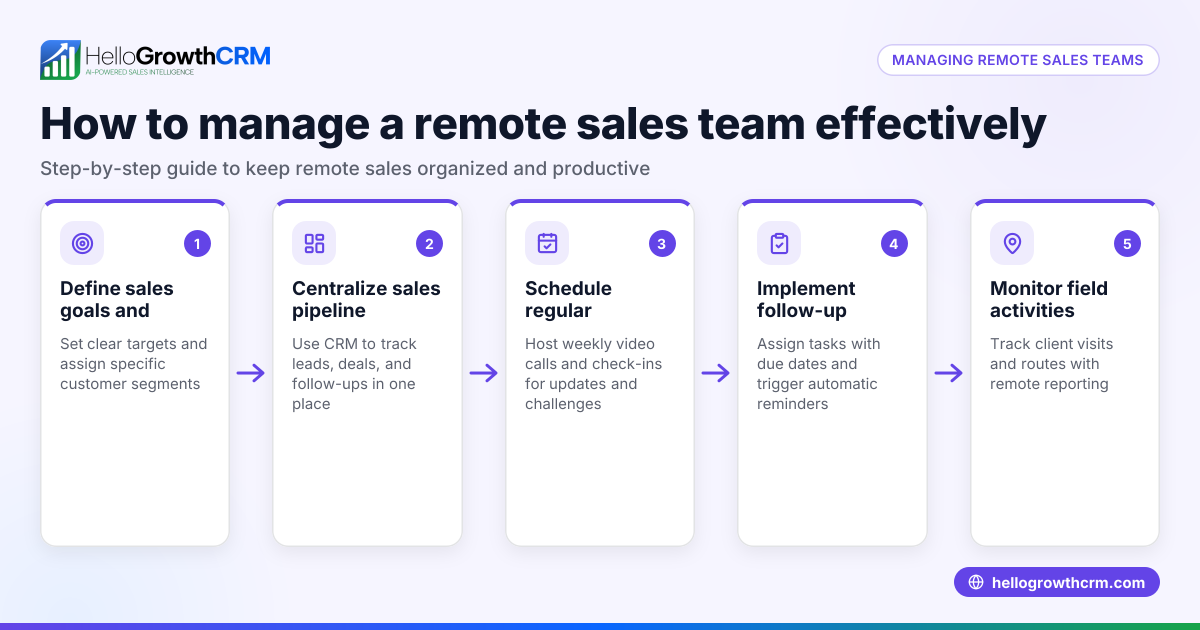
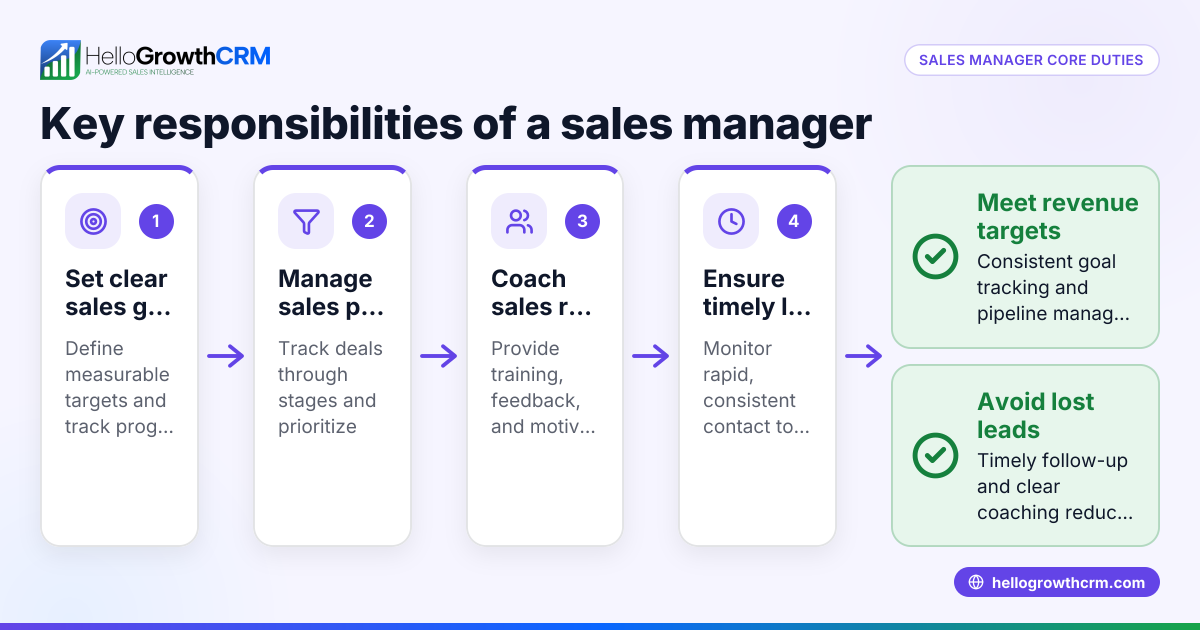
An internal sales manager is responsible for managing sales processes conducted within the business premises, focusing on remote communications such as phone calls, emails, WhatsApp messages, and online chats. Their main tasks include supervising the sales team, organising and tracking leads and deals, scheduling follow-ups, and driving sales growth by ensuring no opportunity is missed.
Why this comes up / what goes wrong
Small business owners often search for "internal sales manager" when their sales process becomes too complicated to handle manually or when leads are lost due to slow or inconsistent follow-up. Many UK small and mid-sized businesses run sales across WhatsApp, email, and spreadsheets, which can cause disorganisation and missed opportunities. Without a dedicated internal sales manager, leads may slip through the cracks, deals stall, and revenue growth slows down.
Step-by-step
Managing internal sales effectively involves these steps:
- Define the internal sales manager role and responsibilities
- Ensure the person understands pipeline management, lead follow-up, and team coordination.
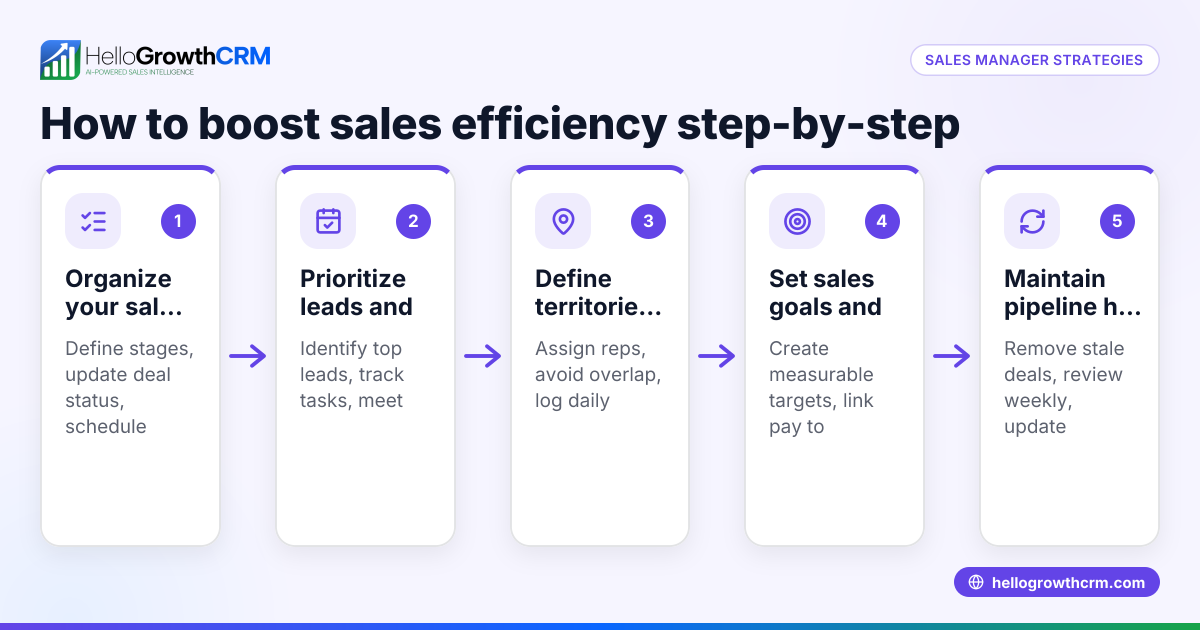
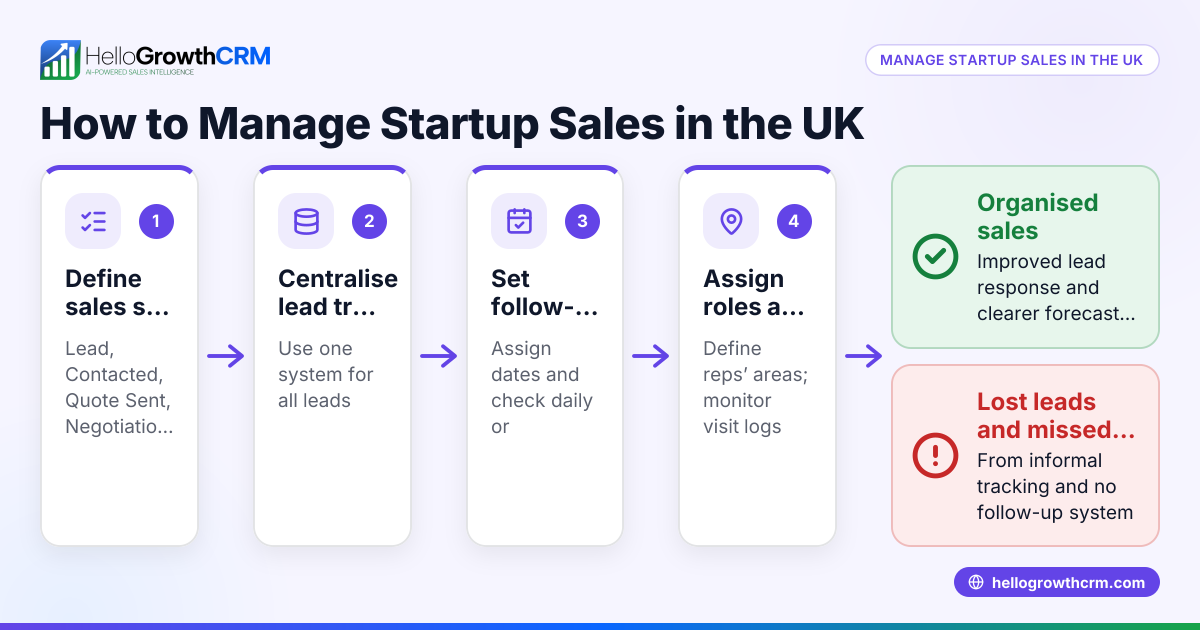
- Set up a structured sales pipeline
- Use a system to track deals from first contact through to closing.
- Check each lead is assigned a stage and a follow-up date to avoid forgetting.
- Implement regular follow-up routines
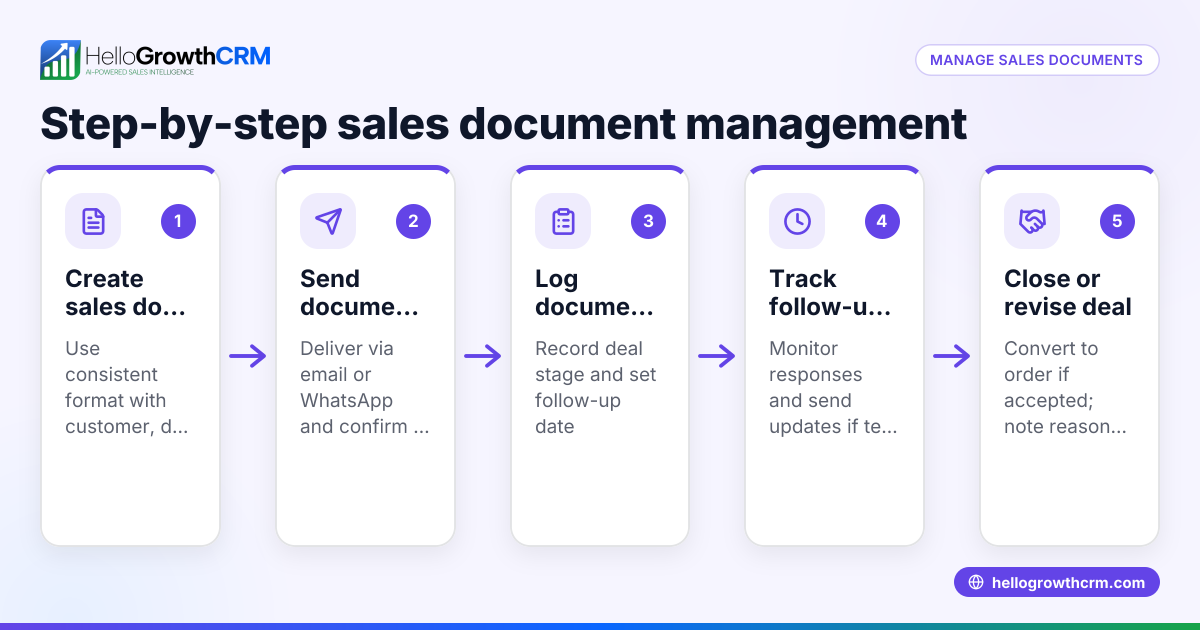
- Schedule follow-ups promptly after each stage, especially after sending quotations.
- Check weekly that follow-ups are completed and record outcomes.
- Monitor sales team activity and performance
- Track calls, emails, and WhatsApp messages to ensure engagement.
- Review activity reports regularly to identify bottlenecks.
- Centralise communications
- Consolidate WhatsApp, email, and phone communications in one place.
- This prevents leads being lost across multiple channels.
- Review sales targets and pipeline health regularly
- Assess progress against targets and adjust strategies.
- Identify stalled deals and decide on next steps.
- Train and support the sales team
- Provide coaching on sales techniques and CRM usage.
- Gather feedback and encourage continuous improvement.
Example (fictional figures)
A letting agency in Manchester hires an internal sales manager to improve follow-up on rental enquiries.
- On 01/04/2026, the agency received 50 new leads worth an estimated £500,000 in potential rental agreements.
- The internal sales manager sets up a pipeline tracking these leads through stages: New, Contacted, Quote Sent, Negotiation, and Closed.
- By 15/04/2026, 20 leads have moved to 'Quote Sent' stage, with quotations valued at £200,000.
- The manager schedules follow-ups 7 days after quotes are sent.
- By 22/04/2026, 10 leads have been closed successfully, generating £100,000 in rental agreements.
Calculation example:
£500,000 × 20/50 = £200,000 (value at 'Quote Sent' stage)
£200,000 × 10/20 = £100,000 (value of closed deals)
This tracking helps the agency focus efforts where deals are most likely to close and prevents leads from being forgotten.
Common mistakes
- No clear sales pipeline
- Prevent by setting up a deal tracking system that shows each lead’s status clearly.
- Slow or inconsistent follow-up
- Prevent by scheduling follow-up dates and reminders for every deal stage.
- Scattered communication channels
- Prevent by centralising WhatsApp, email, and calls in one CRM system.
- Lack of sales team oversight
- Prevent by regularly reviewing activity logs and sales results.
- Ignoring stalled deals
- Prevent by flagging deals that don’t progress and taking action promptly.
- Not training the sales team on tools and processes
- Prevent by providing regular coaching and support on CRM and sales techniques.
Doing this in HelloGrowthCRM
HelloGrowthCRM helps internal sales managers stay organised and efficient. Its Deals (pipeline) feature shows quotations sent with follow-up dates, ensuring no lead is forgotten. Territories, field operations and commissions tools allow managers to track field reps’ visits and daily activity if relevant. Managed RevOps provides weekly support to founders without a sales manager, ensuring follow-up queues are worked consistently. Learn more about WhatsApp and SMS CRM and the built-in CRM dialer to streamline your communications.
Frequently asked questions
What is the difference between an internal sales manager and a field sales manager? An internal sales manager handles sales activities from within the office, mainly through phone, email, and digital communication. A field sales manager oversees sales reps who meet customers face-to-face outside the office.
How can an internal sales manager improve lead follow-up? By using a structured sales pipeline with clear stages and scheduled follow-ups, the manager ensures leads are contacted promptly and consistently, reducing lost opportunities.
Can small businesses afford to hire an internal sales manager? Not every small business needs a full-time internal sales manager. Some use services like Managed RevOps to get sales follow-up support without hiring a dedicated person.
What tools help an internal sales manager organise sales? CRM systems with pipeline management, communication integration (WhatsApp, email, SMS), and task reminders help keep track of leads and deals efficiently.
How does HelloGrowthCRM support internal sales management? HelloGrowthCRM offers deal pipelines with follow-up dates, territory and field operations tracking, and Managed RevOps support for founders without sales managers. This centralises and simplifies sales management.
Key takeaways
- An internal sales manager manages sales activities done inside the office, focusing on remote communication.
- Clear pipeline stages and scheduled follow-ups prevent lost leads.
- Centralising communication channels like WhatsApp, email, and calls improves organisation.
- Regular monitoring and coaching keep the sales team effective.
- HelloGrowthCRM offers pipeline tracking, territory management, and Managed RevOps support.
Start managing your internal sales better today. Start on the Free Forever plan (200 leads, no credit card).
Ready to put this into practice?
Set up your pipeline, WhatsApp follow-ups, and AI lead scoring in minutes — free, no credit card.
Try HelloGrowthCRM freeGet CRM tips in your inbox
Join thousands of sales professionals who get weekly insights on CRM strategy, AI automation, and pipeline optimization.

The HelloGrowthCRM team publishes guides on CRM strategy, AI sales tools, and revenue operations for small business sales teams.