HelloGrowthCRM software
Built for real small-business sales teams
HelloGrowthCRM helps reps qualify faster, follow up on time, and close more deals—with practical automation in one place.
- AI lead scoring and pipeline visibility
- Built-in dialer, WhatsApp, and email automation
- Sales forecasting and RevOps-ready reporting
Lead generation databases are organized collections of potential customer information used to identify and engage new sales leads. They help businesses find prospects who may be interested in their products or services. This article explains why small business owners seek lead generation databases, how to use them step-by-step, common mistakes to avoid, and how HelloGrowthCRM can streamline lead management.
Why this comes up / what goes wrong
Many small business owners struggle to find consistent ways to attract and organize new leads. They often rely on scattered sources like spreadsheets, email threads, or text messages, which leads to lost or slow follow-up on inquiries. Without a centralized database, it’s difficult to prioritize which leads to contact first or track the sales process. This causes missed opportunities and wasted marketing effort. Small businesses want lead generation databases to collect, organize, and qualify leads efficiently so their sales teams can act quickly and close more deals.
Step-by-step
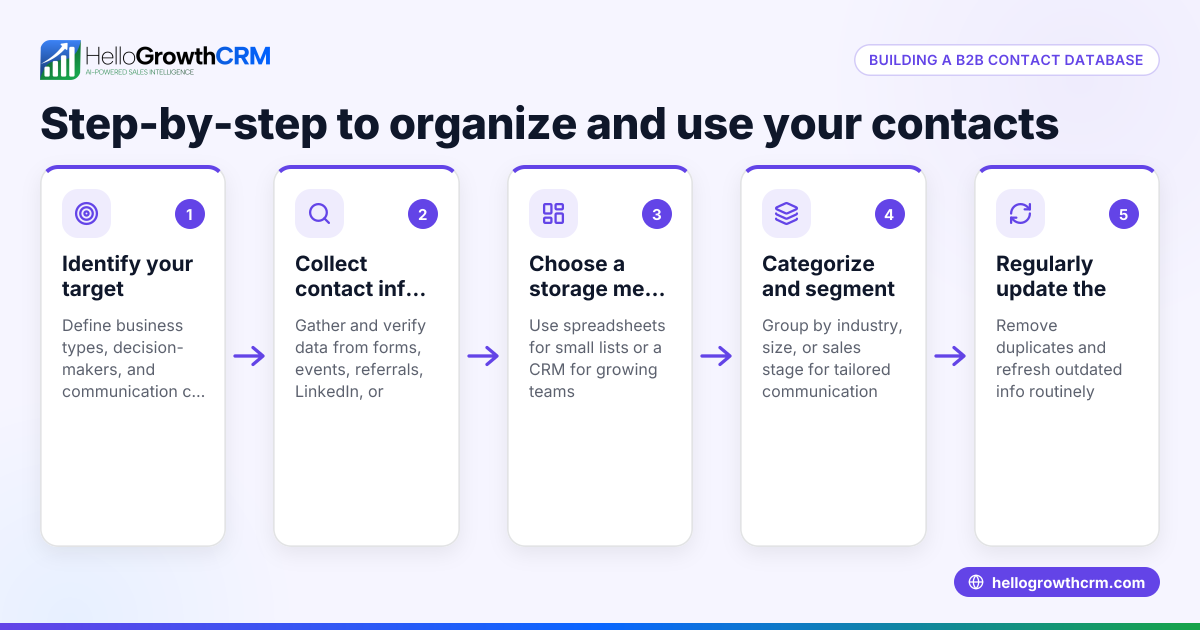
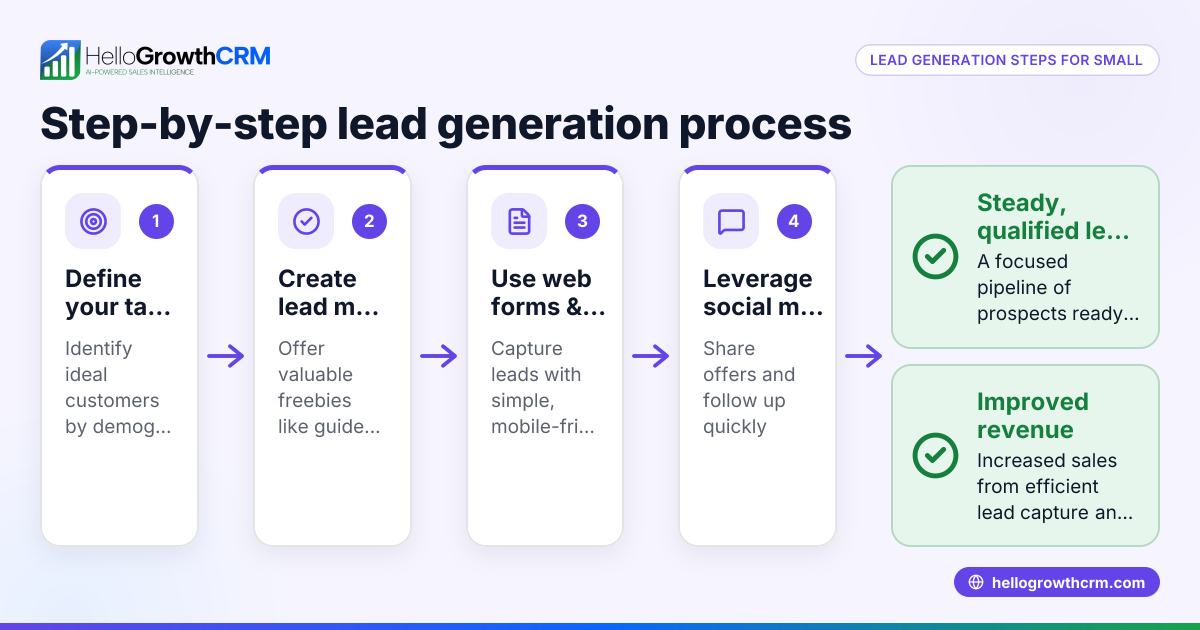
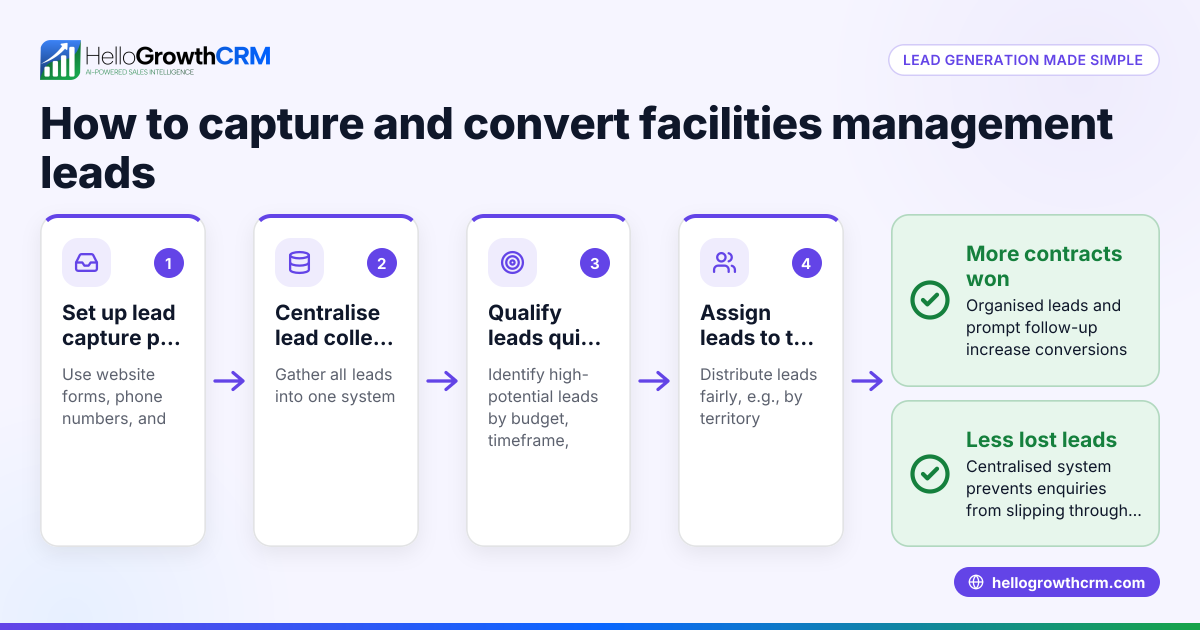
- Identify your target audience and data needs. Define the industries, locations, company sizes, or customer profiles you want to reach. Decide what information you need to collect, such as names, phone numbers, email addresses, company names, or purchase intent.
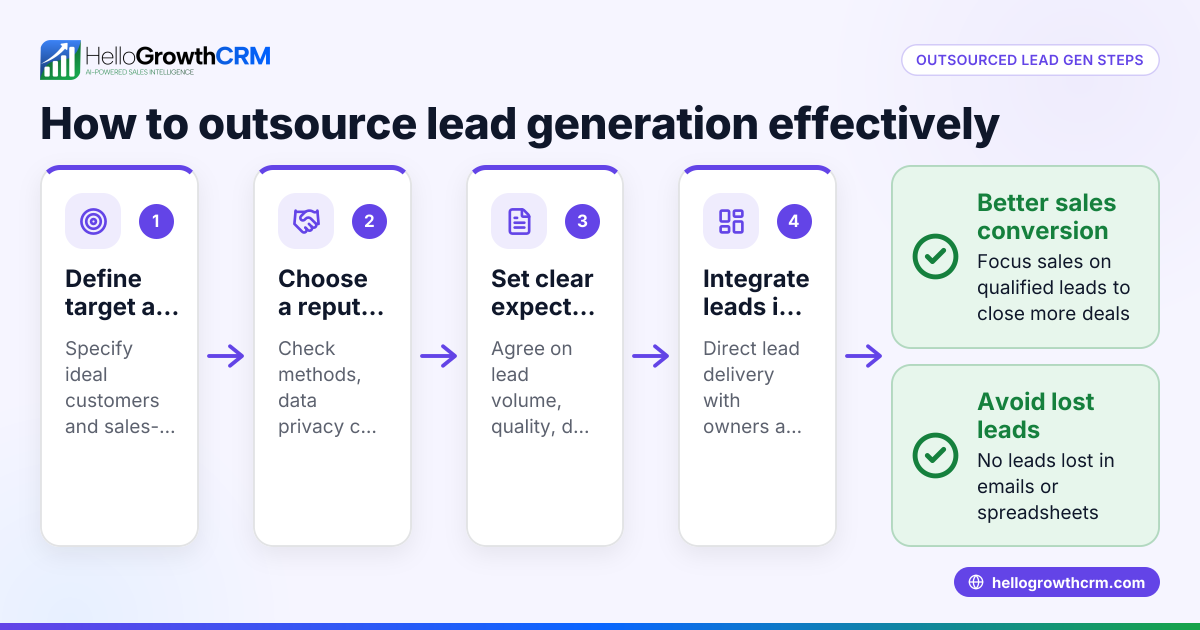
- Choose a lead generation database source. This could be a purchased list, a subscription service, or leads collected from your website, social media, or advertising campaigns. Check that the data is current, relevant, and compliant with US privacy laws.
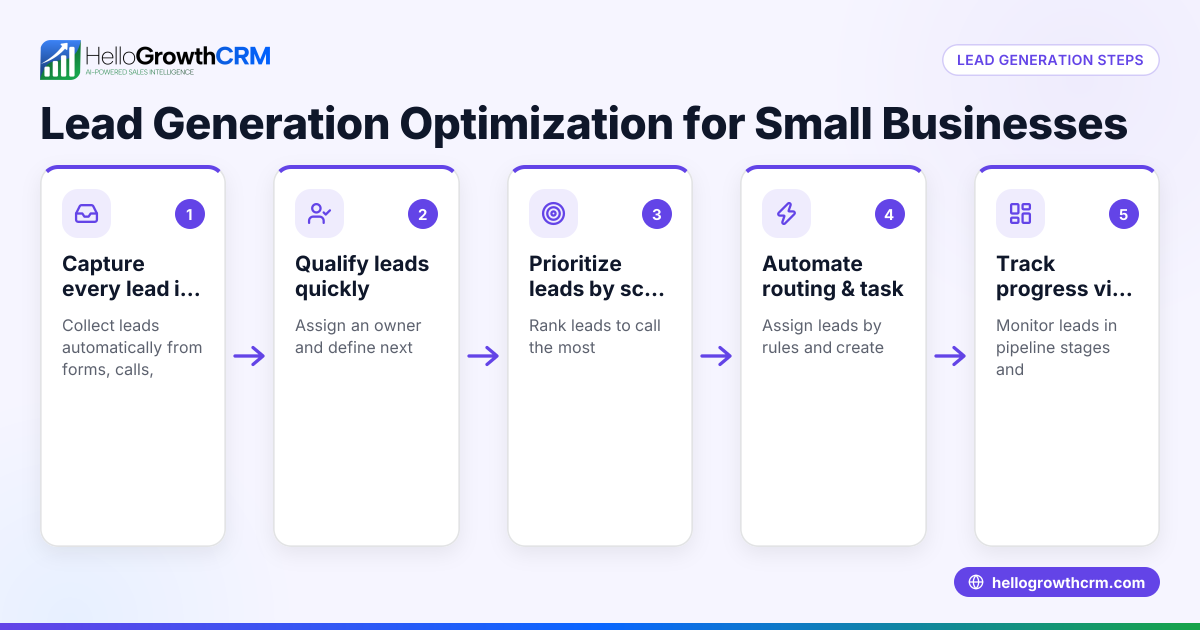
- Import or capture leads into your system. Use tools or software to bring the lead data into one place. Avoid manual entry to reduce errors. Verify data quality and completeness.
- Qualify and score leads. Evaluate leads based on criteria like engagement level, budget, or company size to prioritize those most likely to convert. This helps sales teams focus their efforts effectively.
- Assign leads to salespeople. Use rules or automated workflows to distribute leads fairly or by territory. Ensure each lead has a clear owner responsible for follow-up.
- Track lead interactions and progress. Record calls, emails, messages, and meetings to maintain context. Update lead status as they move through the sales pipeline.
- Review and refine your lead database regularly. Remove outdated contacts, update information, and analyze which sources produce the best leads.
Example (fictional figures)
A plumbing company in Austin, Texas, wants to grow their customer base using a lead generation database. They purchase a list of 500 local property managers with phone numbers and emails for $2,500 on 03/15/2026.
- Cost per lead = $2,500 ÷ 500 = $5
- They import the leads into their system and qualify 30% as high-potential based on property size and maintenance needs.
- High-potential leads = 500 × 30% = 150
- Their sales team calls the top 150 leads first.
- If their conversion rate is 10%, they expect to close 15 new contracts.
This example shows how a lead generation database helps target efforts and estimate returns.
Common mistakes
- Using outdated or inaccurate data. Prevent this by verifying and updating lead information regularly.
- Not qualifying leads before outreach. Use scoring methods to focus on leads most likely to convert.
- Failing to assign clear ownership. Ensure every lead has an assigned salesperson to avoid missed follow-ups.
- Relying on manual data entry. Automate lead capture to reduce errors and delays.
- Ignoring lead engagement history. Track all interactions to personalize follow-up and improve conversion.
- Not reviewing lead sources. Periodically analyze which databases or campaigns deliver the best leads to optimize spending.
Doing this in HelloGrowthCRM
HelloGrowthCRM captures every enquiry from forms, calls, or WhatsApp as a lead with an owner and a next step, avoiding lost leads in notebooks. Its AI lead scoring helps telecallers prioritize calls to leads most likely to convert. Automated workflows and lead routing assign new inquiries round-robin or by rules, creating first-call tasks automatically. Learn more about AI lead scoring and the WhatsApp and SMS CRM features that support this process.
Frequently asked questions
What exactly is a lead generation database? It is a structured collection of potential customer contacts and information used to find and engage new sales leads. It can include data from purchased lists, website forms, or marketing campaigns.
How do I know if a lead generation database is good quality? Good databases have current, accurate, and relevant information that matches your target market. Verify the source, check for duplicates, and confirm compliance with privacy laws.
Can I use lead generation databases without software? You can, but managing leads manually with spreadsheets or notes is prone to errors and delays. Using CRM software improves organization and follow-up efficiency.
How does AI lead scoring work in lead databases? AI lead scoring analyzes lead data and past sales outcomes to prioritize leads most likely to convert. This helps sales teams focus on high-value prospects first.
Is lead routing important? Yes, lead routing assigns leads automatically to the right salesperson based on rules like territory or workload, ensuring timely follow-up and balanced workloads.
Key takeaways
- Lead generation databases organize potential customer data to find and prioritize sales leads.
- Define your target audience and data needs before choosing or building a database.
- Automate lead capture, qualification, and assignment to avoid lost or slow follow-up.
- Use AI lead scoring and workflows to focus sales efforts on the best leads.
- Regularly clean and analyze your database to maintain quality and improve results.
Start managing your leads effectively by trying HelloGrowthCRM. Start on the Free Forever plan (200 leads, no credit card) today.
Ready to put this into practice?
Set up your pipeline, WhatsApp follow-ups, and AI lead scoring in minutes — free, no credit card.
Try HelloGrowthCRM freeGet CRM tips in your inbox
Join thousands of sales professionals who get weekly insights on CRM strategy, AI automation, and pipeline optimization.

The HelloGrowthCRM team publishes guides on CRM strategy, AI sales tools, and revenue operations for small business sales teams.