HelloGrowthCRM software
Built for real small-business sales teams
HelloGrowthCRM helps reps qualify faster, follow up on time, and close more deals—with practical automation in one place.
- AI lead scoring and pipeline visibility
- Built-in dialer, WhatsApp, and email automation
- Sales forecasting and RevOps-ready reporting
Lead generation manufacturing is the process of finding and qualifying potential customers who need your manufacturing products or services. These leads often come from trade shows, web inquiries, referrals, or industry platforms. To convert these leads into sales, manufacturers must organize incoming contacts, prioritize those with the highest potential, assign ownership, and follow up quickly.
Why this comes up / what goes wrong
Manufacturing business owners and accountants in the US frequently struggle with lead generation because leads arrive from multiple sources—emails, calls, WhatsApp messages, trade shows—and often end up scattered across notebooks, spreadsheets, or unlinked systems. This disorganization causes slow follow-up, missed opportunities, and longer sales cycles. Sales teams may waste time chasing unqualified leads or fail to engage decision-makers at the right moment. Without clear lead ownership and task management, leads slip through the cracks, making revenue forecasting difficult and limiting growth.
Step-by-step
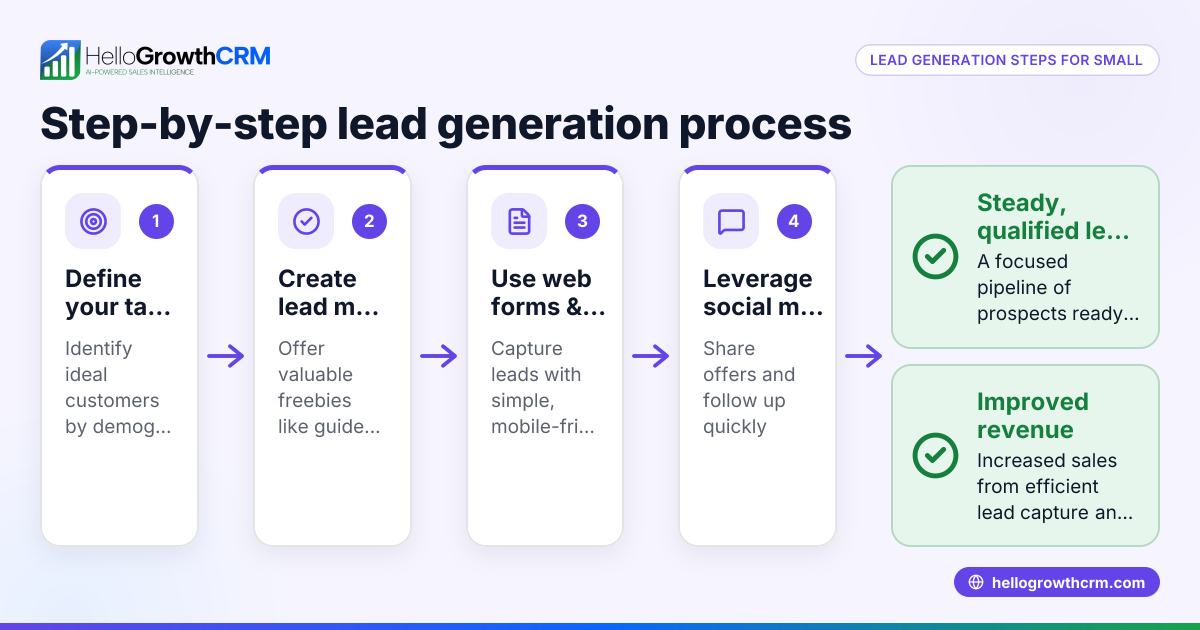
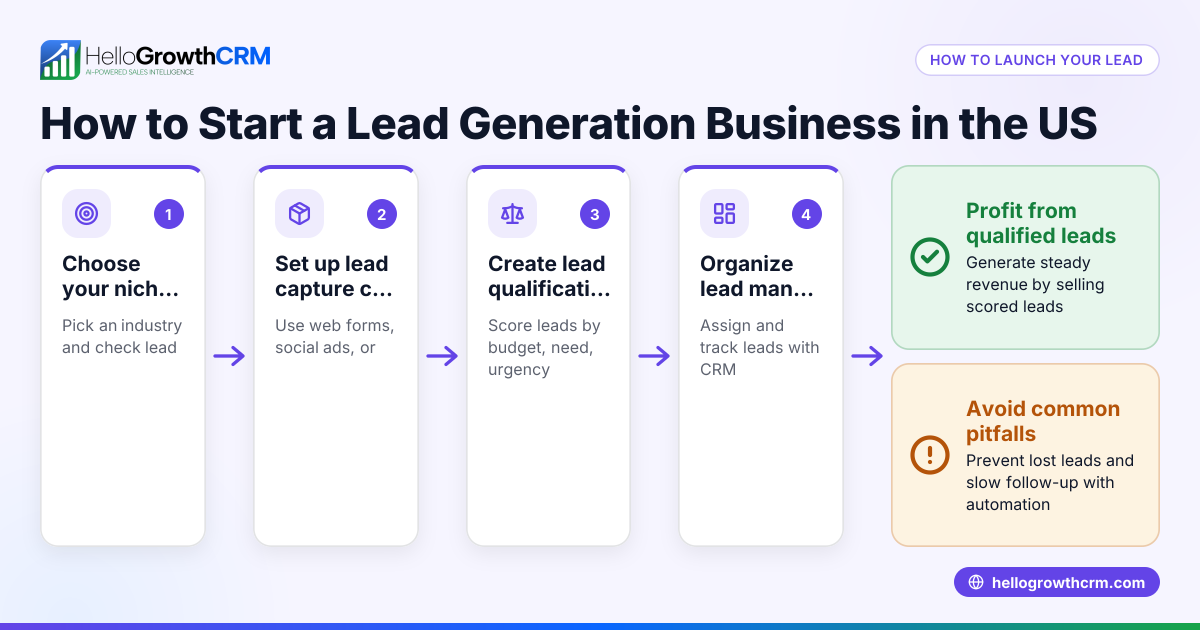
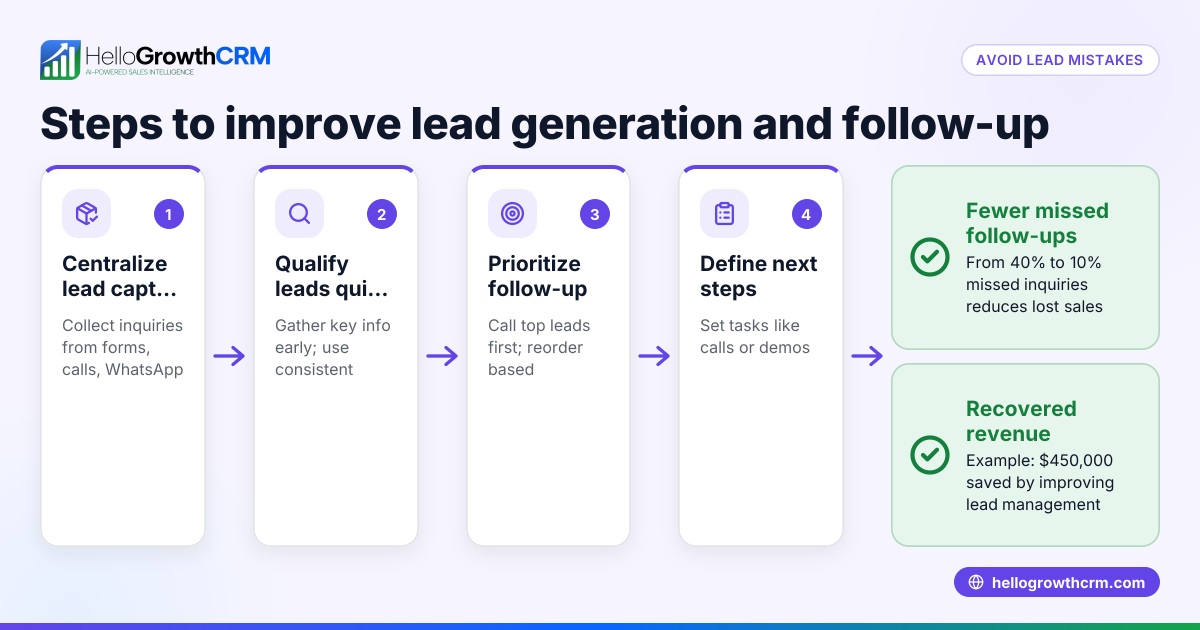
- Define your target customers: Identify your ideal buyers such as original equipment manufacturers (OEMs), distributors, or contractors. Confirm that your lead sources match these customer segments.
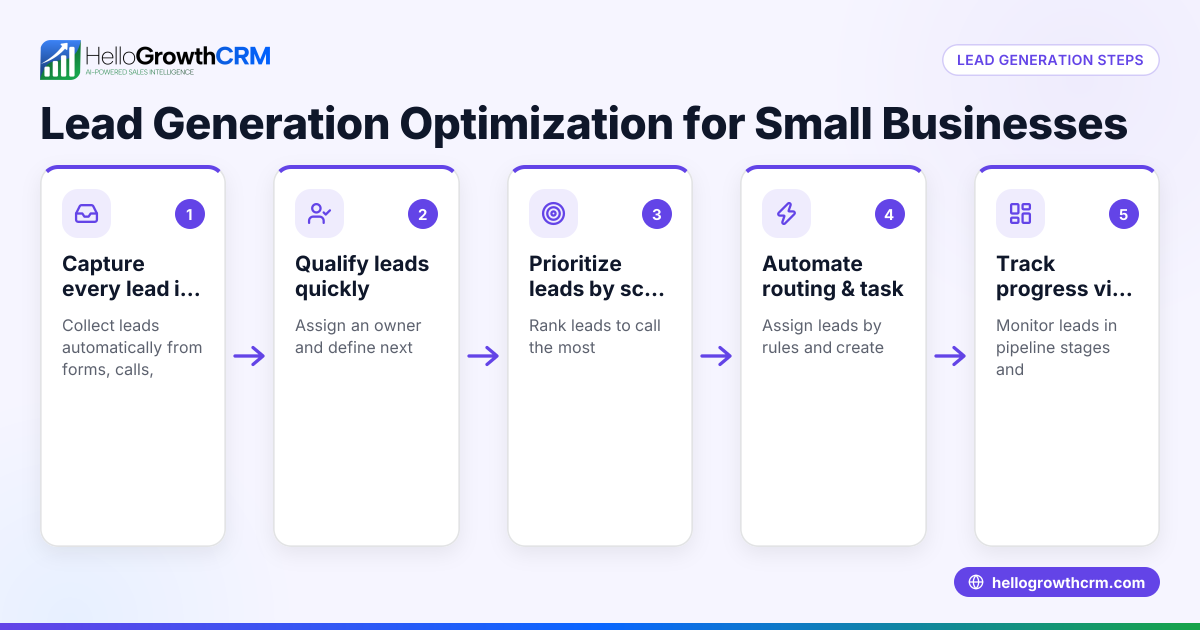
- Capture leads consistently: Collect contact information through web forms, trade show scans, phone calls, or WhatsApp inquiries. Check data accuracy to avoid duplicates.
- Assign lead ownership: Ensure every lead has a responsible sales rep to prevent leads from being overlooked.
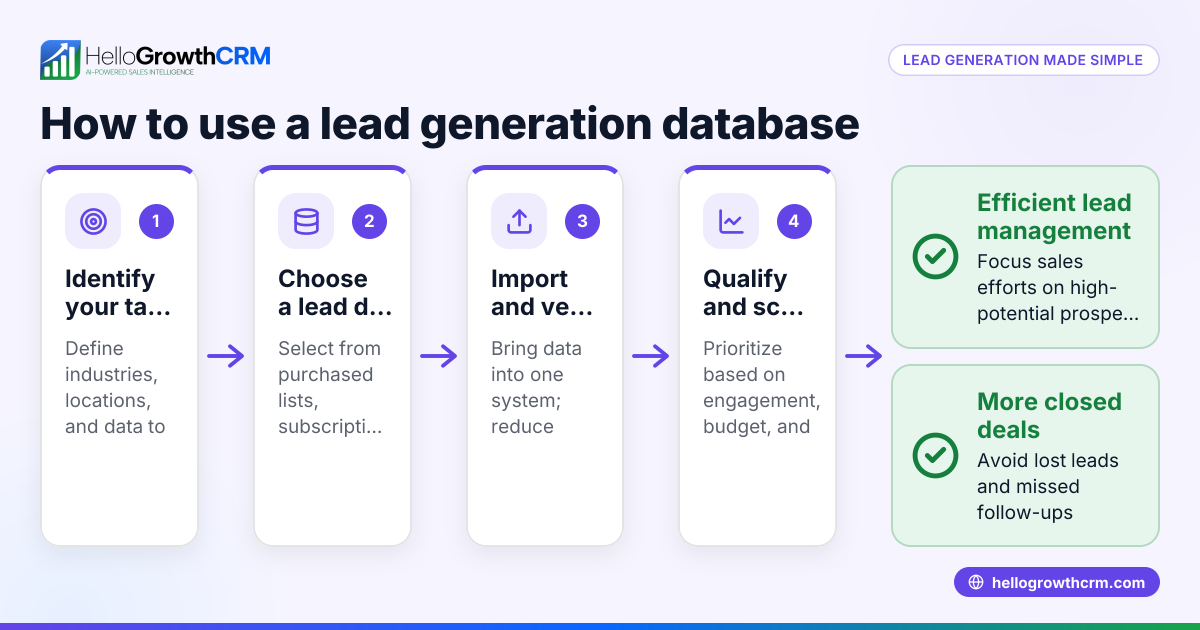
- Score leads by conversion potential: Use criteria like company size, project budget, purchase urgency, or previous interactions to prioritize leads.
- Create follow-up tasks immediately: Set reminders for first contact within 24 hours of capturing the lead.
- Automate lead routing: Assign leads automatically by source, territory, or score to the appropriate sales rep.
- Track lead status and pipeline stages: Regularly update progress to identify which deals are warming up or stalling.
- Analyze lead sources and outcomes: Review which channels produce the best leads and adjust your marketing and sales efforts accordingly.
Example (fictional figures)
SteelWorks Inc., a manufacturing company in Detroit, Michigan, produces custom steel components for automotive and construction industries. In Q2 2026, they generated 250 new leads from web forms, trade shows, and referrals.
- Total leads: 250
- Leads qualified as high potential: 75
- Sales calls made: 230
- Conversion rate on high-potential leads: 30%
- Average sale value: $60,000
Calculations:
High-potential leads converted = 75 × 30% = 22.5 ≈ 23 sales
Estimated revenue = 23 × $60,000 = $1,380,000
By prioritizing leads with AI lead scoring and assigning follow-ups promptly, SteelWorks Inc. improved their conversion rate and revenue forecasting.
Common mistakes
- Not centralizing leads: Leads scattered across notebooks, emails, or spreadsheets cause lost or delayed follow-up. Prevent this by using a CRM to capture every enquiry in one place.
- Skipping lead qualification: Contacting unqualified leads wastes time. Score leads early to focus on prospects with the highest potential.
- Delayed follow-up: Waiting more than 24 hours to contact leads reduces conversion chances. Set automatic reminders to act quickly.
- Manual lead assignment errors: Manually distributing leads can cause uneven workloads or missed leads. Use automated lead routing to ensure fair and accurate assignments.
- Ignoring pipeline tracking: Without tracking lead progress, it’s hard to know which deals need attention. Update lead stages regularly.
- Neglecting data validation: Duplicate or incorrect lead data leads to confusion. Regularly clean and validate your lead data.
Doing this in HelloGrowthCRM
HelloGrowthCRM helps manufacturing businesses by capturing every enquiry from forms, calls, or WhatsApp as a lead with an owner and a next step, instead of losing them in notebooks. Its AI lead scoring lets reps prioritize calling leads most likely to convert first. Automated workflows, lead routing, and validation rules assign incoming leads——using round-robin distribution and create first-call tasks automatically, reducing manual errors and speeding up follow-up. Learn more about AI lead scoring and how HelloGrowthCRM supports Manufacturing in the US at HelloGrowthCRM for the United States.
Frequently asked questions
What are the best lead sources for manufacturing businesses? Trade shows, industry websites, referrals, and targeted web forms are common and effective sources. The key is ensuring leads match your target customer profile and are captured promptly.
How quickly should I follow up with manufacturing leads? Following up within 24 hours is ideal. Prompt contact increases engagement chances and demonstrates professionalism.
Can AI really help prioritize manufacturing leads? Yes, AI lead scoring ranks prospects by their likelihood to convert, helping sales reps focus on high-value leads first.
How do I avoid losing leads when they come from multiple channels? Centralize all enquiries into a CRM where leads are automatically assigned and tracked. This prevents leads from being overlooked or duplicated.
Is automation useful in manufacturing lead generation? Automation speeds lead routing, task creation, and follow-up reminders, reducing manual errors and improving sales efficiency.
Key takeaways
- Manufacturing lead generation requires targeted capture and quick qualification.
- Centralizing leads with ownership and follow-up tasks prevents lost opportunities.
- AI lead scoring helps prioritize leads most likely to convert.
- Automated lead routing and workflows reduce manual errors.
- Prompt follow-up within 24 hours increases conversion chances.
- Regular pipeline tracking and data validation improve forecasting.
For manufacturing businesses looking to organize and prioritize leads efficiently, HelloGrowthCRM offers tools to capture every enquiry, score leads with AI, and automate lead assignment and task creation. Start on the Free Forever plan (200 leads, no credit card) to see how it fits your sales process.
Ready to put this into practice?
Set up your pipeline, WhatsApp follow-ups, and AI lead scoring in minutes — free, no credit card.
Try HelloGrowthCRM freeGet CRM tips in your inbox
Join thousands of sales professionals who get weekly insights on CRM strategy, AI automation, and pipeline optimization.

The HelloGrowthCRM team publishes guides on CRM strategy, AI sales tools, and revenue operations for small business sales teams.