HelloGrowthCRM software
Built for real small-business sales teams
HelloGrowthCRM helps reps qualify faster, follow up on time, and close more deals—with practical automation in one place.
- AI lead scoring and pipeline visibility
- Built-in dialer, WhatsApp, and email automation
- Sales forecasting and RevOps-ready reporting
Lead nurturing for healthcare means systematically engaging potential patients or clients from first contact until they decide to use your services. This involves timely follow-up, personalised communication, and organised tracking of leads. This article covers why healthcare businesses need lead nurturing, step-by-step actions to implement it, a worked example for a diagnostic lab, common mistakes to avoid, and how HelloGrowthCRM supports healthcare lead management.
Why this comes up / what goes wrong
Healthcare business owners such as clinic founders, lab managers, or accountants often face lost or delayed enquiries. Leads come from multiple sources like IndiaMART, JustDial, WhatsApp, or web forms but end up scattered in notebooks, WhatsApp chats, or spreadsheets. Without systematic follow-up, potential patients lose interest or choose competitors. In healthcare, trust and quick response are crucial because patients seek timely diagnostics or consultations. For example, a two-doctor dental clinic in Chennai may get calls but lack a clear process to prioritise and follow up, resulting in lost appointments. Similarly, a diagnostic lab in Lucknow may receive many test enquiries but fail to convert them due to slow or inconsistent contact. This leads to wasted marketing spend and unpredictable revenues.
Step-by-step
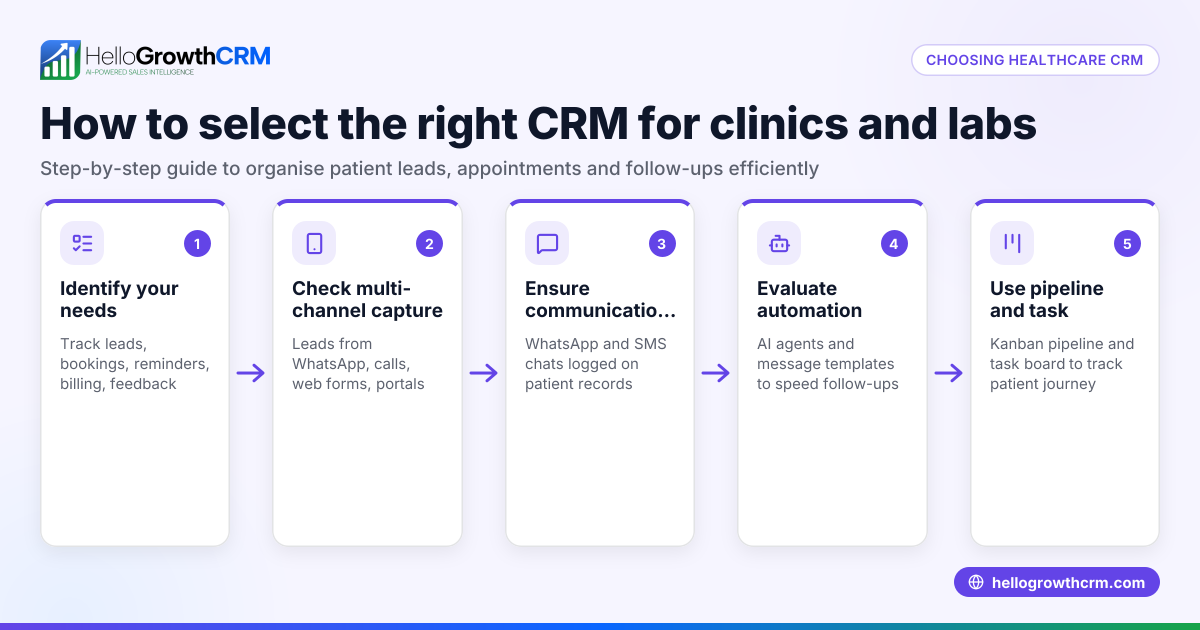
- Collect and centralise leads: Gather enquiries from all channels—IndiaMART, JustDial, WhatsApp, calls, and website forms—into one place. Check that each lead has contact details and source information.
- Assign lead ownership: Allocate each lead to a specific team member (telecaller or front desk) responsible for follow-up. Confirm the owner is clear and accountable.
- Set the first contact timeline: Define a maximum time (e.g., within 1 hour or same day) to make the first call or message. Check if tasks or reminders are created automatically.
- Qualify the lead: During the first contact, ask key questions to understand the patient’s needs, urgency, and budget. Check if this data is recorded in the lead profile.
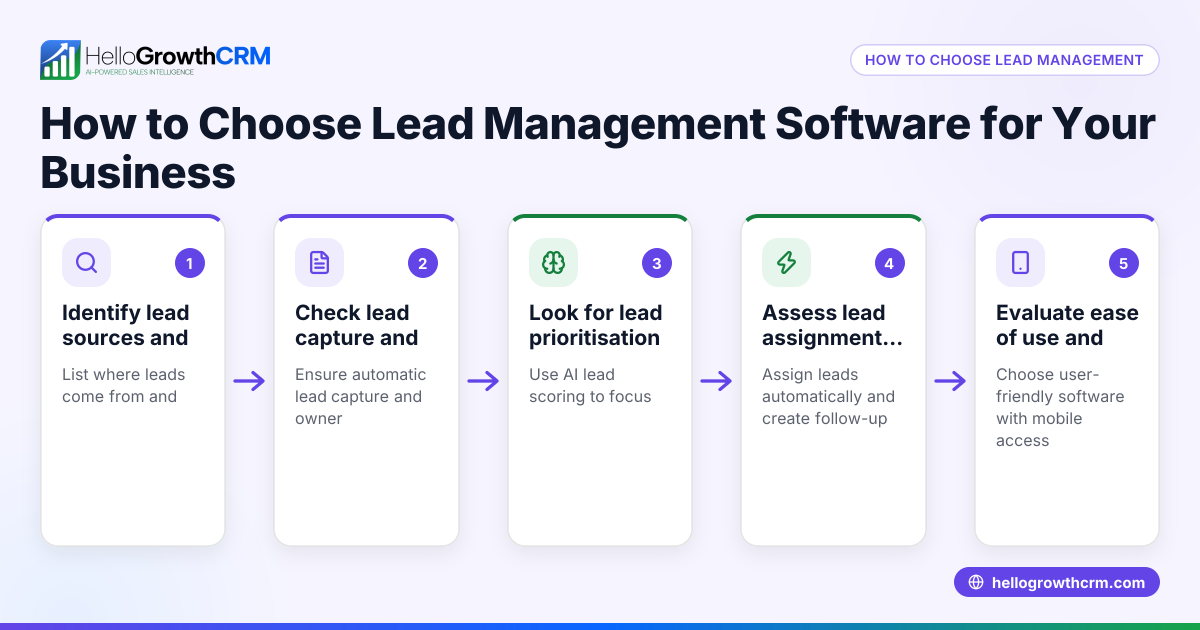
- Score and prioritise leads: Use criteria like urgency, test type, or patient readiness to rank leads. Prioritise follow-up accordingly.
- Nurture with personalised communication: Send tailored messages via WhatsApp, SMS, or email with information about services, preparation instructions, or offers. Verify that communication is timely and relevant.
- Schedule appointments or next steps: Convert interested leads into bookings or consultations. Confirm appointments and send reminders.
- Track progress and update status: Move leads through pipeline stages such as New, Contacted, Interested, Booked, or Closed. Check if the system shows clear status and next actions.
- Analyse and improve: Review reports on lead sources, conversion rates, and follow-up performance monthly. Identify bottlenecks and adjust processes.
Example (fictional figures)
A diagnostic lab in Lucknow receives 100 enquiries in March 2024 from IndiaMART and WhatsApp.
- Total enquiries: 100
- Average conversion rate without nurturing: 10% (10 bookings)
- Average conversion rate with nurturing: 25% (25 bookings)
- Average revenue per booking: ₹2,000
Calculations:
Without nurturing: ₹2,000 × 10 bookings = ₹20,000
With nurturing: ₹2,000 × 25 bookings = ₹50,000
Additional revenue gained by nurturing: ₹50,000 - ₹20,000 = ₹30,000
This shows how timely and organised lead nurturing can increase bookings and revenue significantly.
Common mistakes
- Ignoring lead source tracking: Without knowing where leads come from, you cannot optimise marketing spend. Prevent this by recording source data for every enquiry.
- Delayed first contact: Waiting too long to call or message leads causes lost interest. Prevent by setting strict timelines and automated reminders.
- No lead ownership: Leads get lost if no one is responsible. Assign owners clearly and monitor their activity.
- Using generic communication: Sending the same message to all leads reduces engagement. Personalise messages based on lead data.
- Manual tracking in spreadsheets or notebooks: This leads to errors and missed follow-ups. Use a CRM with lead capture and pipeline management.
- Not analysing results: Without reviewing lead conversion and follow-up efficiency, you cannot improve. Schedule regular reporting.
For healthcare-specific workflows and lead routing, see Clinics, labs and healthcare.
Doing this in HelloGrowthCRM
HelloGrowthCRM helps healthcare businesses capture every enquiry from forms, calls, or WhatsApp as a lead with an assigned owner and a next step, avoiding lost leads in notebooks. Its AI lead scoring lets telecallers prioritise calls to leads most likely to convert first. Automated workflows and lead routing assign new IndiaMART enquiries round-robin and create first-call tasks automatically. These features ensure timely, organised follow-up that suits clinics, labs, and healthcare teams. Learn more about AI lead scoring and HelloGrowthCRM for India here.
Frequently asked questions
What is lead nurturing in healthcare? Lead nurturing in healthcare means regularly engaging potential patients or clients from their first enquiry until they decide to book a service. It involves timely follow-up, personalised communication, and tracking progress through a sales pipeline.
How can I prioritise leads in a busy healthcare practice? You can prioritise leads by scoring them based on urgency, type of service needed, and patient readiness. AI lead scoring tools can help telecallers focus on leads most likely to convert first, saving time and increasing bookings.
Why is quick follow-up important for healthcare leads? Patients often seek quick answers for diagnostics or consultations. Delayed responses can cause them to choose competitors. Setting strict timelines for first contact improves conversion rates.
Can I automate lead assignment in healthcare businesses? Yes, automated lead routing can assign enquiries to team members based on territory, source, or round-robin methods. This ensures fair workload distribution and faster response times.
How do I measure the success of lead nurturing? Track metrics like enquiry-to-booking conversion rate, average response time, and lead source performance. Regular reporting helps identify bottlenecks and areas for improvement.
Key takeaways
- Centralise and organise all healthcare leads from multiple channels.
- Assign clear ownership and set strict timelines for first contact.
- Use lead scoring to prioritise follow-up based on urgency and readiness.
- Personalise communication and automate workflows to improve efficiency.
- Avoid manual tracking and delayed responses to prevent lost leads.
- Regularly analyse lead data to improve conversion and revenue.
Start improving your healthcare lead nurturing today. Start on the Free Forever plan (200 leads, no credit card).
Ready to put this into practice?
Set up your pipeline, WhatsApp follow-ups, and AI lead scoring in minutes — free, no credit card.
Try HelloGrowthCRM freeGet CRM tips in your inbox
Join thousands of sales professionals who get weekly insights on CRM strategy, AI automation, and pipeline optimization.

The HelloGrowthCRM team publishes guides on CRM strategy, AI sales tools, and revenue operations for small business sales teams.