HelloGrowthCRM software
Built for real small-business sales teams
HelloGrowthCRM helps reps qualify faster, follow up on time, and close more deals—with practical automation in one place.
- AI lead scoring and pipeline visibility
- Built-in dialer, WhatsApp, and email automation
- Sales forecasting and RevOps-ready reporting
CRM systems for healthcare are specialized tools designed to manage patient leads, appointments, and communications while complying with healthcare industry needs. Clinics, diagnostic labs, and small healthcare providers in India often struggle with slow follow-ups, scattered data across WhatsApp and spreadsheets, and missed revenue opportunities. A CRM tailored to healthcare can centralize patient information, automate follow-ups, and improve sales or service workflows.
Why this comes up / what goes wrong
Healthcare business owners and accountants in India face unique challenges. For example, a two-doctor dental clinic in Chennai or a diagnostic lab in Lucknow receive patient inquiries from multiple sources like IndiaMART, JustDial, and their website. Without a proper CRM, leads get lost or followed up too late. Teams rely heavily on WhatsApp chats and Excel sheets, which are hard to track and update in real time. This causes missed appointments, delayed reports, and lost revenue. Moreover, healthcare data is sensitive, requiring secure and compliant handling.
Step-by-step
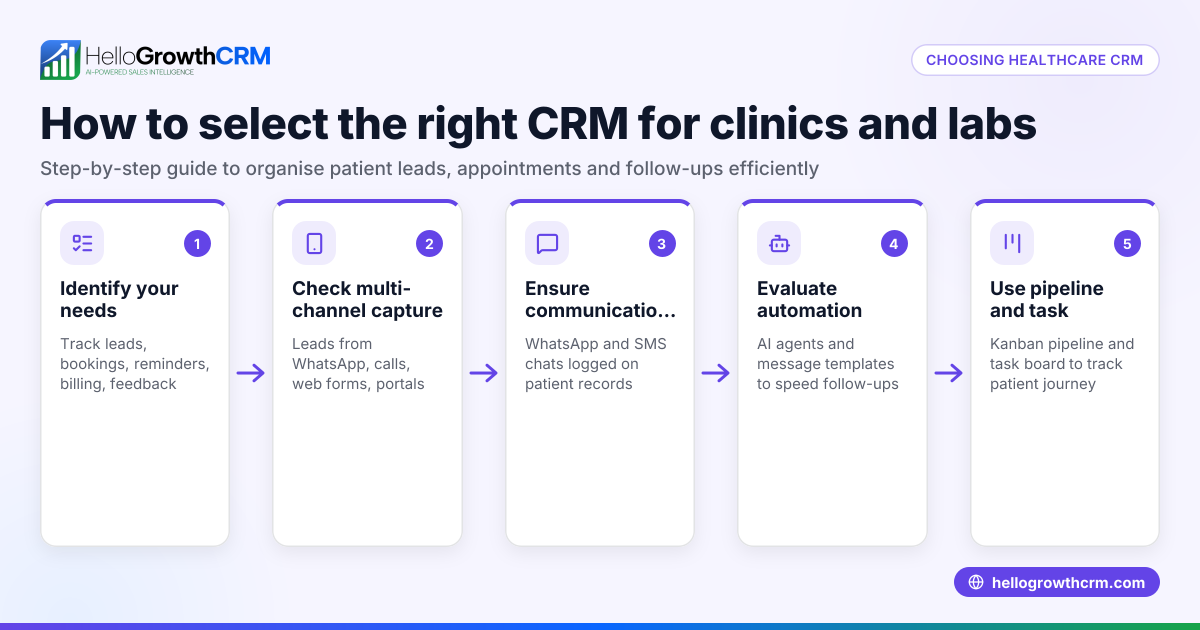
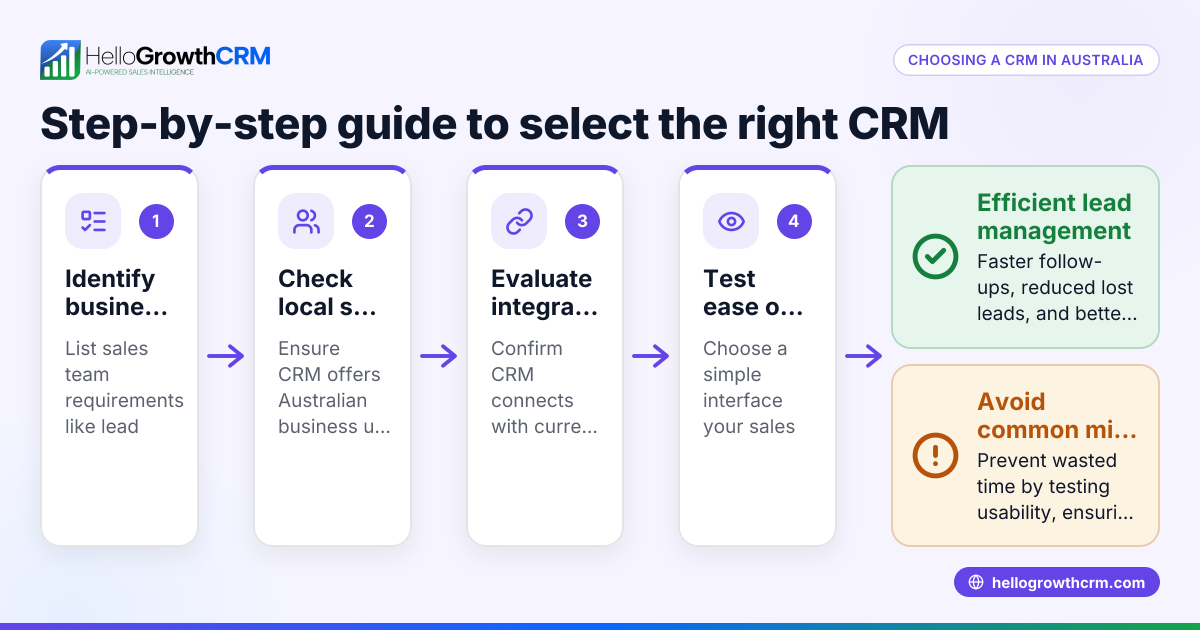
- Identify your healthcare business needs: List what your clinic, lab, or practice requires from a CRM — lead capture, appointment scheduling, follow-ups, patient communication, and data security.
- Check integration with communication channels: Ensure the CRM supports WhatsApp and SMS, as these are primary communication tools in Indian healthcare. This helps keep patient conversations logged and follow-ups timely.
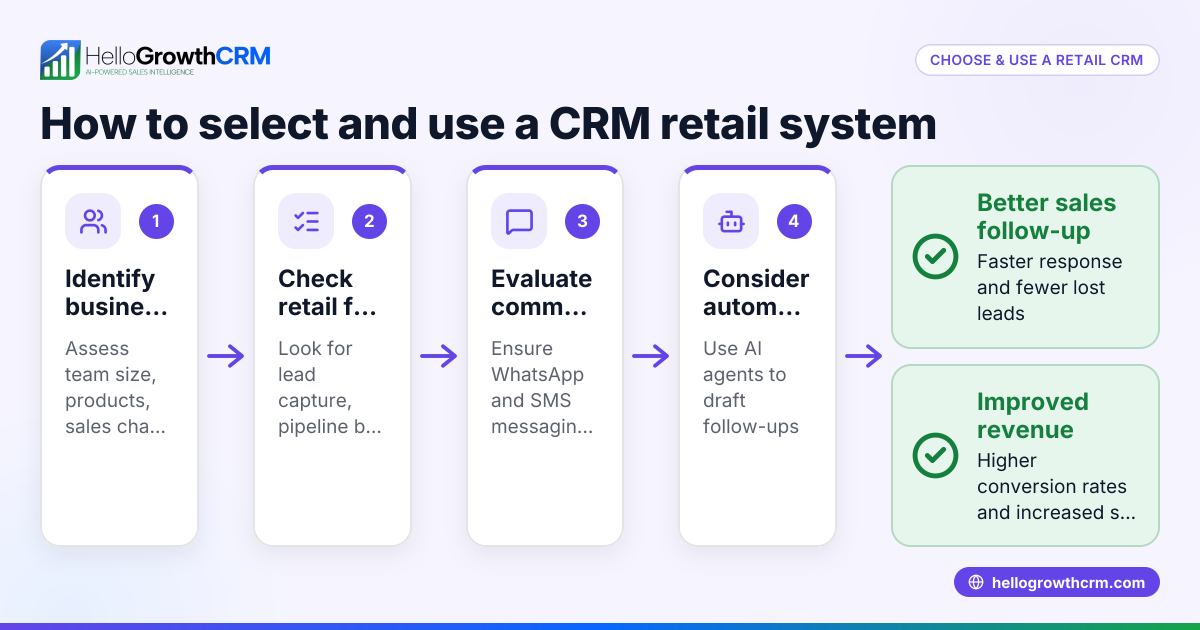
- Evaluate automation features: Look for AI agents or automation that can draft follow-ups or remind your team about pending tasks, reducing manual effort.
- Assess ease of use for your team: The CRM should be simple enough for doctors, receptionists, and sales or telecalling staff to adopt without heavy training.
- Review compliance and data privacy: Confirm that the CRM provider follows data protection norms suitable for healthcare.
- Consider managed support options: If you don’t have a sales manager, see if the CRM offers managed revenue operations support to keep follow-ups on track.
- Trial before committing: Use free or trial plans to test the CRM in your daily workflow.
- Compare costs and scalability: Make sure the CRM fits your budget and can grow with your healthcare business.
For more on healthcare-specific CRM features, see Clinics, labs and healthcare.
Example (fictional figures)
A diagnostic lab in Lucknow receives 150 patient inquiries monthly via IndiaMART, JustDial, and website forms. Without a CRM, 30% of leads are lost due to delayed follow-up.
- Total monthly leads = 150
- Leads lost without CRM = 150 × 30% = 45
- Average revenue per patient = ₹3,000
- Lost revenue monthly = 45 × ₹3,000 = ₹1,35,000
By implementing a CRM that automates follow-ups and logs WhatsApp conversations, the lab reduces lost leads to 10%.
- Leads lost with CRM = 150 × 10% = 15
- Leads saved = 45 - 15 = 30
- Revenue saved monthly = 30 × ₹3,000 = ₹90,000
This shows how a CRM can directly impact revenue by improving lead management.
Common mistakes
- Not integrating WhatsApp communication: Many healthcare providers use WhatsApp heavily. Missing this integration means conversations aren’t logged, causing follow-up gaps. Use a CRM with WhatsApp and SMS support like HelloGrowthCRM (/product/whatsapp-sms-crm).
- Overlooking automation: Manual follow-ups lead to delays and errors. Prevent this by choosing a CRM with AI agents that draft follow-ups for quick review and sending.
- Choosing a complex system: Overly technical CRMs discourage team adoption. Select a user-friendly CRM suited for healthcare staff.
- Ignoring managed support: Without a dedicated sales manager, follow-up queues pile up. Managed RevOps services can keep your sales pipeline clean and active (/services/managed-revops).
- Skipping trial runs: Not testing the CRM before purchase can lead to mismatch with business needs. Always trial the CRM with real leads.
- Neglecting data privacy: Healthcare data is sensitive. Ensure the CRM provider complies with data protection norms.
Doing this in HelloGrowthCRM
HelloGrowthCRM offers WhatsApp and SMS messaging workflows that help healthcare teams engage patients on channels they already use. WhatsApp conversations with a lead are logged on the lead record, and follow-ups can be sent as messages, ensuring no patient inquiry is missed. Its AI agents (currently in Beta) draft follow-up messages after calls, so your team only needs to review and send, saving time. For founders without a sales manager, HelloGrowthCRM provides Managed RevOps support that works the follow-up queue weekly, maintaining pipeline hygiene and timely patient engagement. Learn more about HelloGrowthCRM for India (/in).
Frequently asked questions
What features should a healthcare CRM have? A healthcare CRM should support lead capture from multiple sources, integrate WhatsApp and SMS for communication, automate follow-ups, ensure data privacy, and be easy for medical staff to use. Features like AI-driven follow-up drafting and managed RevOps support improve efficiency.
Can a CRM integrate with WhatsApp for patient communication? Yes, many healthcare CRMs now integrate WhatsApp and SMS messaging. This lets you log conversations automatically and send follow-ups on channels patients prefer, improving response rates and record accuracy. HelloGrowthCRM includes these features (/product/whatsapp-sms-crm).
How can small clinics manage CRM follow-ups without dedicated sales staff? If your clinic lacks a sales manager, consider CRMs offering Managed RevOps services. They provide weekly follow-up execution and pipeline cleanup, ensuring leads don’t fall through the cracks. HelloGrowthCRM offers this for healthcare businesses (/services/managed-revops).
Are healthcare CRMs secure for sensitive patient data? Healthcare CRMs should comply with data protection laws and implement security measures like encrypted messaging and access controls. Always verify the provider’s compliance statements and security certifications. NEEDS EXPERT REVIEW
Is HelloGrowthCRM suitable for healthcare businesses? Yes, HelloGrowthCRM’s WhatsApp-native CRM, AI agents, and Managed RevOps support make it well-suited for Indian healthcare businesses like clinics and labs. It helps centralize patient communication and automate follow-ups.
For more healthcare industry solutions, see Clinics, labs and healthcare.
Key takeaways
- Healthcare CRMs must handle patient leads, appointments, and communication securely and efficiently.
- Integration with WhatsApp and SMS is crucial for Indian healthcare businesses.
- Automation with AI agents reduces manual follow-up work and speeds response.
- Managed RevOps support helps founders without sales managers maintain pipeline hygiene.
- Trial the CRM before buying to ensure it fits your healthcare workflow.
- HelloGrowthCRM offers WhatsApp-native messaging, AI follow-up drafting, and managed support tailored for healthcare teams.
Start your healthcare CRM journey with HelloGrowthCRM’s Free Forever plan, which supports 200 leads and requires no credit card. Visit Start on the Free Forever plan to begin.
Ready to put this into practice?
Set up your pipeline, WhatsApp follow-ups, and AI lead scoring in minutes — free, no credit card.
Try HelloGrowthCRM freeGet CRM tips in your inbox
Join thousands of sales professionals who get weekly insights on CRM strategy, AI automation, and pipeline optimization.

The HelloGrowthCRM team publishes guides on CRM strategy, AI sales tools, and revenue operations for small business sales teams.