HelloGrowthCRM software
Built for real small-business sales teams
HelloGrowthCRM helps reps qualify faster, follow up on time, and close more deals—with practical automation in one place.
- AI lead scoring and pipeline visibility
- Built-in dialer, WhatsApp, and email automation
- Sales forecasting and RevOps-ready reporting
Marketing automation implementation means setting up software and workflows that automatically send marketing messages and manage leads without manual effort. It involves planning your goals, choosing tools, creating automated sequences, and testing them. This article explains why small businesses need marketing automation, gives step-by-step setup instructions, a practical example, common pitfalls to avoid, and how HelloGrowthCRM supports automation.
Why this comes up / what goes wrong
Small business owners often find themselves overwhelmed by the manual tasks involved in marketing: sending follow-up emails, texting leads, tracking responses, and juggling spreadsheets. This slows down lead follow-up, causes missed opportunities, and wastes time. Marketing automation implementation comes up as the solution to streamline these repetitive tasks, keep prospects engaged, and improve sales conversions without adding staff. However, many owners struggle to know where to start or how to set it up effectively.
Step-by-step
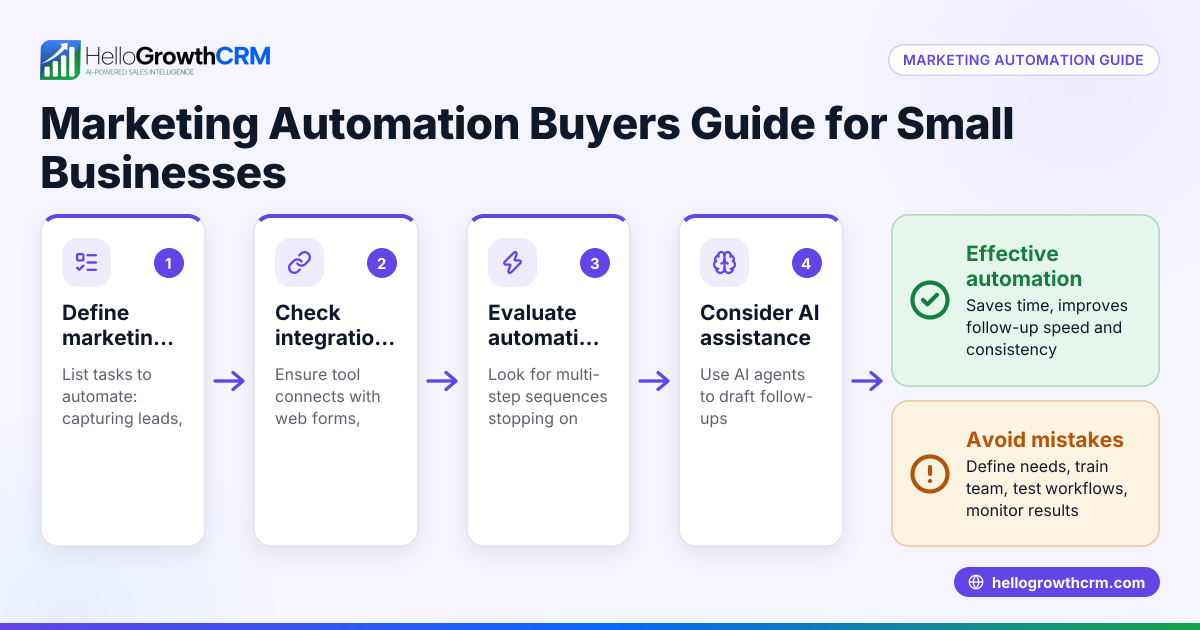
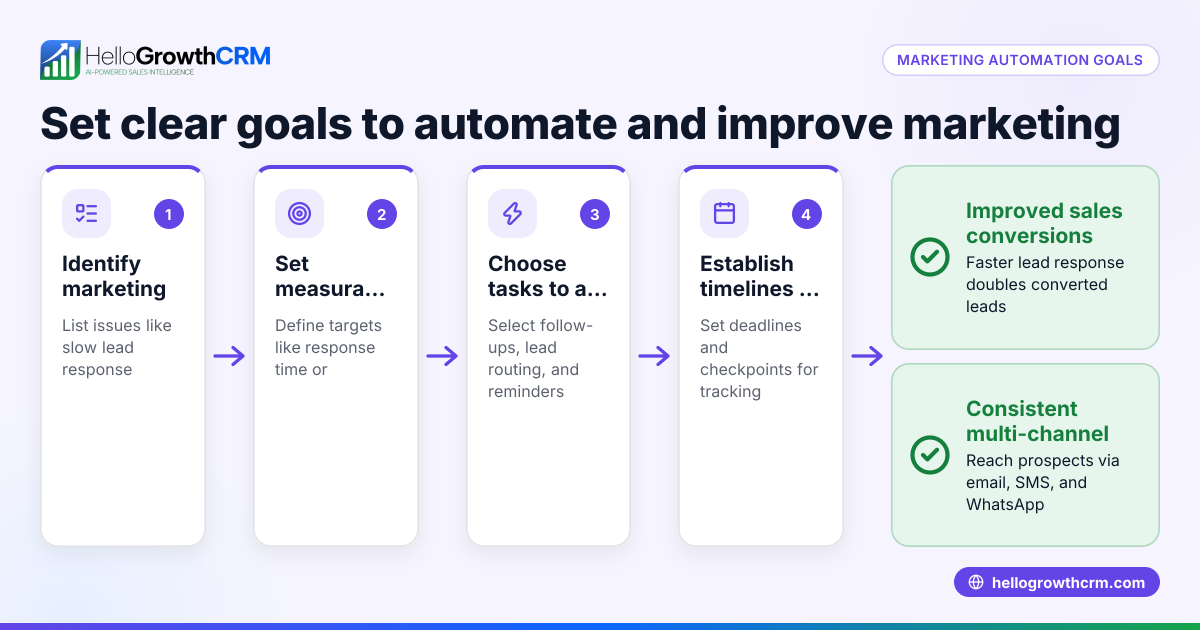
- Define your marketing goals and audience
- Decide what you want to achieve (e.g., more qualified leads, faster follow-up).
- Identify your target customer segments.
- Choose the right marketing automation tool
- Look for software that supports multi-channel outreach (email, SMS, WhatsApp).
- Ensure it can integrate with your existing lead sources like web forms.
- Map out your customer journey and touchpoints
- Plan the sequence of messages your prospects should receive.
- Include timing for follow-ups and triggers for responses.
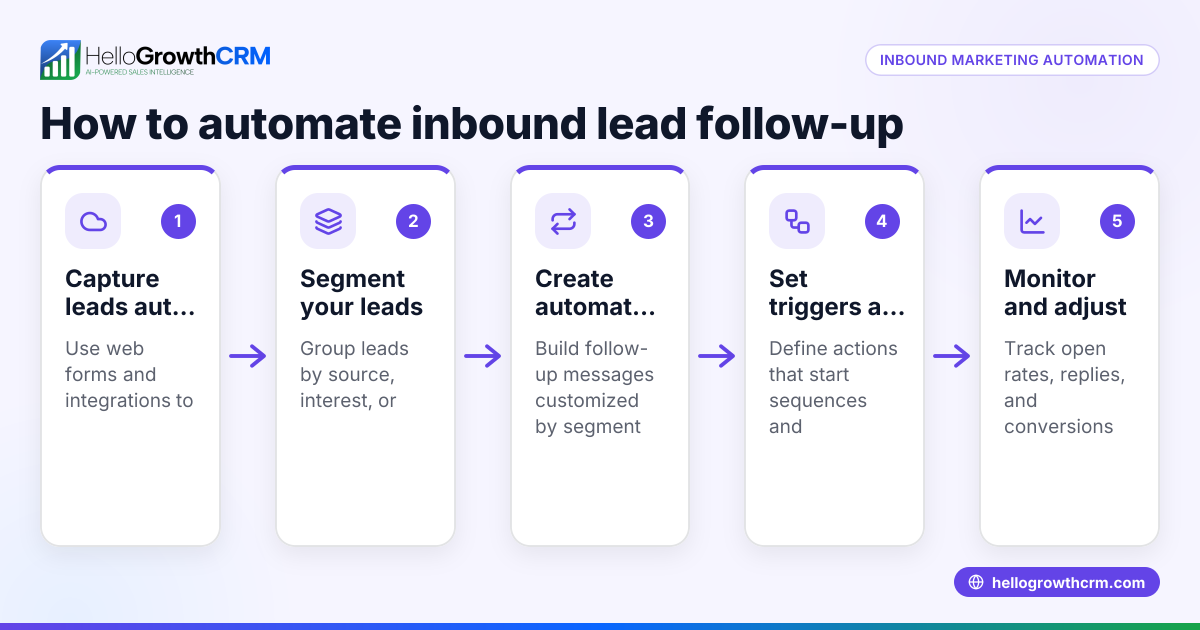
- Create automated sequences and workflows
- Build multi-step campaigns that send messages automatically.
- Set rules for lead routing and task creation to assign follow-up calls.
- Test your automation flows before launch
- Send test messages to yourself or your team.
- Check that triggers and task assignments work as expected.
- Launch and monitor performance
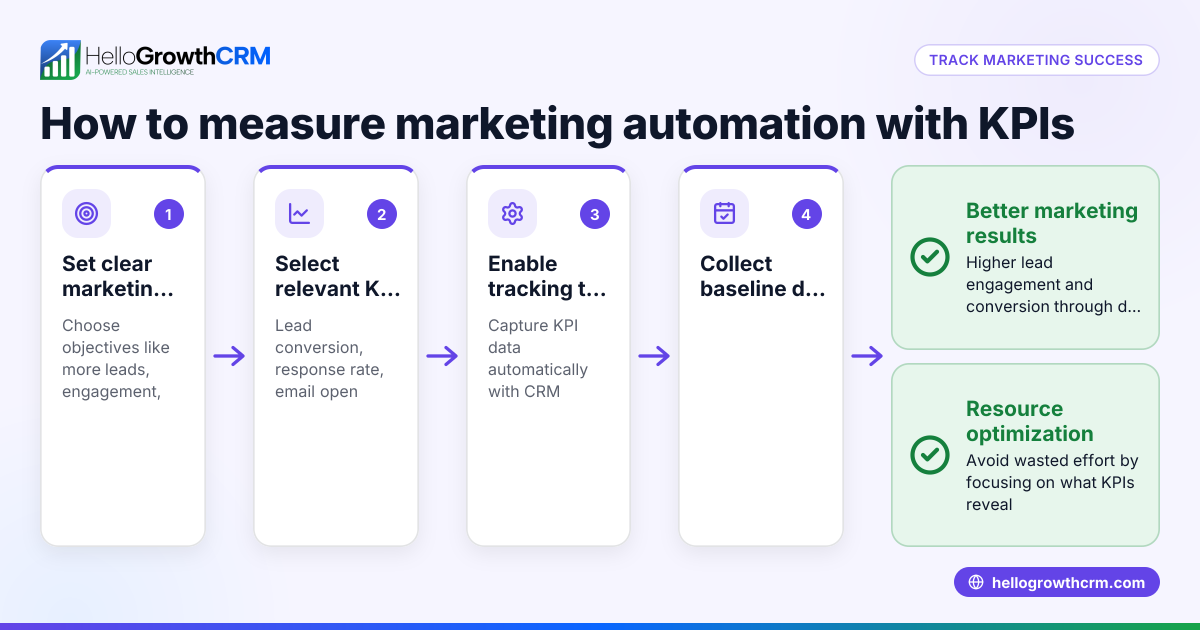
- Track open rates, replies, and conversions.
- Adjust sequences based on results and feedback.
- Train your sales team on using automation tools
- Ensure reps know how to review AI-drafted messages and follow up promptly.
- Encourage consistent use to keep data accurate.
Example (fictional figures)
A landscaping contractor in Charlotte, North Carolina, wants to implement marketing automation to handle online inquiries more efficiently.
- Average monthly leads: 150
- Goal: Follow up with each lead within 24 hours to book consultations
Steps:
- They set up a 5-step follow-up sequence over two weeks via email and SMS.
- Each new lead from their website is automatically assigned to sales reps in a round-robin fashion.
- A first-call task is created automatically for each new lead.
Cost savings example:
Manual follow-up time per lead = 15 minutes
150 leads × 15 minutes = 2,250 minutes = 37.5 hours/month
At $20/hour for sales reps:
37.5 hours × $20 = $750/month saved by automating initial outreach and task assignment.
This automation frees reps to focus on calls rather than manual messaging.
Common mistakes
- Skipping clear goal setting: Without defined objectives, automation can be unfocused. Prevent by writing down your goals before setup.
- Overloading prospects with too many messages: Too frequent or irrelevant messages cause opt-outs. Prevent by spacing messages and personalizing content.
- Ignoring data cleanup: Poor data quality leads to wrong assignments and failed triggers. Prevent by regularly updating and validating lead data.
- Not training the sales team: Automation fails if reps don’t use or trust it. Prevent by training and involving your team early.
- Not testing workflows: Errors in sequences cause confusion. Prevent by thorough testing before launch.
Doing this in HelloGrowthCRM
HelloGrowthCRM supports marketing automation with features designed for small and mid-sized businesses. You can create sequences and campaigns that run automated five-step follow-ups over two weeks, stopping immediately when a prospect replies. Its AI agents draft follow-up messages after calls, letting sales reps review and send quickly. Automated workflows and lead routing assign new enquiries round-robin and create first-call tasks automatically. Learn more about how HelloGrowthCRM’s AI CRM and WhatsApp and SMS CRM features help you implement marketing automation efficiently.
Frequently asked questions
What is the difference between marketing automation and CRM? Marketing automation focuses on automating marketing tasks like sending emails or texts, while CRM manages customer data and interactions. Many modern CRMs, including HelloGrowthCRM, combine both to streamline sales and marketing.
How long does it take to implement marketing automation? Implementation can take from a few days to several weeks depending on your goals, complexity of sequences, and team training. Starting with simple sequences and expanding gradually is common.
Can small businesses benefit from marketing automation? Yes, especially businesses with multiple leads and manual follow-up processes. Automation saves time, reduces missed leads, and improves response speed.
Do I need technical skills to set up marketing automation? Basic setup is usually user-friendly with drag-and-drop builders, but some technical knowledge helps with integrations and custom workflows. HelloGrowthCRM offers intuitive tools to simplify this.
How does AI help in marketing automation? AI can draft follow-up messages, update records automatically, and execute workflow steps, reducing manual work and speeding response times.
Key takeaways
- Marketing automation automates repetitive marketing tasks to save time and improve lead follow-up.
- Start by defining clear goals, choosing suitable tools, and mapping customer journeys.
- Build, test, and monitor multi-step automated sequences and workflows.
- Avoid common mistakes like poor goal setting, over-messaging, and lack of team training.
- HelloGrowthCRM offers sequences, AI agents, and workflows to simplify marketing automation for small businesses.
Implement marketing automation to keep your leads engaged and your sales team productive without extra manual work. Start on the Free Forever plan (200 leads, no credit card) with HelloGrowthCRM to try these features yourself.
Ready to put this into practice?
Set up your pipeline, WhatsApp follow-ups, and AI lead scoring in minutes — free, no credit card.
Try HelloGrowthCRM freeGet CRM tips in your inbox
Join thousands of sales professionals who get weekly insights on CRM strategy, AI automation, and pipeline optimization.

The HelloGrowthCRM team publishes guides on CRM strategy, AI sales tools, and revenue operations for small business sales teams.