HelloGrowthCRM software
Built for real small-business sales teams
HelloGrowthCRM helps reps qualify faster, follow up on time, and close more deals—with practical automation in one place.
- AI lead scoring and pipeline visibility
- Built-in dialer, WhatsApp, and email automation
- Sales forecasting and RevOps-ready reporting
A marketing automation strategy is a plan for using software tools to automate repetitive marketing tasks such as sending follow-up messages, managing email campaigns, and nurturing leads. This approach helps small businesses maintain timely contact with prospects, improve efficiency, and increase sales conversions without manual effort. This article covers why small businesses need marketing automation, the step-by-step process to create a strategy, a detailed example with figures, common pitfalls, and how HelloGrowthCRM supports marketing automation.
Why this comes up / what goes wrong
Small-business owners often struggle with staying in touch with leads consistently. They may rely on manual emails, texts, or spreadsheets, which can lead to slow follow-up, missed opportunities, and lost sales. Without an automation strategy, it’s hard to keep track of who to contact, when, and how, especially as the business grows. This leads to inconsistent messaging and wasted time on repetitive tasks that could be automated.
Step-by-step
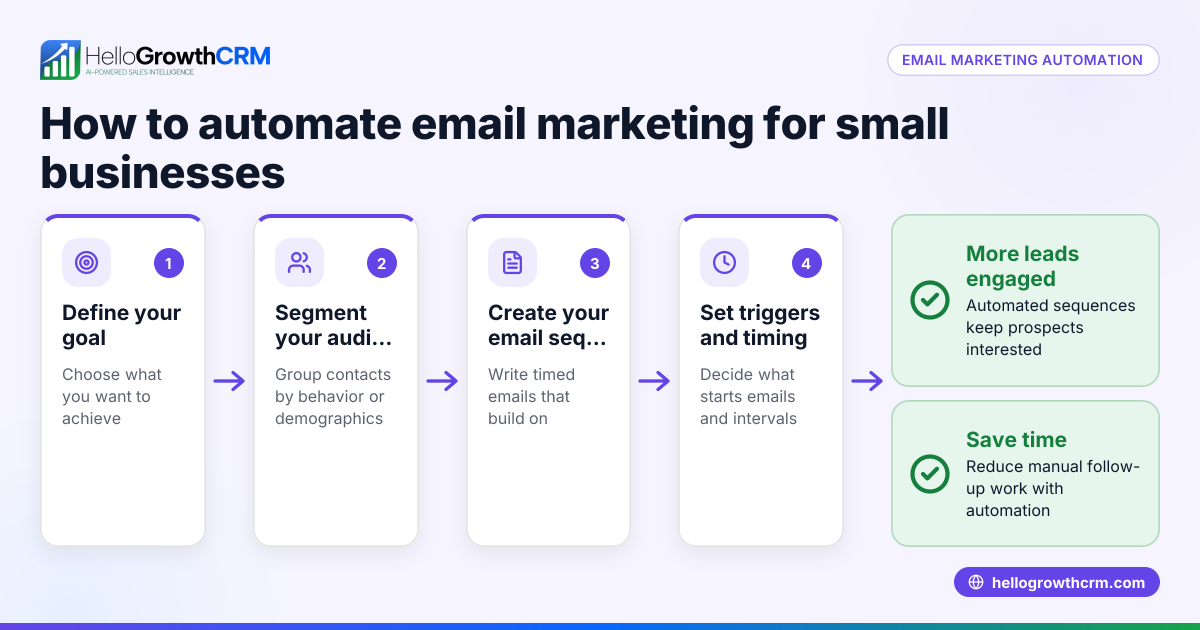
- Define your marketing goals: Decide what you want to achieve with automation, such as increasing lead engagement, speeding up follow-ups, or improving conversion rates. Check that these goals align with your overall sales objectives.
- Identify repetitive marketing tasks to automate: List tasks like sending welcome emails, follow-up texts, or drip campaigns. Check which tasks consume the most time or have the biggest impact on lead nurturing.
- Segment your audience: Group your leads by characteristics like source, interest, or stage in the sales funnel. Check that these segments make sense for targeted messaging.
- Design automation workflows: Plan sequences of messages or actions triggered by lead behavior or time intervals. Check that each step has a clear purpose and timing.
- Choose your channels: Decide which communication channels to use (email, SMS, WhatsApp). Check that your audience prefers these channels.
- Set up lead routing and assignment: Define rules to assign leads to sales reps automatically to ensure timely follow-up. Check that assignments balance workload fairly.
- Create and test your sequences and campaigns: Build multi-step follow-up sequences and broadcast campaigns. Test them to ensure messages send correctly and stop if a prospect replies.
- Monitor and optimize: Track performance metrics like open rates, response rates, and conversions. Adjust your strategy based on what works.
- Train your team: Ensure everyone understands the automation tools and workflows. Check that reps know how to intervene when needed.
Example (fictional figures)
A two-location dental practice in Columbus, Ohio wants to automate lead follow-up to increase new patient bookings.
- They receive 100 new inquiries monthly.
- Current manual follow-up takes 3 days on average, with a 10% booking rate.
- Goal: reduce follow-up time to 1 day and increase booking rate to 20%.
Steps:
- Define goal: Increase bookings from 10 to 20 per month.
- Automate follow-up with a 5-step sequence over two weeks.
- Assign leads round-robin to 2 receptionists.
Calculations:
- Current bookings = 100 × 10% = 10
- Target bookings = 100 × 20% = 20
By automating:
- Follow-up time drops from 3 to 1 day.
- Response rate improves due to timely, consistent contact.
If each new patient brings $500 revenue, revenue increase: $500 × (20 - 10) = $500 × 10 = $5,000 additional monthly revenue.
Common mistakes
- Not defining clear goals: Prevent by setting specific, measurable objectives before starting.
- Ignoring audience segmentation: Prevent by grouping leads for targeted messaging.
- Overloading with too many messages: Prevent by spacing messages and stopping sequences when prospects respond.
- Not testing workflows: Prevent by running tests to catch errors before launch.
- Failing to assign leads properly: Prevent by using automated lead routing rules.
- Neglecting team training: Prevent by training sales reps on automation tools and workflows (AI CRM).
Doing this in HelloGrowthCRM
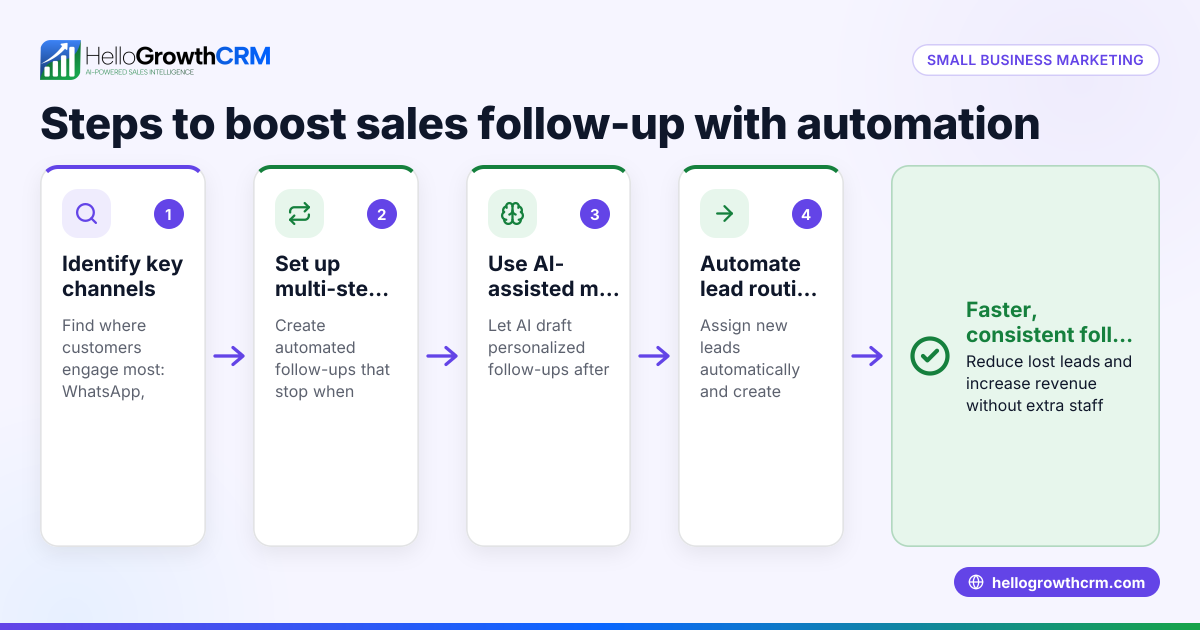
HelloGrowthCRM supports marketing automation with features that help small businesses automate follow-ups and lead management. You can set up sequences and campaigns where a five-step follow-up runs automatically over two weeks and stops immediately when a prospect replies. AI agents draft follow-up messages after calls, letting reps review and send quickly. Workflows and lead routing rules automate lead assignment and task creation, such as assigning new inquiries round-robin and automatically creating first-call tasks. These features help keep your marketing automation strategy efficient and responsive (WhatsApp and SMS CRM, HelloGrowthCRM for the United States).
Frequently asked questions
What is the difference between marketing automation and CRM? Marketing automation focuses on automating marketing tasks like sending emails and nurturing leads, while CRM manages customer relationships and tracks sales activities. Many CRMs, like HelloGrowthCRM, include marketing automation features.
How do I measure the success of my marketing automation strategy? Track metrics such as response rates, conversion rates, lead engagement, and revenue impact. Regularly review these to optimize your workflows.
Can small businesses afford marketing automation? Yes, many CRM platforms offer affordable plans suitable for small businesses. Starting with basic automation like sequences can save time and improve sales efficiency.
How often should I update my marketing automation workflows? Review workflows quarterly or after major campaigns to adjust messaging, timing, and lead assignment based on performance data.
Key takeaways
- A marketing automation strategy automates repetitive marketing tasks to save time and improve lead nurturing.
- Define clear goals, segment your audience, and design targeted workflows.
- Use multi-step sequences and automated lead routing for consistent, timely follow-up.
- Avoid common mistakes like unclear goals, poor segmentation, and lack of testing.
- HelloGrowthCRM offers sequences, AI agents, and workflows to support your marketing automation.
Start your marketing automation journey today with HelloGrowthCRM. Start on the Free Forever plan (200 leads, no credit card).
Ready to put this into practice?
Set up your pipeline, WhatsApp follow-ups, and AI lead scoring in minutes — free, no credit card.
Try HelloGrowthCRM freeGet CRM tips in your inbox
Join thousands of sales professionals who get weekly insights on CRM strategy, AI automation, and pipeline optimization.

The HelloGrowthCRM team publishes guides on CRM strategy, AI sales tools, and revenue operations for small business sales teams.