HelloGrowthCRM software
Built for real small-business sales teams
HelloGrowthCRM helps reps qualify faster, follow up on time, and close more deals—with practical automation in one place.
- AI lead scoring and pipeline visibility
- Built-in dialer, WhatsApp, and email automation
- Sales forecasting and RevOps-ready reporting
A B2B business development strategy is a structured plan to identify, attract, and retain business clients by nurturing relationships and creating value. It focuses on understanding your target business customers, developing sales approaches, and building partnerships. This article explains why B2B strategy matters, outlines clear steps to create one, shows a realistic example, and highlights common mistakes to avoid.
Why this comes up / what goes wrong
Small and mid-sized US businesses often struggle with B2B development because they rely on informal sales methods like text messages, emails, or spreadsheets, which leads to slow follow-up and lost leads. Without a clear strategy, sales efforts become reactive rather than proactive, resulting in missed opportunities and inefficient use of resources. Business owners want to grow by securing reliable business clients, but lack a repeatable process for lead generation, qualification, and relationship management.
Step-by-step
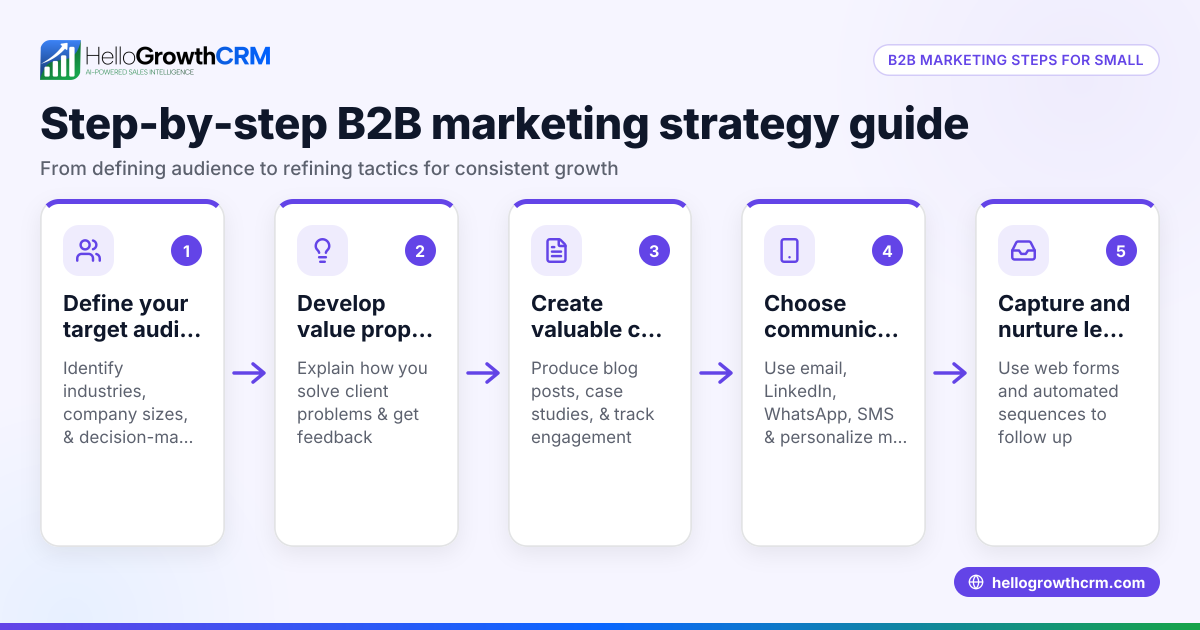
- Define Your Target Market and Ideal Customer Profile
- Identify the industries, company sizes, and decision-makers who benefit most from your product or service.
- Check that your profile is specific enough to focus your efforts but broad enough to find sufficient leads.
- Research Your Competitors and Market Needs
- Analyze what competitors offer and where gaps exist.
- Validate that your solution addresses a real pain point or opportunity.
- Develop Your Value Proposition and Messaging
- Craft clear messages that explain how your product improves the customer's business.
- Test messaging with prospects to ensure clarity and relevance.
- Set Up Lead Capture and Outreach Channels
- Use web forms, email, WhatsApp, or SMS to capture and communicate with leads.
- Ensure prompt follow-up to avoid losing interest.
- Qualify Leads Using Criteria and Scoring
- Establish qualification criteria such as budget, authority, need, and timeline.
- Score leads to prioritize sales efforts.
- Build a Sales Pipeline and Track Progress
- Organize leads through stages like prospecting, qualification, proposal, and closing.
- Regularly review pipeline health and adjust tactics.
- Nurture Relationships and Follow Up Consistently
- Use sequences of emails, WhatsApp messages, or calls to stay top of mind.
- Personalize communication to build trust.
- Analyze Results and Refine Your Approach
- Track metrics such as lead conversion rates and sales cycle length.
- Adjust targeting, messaging, or process steps based on data.
For managing communication channels and follow-ups effectively, consider solutions like WhatsApp and SMS CRM or a built-in CRM dialer to streamline outreach.
Example (fictional figures)
"GreenFlow Plumbing," a plumbing company in Austin, Texas, wants to grow its B2B client base among property management firms.
- Target market: Property management firms with 50+ rental units in Austin.
- Research shows competitors don’t offer quick emergency response contracts.
- Value proposition: "Reliable 24/7 plumbing service that minimizes tenant complaints and downtime."
- Set up a web form on their site to capture inquiries and use WhatsApp for immediate follow-up.
- Qualification criteria: firm size > 50 units, budget > $5,000/year, decision-maker identified.
- Pipeline stages: Lead captured → Qualified → Proposal sent → Contract signed.
- Follow-up sequence: initial WhatsApp message, email with brochure, call to discuss needs.
- Metrics tracked monthly.
In March 2026, GreenFlow captured 30 leads.
- Qualified leads: 20 (30 × 67%)
- Proposals sent: 15 (20 × 75%)
- Contracts signed: 6 (15 × 40%)
Revenue per contract: $12,000/year
Total new revenue = 6 × $12,000 = $72,000/year
This example shows how a clear strategy turns leads into measurable revenue.
Common mistakes
- Ignoring lead qualification: Follow a clear qualification process to avoid wasting time on low-potential leads.
- Slow response to inquiries: Use automated alerts or a CRM system to ensure fast follow-up.
- No consistent follow-up: Schedule regular outreach sequences via email or WhatsApp to nurture leads.
- Poorly defined target market: Be specific about who benefits most to focus resources effectively.
- Not tracking pipeline stages: Without tracking, you can’t identify bottlenecks or forecast sales.
To avoid these, tools like HelloGrowthCRM for the United States can help organize leads and communication.
Frequently asked questions
What is the difference between business development and sales? Business development focuses on creating long-term value and partnerships, including lead generation and market research. Sales is the process of closing deals and converting leads into customers. Both work together but have different focuses.
How do I identify potential B2B clients? Start by defining your ideal customer profile based on industry, size, and needs. Use online directories, LinkedIn, and referrals to find companies matching your profile.
How important is follow-up in B2B sales? Follow-up is critical because business buyers often require multiple contacts before deciding. Consistent and prompt follow-up increases trust and improves conversion rates.
Can small businesses handle B2B development without a CRM? While possible, managing leads and communication manually often leads to lost opportunities. A CRM system helps organize contacts, automate follow-ups, and track progress efficiently.
What role does messaging play in B2B development? Clear messaging conveys your value and differentiates you from competitors. It should address the specific pain points of your target clients to engage them effectively.
Key takeaways
- Define a specific target market and ideal customer profile.
- Develop clear value propositions and messaging tailored to business clients.
- Use a structured process for lead capture, qualification, and pipeline management.
- Follow up promptly and consistently using multiple communication channels.
- Track results and refine your strategy based on data.
- Avoid common mistakes like slow follow-up and unclear targeting.
Start building your B2B business development strategy today. To manage leads and communication efficiently, start on the Free Forever plan (200 leads, no credit card).
Ready to put this into practice?
Set up your pipeline, WhatsApp follow-ups, and AI lead scoring in minutes — free, no credit card.
Try HelloGrowthCRM freeGet CRM tips in your inbox
Join thousands of sales professionals who get weekly insights on CRM strategy, AI automation, and pipeline optimization.

The HelloGrowthCRM team publishes guides on CRM strategy, AI sales tools, and revenue operations for small business sales teams.