HelloGrowthCRM software
Built for real small-business sales teams
HelloGrowthCRM helps reps qualify faster, follow up on time, and close more deals—with practical automation in one place.
- AI lead scoring and pipeline visibility
- Built-in dialer, WhatsApp, and email automation
- Sales forecasting and RevOps-ready reporting
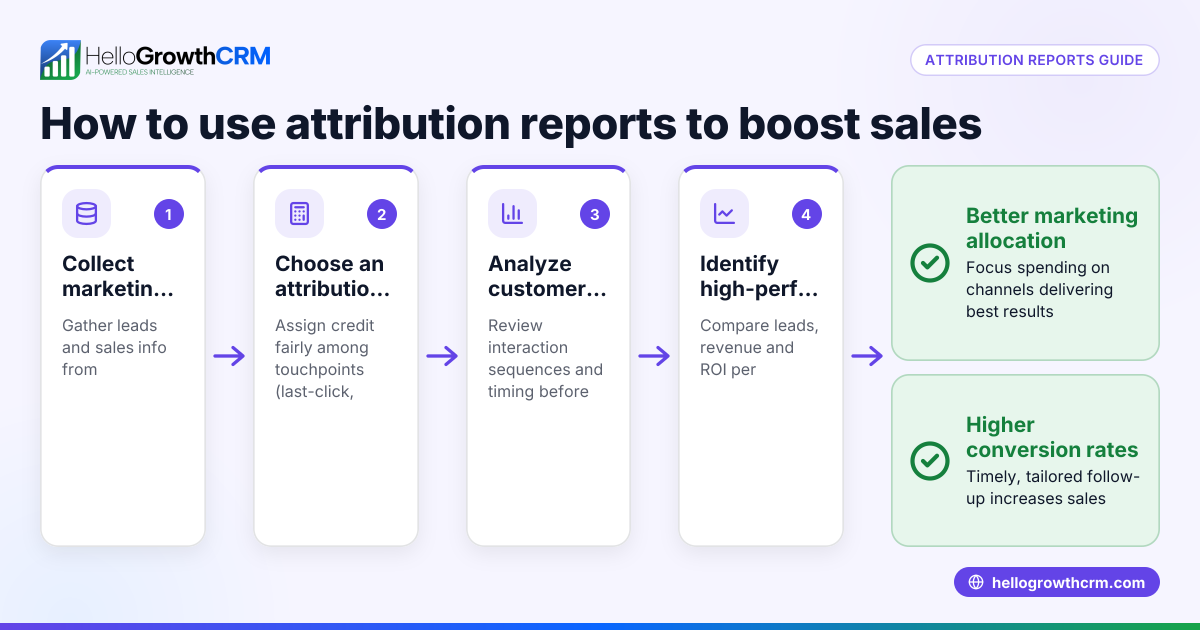
Pipeline attribution is the method of assigning credit to specific marketing or sales actions that influence a deal’s progression through your sales pipeline. It answers questions like: Which lead source brought in this opportunity? Which salesperson’s follow-up pushed the deal closer to closing? Understanding pipeline attribution helps small business owners allocate resources effectively and improve sales forecasting.
Why this comes up / what goes wrong
Small business owners often lose track of how leads enter and move through their sales pipeline. They may rely on spreadsheets, emails, or text messages to manage deals, which makes it difficult to see which marketing campaigns or sales efforts actually generate revenue. Without pipeline attribution, owners can’t tell if a social media ad, a referral, or a cold call is responsible for a closed deal. This leads to wasted budget and missed opportunities to optimize sales.
Often, sales teams work in silos without clear communication on which activities impact deal progress. This results in missed follow-ups or duplicated efforts. Without clear pipeline attribution, forecasting revenue becomes guesswork because the owner cannot accurately predict which deals will close or which channels produce the most value.
Step-by-step
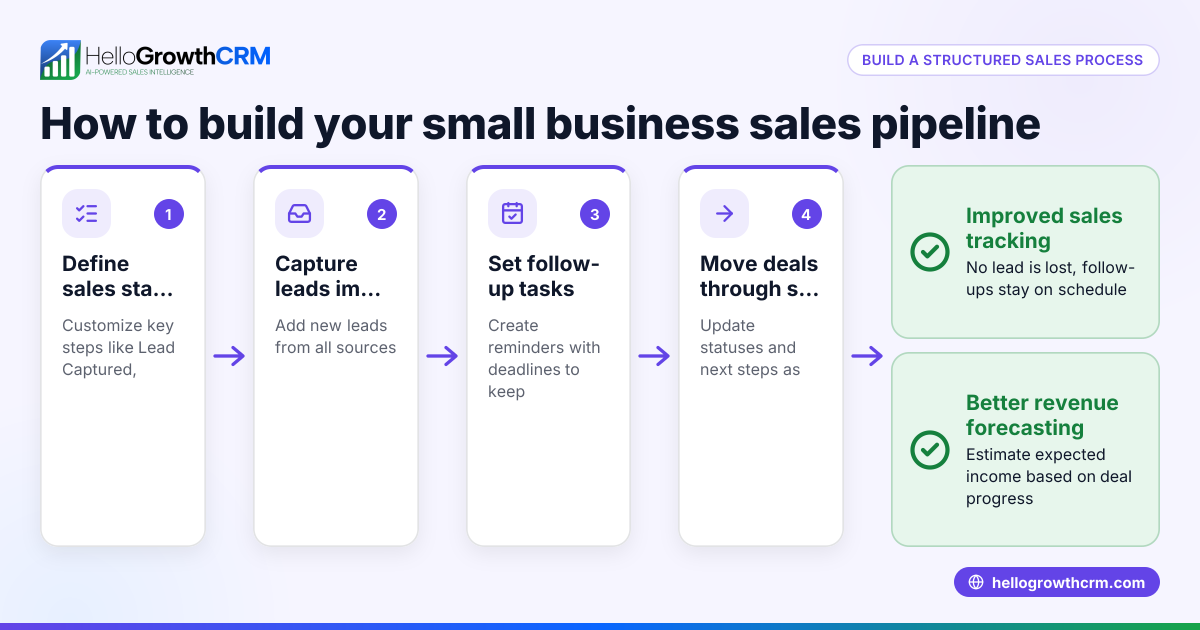
- Identify your lead sources: List all ways leads come in, such as website forms, referrals, cold calls, or ads. Be specific about each channel.
- Track each lead’s origin: When a lead enters your system, record its source clearly and consistently.
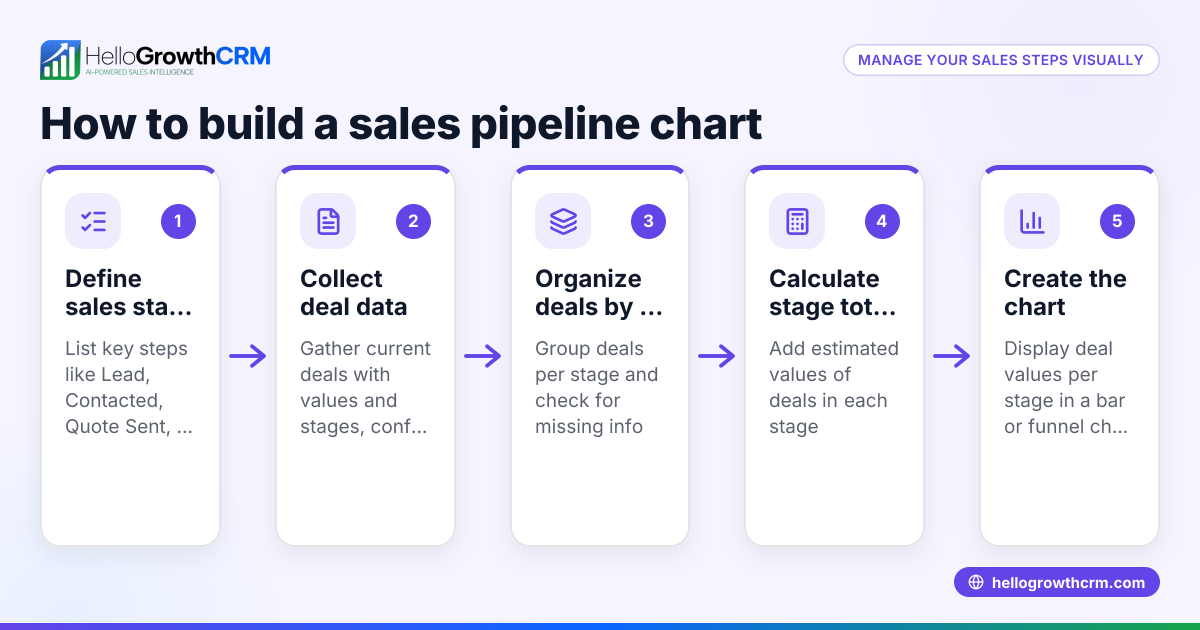
- Create a sales pipeline with defined stages: For example, lead contacted, qualified, quote sent, negotiation, and closed. Make sure everyone on the team understands these stages.
- Assign each deal to a pipeline stage: Update the deal’s stage as it progresses and record the date of each change.
- Attribute pipeline movement to activities: Note which marketing or sales actions caused the deal to move stages, such as a follow-up call or an email sequence.
- Review pipeline data regularly: Check which sources and activities lead to the most closed deals and highest revenue.
- Adjust marketing and sales efforts based on findings: Invest more in effective channels and improve or drop ineffective ones.
- Use software tools to automate tracking: A CRM can help manage deal stages, record activities, and provide insights without manual spreadsheets.
Example (fictional figures)
A B2B software reseller in Denver, Colorado, tracks pipeline attribution for Q1 2026.
- Total deals started: 50
- Deals from website form: 30
- Deals from referrals: 15
- Deals from cold calls: 5
They close 20 deals total, with revenue as follows:
- Closed deals from website form: 12 deals × $25,000 each = $300,000
- Closed deals from referrals: 7 deals × $40,000 each = $280,000
- Closed deals from cold calls: 1 deal × $20,000 = $20,000
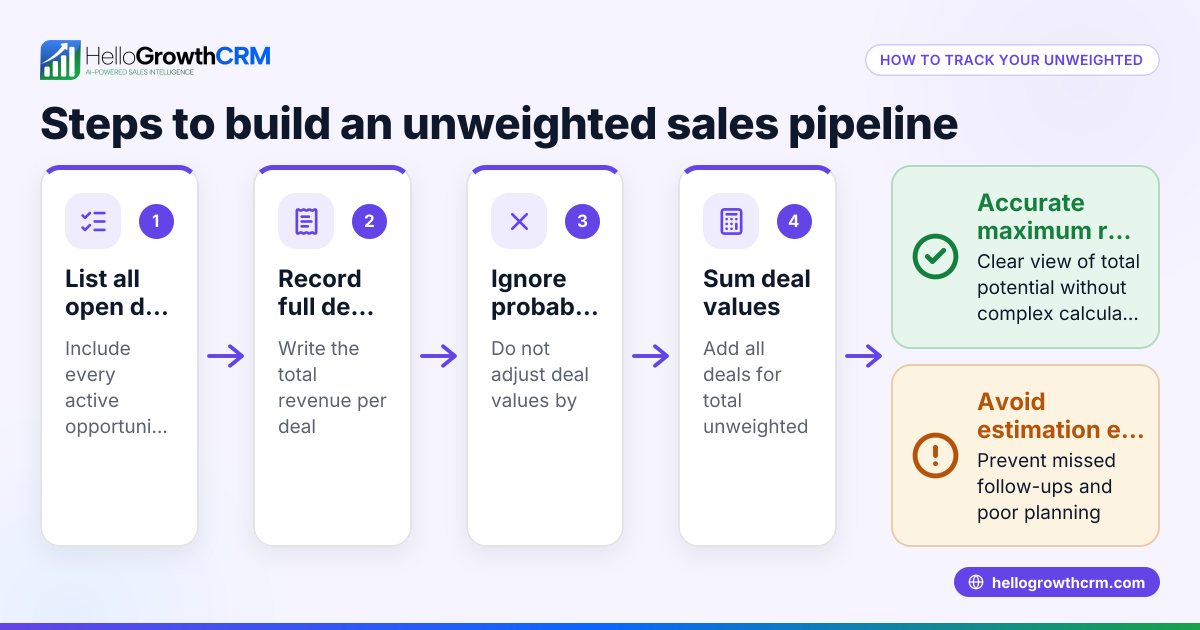
Total revenue = $300,000 + $280,000 + $20,000 = $600,000
By attributing pipeline revenue, the owner sees referrals have higher average deal size ($40,000) despite fewer deals, suggesting to focus more on referral programs.
Common mistakes
- Not tracking lead sources consistently: Prevent by always recording the source at lead capture and training your team to do so.
- Mixing up pipeline stages or skipping updates: Prevent by defining clear stages and requiring timely updates for every deal.
- Ignoring pipeline attribution data: Prevent by scheduling regular reviews and making decisions based on the data.
- Using spreadsheets without automation: Prevent by switching to a CRM that tracks deals and sources automatically.
- Failing to attribute pipeline movement to specific activities: Prevent by logging sales actions linked to stage changes to understand what drives progress.
- Overlooking stalled deals: Prevent by monitoring pipeline health and following up on deals stuck in stages.
Doing this in HelloGrowthCRM
HelloGrowthCRM’s Deals (pipeline) feature lets you track open opportunities from first contact through close, with clear stages and follow-up dates so no deal is forgotten. For example, a quotation sent last week appears at the 'quote sent' stage with a follow-up date to ensure timely action. The Pipeline forecast and AI insights provide AI-assisted revenue forecasting based on deal stages and historical conversion patterns. This helps owners see which stages deals stall in without building spreadsheets. Learn more about these features on AI CRM and sales forecasting.
Frequently asked questions
What is pipeline attribution in sales? Pipeline attribution identifies which marketing or sales activities contribute to moving a deal through the sales pipeline. It helps you understand the return on investment for each channel or action.
How can small businesses track pipeline attribution effectively? By capturing lead sources at entry, defining clear pipeline stages, updating deal progress regularly, and linking sales activities to stage movements. Using a CRM simplifies this process and reduces manual errors.
Why is pipeline attribution important for sales forecasting? It shows which deals are likely to close based on their source and stage, allowing more accurate revenue projections and better resource allocation. This improves planning and budgeting.
Can pipeline attribution improve sales team performance? Yes, by highlighting which activities and reps move deals forward, enabling coaching and focus on effective tactics. Tools like HelloGrowthCRM provide AI insights to support this.
How does HelloGrowthCRM support pipeline attribution? It tracks deals through stages with follow-up dates and uses AI to forecast revenue and identify stalled deals, reducing manual tracking and improving pipeline visibility. Learn more about HelloGrowthCRM for the United States here.
Key takeaways
- Pipeline attribution assigns credit to marketing and sales actions that move deals.
- Consistent tracking of lead sources and pipeline stages is essential.
- Regularly reviewing pipeline data helps optimize sales and marketing efforts.
- Avoid common mistakes like inconsistent tracking and ignoring data.
- HelloGrowthCRM supports pipeline attribution with deal tracking and AI-powered forecasting.
Start managing your sales pipeline more effectively today. Start on the Free Forever plan (200 leads, no credit card).
Ready to put this into practice?
Set up your pipeline, WhatsApp follow-ups, and AI lead scoring in minutes — free, no credit card.
Try HelloGrowthCRM freeGet CRM tips in your inbox
Join thousands of sales professionals who get weekly insights on CRM strategy, AI automation, and pipeline optimization.

The HelloGrowthCRM team publishes guides on CRM strategy, AI sales tools, and revenue operations for small business sales teams.