HelloGrowthCRM software
Built for real small-business sales teams
HelloGrowthCRM helps reps qualify faster, follow up on time, and close more deals—with practical automation in one place.
- AI lead scoring and pipeline visibility
- Built-in dialer, WhatsApp, and email automation
- Sales forecasting and RevOps-ready reporting
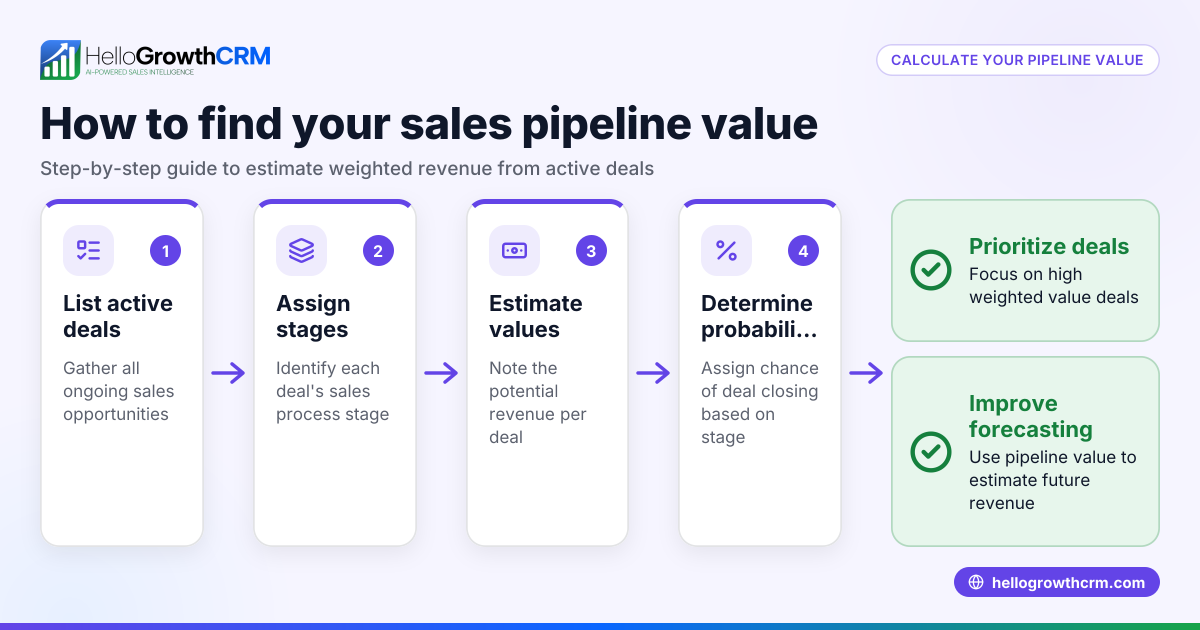
An unweighted pipeline is a sales tracking method that lists all your open deals at their full potential value, without applying any probability or weighting to reflect the chance of closing. This means every deal is counted at its full value regardless of how far along it is in the sales process. Understanding this helps small-business owners see the total possible revenue from all leads and opportunities.
Why this comes up / what goes wrong
Small-business owners often ask about unweighted pipelines when they want a clear snapshot of their total sales opportunities without complex calculations. Many track leads and deals in spreadsheets or scattered notes, losing sight of the total potential revenue. Without a proper unweighted pipeline, owners may underestimate or overestimate their sales capacity, leading to poor planning and missed follow-ups. They want a straightforward way to see all deals in one place, regardless of stage or likelihood.
This need becomes critical when sales teams juggle multiple leads across different channels like email, text, and WhatsApp, often resulting in slow or forgotten follow-ups. Without a clear unweighted pipeline, it’s easy to lose track of deals or misjudge the total revenue opportunity, which can hurt business growth.
Step-by-step
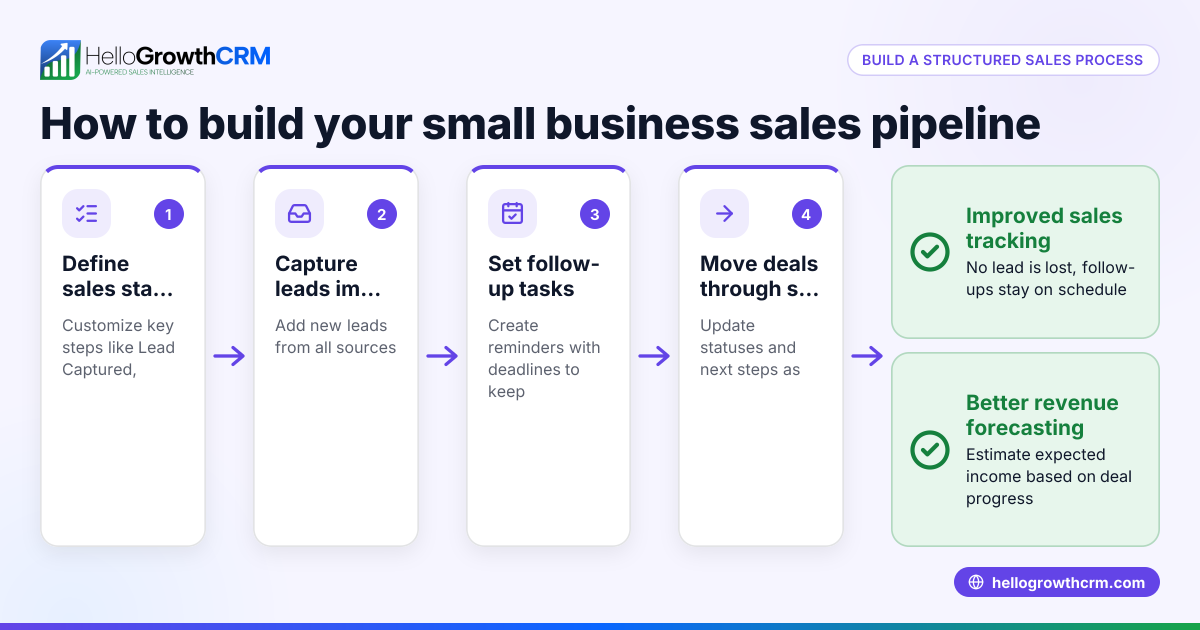
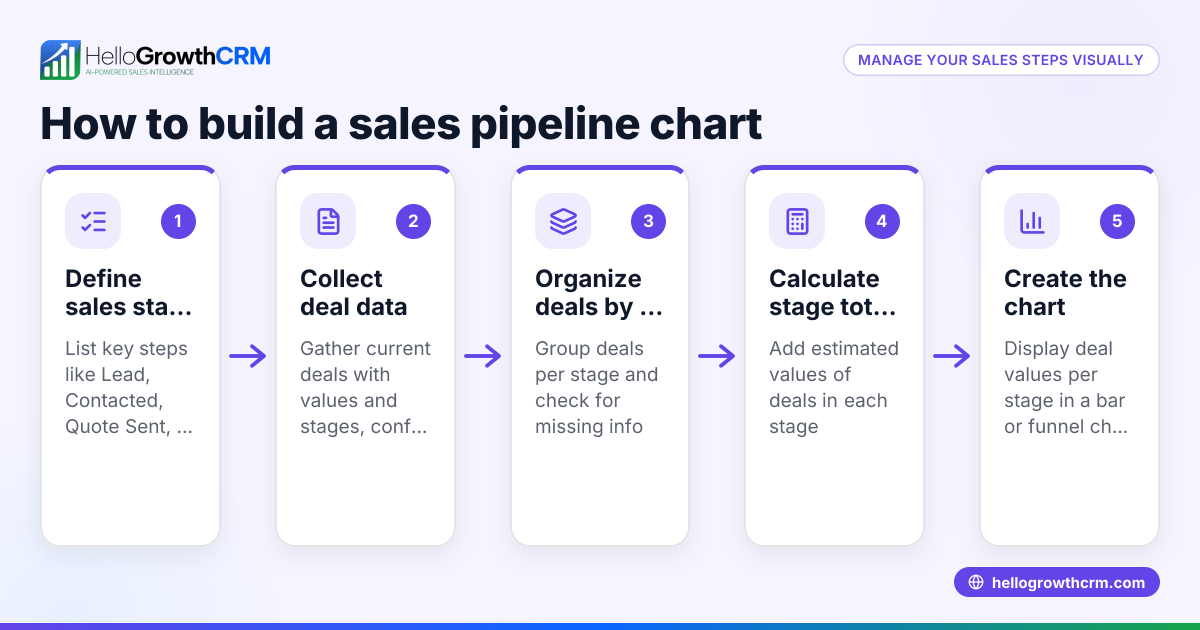
- List all open deals: Gather every current sales opportunity, whether in early contact, negotiation, or awaiting a decision. Include every deal that could realistically close.
- Record the full deal value: For each opportunity, write down the total potential revenue if it closes, without adjusting for probability.
- Ignore probabilities: Do not multiply deal values by likelihood percentages. Treat every deal as its full value.
- Sum the deal values: Add all deal values together to find the total unweighted pipeline amount.
- Review regularly: Update the list frequently to add new opportunities and remove closed or lost deals.
- Use this figure for planning: Understand this is your maximum potential revenue and use it alongside weighted forecasts for balanced decisions.
- Check for duplicates or outdated deals: Ensure your list only includes current, active opportunities to avoid inflating the pipeline.
For small businesses using multiple communication channels and manual tracking, this step-by-step approach helps keep the unweighted pipeline clear and actionable. You can also explore tools that integrate sales forecasting and AI insights to complement this process, such as HelloGrowthCRM’s sales forecasting features.
Example (fictional figures)
A residential real-estate team in Phoenix, Arizona, tracks their unweighted pipeline on 06/15/2026. They have these open deals:
- Deal 1: $350,000 (house sale in negotiation)
- Deal 2: $275,000 (pending client decision)
- Deal 3: $125,000 (new lead, initial contact)
Calculate the unweighted pipeline total:
$350,000 + $275,000 = $625,000 $625,000 + $125,000 = $750,000
This $750,000 is the total potential revenue if every deal closes, without adjusting for how likely each deal is to close.
Common mistakes
- Mixing weighted and unweighted values: Keep unweighted pipeline strictly as full deal values. Mixing in probabilities confuses the metric. Prevent this by clearly labeling your lists.
- Including lost or stale deals: Remove deals that are no longer active to avoid overstating potential. Schedule regular reviews.
- Ignoring follow-up dates: Without timely follow-ups, deals stall and pipeline accuracy suffers. Use a system that reminds you to follow up.
- Relying solely on unweighted pipeline: It shows maximum potential but not realistic forecasts. Combine with weighted pipeline analysis for better planning. See how AI insights can help at sales forecasting.
- Using spreadsheets without automation: Manual tracking risks errors and missed updates. Consider tools designed for pipelines to reduce mistakes.
Doing this in HelloGrowthCRM
HelloGrowthCRM helps small businesses manage their unweighted pipeline with its Deals (pipeline) feature. For example, a quotation sent last week appears as a deal in the 'quote sent' stage with a follow-up date, ensuring no deal is forgotten. The platform also offers Pipeline forecast and AI insights, showing which stages deals are stalling in without building spreadsheets. This helps owners keep their pipeline accurate and actionable. Learn more about these features in the AI CRM and sales forecasting pages.
Frequently asked questions
What is the difference between an unweighted and weighted pipeline? An unweighted pipeline lists all deals at their full value without adjusting for the chance of closing, while a weighted pipeline multiplies each deal’s value by its probability of closing to estimate expected revenue.
Why should I track an unweighted pipeline? Tracking an unweighted pipeline gives you a clear view of total potential revenue if all deals close. It helps in understanding maximum sales capacity and identifying all active opportunities.
How often should I update my unweighted pipeline? Update it regularly, ideally weekly or after major sales activities, to add new deals, remove lost ones, and keep values current. This keeps your sales planning accurate.
Can I use HelloGrowthCRM to manage my unweighted pipeline? Yes, HelloGrowthCRM’s Deals feature lets you track all open deals with follow-up dates, ensuring no opportunities are missed. The platform also offers AI insights to spot stalled deals and forecast sales.
Is the unweighted pipeline enough for sales forecasting? No, while it shows total potential revenue, it doesn’t account for deal likelihood. Combine it with weighted pipelines or AI-assisted forecasts for realistic revenue predictions.
How does an unweighted pipeline help with follow-ups? By listing all deals at full value, the unweighted pipeline highlights every opportunity needing attention. Using tools like HelloGrowthCRM, you can set follow-up dates for each deal stage, preventing leads from being forgotten.
Key takeaways
- An unweighted pipeline sums all open deals at their full value without adjusting for probability.
- It provides a maximum potential revenue snapshot but does not reflect realistic closing chances.
- Regularly update your unweighted pipeline to keep it accurate and actionable.
- Avoid mixing weighted and unweighted data to prevent confusion.
- Use tools like HelloGrowthCRM to track deals with follow-up dates and get AI insights on pipeline health.
Start managing your sales pipeline clearly and efficiently. Start on the Free Forever plan (200 leads, no credit card) with HelloGrowthCRM today.
Ready to put this into practice?
Set up your pipeline, WhatsApp follow-ups, and AI lead scoring in minutes — free, no credit card.
Try HelloGrowthCRM freeGet CRM tips in your inbox
Join thousands of sales professionals who get weekly insights on CRM strategy, AI automation, and pipeline optimization.

The HelloGrowthCRM team publishes guides on CRM strategy, AI sales tools, and revenue operations for small business sales teams.