HelloGrowthCRM software
Built for real small-business sales teams
HelloGrowthCRM helps reps qualify faster, follow up on time, and close more deals—with practical automation in one place.
- AI lead scoring and pipeline visibility
- Built-in dialer, WhatsApp, and email automation
- Sales forecasting and RevOps-ready reporting
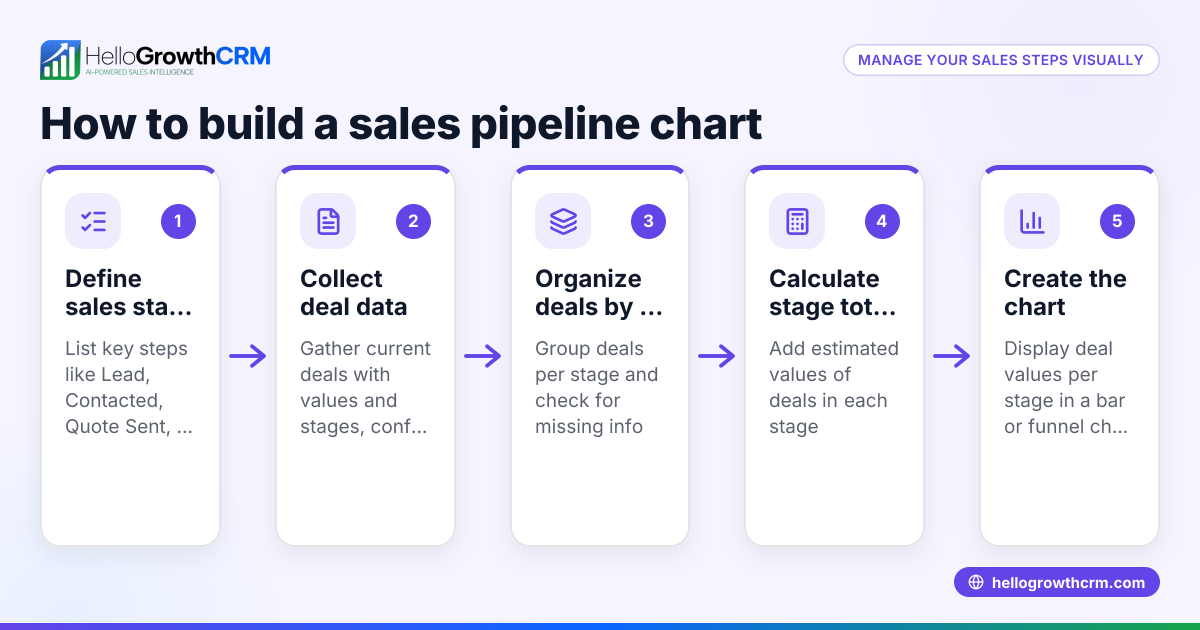
Building a pipeline means setting up a structured process to manage your sales opportunities as they move from initial interest to closing. It helps you track each lead’s progress, plan follow-ups, and predict future revenue. Without a pipeline, leads can get lost, follow-ups delayed, and sales become unpredictable.
Why this comes up / what goes wrong
Many small business owners struggle with scattered sales processes that rely on text messages, emails, and spreadsheets. This scattered approach makes it hard to know which leads require attention or when to follow up. Without a clear pipeline, deals often stall without notice, follow-ups are missed, and revenue forecasting becomes guesswork. Slow or inconsistent follow-up frequently causes lost leads and missed sales opportunities.
Step-by-step
- Define your sales stages: Identify the key steps your prospects move through. Typical stages include Lead Captured, Contacted, Demo Scheduled, Quote Sent, Negotiation, and Closed. Customize these stages to match your business model and customer journey.
- Capture leads immediately: Add new leads to your pipeline as soon as they come in from web forms, referrals, or other sources to avoid losing them.
- Set follow-up tasks and deadlines: Assign reminders for each deal with specific follow-up dates to keep conversations progressing and avoid forgetting leads.
- Move deals through stages: Update the status of each deal as prospects advance, noting dates and next actions to maintain accurate tracking.
- Review your pipeline regularly: Check your pipeline weekly to identify stalled deals and prioritize your next steps.
- Analyze pipeline health: Look for stages where deals linger too long and adjust your sales approach to improve conversion rates.
- Forecast revenue: Estimate expected income based on deal stage probabilities and values to plan your finances and business growth.
Using tools like HelloGrowthCRM’s Deals (pipeline) and Pipeline forecast and AI insights automates tracking and forecasting, reducing manual work and errors.
Example (fictional figures)
A two-location dental practice in Columbus, Ohio, wants to organize patient bookings and upsell services.
- They define stages: Lead Captured, Contacted, Appointment Scheduled, Quote Sent, Closed.
- On 05/01/2026, they capture 10 new leads, each with an average potential revenue of $500.
- They move 5 leads to Contacted, 3 to Appointment Scheduled, and 2 to Quote Sent.
- They set follow-up dates for the 2 quotes sent on 05/03/2026.
Calculations:
- Potential revenue at Quote Sent stage = 2 leads × $500 = $1,000
- Estimated close rate at Quote Sent stage = 70% (assumed)
- Expected revenue = $1,000 × 70% = $700
This forecast helps the practice focus on follow-ups and anticipate $700 in likely revenue from current quotes.
Common mistakes
- Not defining clear stages: Prevent this by mapping your sales process before tracking deals, ensuring everyone understands each step.
- Failing to update the pipeline regularly: Schedule weekly reviews to keep data current and accurate.
- Ignoring follow-up tasks: Use reminders for each deal to avoid missed contacts and lost opportunities.
- Relying only on spreadsheets: Use a CRM like HelloGrowthCRM to automate tracking and forecasting, reducing errors and saving time.
- Overlooking stalled deals: Analyze pipeline health regularly to identify and revive stuck opportunities.
- Not forecasting revenue: Without forecasting, budgeting and planning become guesswork, increasing risk.
Doing this in HelloGrowthCRM
HelloGrowthCRM’s Deals (pipeline) feature tracks your sales opportunities from first contact through close, showing stage movement and follow-up dates so no deal is forgotten. The Pipeline forecast and AI insights feature projects expected close amounts and highlights where deals stall, eliminating the need for manual spreadsheets and helping you focus efforts where they matter most.
Frequently asked questions
What is the difference between a sales pipeline and a sales funnel? A sales pipeline tracks individual deals through defined stages, focusing on managing and forecasting sales progress. A sales funnel shows the overall conversion process from many prospects to fewer customers, emphasizing volume and drop-off rates.
How often should I update my sales pipeline? Update your pipeline daily or at least weekly to reflect current deal statuses, follow-ups, and new leads. Regular updates ensure accurate forecasting and timely actions.
Can I build a pipeline without a CRM? Yes, spreadsheets or manual methods work, but keeping data accurate and timely is harder. A CRM like HelloGrowthCRM automates tracking, reminders, and forecasting, saving time and reducing errors.
What sales stages should I use? Sales stages depend on your business but typically include Lead Captured, Contacted, Quote Sent, and Closed. Customize stages to fit your customer journey.
How does pipeline forecasting help my business? Forecasting estimates expected revenue based on current deals and their likelihood to close. It helps plan budgets, staffing, and growth strategies with more confidence.
Why is regular follow-up important in building a pipeline? Regular follow-up keeps prospects engaged and moves deals forward. Without it, leads can go cold and sales opportunities are lost.
Key takeaways
- Building a pipeline organizes and tracks sales opportunities through clear stages.
- Promptly capturing leads and setting follow-up tasks keeps deals moving.
- Regularly review and update your pipeline to spot stalled deals.
- Avoid manual tracking mistakes by using CRM tools like HelloGrowthCRM.
- Pipeline forecasting improves revenue visibility and business planning.
- Clear sales stages tailored to your process enhance pipeline effectiveness.
Start organizing your sales pipeline today to improve sales consistency and growth. Start on the Free Forever plan (200 leads, no credit card) with HelloGrowthCRM and see how deals and forecasts help you stay on top.
Ready to put this into practice?
Set up your pipeline, WhatsApp follow-ups, and AI lead scoring in minutes — free, no credit card.
Try HelloGrowthCRM freeGet CRM tips in your inbox
Join thousands of sales professionals who get weekly insights on CRM strategy, AI automation, and pipeline optimization.

The HelloGrowthCRM team publishes guides on CRM strategy, AI sales tools, and revenue operations for small business sales teams.