HelloGrowthCRM software
Built for real small-business sales teams
HelloGrowthCRM helps reps qualify faster, follow up on time, and close more deals—with practical automation in one place.
- AI lead scoring and pipeline visibility
- Built-in dialer, WhatsApp, and email automation
- Sales forecasting and RevOps-ready reporting
Power pricing CRM software is designed to help businesses manage customer relationships with pricing strategies that maximise revenue and efficiency. To choose the right software, you need to assess your sales process, integration needs, and pricing flexibility. This article covers why businesses look for power pricing CRM software, how to evaluate options step-by-step, common pitfalls, and a practical example.
Why this comes up / what goes wrong
Small and mid-sized UK businesses often struggle with managing leads, pricing offers, and follow-ups across disconnected tools like spreadsheets, WhatsApp, and email. This fragmentation slows down sales, causes missed opportunities, and makes pricing inconsistent. Business owners searching for power pricing CRM software want a system that integrates pricing power with customer management, automates follow-ups, and provides clear visibility of sales pipelines.
Often, businesses lose leads because sales teams cannot quickly apply the right pricing or track customer interactions in one place. Without a CRM that supports dynamic pricing and communication channels like WhatsApp and SMS, teams waste time switching apps and risk errors.
Step-by-step
- Identify your pricing needs: Determine if you need tiered pricing, discounts, quotes, or custom pricing rules. Check if the CRM supports flexible pricing models.
- Assess communication channels: Ensure the CRM supports the channels your sales team uses, such as WhatsApp, SMS, and email, to keep all interactions logged and accessible.
- Check lead and pipeline management: Look for features like lead capture from web forms, AI lead scoring, and pipeline boards to prioritise and track deals.
- Evaluate automation capabilities: Confirm if the CRM can automate follow-ups, pricing updates, and task reminders to speed up sales cycles.
- Test built-in calling features: A built-in dialer lets reps call directly from the CRM and log call outcomes, improving efficiency.
- Review reporting and forecasting: The CRM should provide sales forecasting and reporting to help you understand pricing impact and sales performance.
- Compare integration options: Check if the CRM integrates with your existing tools like web forms or accounting software.
- Consider user experience and adoption: Choose a CRM that your team will actually use, with an intuitive interface and mobile access.
- Review pricing plans: Understand the cost structure and what features are included at each level. See CRM pricing in the United Kingdom for examples.
- Request demos and trials: Test the CRM with your sales process to ensure it fits your power pricing needs.
Example (fictional figures)
A letting agency in Manchester wants to use power pricing CRM software to manage rental leads and apply dynamic discounts for long-term tenants.
- Monthly rental leads: 500
- Average rental price: £1,200
- Discount tiers: 5% for 12+ months, 10% for 24+ months
The agency sets up the CRM to apply discounts automatically and follow up via WhatsApp.
Calculations:
Base rental revenue = 500 × £1,200 = £600,000
Discount for 12+ months (assume 30% of tenants):
500 × 30% = 150 tenants
Discounted revenue = 150 × £1,200 × 95% = £171,000
Discount for 24+ months (assume 10% of tenants):
500 × 10% = 50 tenants
Discounted revenue = 50 × £1,200 × 90% = £54,000
Remaining tenants without discount:
500 - 150 - 50 = 300 tenants
Revenue from these tenants = 300 × £1,200 = £360,000
Total revenue after discounts = £171,000 + £54,000 + £360,000 = £585,000
This CRM setup helps the agency track leads, apply pricing rules automatically, and send follow-ups via WhatsApp to close deals faster.
Common mistakes
- Choosing a CRM without pricing flexibility: Prevent this by confirming the CRM supports your specific pricing models before buying.
- Ignoring communication channels: Avoid selecting software that doesn’t log WhatsApp or SMS conversations, as this causes information loss.
- Neglecting automation: Manual follow-ups slow sales. Look for CRM automation features to keep leads engaged.
- Overlooking user adoption: A complex CRM leads to poor use. Choose one with a simple interface and mobile access.
- Skipping demos or trials: Always test the CRM with your sales process to spot mismatches early.
- Failing to check integration options: Ensure the CRM connects smoothly with your web forms and other tools to avoid double entry.
See more on CRM features to understand what to expect.
Doing this in HelloGrowthCRM
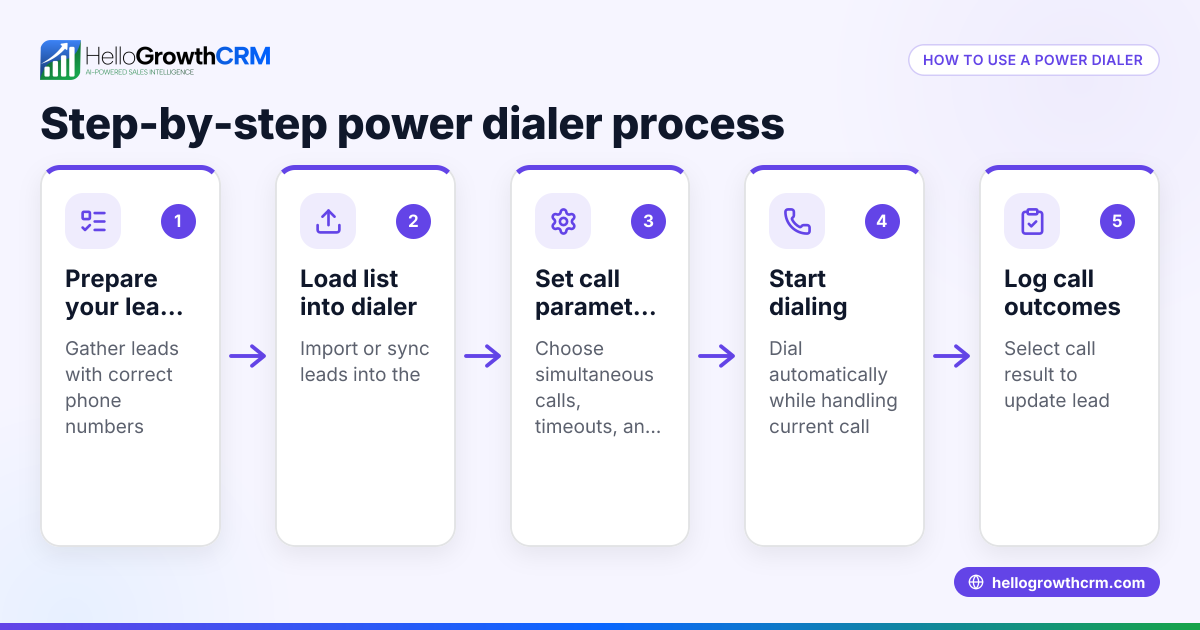
HelloGrowthCRM offers a built-in dialer that lets your telecallers work through lead lists inside the CRM, logging call outcomes directly on each lead. WhatsApp and SMS conversations with leads are automatically logged and can be followed up with messages from the CRM. Additionally, AI agents (in beta) draft follow-up messages after calls, so your reps only need to review and send them. This integration of calling, messaging, and AI helps speed up sales and maintain consistent pricing communication.
Frequently asked questions
What is power pricing CRM software? Power pricing CRM software combines customer relationship management with dynamic pricing tools. It helps sales teams apply pricing strategies automatically and track customer interactions in one place.
How do I know if a CRM supports power pricing? Check if the CRM offers flexible pricing models, discount rules, and quoting features. Also, review if it integrates pricing with lead and pipeline management.
Can I use WhatsApp with power pricing CRM software? Yes, many modern CRMs, including HelloGrowthCRM, log WhatsApp conversations and allow follow-ups via WhatsApp and SMS, keeping all communication in one record.
Why is automation important in power pricing CRM? Automation speeds up follow-ups and pricing updates, reducing manual errors and ensuring leads receive timely offers.
How do I choose the right pricing plan for CRM software? Review the features included at each pricing tier and match them to your business needs. See CRM pricing in the United Kingdom for guidance.
Can I try power pricing CRM software before buying? Most providers offer demos or trials. Use these to test how well the CRM fits your sales process and pricing needs.
Key takeaways
- Identify your pricing and communication needs before choosing CRM software.
- Look for CRMs that support WhatsApp, SMS, and built-in dialers for efficient follow-up.
- Automation in follow-ups and pricing reduces errors and speeds sales.
- Test CRMs with demos or trials to ensure they fit your processes.
- Check integration options and pricing plans carefully.
- User-friendly CRMs improve adoption and sales team efficiency.
Choosing power pricing CRM software can transform your sales process by centralising pricing, communication, and lead management. For UK businesses looking for a CRM that supports WhatsApp and AI-assisted follow-ups, see HelloGrowthCRM for the United Kingdom and See UK pricing.
Ready to put this into practice?
Set up your pipeline, WhatsApp follow-ups, and AI lead scoring in minutes — free, no credit card.
Try HelloGrowthCRM freeGet CRM tips in your inbox
Join thousands of sales professionals who get weekly insights on CRM strategy, AI automation, and pipeline optimization.

The HelloGrowthCRM team publishes guides on CRM strategy, AI sales tools, and revenue operations for small business sales teams.