HelloGrowthCRM software
Built for real small-business sales teams
HelloGrowthCRM helps reps qualify faster, follow up on time, and close more deals—with practical automation in one place.
- AI lead scoring and pipeline visibility
- Built-in dialer, WhatsApp, and email automation
- Sales forecasting and RevOps-ready reporting
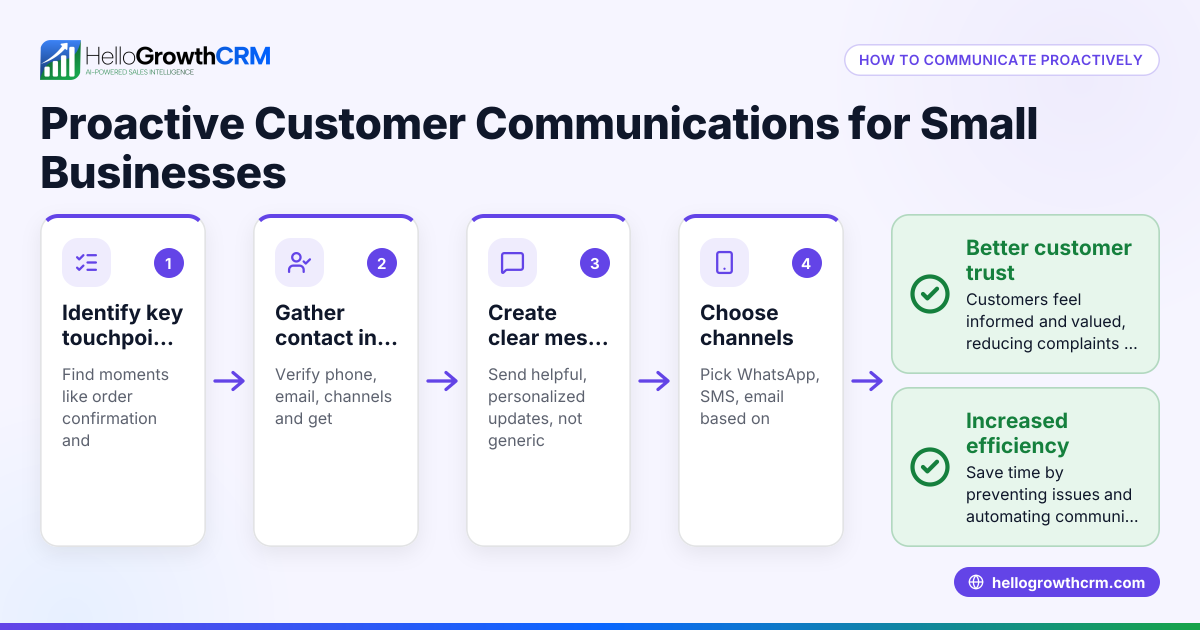
Proactive customer service means reaching out to customers with solutions, updates, or support before they ask for help. Instead of waiting for customers to report problems, you anticipate their needs and act early. This approach improves the customer experience and can reduce workload by preventing issues from escalating.
Why this comes up / what goes wrong
Many small business owners in the UK struggle with reactive customer service, where they only respond after customers complain or ask questions. This leads to slow responses, frustrated customers, and sometimes lost sales. For example, a kitchen-fitting company might only find out about a delivery delay when a customer calls upset, missing the chance to inform them in advance. Without proactive service, businesses risk damaging their reputation and losing repeat customers.
Step-by-step
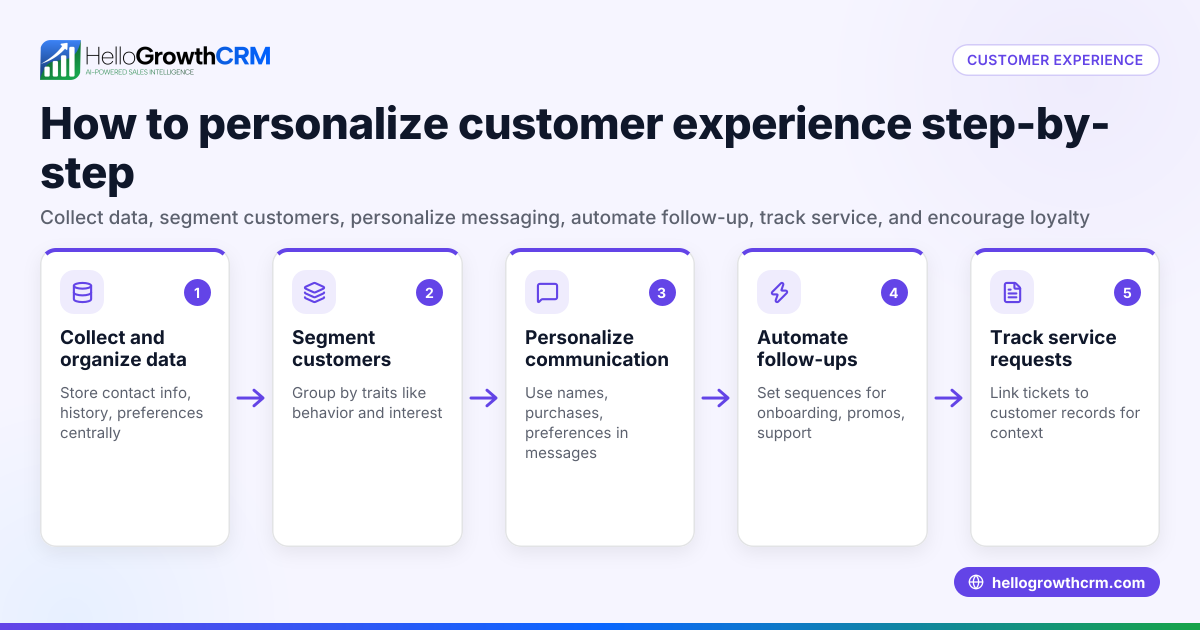
- Collect and centralise customer data: Gather all customer information and past interactions in one place. Check that the data is accurate, complete, and accessible to your team to understand customer history and preferences.
- Identify common issues and questions: Review past support tickets, calls, or feedback to find frequent problems customers face. Verify these issues are well documented and prioritise the most impactful.
- Set up alerts and triggers: Use software or manual checks to flag when a customer might need help. For example, create alerts for delivery delays, warranty expirations, or product usage tips. Confirm that alerts are timely and reach the right team members.
- Reach out proactively: Contact customers via their preferred channels such as WhatsApp, email, or phone with relevant information or offers before they ask. Ensure messages are personalised, clear, and helpful.
- Provide self-service options: Develop a knowledge base, FAQs, or a customer portal where customers can find answers easily. Check that these resources are up to date, easy to navigate, and cover common questions.
- Track and follow up: Monitor customer satisfaction and follow up to confirm issues are resolved. Check that feedback and interactions are recorded for continuous improvement.
Example (fictional figures)
"Leeds Kitchens Ltd" is a kitchen-fitting company in Leeds. In 2025, they completed 1,000 orders. They noticed 10% of customers (100) called about delivery delays.
Step 1: They analysed 100 calls about delays to understand causes.
Step 2: They set up a proactive alert system to notify customers by WhatsApp 3 days before expected delivery if any delay occurred.
Step 3: In the first quarter of 2026, they contacted 50 customers proactively regarding delays.
Step 4: Out of those 50 customers, only 5 called with complaints.
Step 5: This reduced reactive complaint calls by 45 (50 - 5 = 45).
Step 6: Staff time saved was calculated as follows:
- Average call handling time: 10 minutes per call
- Calls avoided: 45
- Total time saved: 45 calls × 10 minutes = 450 minutes = 7.5 hours
Step 7: Customer satisfaction scores improved by 20%
This proactive approach saved staff time and improved customer relationships.
Common mistakes
- Waiting for customers to complain: Prevent this by setting up alerts and regularly monitoring customer activity.
- Sending generic messages: Prevent by personalising communication based on customer data.
- Overloading customers with information: Prevent by targeting messages only when relevant and valuable.
- Lack of follow-up: Prevent by tracking responses and ensuring issues are fully resolved.
- Ignoring self-service tools: Prevent by maintaining an easy-to-use knowledge base and encouraging customers to use it.
Doing this in HelloGrowthCRM
HelloGrowthCRM supports proactive customer service with its customer portal, referrals, tickets, and knowledge base features. After the sale, all service requests stay on the same customer record as the deal, helping your team track issues and follow up efficiently. The branded self-service customer portal lets customers find answers independently, reducing incoming queries. For more details, see HelloGrowthCRM for the United Kingdom and learn how the customer health score helps monitor customer satisfaction. Its WhatsApp and SMS CRM capabilities also make proactive outreach easy and timely. Learn more about WhatsApp and SMS CRM.
Frequently asked questions
What is the difference between proactive and reactive customer service? Proactive service anticipates and addresses customer needs before they ask, while reactive service responds only after customers report an issue. Proactive approaches improve satisfaction and reduce complaints.
How can small businesses start with proactive customer service? Begin by collecting customer data and identifying common issues. Then set up alerts to notify customers early and provide self-service resources. Use HelloGrowthCRM's customer module to centralise communication and track requests.
Why is proactive customer service important for UK small businesses? It builds trust and loyalty by showing customers you care about their experience. It can also reduce support costs and increase repeat business, which is critical for small and mid-sized companies.
Can proactive customer service be automated? Yes, many tasks like alerts, follow-ups, and messaging can be automated with CRM tools. However, personalisation and timely human responses remain important.
How do I measure the success of proactive customer service? Track metrics like customer satisfaction scores, reduction in complaint calls, repeat sales, and response times. Tools with customer health scoring can help monitor these indicators.
Key takeaways
- Proactive customer service means anticipating and addressing customer needs before problems arise.
- Centralise customer data and identify common issues to act early.
- Use alerts and personalised outreach via preferred channels like WhatsApp.
- Provide a self-service knowledge base to empower customers.
- Track and follow up to ensure issues are resolved and satisfaction improves.
- HelloGrowthCRM offers tools to manage proactive customer service efficiently, including a branded customer portal and support ticket tracking.
Start improving your customer service today. Start on the Free Forever plan (200 leads, no credit card).
Ready to put this into practice?
Set up your pipeline, WhatsApp follow-ups, and AI lead scoring in minutes — free, no credit card.
Try HelloGrowthCRM freeGet CRM tips in your inbox
Join thousands of sales professionals who get weekly insights on CRM strategy, AI automation, and pipeline optimization.

The HelloGrowthCRM team publishes guides on CRM strategy, AI sales tools, and revenue operations for small business sales teams.