HelloGrowthCRM software
Built for real small-business sales teams
HelloGrowthCRM helps reps qualify faster, follow up on time, and close more deals—with practical automation in one place.
- AI lead scoring and pipeline visibility
- Built-in dialer, WhatsApp, and email automation
- Sales forecasting and RevOps-ready reporting
Real estate leads for investors are potential property deals or sellers interested in selling properties that match an investor's criteria. To find and qualify these leads, investors typically use targeted marketing, lead capture systems, and lead scoring to prioritize follow-up. This article covers why investors seek these leads, step-by-step methods to find and qualify them, common pitfalls, a practical example, and how HelloGrowthCRM supports this process.
Why this comes up / what goes wrong
Real estate investors and their teams often struggle to find qualified leads that fit their investment goals, such as fix-and-flip properties, rental income properties, or land deals. Many leads come in through various channels—websites, calls, text messages, or WhatsApp—but without a system to organize and prioritize them, valuable opportunities get lost or delayed. Investors may also waste time chasing unqualified leads that don’t meet their criteria, reducing their deal flow and revenue.
Accountants or business owners managing real estate investments need a clear, repeatable system to capture leads, evaluate their potential, and assign follow-up tasks to team members. Without this, leads pile up in spreadsheets, notebooks, or disorganized inboxes, causing slow response times and missed deals.
Step-by-step
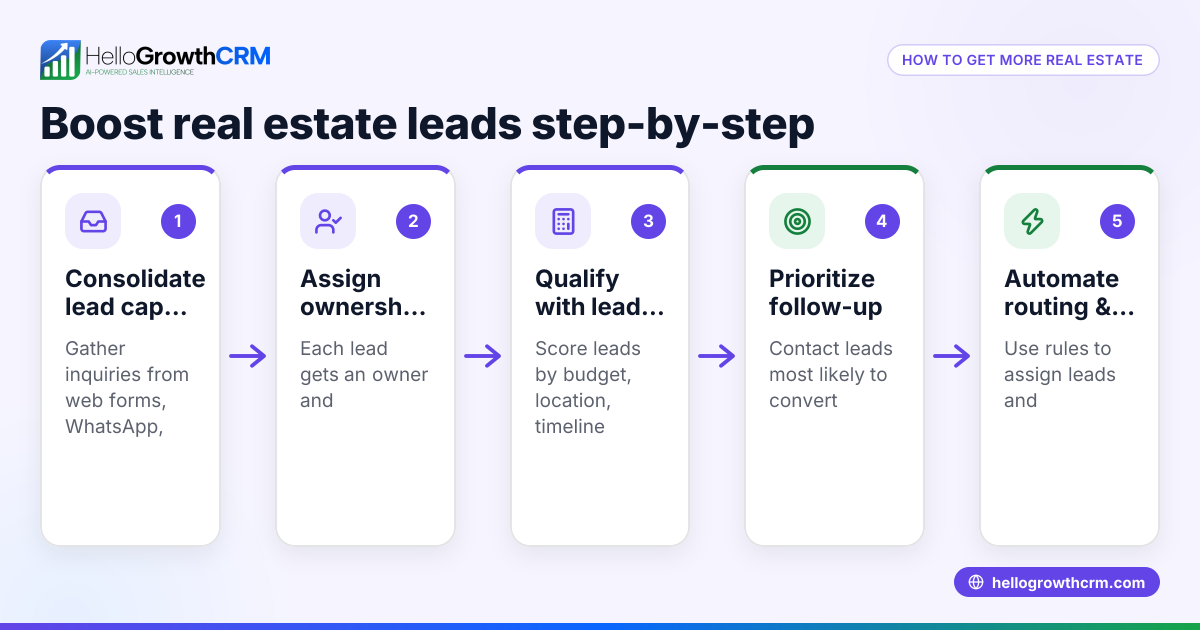
- Define your investment criteria clearly
- Identify property types, price ranges, locations, and deal characteristics you want.
- Check that your criteria are specific enough to filter out irrelevant leads.
- Set up lead capture channels
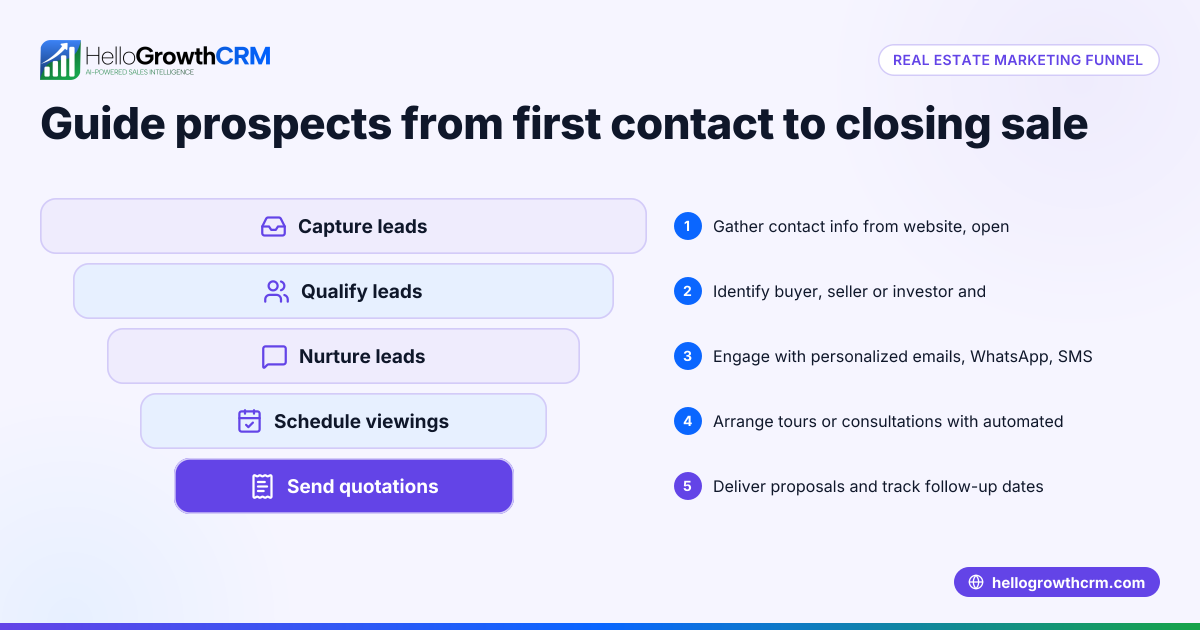
- Use web forms on your website to gather seller information.
- Collect leads from calls, WhatsApp messages, and text messages.
- Check that all inquiries funnel into a single system rather than scattered apps or notebooks.
- Qualify leads immediately
- Verify lead details against your criteria.
- Use scoring methods to rank leads by likelihood to convert.
- Check for completeness of information (property address, seller motivation, price expectations).
- Assign leads to team members
- Use round-robin or territory-based assignment to distribute leads fairly.
- Ensure each lead has an owner responsible for follow-up.
- Create and track follow-up tasks
- Schedule calls, property visits, or document requests.
- Track task completion and lead progression through your pipeline.
- Review and adjust your lead sources regularly
- Analyze which channels bring the best leads.
- Check conversion rates and drop-offs.
- Adjust marketing and lead capture accordingly.
Example (fictional figures)
A real estate investment company in Austin, Texas, focuses on buying rental properties under $300,000. In March 2026, they received 100 leads from their website, calls, and WhatsApp.
- Total leads: 100
- Qualified leads (meet criteria): 40
- Leads contacted within 24 hours: 30
- Leads that agreed to property visits: 15
Calculations:
Qualified leads rate = 40 qualified leads ÷ 100 total leads = 0.40 or 40%
Contact rate = 30 contacted ÷ 40 qualified leads = 0.75 or 75%
Visit conversion rate = 15 visits ÷ 30 contacted = 0.50 or 50%
This means the company converted 15 leads to visits from 100 initial inquiries by focusing on quick qualification and follow-up.
Common mistakes
- Ignoring lead qualification: Contacting every lead without filtering wastes time. Prevent by defining clear criteria and scoring leads.
- Using multiple unconnected tools: Leads spread across notebooks, texts, and spreadsheets cause confusion. Prevent by centralizing lead capture and management.
- Delaying follow-up: Slow response loses seller interest. Prevent by automating task creation and reminders for calls.
- Not assigning ownership: Leads without a clear owner get neglected. Prevent by assigning leads automatically using round-robin or territory rules.
- Failing to review lead sources: Continuing ineffective marketing wastes budget. Prevent by regularly analyzing lead quality and conversion.
- Overlooking automated workflows: Manual processes increase errors and delays. Prevent by using workflows to trigger tasks and notifications.
Doing this in HelloGrowthCRM
HelloGrowthCRM helps real estate investors manage leads efficiently by capturing every enquiry from forms, calls, or WhatsApp as a lead with an assigned owner and a next step, instead of leaving them in notebooks. Its AI lead scoring lets reps prioritize calling leads most likely to convert first, improving conversion rates. Automated workflows and lead routing assign new leads by round-robin or territory and create follow-up tasks automatically, ensuring no lead is missed. Learn more about AI lead scoring and how HelloGrowthCRM supports real estate and builders in the US at HelloGrowthCRM for the United States.
Frequently asked questions
How do I find quality real estate leads for investors? Focus on targeted marketing channels like online forms, referrals, and direct outreach. Use lead capture tools to collect inquiries from calls, WhatsApp, and texts. Then qualify leads quickly based on your investment criteria.
What criteria should I use to qualify real estate leads? Common criteria include property type, location, price range, seller motivation, and property condition. The more specific your criteria, the easier it is to filter out leads that don’t fit your investment strategy.
How can I prioritize which leads to contact first? Use lead scoring systems that rank leads based on completeness of information, seller urgency, and match to your criteria. AI lead scoring can automate this prioritization, helping your team focus on the best opportunities.
Why is lead assignment important in real estate investing? Assigning leads to specific team members ensures accountability and faster follow-up. Automated lead routing by territory or round-robin balances workloads and prevents leads from being overlooked.
Can automation improve my real estate lead management? Yes. Automating workflows to create follow-up tasks, send notifications, and move leads through your pipeline reduces errors and response time, increasing your chances of closing deals.
Key takeaways
- Define clear investment criteria to filter real estate leads effectively.
- Centralize lead capture from web forms, calls, WhatsApp, and texts.
- Use lead scoring to prioritize the best leads for follow-up.
- Assign leads automatically to team members to ensure accountability.
- Automate workflows for task creation and pipeline management.
- Regularly review lead sources and conversion rates to optimize marketing.
Start managing your real estate leads more efficiently today. Start on the Free Forever plan (200 leads, no credit card) with HelloGrowthCRM.
Ready to put this into practice?
Set up your pipeline, WhatsApp follow-ups, and AI lead scoring in minutes — free, no credit card.
Try HelloGrowthCRM freeGet CRM tips in your inbox
Join thousands of sales professionals who get weekly insights on CRM strategy, AI automation, and pipeline optimization.

The HelloGrowthCRM team publishes guides on CRM strategy, AI sales tools, and revenue operations for small business sales teams.