HelloGrowthCRM software
Built for real small-business sales teams
HelloGrowthCRM helps reps qualify faster, follow up on time, and close more deals—with practical automation in one place.
- AI lead scoring and pipeline visibility
- Built-in dialer, WhatsApp, and email automation
- Sales forecasting and RevOps-ready reporting
Real estate pitches are essential tools for business owners and accountants in the US real estate market to attract clients, investors, or partners. A good pitch clearly communicates what your business offers, why it stands out, and what benefits clients receive.
Why this comes up / what goes wrong
Many real estate business owners or accountants struggle to create pitches that connect with their audience. They may present unclear messages, fail to highlight what makes them unique, or not tailor their pitch to specific client needs like buyers, sellers, or investors. These issues often lead to lost leads and missed opportunities. For small and mid-sized US real estate businesses competing locally, a clear and compelling pitch is critical to building trust and winning business.
Step-by-step
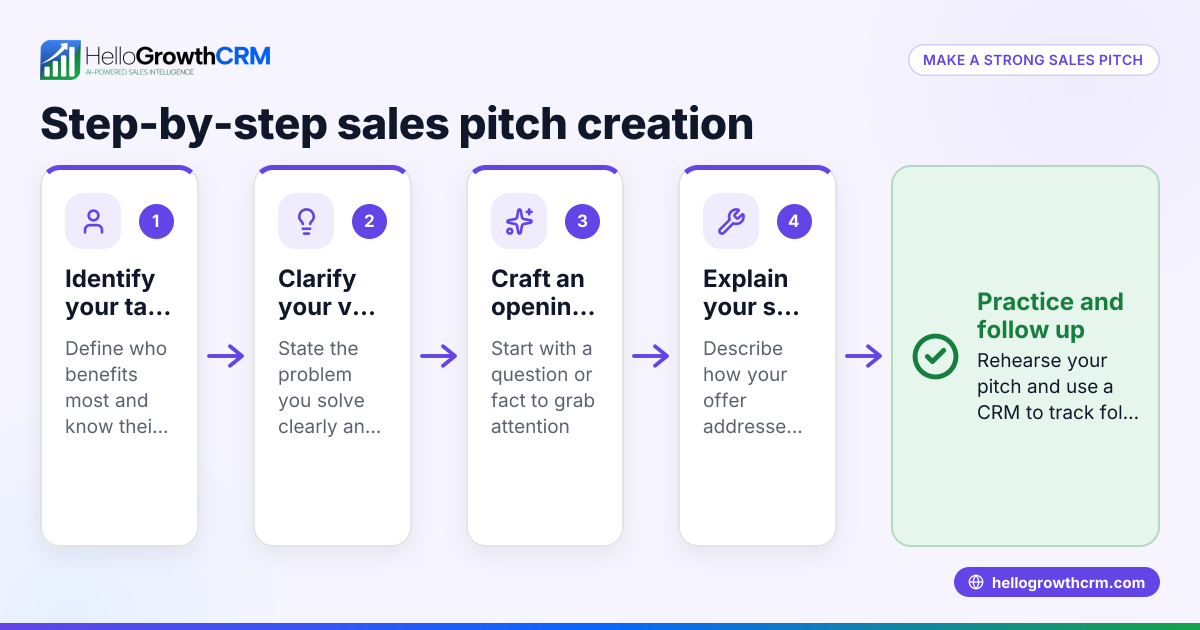
- Start with a clear introduction: State your name, business name, and your role. Make sure it is concise and professional.
- Describe your target market: Specify the types of properties or clients you serve, such as residential homes in Columbus, Ohio, or commercial properties in suburban areas.
- Highlight your unique selling points (USPs): Explain what sets your service apart, like local market expertise, fast response times, or specialized financing options.
- Provide evidence or proof: Share brief success stories, client testimonials, or relevant statistics to build credibility.
- Explain the benefits: Focus on what the client gains, such as a smooth buying process, competitive pricing, or personalized service.
- Include a call to action (CTA): Invite the listener or reader to schedule a meeting, visit your website, or contact you for more information.
- Tailor your pitch: Adapt your tone and content depending on whether you are addressing buyers, sellers, investors, or partners.
Check that each step is clear and avoids jargon. Keep your spoken pitch under two minutes.
Example (fictional figures)
Consider "Columbus Home Finders," a two-location real estate business in Columbus, Ohio, specializing in residential properties.
- Introduction: "Hi, I’m Jane Smith, founder of Columbus Home Finders, helping families find their dream homes in Central Ohio."
- Target market: "We focus on residential properties in Columbus and nearby suburbs."
- USPs: "Our team offers personalized tours and negotiates aggressively to get the best price."
- Proof: "Last year, we helped 50 families close on homes within an average of 30 days."
- Benefits: "We make the buying process smooth and stress-free, with expert guidance at every step."
- CTA: "Let’s schedule a free consultation this week to see how we can help you find your perfect home."
Calculations for business impact:
Assuming each home sold averages $300,000 in sale price and the business earns a 3% commission:
$300,000 × 3% = $9,000 commission per home
With 50 homes sold:
$9,000 × 50 = $450,000 total commission revenue
This pitch highlights how the business achieves significant sales volume and revenue by focusing on personalized service and quick closings.
Common mistakes
- Being too vague or generic: Avoid broad claims like "We’re the best." Use specific USPs and evidence.
- Overloading with details: Don’t confuse your audience with too many numbers or jargon. Keep it simple.
- Ignoring the audience’s needs: Tailor your pitch to the listener’s role, whether buyer, seller, or investor.
- Skipping the call to action: Always end with a clear next step.
- Not rehearsing: Practice to sound confident and natural.
Prevent these by preparing carefully, testing your pitch on colleagues, and asking for feedback. For more on industry-specific sales, see Real estate and builders.
Frequently asked questions
What makes a real estate pitch effective? An effective pitch is clear, concise, and focused on the client’s needs. It highlights your unique advantages and includes a call to action. Avoid jargon and tailor your message to your audience.
How long should a real estate pitch be? Ideally, keep it between 60 to 120 seconds if spoken. For written pitches, aim for one to two paragraphs that quickly communicate key points.
Can I use the same pitch for buyers and sellers? It’s best to customize your pitch. Buyers want to know about finding the right home and financing, while sellers care about pricing and marketing strategies.
Should I include pricing details in my pitch? Generally, no. Pricing is better discussed after establishing interest. Focus your pitch on value and benefits first.
How can I improve my pitch over time? Record your pitches, gather feedback, and adjust based on what resonates with your audience. For tools that support sales communication, explore HelloGrowthCRM and learn about WhatsApp and SMS CRM.
Key takeaways
- Start with a clear, concise introduction tailored to your audience.
- Highlight your unique selling points with evidence.
- Keep your pitch simple and focused on client benefits.
- Always end with a clear call to action.
- Avoid jargon, overload, and generic claims.
- Customize your pitch for buyers, sellers, or investors.
Real estate business owners in the US can improve sales and lead conversion by crafting pitches that speak directly to their clients’ needs. Start improving your real estate pitches today. Start on the Free Forever plan (200 leads, no credit card).
This article is general information, not tax or legal advice. Rules change; confirm the current position with the IRS or your state's department of revenue, or with your CPA, before acting.
Ready to put this into practice?
Set up your pipeline, WhatsApp follow-ups, and AI lead scoring in minutes — free, no credit card.
Try HelloGrowthCRM freeGet CRM tips in your inbox
Join thousands of sales professionals who get weekly insights on CRM strategy, AI automation, and pipeline optimization.

The HelloGrowthCRM team publishes guides on CRM strategy, AI sales tools, and revenue operations for small business sales teams.