HelloGrowthCRM software
Built for real small-business sales teams
HelloGrowthCRM helps reps qualify faster, follow up on time, and close more deals—with practical automation in one place.
- AI lead scoring and pipeline visibility
- Built-in dialer, WhatsApp, and email automation
- Sales forecasting and RevOps-ready reporting
Sales and marketing working together means aligning their goals, sharing information, and coordinating efforts to convert leads into customers efficiently. This collaboration ensures leads don’t fall through the cracks and messaging stays consistent. This article covers why this alignment matters, step-by-step actions to achieve it, a practical example, common pitfalls, and how HelloGrowthCRM supports this process.
Why this comes up / what goes wrong
Small business owners often see sales and marketing as separate functions. Marketing generates leads through campaigns, social media, or events, while sales tries to close deals. Without coordination, marketing may send unqualified leads to sales, or sales might ignore marketing materials. Leads can be lost due to slow follow-up or inconsistent messaging. Sales teams using texts, emails, and spreadsheets separately from marketing efforts create data silos. This lack of alignment wastes time and money, causing frustration and missed revenue.
Step-by-step
- Define shared goals and metrics
- Agree on what counts as a qualified lead and a successful sale.
- Check that marketing and sales KPIs support each other, such as lead volume and conversion rate.
- Create a clear lead handoff process
- Specify when and how marketing passes leads to sales.
- Check that sales acknowledges receipt and follows up within a set time.
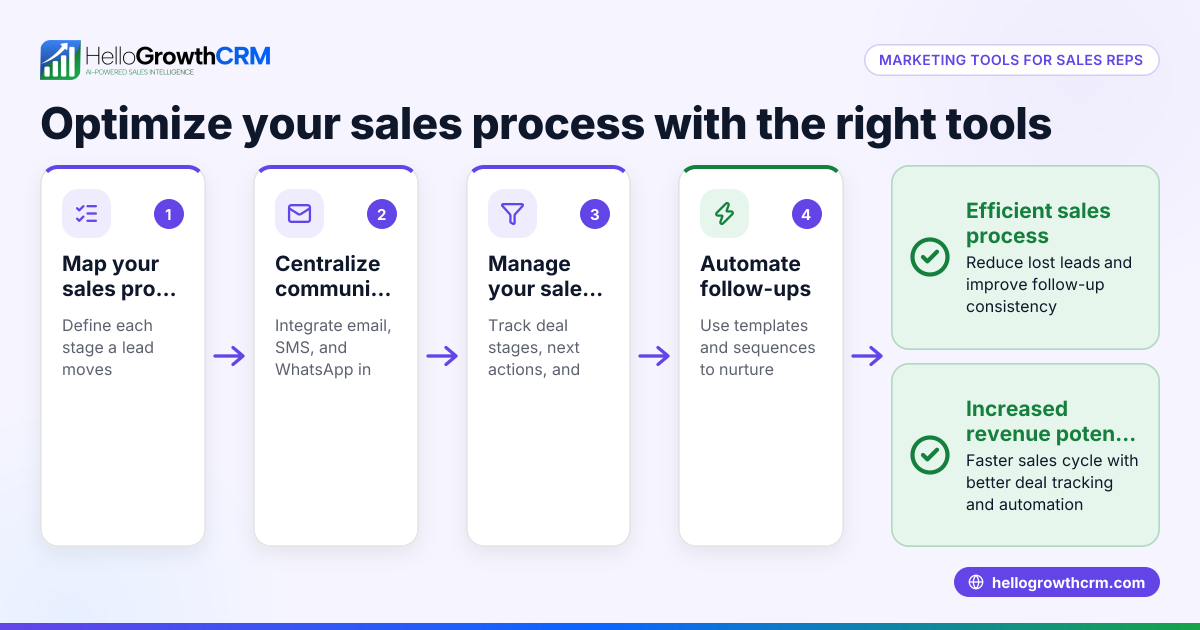
- Use a shared system to track leads and deals
- Choose a CRM where both teams log activities, notes, and follow-ups.
- Check regularly that all leads move through the pipeline stages visibly.
- Develop consistent messaging and content
- Marketing provides sales with up-to-date materials and templates.
- Check that sales uses these in communications to prospects.
- Hold regular alignment meetings
- Review pipeline status, lead quality, and feedback.
- Check that both teams share insights and adjust strategies.
- Measure and optimize together
- Analyze conversion rates and campaign results jointly.
- Check that improvements are implemented on both sides.
Example (fictional figures)
A two-location dental practice in Columbus, Ohio, wants sales and marketing to work together to increase new patient appointments.
- Marketing runs ads and collects 500 leads from 01/01/2026 to 01/31/2026.
- They define a qualified lead as a contact who schedules an appointment.
- Marketing passes 200 qualified leads to sales (receptionists and office managers).
- Sales tracks each lead in their CRM pipeline.
- Sales follows up within 2 days to confirm appointments.
Calculations:
Leads generated = 500 Qualified leads passed to sales = 200 Appointment conversion rate = 60% (120 appointments booked)
Revenue per appointment = $150
Total revenue = 120 × $150 = $18,000
By aligning, the practice tracks leads and follow-ups clearly, avoiding lost opportunities and increasing revenue.
Common mistakes
- No shared definitions of lead quality
- Prevent by agreeing on lead criteria before campaigns start.
- Leads ignored or delayed in follow-up
- Prevent by setting and monitoring follow-up deadlines.
- Using separate tools with no integration
- Prevent by adopting a shared CRM platform.
- Lack of communication between teams
- Prevent by scheduling regular alignment meetings.
- Sales not using marketing materials
- Prevent by providing easy access to templates and training.
- No measurement of joint performance
- Prevent by defining and reviewing shared KPIs.
For tools and templates to help avoid these mistakes, see the free sales tools and templates available at HelloGrowthCRM free sales tools.
Doing this in HelloGrowthCRM
HelloGrowthCRM supports sales and marketing working together through several features:
- Territories, field operations and commissions: Field sales reps can log visits from their phones, and managers see the day's activity, helping coordinate field and office teams. Learn more at territory management.
- Free sales tools, templates and calculators: Download follow-up cadences or pipeline templates without signing up, helping both teams stay on the same page. See the resources at free sales tools and calculators.
- Deals (pipeline): Track open opportunities with stages and follow-up dates so quotations don’t get forgotten. This keeps sales and marketing aligned on the status of leads. More details at AI CRM.
Frequently asked questions
How can marketing support sales without confusing leads? Marketing should qualify leads before passing them to sales, ensuring contact information is complete and the lead fits the target customer profile. Clear lead scoring and criteria help sales focus on promising prospects.
What is the best way to share leads between marketing and sales? A shared CRM system with automatic lead assignment and notifications works best. It tracks lead status, follow-ups, and notes accessible to both teams, avoiding lost or duplicated leads.
How often should sales and marketing meet to stay aligned? Regular meetings, such as weekly or biweekly, allow teams to review pipeline progress, discuss lead quality, and adjust strategies based on real data.
Can small businesses benefit from complex CRM features? Yes, but start with simple tools like pipeline tracking and follow-up reminders. HelloGrowthCRM offers scalable features such as territories and field operations for when your team grows.
How do I measure if sales and marketing alignment is working? Track lead conversion rates, sales cycle length, and revenue growth. Improvements in these metrics indicate better alignment and collaboration.
Key takeaways
- Align sales and marketing goals and agree on lead qualifications.
- Use a shared CRM to track leads, deals, and follow-ups transparently.
- Maintain regular communication and share marketing materials with sales.
- Set clear processes for lead handoff and timely follow-up.
- Measure performance jointly and adjust strategies together.
- Use free sales tools and pipeline templates to support alignment.
Sales and marketing working together can transform your lead handling and boost revenue. Start by defining shared goals and tracking leads in one place. Explore HelloGrowthCRM’s free tools and pipeline features to get your teams coordinated.
Start on the Free Forever plan (200 leads, no credit card) at HelloGrowthCRM Free Forever plan to try this approach yourself.
Ready to put this into practice?
Set up your pipeline, WhatsApp follow-ups, and AI lead scoring in minutes — free, no credit card.
Try HelloGrowthCRM freeGet CRM tips in your inbox
Join thousands of sales professionals who get weekly insights on CRM strategy, AI automation, and pipeline optimization.

The HelloGrowthCRM team publishes guides on CRM strategy, AI sales tools, and revenue operations for small business sales teams.