HelloGrowthCRM software
Built for real small-business sales teams
HelloGrowthCRM helps reps qualify faster, follow up on time, and close more deals—with practical automation in one place.
- AI lead scoring and pipeline visibility
- Built-in dialer, WhatsApp, and email automation
- Sales forecasting and RevOps-ready reporting
Customer engagement marketing is the strategy of actively interacting with customers to build lasting relationships and increase loyalty. It involves two-way communication, personalized experiences, and ongoing support instead of focusing solely on one-time sales. This article covers why customer engagement marketing matters for small businesses, step-by-step actions to implement it, common mistakes to avoid, a practical example, and how HelloGrowthCRM can help you maintain engagement after the sale.
Why this comes up / what goes wrong
Small-business owners often find that after a customer makes a purchase, communication stops or becomes infrequent. They might rely on occasional email blasts, phone calls, or text messages without a clear system to track interactions or customer needs. This leads to missed opportunities for repeat sales and referrals because customers feel neglected or forget about the business. Without a consistent engagement strategy, service requests can get lost or delayed, causing frustration and damaging loyalty.
Step-by-step
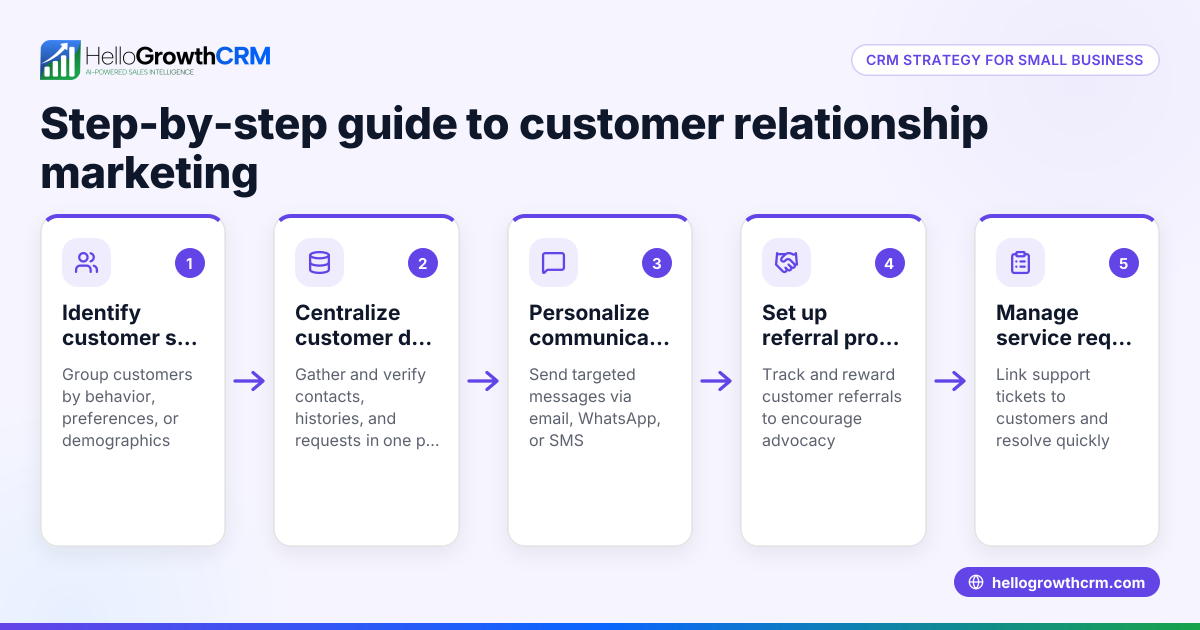
- Map your customer journey: Identify every point where customers interact with your business, from first inquiry through purchase to post-sale support. Check that each step offers a chance to engage meaningfully.
- Collect accurate customer contact info and preferences: Use web forms or direct conversations to gather emails, phone numbers, and communication preferences. Verify this data to avoid errors.
- Segment your customers: Group customers by purchase history, interests, or engagement level. This allows you to tailor messages and offers to each segment.
- Create relevant content and offers: Develop emails, WhatsApp messages, or SMS texts that provide value, such as tips, updates, or exclusive discounts tailored to each segment.
- Set up multi-channel communication: Use email, SMS, and WhatsApp sequences to reach customers on their preferred channels. Monitor open and response rates to adjust your approach.
- Respond promptly to inquiries and service requests: Use a ticket system or customer portal to track questions or complaints. Ensure follow-up within your set service-level agreement (SLA).
- Encourage referrals and feedback: Ask satisfied customers to refer others or leave reviews. Use referral program tracking to reward them and grow your customer base.
- Analyze engagement data: Regularly review which messages and channels perform best. Adjust your strategy based on this data to improve results.
Learn more about managing communication channels with WhatsApp and SMS CRM.
Example (fictional figures)
A landscaping contractor in Charlotte, North Carolina, wants to improve customer engagement marketing starting 07/01/2026.
- Customer base: 500 active customers
- Average revenue per customer per year: $1,200
- Current repeat rate: 30%
Goal: Increase repeat rate to 40% through better engagement.
Step 1: Segment customers by last service date.
Step 2: Send personalized WhatsApp messages with seasonal lawn care tips and a 10% discount offer.
Step 3: Track responses and follow up with interested customers.
Calculations:
Current repeat customers = 500 × 30% = 150
Target repeat customers = 500 × 40% = 200
Additional repeat customers needed = 200 - 150 = 50
If each repeat customer spends $1,200:
Additional revenue = 50 × $1,200 = $60,000
This $60,000 increase results from better engagement and timely follow-up.
Common mistakes
- Ignoring customer preferences: Prevent this by asking customers how they want to be contacted and respecting those choices.
- One-way communication only: Prevent by encouraging replies and feedback, not just sending announcements.
- Not tracking service requests: Prevent by using a ticket system or customer portal to log and resolve issues quickly.
- Failing to segment customers: Prevent by grouping customers to personalize messages and offers.
- Overloading customers with messages: Prevent by scheduling communications thoughtfully and focusing on value.
Learn how to measure ongoing customer satisfaction with a customer health score.
Doing this in HelloGrowthCRM
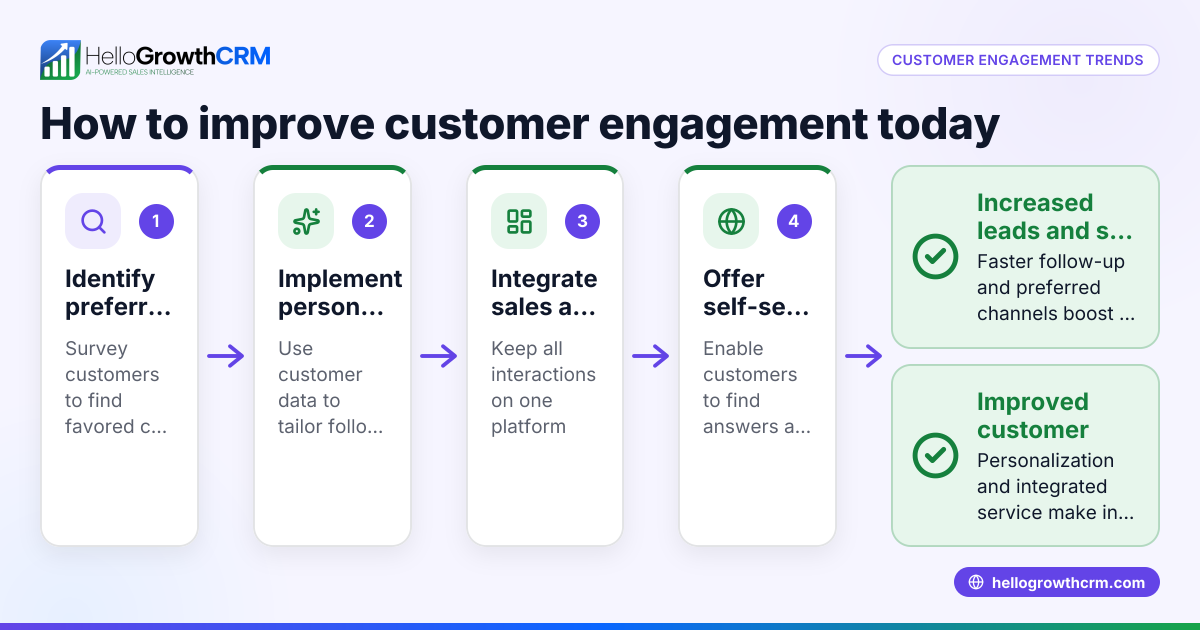
HelloGrowthCRM supports customer engagement marketing after the sale with a branded self-service customer portal where customers can submit service requests. These tickets stay linked to the same customer record as their deal, ensuring your team has full context. The platform also tracks referrals and maintains a knowledge base to answer common questions, helping you provide consistent, timely support.
Frequently asked questions
What is the difference between customer engagement and customer service? Customer engagement includes all interactions aimed at building relationships and loyalty, including marketing communications and personalized content. Customer service focuses on helping customers solve problems or answer questions, usually after a sale.
How often should I contact customers for engagement marketing? There is no fixed rule; it depends on your business and customer preferences. The key is to provide relevant, valuable communication without overwhelming them. Monitor responses and adjust frequency accordingly.
Can I use WhatsApp for customer engagement marketing? Yes, WhatsApp is effective for direct, personal communication. Using a CRM like HelloGrowthCRM that supports WhatsApp and SMS sequences can help you automate and track these conversations.
How do referrals fit into customer engagement marketing? Referrals are a powerful engagement tool. Encouraging satisfied customers to refer others and tracking these referrals helps grow your business and rewards loyal customers.
What is a customer portal and why is it useful? A customer portal is a branded online space where customers can access information, submit support tickets, and find answers in a knowledge base. It improves engagement by providing convenient self-service options.
Key takeaways
- Customer engagement marketing builds ongoing relationships through personalized, timely communication.
- Map customer journeys and segment your audience to tailor messages effectively.
- Use multi-channel outreach including email, WhatsApp, and SMS to meet customers where they are.
- Track and respond promptly to service requests using tickets or a customer portal.
- Encourage referrals and feedback to expand your customer base.
- HelloGrowthCRM supports engagement after the sale with a customer portal, referrals, and ticket tracking.
Start building stronger customer relationships today. Start on the Free Forever plan (200 leads, no credit card).
Ready to put this into practice?
Set up your pipeline, WhatsApp follow-ups, and AI lead scoring in minutes — free, no credit card.
Try HelloGrowthCRM freeGet CRM tips in your inbox
Join thousands of sales professionals who get weekly insights on CRM strategy, AI automation, and pipeline optimization.

The HelloGrowthCRM team publishes guides on CRM strategy, AI sales tools, and revenue operations for small business sales teams.