HelloGrowthCRM software
Built for real small-business sales teams
HelloGrowthCRM helps reps qualify faster, follow up on time, and close more deals—with practical automation in one place.
- AI lead scoring and pipeline visibility
- Built-in dialer, WhatsApp, and email automation
- Sales forecasting and RevOps-ready reporting
Sales closing techniques are the specific strategies and steps used to finalize a sale and convert prospects into paying customers. They include qualifying leads, addressing objections, creating urgency, and directly asking for the sale. This article explains why sales closing matters, provides a step-by-step process, a detailed example, common mistakes to avoid, and how a CRM can assist with managing deals and follow-ups.
Why this comes up / what goes wrong
Small-business owners in the US often find it challenging to close sales because their follow-up processes are inconsistent or rely on scattered notes, emails, and spreadsheets. Without clear sales closing techniques, prospects may delay decisions or lose interest, causing missed revenue. Many owners do not have a structured way to move leads through the final stages of the sales process, resulting in lost opportunities and wasted effort. Using proven sales closing techniques helps ensure each lead is handled effectively and sales are secured more reliably.
Step-by-step
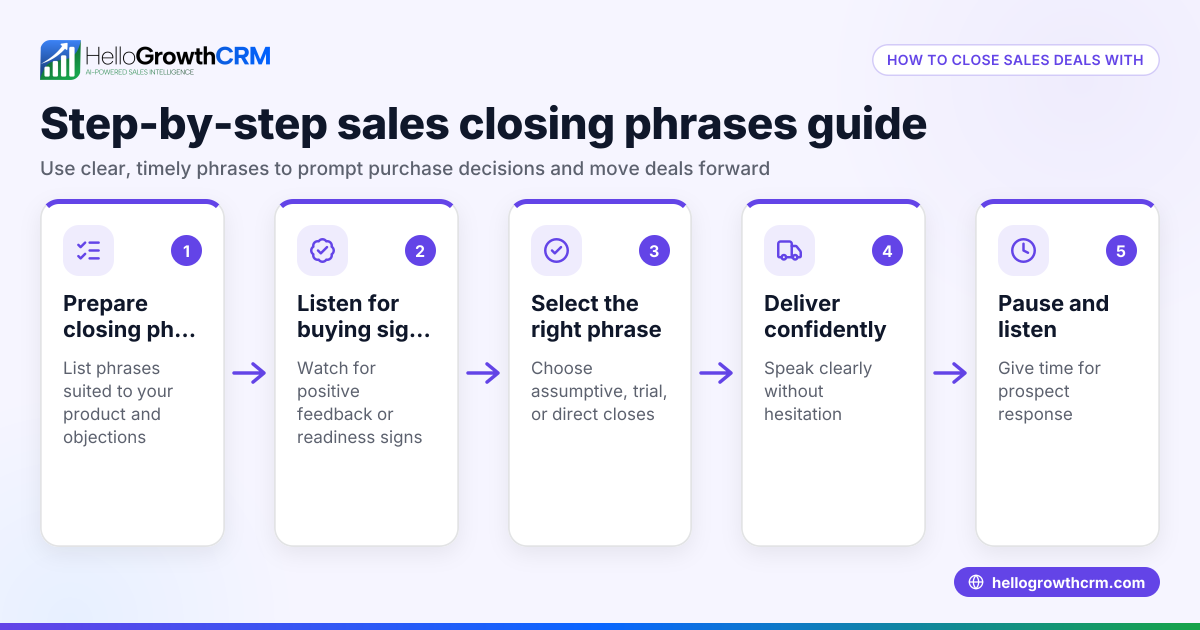
- Qualify the Prospect: Verify the prospect’s needs, budget, and authority to decide. Confirm they fit your product or service before investing more time.
- Present a Clear Offer: Provide a concise, tailored proposal or quotation that meets the prospect’s requirements. Make sure the offer is easy to understand.
- Handle Objections: Listen carefully to any concerns or questions. Respond honestly and thoroughly to ensure objections are fully addressed.
- Create Urgency: Use limited-time offers, highlight benefits of acting now, or mention upcoming price changes to encourage prompt decisions.
- Ask for the Sale: Use direct closing questions like “Are you ready to proceed?” or “Which option works best for you?” to confirm commitment.
- Confirm Details: Review terms, delivery dates, payment schedules, and any other important points to avoid misunderstandings.
- Schedule Follow-up: If the prospect is not ready to decide, set a clear next step with a date and method for follow-up communication.
After each step, check that the prospect remains engaged and responsive before moving on.
Example (fictional figures)
A residential real-estate team in Phoenix, Arizona, aims to close a $350,000 home sale by 07/15/2026.
- Qualify: Confirm the buyer’s budget is $350,000 and they have mortgage pre-approval.
- Present Offer: Submit a written offer for $350,000 with a 30-day closing period.
- Handle Objections: The buyer worries about the home inspection results; the team includes a contingency clause.
- Create Urgency: Inform the buyer that another interested party is scheduled to view the home next week.
- Ask for the Sale: “Are you ready to sign the purchase agreement today?”
- Confirm Details: Review the closing date, deposit amount ($10,500), and financing terms.
- Schedule Follow-up: If the buyer hesitates, set a call for 07/10/2026 to check in.
Calculation of deposit as part of total price: $350,000 × 3% = $10,500 earnest money deposit
This structured approach helps the team close the deal efficiently and with clear communication.
Common mistakes
- Not qualifying leads properly: Prevent by asking budget and decision-maker questions early to focus on serious prospects.
- Ignoring objections or rushing through them: Prevent by listening carefully and addressing concerns fully to build trust.
- Failing to create urgency: Prevent by explaining time-sensitive benefits or limited availability to encourage timely decisions.
- Avoiding the direct close question: Prevent by practicing clear and confident closing questions to prompt commitment.
- Losing track of follow-up dates: Prevent by using tools like a CRM’s Deals (pipeline) to set reminders and next steps (see built-in CRM dialer).
- Relying on scattered notes and spreadsheets: Prevent by centralizing sales data in a CRM for visibility and accountability (see WhatsApp and SMS CRM).
Doing this in HelloGrowthCRM
HelloGrowthCRM helps you track deals through a pipeline with clear stages and follow-up dates. For example, a quotation sent last week appears as a deal at the 'quote sent' stage with a follow-up date, so it is not forgotten. Field sales reps can log visits from their phones, allowing managers to monitor daily activity and territory progress. Founders without sales managers can use Managed RevOps support to ensure weekly follow-up execution and pipeline hygiene. Learn more at HelloGrowthCRM for the United States.
Frequently asked questions
What are the most effective sales closing techniques? The most effective techniques include qualifying prospects, handling objections thoroughly, creating urgency, and asking direct closing questions. Combining these with clear follow-up plans improves your chances of closing sales.
How can I handle objections without losing the sale? Listen carefully to the prospect’s concerns, acknowledge them, and provide honest answers. Make sure the prospect feels heard and their objections are resolved before moving forward.
When should I ask for the sale? Ask for the sale after you have addressed objections and presented a clear offer. Timing is important—once the prospect shows buying signals, use a direct closing question to confirm commitment.
How can technology help with sales closing? A CRM centralizes deals, sets follow-up reminders, and tracks sales stages to prevent leads from slipping through the cracks. It also helps field reps log visits and offers managed support for follow-up execution.
What if the prospect is not ready to decide? Schedule a specific follow-up date and method to keep the conversation moving. Use this time to provide additional information or address new questions.
Key takeaways
- Use a structured approach: qualify, present, handle objections, create urgency, ask for the sale, confirm details, and follow up.
- Address objections fully to build trust and advance the sale.
- Create urgency to encourage timely decisions.
- Use direct closing questions to clarify commitment.
- Avoid losing leads by tracking deals and follow-ups in a CRM.
- HelloGrowthCRM helps manage deals, field sales visits, and follow-up tasks to improve closing rates.
Start improving your sales closing today with a clear plan and tools that keep you organized.
Start on the Free Forever plan (200 leads, no credit card) at HelloGrowthCRM.
Ready to put this into practice?
Set up your pipeline, WhatsApp follow-ups, and AI lead scoring in minutes — free, no credit card.
Try HelloGrowthCRM freeGet CRM tips in your inbox
Join thousands of sales professionals who get weekly insights on CRM strategy, AI automation, and pipeline optimization.

The HelloGrowthCRM team publishes guides on CRM strategy, AI sales tools, and revenue operations for small business sales teams.