HelloGrowthCRM software
Built for real small-business sales teams
HelloGrowthCRM helps reps qualify faster, follow up on time, and close more deals—with practical automation in one place.
- AI lead scoring and pipeline visibility
- Built-in dialer, WhatsApp, and email automation
- Sales forecasting and RevOps-ready reporting
Sales GTM, or Sales Go-To-Market, is a focused plan that outlines how your business approaches selling to customers. It covers who you sell to, how you reach them, and how you close deals effectively. Having a clear sales GTM helps avoid missed opportunities and slow follow-up that small businesses often face.
Why this comes up / what goes wrong
Small business owners often struggle with inconsistent sales results because they lack a clear sales GTM. Without a plan, sales efforts can be scattered—leads get lost, follow-ups delayed, and messaging unclear. This is especially common when sales run on informal tools like texts, emails, and spreadsheets. A defined sales GTM aligns your team on target customers, sales processes, and tools, so you convert leads faster and more reliably.
Step-by-step
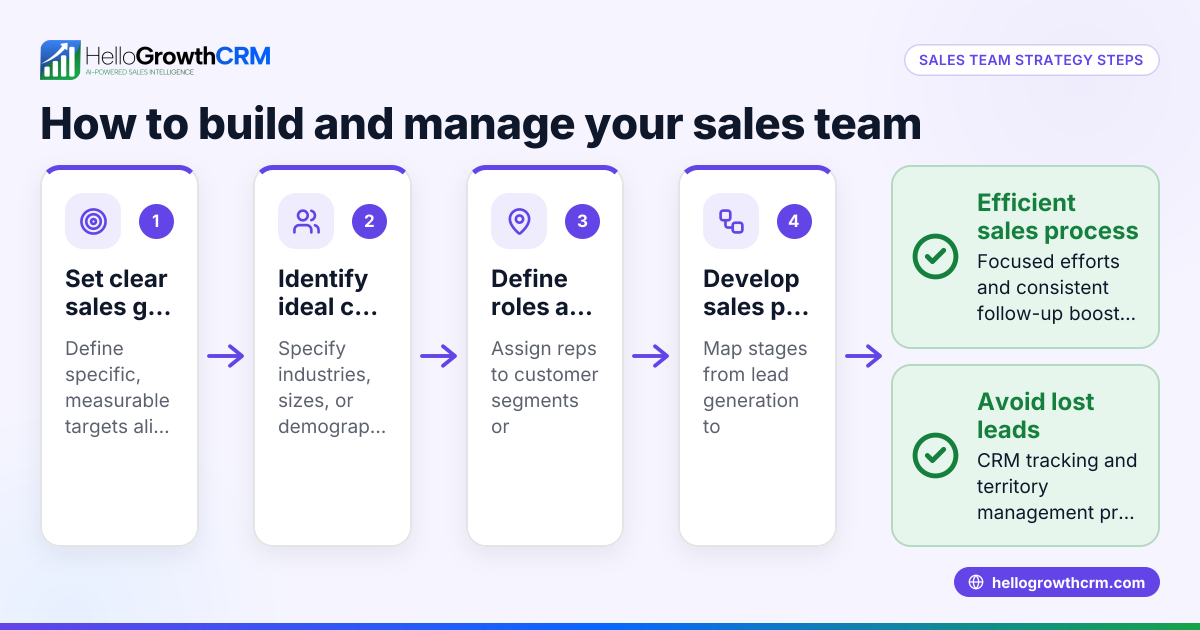
- Define your target market and ideal customer profile
- Identify who benefits most from your product or service.
- Check that the market is large enough to reach your growth goals.
- Clarify your value proposition and messaging
- State clearly how your offering solves customer problems.
- Test messaging with real prospects and refine.
- Choose sales channels and tactics
- Decide if you sell direct, through partners, online, or field sales.
- Ensure channels match customer preferences and your resources.
- Map out the sales process and pipeline stages
- Define each step from lead capture to closing the deal.
- Set criteria for moving deals between stages.
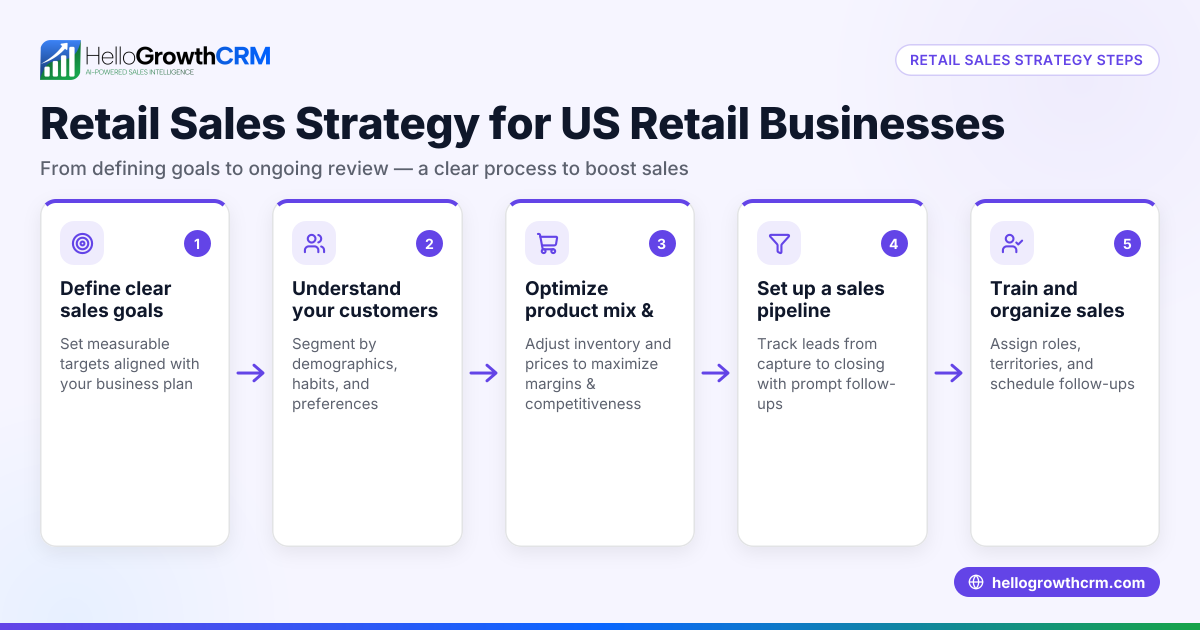
- Assign roles and territories if applicable
- Allocate leads and accounts to sales reps or teams.
- Use territory tools to balance workload and coverage.
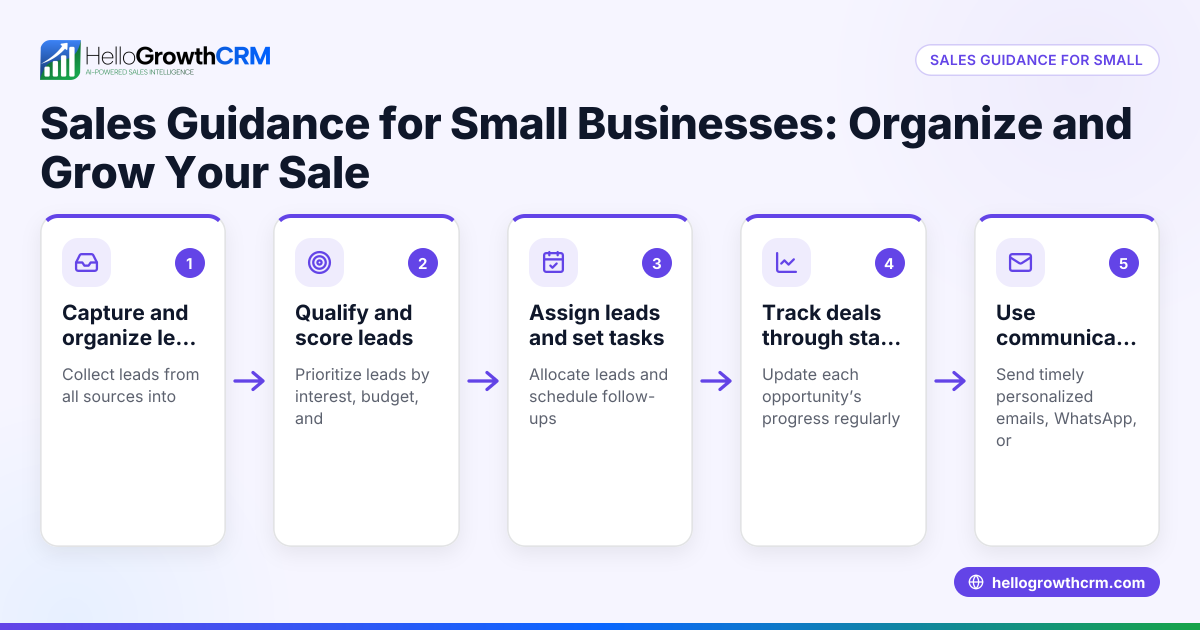
- Set follow-up cadences and communication sequences
- Plan when and how to contact prospects via email, WhatsApp, SMS, or calls.
- Track all interactions to avoid missing follow-ups.
- Use sales tools to track and forecast
- Implement a CRM to manage deals and pipeline visibility.
- Regularly review sales forecasts and adjust plans.
- Train your team and monitor performance
- Ensure everyone understands the GTM plan and their responsibilities.
- Use KPIs to measure success and identify gaps.
Example (fictional figures)
Imagine a B2B software reseller in Denver, Colorado, launching a new CRM product on 04/01/2026.
- Target market: small businesses in Colorado with 5-50 employees.
- Goal: $1,000,000 in sales in 12 months.
- Average deal size: $10,000.
- Sales cycle: 3 months.
Steps:
- Calculate needed deals: $1,000,000 $10,000 = 100 deals
- Estimate monthly deals: 100 deals 12 months = ~8.33 deals per month
- Set lead conversion rate (assumed): 20% Leads needed per month = 8.33 20% = 41.65 leads
- Plan lead capture and follow-up:
- Capture at least 42 qualified leads monthly.
- Follow up promptly using email, WhatsApp, and calls.
- Track pipeline stages:
- Leads → Qualified → Proposal Sent → Negotiation → Closed
- Assign sales reps territories within Colorado cities.
This example shows how a sales GTM breaks down goals into actionable steps with clear metrics.
Common mistakes
- No clear target market: Leads to wasted effort. Prevent by defining and validating your ideal customer profile.
- Ignoring follow-up timing: Slow responses lose deals. Prevent by scheduling follow-ups and tracking them in a CRM.
- Uncoordinated sales channels: Confusing customers and diluting efforts. Prevent by selecting channels that align with your market.
- No pipeline visibility: Leads fall through cracks. Prevent by using a pipeline management tool with deal stages.
- Untrained sales team: Inconsistent messaging and execution. Prevent by regular training and clear documentation.
- Neglecting performance monitoring: Unable to spot issues early. Prevent by reviewing KPIs weekly or monthly.
Doing this in HelloGrowthCRM
HelloGrowthCRM helps you implement your sales GTM with key features:
- Deals (pipeline): Track open opportunities from first contact through close, with stage movement and follow-up dates so no quotation or lead is forgotten. Learn more at AI CRM.
- Territories, field operations and commissions: Define sales territories, log field visits from mobile, and monitor daily activity, ideal for distributor field reps. Details at Territory Management.
- Managed RevOps: If you lack a sales manager, get dedicated support for weekly follow-up execution, pipeline hygiene, and KPI reports to keep your sales GTM on track. More info at HelloGrowthCRM for the United States.
Frequently asked questions
What does sales GTM stand for? Sales GTM means Sales Go-To-Market. It is a plan that outlines how your business sells to customers, covering target markets, sales channels, messaging, and execution.
Why is a sales GTM important for small businesses? Without a sales GTM, sales efforts can be disorganized, causing missed leads and slow follow-up. A GTM plan aligns your team and processes for consistent, efficient sales.
How do I create a sales GTM? Start by defining your target market and value proposition, then choose sales channels and map your sales process. Assign roles, plan follow-ups, and use tools like CRM to track deals.
Can I manage sales GTM without software? Yes, but it is harder to track leads, pipeline stages, and follow-ups manually. Using a CRM like HelloGrowthCRM makes managing your sales GTM easier and more reliable. Learn about its WhatsApp and SMS CRM.
What sales tools does HelloGrowthCRM provide for GTM? It offers pipeline deal tracking, territory and field sales management, and Managed RevOps support to keep your sales process organized and effective.
Key takeaways
- Sales GTM is a strategic plan for how your business sells to customers.
- Defining your target market and sales process is essential.
- Use a CRM to track deals, follow-ups, and territories.
- Avoid common mistakes like unclear targets and poor follow-up.
- HelloGrowthCRM provides tools to support your sales GTM execution.
Start building your sales GTM today to improve your sales results. To try these tools for free, Start on the Free Forever plan (200 leads, no credit card).
Ready to put this into practice?
Set up your pipeline, WhatsApp follow-ups, and AI lead scoring in minutes — free, no credit card.
Try HelloGrowthCRM freeGet CRM tips in your inbox
Join thousands of sales professionals who get weekly insights on CRM strategy, AI automation, and pipeline optimization.

The HelloGrowthCRM team publishes guides on CRM strategy, AI sales tools, and revenue operations for small business sales teams.